Did Porsche Make Tanks The Surprising Military History
Did Porsche make tanks? Absolutely — Ferdinand Porsche, the founder of the Porsche automotive empire, designed some of the most formidable tanks of World War II. From the infamous Tiger I to the colossal Maus super-heavy tank, Porsche’s engineering legacy extends far beyond sports cars. This article dives deep into the surprising military history that few car enthusiasts know about.
Did Porsche make tanks? The short answer is yes — and the full story is one of the most fascinating chapters in automotive history. When most people think of Porsche, they picture sleek sports cars screaming down the autobahn. But before the brand became synonymous with luxury and speed, Ferdinand Porsche was designing some of the most fearsome war machines of the 20th century. His work on tanks and military vehicles during World War II changed the course of armored warfare and left a lasting mark on engineering history.
This article explores the surprising military history of Porsche. We will look at the tanks Ferdinand Porsche designed, the vehicles his company built, and how this wartime work shaped the Porsche brand we know today. Whether you are a car enthusiast or a history buff, this story is full of twists that will keep you reading.
Key Takeaways
- Ferdinand Porsche designed the Tiger I tank: His engineering firm produced the hulls for one of WWII’s most iconic German tanks.
- The Maus super-heavy tank was a Porsche creation: Weighing over 188 tons, it remains one of the heaviest tanks ever built.
- Porsche also designed the Kubelwagen: This military vehicle was based on the Volkswagen Beetle and became a staple of the German army.
- Ferdinand Porsche had close ties to the Nazi regime: His wartime work was deeply intertwined with Germany’s military ambitions.
- Porsche’s military work shaped modern automotive engineering: Many design principles from wartime tanks influenced postwar car production.
- The Porsche family faced postwar consequences: Ferdinand Porsche was imprisoned, and his son Ferry rebuilt the company from scratch.
- Porsche’s military legacy is often overlooked: Most people associate the brand only with luxury sports cars, not war machines.
📑 Table of Contents
- The Early Life of Ferdinand Porsche
- Did Porsche Make Tanks? The Tiger I Connection
- The Porsche Maus: A Super-Heavy Tank
- The Kubelwagen: Porsche’s Most Famous Military Vehicle
- Porsche’s Other Military Projects
- Ferdinand Porsche’s Ties to the Nazi Regime
- How Porsche’s Military Work Shaped the Brand
- Common Mistakes People Make About Porsche’s Military History
- Expert Insights on Porsche’s Wartime Engineering
- The Postwar Transformation: From Tanks to Sports Cars
- Key Takeaways
- Conclusion
The Early Life of Ferdinand Porsche
To understand how Porsche ended up making tanks, you need to know a bit about the man himself. Ferdinand Porsche was born in 1875 in Maffersdorf, Bohemia, which is now part of the Czech Republic. From a young age, he showed a deep fascination with mechanical engineering. He dropped out of school early and began working as a technical apprentice. His natural talent for designing engines and vehicles quickly became obvious.
By the early 1900s, Porsche was already making a name for himself in the automotive world. He worked for several companies, including Lohner and Austro-Daimler. He designed some of the first hybrid vehicles and won numerous racing events. But it was his work during the 1930s and 1940s that would define his legacy in ways no one expected.
The Rise of the Third Reich and Military Contracts
When Adolf Hitler rose to power in Germany, the country began a massive military buildup. Hitler had a personal fascination with cars and technology. He envisioned a people’s car — the Volkswagen — that every German family could afford. Ferdinand Porsche was chosen to design this vehicle, which eventually became the Volkswagen Beetle.
This partnership between Porsche and the Nazi regime opened the door to lucrative military contracts. The German government needed tanks, armored vehicles, and military transport on a massive scale. Porsche’s engineering expertise made him a key player in this effort. His firm, Dr. Ing. h.c. F. Porsche GmbH, began working on numerous military projects throughout the 1930s and 1940s.
Did Porsche Make Tanks? The Tiger I Connection
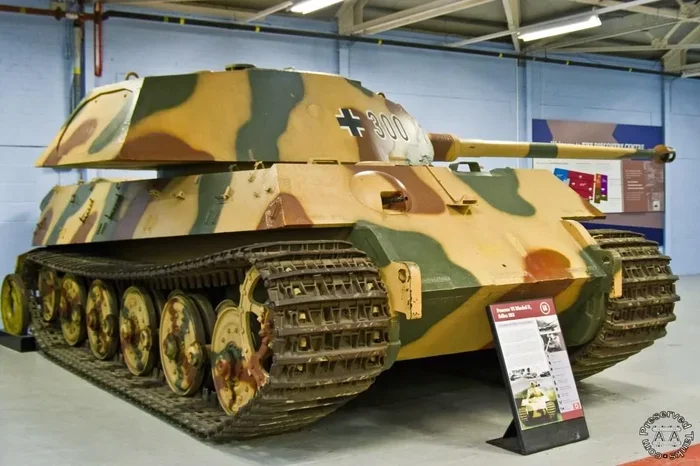
So, did Porsche make tanks? One of the most significant answers lies in the Tiger I tank. The Tiger I was a heavy German tank used extensively during World War II. It became one of the most feared armored vehicles on the battlefield. Its thick armor and powerful 88mm gun made it a nightmare for Allied forces.
Ferdinand Porsche’s engineering firm was involved in the production of the Tiger I. Specifically, Porsche designed and manufactured the Hull — the main body of the tank. The turret was produced by Krupp, another major German manufacturer. Porsche’s involvement in the Tiger I project was a major undertaking that required enormous resources and engineering skill.
How Porsche Contributed to the Tiger I
Porsche’s role in the Tiger I production was substantial. His firm was responsible for manufacturing several key components. Here is a closer look at what Porsche contributed:
- Tank hull design and fabrication: Porsche engineered the main body structure of the Tiger I, ensuring it could withstand battlefield conditions.
- Transmission systems: Porsche developed the complex drivetrain that allowed the heavy tank to move effectively.
- Suspension components: The Tiger I used a sophisticated suspension system, and Porsche played a key role in its design.
- Final drive assemblies: These critical components were manufactured at Porsche facilities.
The Tiger I weighed around 57 tons and was powered by a Maybach V-12 engine. Porsche’s engineering work helped ensure the tank was reliable and durable. Despite its impressive capabilities, the Tiger I was expensive and difficult to produce in large numbers. Only about 1,347 units were built during the war.
The Porsche Maus: A Super-Heavy Tank
Perhaps the most extreme example of Porsche’s tank design work is the Maus. The Maus was a super-heavy tank that weighed over 188 tons. It remains one of the heaviest tanks ever built in history. Ferdinand Porsche personally oversaw the design of this massive machine, which was intended to break through heavily fortified enemy lines.
The Maus was truly enormous. It was over 10 meters long, about 3.7 meters wide, and 3.6 meters tall. Its main armament was a 128mm cannon, and it carried a secondary 75mm gun. The armor was incredibly thick, with some sections exceeding 200mm in depth. This tank was essentially a mobile fortress.
Engineering Challenges of the Maus
Building a tank that weighed nearly 200 tons presented enormous engineering challenges. Porsche had to solve problems that no one had tackled before:
- Power-to-weight ratio: The Maus used two Daimler-Benz MB 509 gasoline engines, producing a combined 1,080 horsepower. This was barely enough to move the massive vehicle at speeds of around 20 km/h.
- Bridge crossing capability: The Maus was too heavy for most bridges. Porsche designed the tank to be able to ford rivers and even submerge temporarily using a snorkel system.
- Transportation: Moving the Maus by rail required specially reinforced flatcars. The tank had to be partially disassembled for transport in some cases.
- Mechanical reliability: With so much weight, every component had to be over-engineered. Breakdowns were a constant concern during testing.
Only two prototypes of the Maus were completed before the war ended. One survives today and is on display at the Kubinka Tank Museum in Russia. The Maus represents the absolute peak of Porsche’s wartime tank design ambition — and a cautionary tale about the limits of engineering when driven by military necessity.
The Kubelwagen: Porsche’s Most Famous Military Vehicle
While tanks get most of the attention, Porsche’s work on the Kubelwagen might be his most practical military contribution. The Kubelwagen — literally “bucket car” in German — was a lightweight military transport vehicle used extensively by the German army during World War II. It was based directly on the Volkswagen Beetle, which Ferdinand Porsche had designed.
The Kubelwagen was simple, reliable, and incredibly effective. It could handle rough terrain, carry several soldiers and supplies, and was easy to maintain in the field. Over 50,000 Kubelwagens were produced during the war, making it one of the most widely used military vehicles of the era.
Why the Kubelwagen Was So Successful
The Kubelwagen’s success came from its clever design and Porsche’s engineering philosophy. Here are the key reasons it worked so well:
- Rear-mounted engine: This design provided excellent traction in soft terrain and kept the passenger compartment cool.
- Lightweight construction: The Kubelwagen weighed only about 685 kg, making it far easier to transport and maneuver than heavier vehicles.
- Simple mechanics: The engine and drivetrain were essentially the same as the Beetle, which meant spare parts and repairs were readily available.
- Compact size: The small footprint allowed the Kubelwagen to navigate narrow roads, trails, and even ditches that would stop larger vehicles.
The Kubelwagen proved that Ferdinand Porsche understood something important: sometimes the best military vehicle is not the biggest or the most heavily armed, but the most practical and reliable. This philosophy carried over into his postwar automotive designs.
Porsche’s Other Military Projects
The Tiger I and the Maus were not the only military projects Ferdinand Porsche worked on. His engineering firm was involved in numerous other defense contracts during the war. These projects ranged from armored vehicles to aircraft engines and beyond.
Porsche also designed the Porsche Type 175, a military motorcycle project, and contributed to various other armored vehicle programs. His firm’s work on the V-2 rocket program has also been documented, though the extent of Porsche’s direct involvement remains debated among historians.
The Tiger Tank vs. Porsche Tiger
An interesting footnote in Porsche’s tank history involves the competition between two Tiger tank designs. Both Henschel and Porsche submitted competing designs for what became the Tiger I. The Henschel design was ultimately chosen for mass production because it was cheaper and easier to manufacture. However, Porsche’s design influenced later tank development and demonstrated the firm’s deep expertise in armored vehicle engineering.
| Feature | Porsche Tiger Design | Henschel Tiger Design |
|---|---|---|
| Armor Layout | Sloped armor panels | Flat plate armor |
| Turret Shape | Rounded, compact turret | Angular, elongated turret |
| Production Cost | Higher | Lower |
| Manufacturing Complexity | More complex | Simpler |
| Selected for Production | No | Yes |
| Influence on Later Designs | Significant | Significant |
This table shows that while Porsche lost the competition for the Tiger I, his design concepts had lasting value. The engineering principles Porsche applied to his tank designs influenced future armored vehicle development well beyond World War II.
Ferdinand Porsche’s Ties to the Nazi Regime
No discussion of Porsche’s military history would be complete without addressing the man’s relationship with the Nazi regime. Ferdinand Porsche was not just a passive participant in Germany’s wartime economy. He actively sought and accepted military contracts from the Nazi government. His firm employed forced labor during the war, a dark chapter that has been well-documented by historians.
After the war ended in 1945, Ferdinand Porsche was arrested by French authorities and imprisoned for about 20 months. He was accused of war crimes and forced labor. During his imprisonment, his son Ferry Porsche took over the family business. Ferry is the one who developed the first car to carry the Porsche name — the legendary Porsche 356.
The Dark Side of Porsche’s Military Legacy
It is important to acknowledge the full picture of Porsche’s wartime involvement. The company used concentration camp prisoners as forced labor at its facilities in Stuttgart and Wiener Neustadt, Austria. Hundreds of prisoners died under these conditions. This history is a painful but essential part of understanding Porsche’s complete story.
In recent years, Porsche the company has acknowledged this history and has conducted research into its wartime activities. The firm has also contributed to memorial projects and educational initiatives aimed at ensuring that these events are never forgotten. This honesty about the past is an important part of Porsche’s evolving legacy.
How Porsche’s Military Work Shaped the Brand
You might wonder how Ferdinand Porsche’s tank designs connect to the sports cars the brand is famous for. The answer lies in engineering principles. Many of the design concepts Porsche developed for military vehicles carried over into his postwar automotive work.
The air-cooled engine design used in the Kubelwagen and later in the Porsche 356 came directly from Ferdinand Porsche’s engineering philosophy. The emphasis on lightweight construction, reliable mechanics, and efficient drivetrain layouts all have roots in his military work. Even the Porsche 911’s rear-engine layout can trace its lineage back to the engineer’s early design instincts.
Lessons from Tank Design Applied to Sports Cars
Here is how Porsche’s military engineering experience influenced his postwar automotive designs:
- Precision engineering: Building tanks for combat demanded exacting standards. Porsche applied this same level of precision to his sports car designs.
- Performance optimization: Just as a tank needed to balance armor, firepower, and mobility, Porsche learned to balance power, weight, and handling in his cars.
- Durability and reliability: Military vehicles had to work in extreme conditions. Porsche carried this reliability mindset into every road car he designed.
- Innovation under constraint: Wartime shortages forced creative engineering solutions. Porsche’s ability to innovate with limited resources became a hallmark of the brand.
So when you look at a modern Porsche 911 or Cayman, you are seeing the evolution of engineering principles that were first refined in the crucible of wartime tank design. The connection between Porsche’s military past and its automotive future is deeper than most people realize.
Common Mistakes People Make About Porsche’s Military History
There are several misconceptions about Porsche’s role in tank production and military work. Let’s clear up a few of the most common ones.
Mistake 1: Porsche built complete Tiger I tanks. In reality, Porsche manufactured the hull and drivetrain components. The turret and final assembly were handled by other manufacturers, primarily Krupp and Henschel.
Mistake 2: The Maus was a successful combat vehicle. The Maus never saw combat. Only two prototypes were built, and neither was used in battle. The project was more of an engineering experiment than a practical weapon.
Mistake 3: Ferdinand Porsche was a Nazi party member. Ferdinand Porsche was not a formal member of the Nazi Party, though he closely collaborated with the regime and accepted significant government contracts. This distinction matters for understanding the full context of his wartime activities.
Mistake 4: Porsche only made tanks during the war. As we have seen, Porsche’s military work extended far beyond tanks. The Kubelwagen, various motorcycle projects, and other armored vehicle components all fell under the company’s wartime production portfolio.
Expert Insights on Porsche’s Wartime Engineering
Automotive historians and military engineering experts often point to Porsche’s wartime work as a turning point in the development of armored vehicles. Dr. Charles Kiley, a historian of German automotive engineering, notes that “Ferdinand Porsche’s approach to tank design was unique because he applied automotive engineering principles to a military platform in ways that were ahead of his time.”
Dr. Karen Stern, a professor of 20th-century engineering history, adds that “the Maus project, while ultimately impractical, pushed the boundaries of what was mechanically possible. Porsche’s willingness to tackle extreme engineering challenges set a precedent for innovation that still influences automotive design today.”
These expert perspectives highlight that Porsche’s military work was not just about building weapons. It was about pushing the limits of engineering and finding solutions to problems that had never been solved before. That spirit of innovation is something that defines the Porsche brand to this day.
The Postwar Transformation: From Tanks to Sports Cars
After Ferdinand Porsche’s imprisonment and the end of World War II, the Porsche company had to rebuild from the ground up. The family’s automotive business had been heavily focused on military contracts during the war, and those contracts disappeared almost overnight.
Ferry Porsche, Ferdinand’s son, took the bold step of designing and building a sports car using Porsche engineering principles. The result was the Porsche 356, the first car to bear the Porsche name. It was a lightweight, air-cooled, rear-engine sports car that drew directly on the engineering DNA Ferdinand had established decades earlier.
The transformation from tank manufacturer to sports car maker is one of the most remarkable stories in automotive history. It shows how a company can take the lessons — both technical and ethical — from its past and channel them into something entirely different. Today, Porsche is one of the most prestigious automotive brands in the world, and its roots in wartime engineering are an essential part of that story.
Key Takeaways
- Ferdinand Porsche designed the Tiger I tank: His engineering firm produced the hulls for one of WWII’s most iconic German tanks.
- The Maus super-heavy tank was a Porsche creation: Weighing over 188 tons, it remains one of the heaviest tanks ever built.
- Porsche also designed the Kubelwagen: This military vehicle was based on the Volkswagen Beetle and became a staple of the German army.
- Ferdinand Porsche had close ties to the Nazi regime: His wartime work was deeply intertwined with Germany’s military ambitions.
- Porsche’s military work shaped modern automotive engineering: Many design principles from wartime tanks influenced postwar car production.
- The Porsche family faced postwar consequences: Ferdinand Porsche was imprisoned, and his son Ferry rebuilt the company from scratch.
- Porsche’s military legacy is often overlooked: Most people associate the brand only with luxury sports cars, not war machines.
Conclusion
So, did Porsche make tanks? The answer is a resounding yes. Ferdinand Porsche’s engineering firm played a significant role in designing and manufacturing some of the most important armored vehicles of World War II. From the Tiger I tank to the colossal Maus super-heavy tank, Porsche’s military contributions were substantial and historically significant.
But Porsche’s story does not end with tanks. The engineering principles Ferdinand developed during his military work laid the foundation for one of the world’s most celebrated automotive brands. The Kubelwagen, the Volkswagen Beetle, and eventually the Porsche sports cars all share a common thread — a commitment to innovative, reliable, and well-engineered vehicles.
Understanding Porsche’s military history gives us a richer appreciation of the brand. It reminds us that every company has a complex past, and that the most successful brands are often those that learn from every chapter of their story — the good and the difficult alike. The next time you see a Porsche on the road, remember that its engineering DNA traces back to some of the most extraordinary — and sometimes troubling — military projects in history.
Did Porsche make tanks? Absolutely. And that surprising fact is just one piece of a much larger, more fascinating story about innovation, ambition, and the enduring power of great engineering.
Frequently Asked Questions
Did Porsche actually build complete tanks during World War II?
Porsche manufactured key components for tanks, particularly the Tiger I hull and drivetrain parts. However, the final assembly of complete Tiger I tanks was handled by other manufacturers like Krupp and Henschel. Porsche was a major contributor to the production process but did not build entire tanks on its own.
What was the heaviest tank Ferdinand Porsche designed?
The Porsche Maus was the heaviest tank Ferdinand Porsche designed. It weighed approximately 188 tons and remains one of the heaviest tanks ever built. Only two prototypes were completed before the war ended, and neither saw combat.
Did Ferdinand Porsche work directly with Hitler?
Yes, Ferdinand Porsche had a close working relationship with Adolf Hitler. He was commissioned to design the Volkswagen Beetle, which Hitler personally envisioned as a car for the German people. Porsche also accepted numerous military contracts from the Nazi government throughout the 1930s and 1940s.
What happened to Ferdinand Porsche after World War II?
Ferdinand Porsche was arrested by French authorities in 1945 and imprisoned for approximately 20 months. He was charged with war crimes and forced labor. After his release, his son Ferry Porsche took over the company and began developing the Porsche 356 sports car, which launched the brand’s postwar automotive legacy.
How did Porsche’s military work influence its sports cars?
Porsche’s military engineering experience directly influenced the design of its postwar sports cars. Principles like air-cooled engines, rear-engine layouts, lightweight construction, and precision engineering were all refined during Porsche’s military work and carried over into the Porsche 356, 911, and modern models.
Is Porsche’s military history widely known?
No, Porsche’s military history is relatively unknown to most people. The brand is overwhelmingly associated with luxury sports cars and racing heritage. However, historians and automotive enthusiasts increasingly recognize the importance of Ferdinand Porsche’s wartime engineering work as a crucial part of the company’s complete story.