Does the Tesla Model Y Need Snow Chains for Winter
The Tesla Model Y is a capable electric SUV, but winter conditions can challenge any vehicle. Whether you need snow chains depends on your local laws, driving routes, and weather severity. This guide covers chain requirements, compatible types, installation steps, and smart alternatives to keep you safe on icy roads.
Winter driving throws a lot at your vehicle. Ice, snow, and freezing temperatures test every system in your car. If you own a Tesla Model Y, you might wonder whether you need snow chains to stay safe. The short answer is: it depends on where you drive and what conditions you face. This guide breaks down everything you need to know about Tesla Model Y snow chains and winter readiness.
The Tesla Model Y is a popular electric SUV. It offers strong performance, modern tech, and a smooth ride. Many owners love it for daily commutes and weekend trips. But winter changes the game. Cold temperatures reduce battery range. Snow and ice make roads slippery. Even the best electric drivetrain can lose grip when conditions turn nasty. That is where snow chains come into the picture.
So, does the Tesla Model Y need snow chains? Not always. But in many cases, they are a smart and sometimes legal requirement. Let us explore why, when, and how to use them.
Key Takeaways
- Chain laws vary by state: Some mountain passes and states legally require tire chains regardless of drivetrain.
- AWD helps but does not replace chains: The Model Y’s all-wheel drive improves traction, but chains add critical grip on deep snow and ice.
- Cable chains are best for EVs: They are lighter, easier to install, and less likely to damage the Model Y’s undercarriage.
- Winter tires are a strong alternative: Quality snow tires can reduce or eliminate the need for chains in many conditions.
- Install chains on the front wheels: For the Model Y AWD, front-wheel chains provide the most benefit for steering control.
- Practice before you need them: Install chains at home first so you are confident when winter weather hits.
📑 Table of Contents
- Why Winter Driving Matters for the Tesla Model Y
- When Do You Actually Need Snow Chains on a Tesla Model Y?
- Types of Snow Chains Compatible with the Tesla Model Y
- How to Install Snow Chains on a Tesla Model Y
- Alternatives to Snow Chains for the Tesla Model Y
- Expert Tips for Safe Winter Driving with a Tesla Model Y
- Key Takeaways
- Conclusion
Why Winter Driving Matters for the Tesla Model Y
The Model Y is an excellent vehicle in most conditions. Its all-wheel drive system sends power to both the front and rear wheels. This gives you solid traction on wet and light snow roads. But AWD is not the same as chains. AWD helps you move forward. Chains help you stop and turn safely.
Cold weather also affects the Tesla battery. When temperatures drop, the battery works harder. Range can drop by 20 to 40 percent in extreme cold. This means longer trips take more planning. You might need to charge more often. And if you are stuck in snow, battery power becomes even more critical.
Understanding the Model Y Drivetrain in Cold Weather
The Model Y uses a dual-motor system in its AWD versions. One motor drives the front wheels. The other drives the rear wheels. Tesla’s software controls power delivery instantly. It can send more torque to the wheel that needs it most. This is great for everyday winter driving.
However, ice and packed snow are a different story. Tires on the Model Y are designed for efficiency, not extreme grip. Even with AWD, the tires can spin on black ice. Chains add a physical layer of grip that electronics alone cannot match. They bite into the snow and ice. They give you control that the drivetrain alone cannot provide.
So while the Model Y handles light winter weather well, heavy snow and ice demand extra precautions. That is where winter tires and chains become essential tools.
When Do You Actually Need Snow Chains on a Tesla Model Y?
Not every winter trip requires chains. But certain situations make them a must-have. Knowing when to use them keeps you safe and legal.
State and Mountain Chain Laws You Must Know
Different states have different rules about tire chains. Some states require chains on specific mountain passes during winter months. California, for example, has strict chain laws on roads like Donner Pass and Highway 50. Colorado requires chains on many mountain routes from November through April.
These laws apply to all vehicles. Electric vehicles are not exempt. If a sign says chains are required, you must have them. Failure to comply can lead to fines. Worse, it can put you and others at risk. Always check local chain laws before a winter trip. The California Chain Law and Colorado traction laws are good examples of strict requirements.
Common Winter Scenarios That Require Chains
Here are situations where chains on your Tesla Model Y make sense:
- Mountain passes and steep grades: These roads often have chain requirements regardless of the vehicle type.
- Unplowed or poorly maintained roads: Rural roads may not be cleared quickly. Chains give you the grip to navigate them.
- Heavy snowfall events: Even if roads are plowed, fresh snow can be deep and slippery.
- Icy bridge decks and overpasses: These freeze first and stay icy longer. Chains help you cross safely.
- Emergency or essential travel: If you must drive during a storm, chains add a safety margin.
If you live in a mild winter climate and mostly drive in the city, you may never need chains. But if you travel through mountains or face harsh winters, they are worth having.
Types of Snow Chains Compatible with the Tesla Model Y
Not all chains fit every vehicle. The Model Y has a low ground clearance and a specific wheel well shape. You need chains designed for electric vehicles or for the Model Y specifically.
Cable Chains vs. Link Chains for EVs
There are two main types of chains. Cable chains use rubber or fabric cables with metal links. Link chains use solid metal cross-links. Both work, but they have differences.
Cable chains are lighter and easier to install. They are gentler on the vehicle undercarriage. This makes them a popular choice for EVs like the Model Y. Link chains are more durable and offer stronger grip. They are better for severe snow conditions but can be heavier and harder to fit.
For most Model Y owners, cable chains are the best balance of ease and performance. They are less likely to damage the battery shield or suspension components underneath the car.
Recommended Chain Brands for Tesla Model Y
Several brands make chains that fit the Model Y well. Here are some top options:
- AutoSock: These are fabric-based snow socks. They are not traditional chains but work well in light to moderate snow. They are easy to install and very gentle on the car.
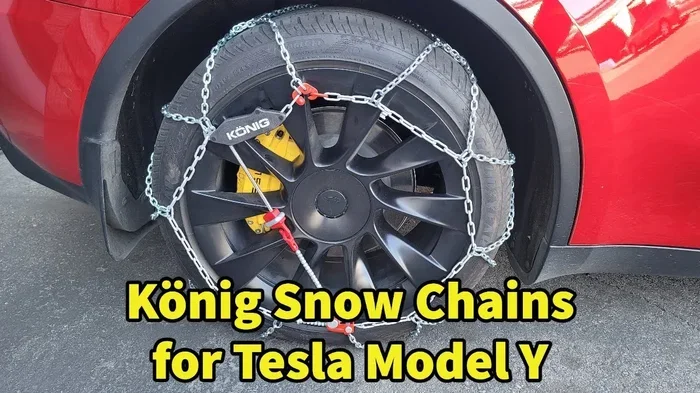
- Konig: Konig makes cable chains specifically designed for low-clearance EVs. They fit the Model Y with minimal gap issues.
- Chains Unlimited: This brand offers custom-fit cable chains. Their models are popular among Tesla owners.
- Les Schwab: Les Schwab sells ready-fit chain sets and can help you find the right size for your Model Y wheels.
Always check your Model Y wheel size before buying. The Model Y comes in 18-inch and 20-inch wheel options. Chains must match your specific wheel diameter and width.
How to Install Snow Chains on a Tesla Model Y
Installing chains might seem intimidating. But with practice, it becomes straightforward. Here is a step-by-step guide.
First, find a safe, flat surface to pull over. Avoid doing this on ice or in traffic. Turn on your hazard lights. Set the parking brake. Put the car in Park.
Take the chains out of the trunk. Lay them flat on the ground behind the tire you are working on. Make sure there are no twists in the cables or links.
Drape the chain over the top of the tire. Center the connector piece on the inside of the tire. Pull both ends around to the outside. Connect the inside links first. Then work your way outward.
Drive forward a few feet. This seats the chain against the tire. Stop and check the fit. Tighten any slack using the tensioners on the outside of the chain. Repeat for the other wheel if needed.
Pro tip: Practice installing chains at home in your garage. This way, you will not be fumbling with them in the cold and dark during a snowstorm. Many Tesla owners recommend doing a test run before winter arrives.
Quick Tips for Chain Installation
- Wear gloves to keep your hands warm and dry.
- Keep a flashlight in your trunk for low-visibility installs.
- Do not drive over 30 mph with chains on.
- Remove chains on clear pavement to avoid tire and road damage.
- Check chain tension after driving a short distance.
Alternatives to Snow Chains for the Tesla Model Y
Chains are not the only option for winter driving. Several alternatives can help you stay safe without traditional chains.
Winter Tires: The Best Alternative
Quality winter tires are the single best alternative to chains. They use special rubber compounds that stay flexible in cold temperatures. The tread patterns are designed to grip snow and channel away slush. For the Model Y, winter tires can make a huge difference in traction and stopping distance.
Many Tesla owners switch to winter tires for the entire season. This eliminates the need for chains in most conditions. Brands like Michelin, Continental, and Pirelli make winter tire options in 18-inch and 20-inch sizes that fit the Model Y.
Winter tires work best when temperatures are below 45 degrees Fahrenheit. They outperform all-season tires in snow, ice, and cold rain. If you live in a moderate winter climate, winter tires alone may be all you need.
Snow Socks and Traction Mats
AutoSock fabric snow socks are a popular alternative. They wrap around the tire like a thick sock. They provide temporary traction in snow and are much easier to install than chains. They are ideal for short trips or getting unstuck from snow.
Traction mats can also help. These are placed under the drive wheels to give grip when starting from a standstill on ice. They are compact and easy to store in the trunk.
EV Winter Driving Accessories
Beyond tires and chains, a few other accessories help with winter EV driving:
- Battery pre-conditioning: Tesla’s navigation system pre-heats the battery before a trip. This preserves range and improves performance in cold weather.
- Heated seat covers: These keep you warm without draining the battery as much as the cabin heater.
- Winter wheel covers: These reduce snow buildup on wheels and improve overall efficiency.
Each alternative has its place. Chains are best for severe conditions. Winter tires are best for daily winter driving. Snow socks work for light snow and short distances. Many Model Y owners use a combination of these tools based on conditions.
Expert Tips for Safe Winter Driving with a Tesla Model Y
Winter driving in an EV requires some extra planning. Here are expert tips to keep you safe and efficient.
Plan your charging stops carefully. Cold weather reduces range by up to 40 percent. A trip that normally takes 200 miles might only get you 120. Use the Tesla navigation app to find Superchargers along your route. Build in extra time for charging.
Drive smoothly and slowly. The Model Y has instant torque from its electric motors. This can cause wheel spin on ice. Ease off the accelerator gently. Brake early and softly. Smooth inputs keep the tires gripping rather than sliding.
Keep your tires properly inflated. Cold air causes tire pressure to drop. Underinflated tires reduce grip and range. Check your tire pressure weekly during winter. The recommended pressure is listed on the driver’s door jamb.
Use Tesla’s winter driving modes. The Model Y has a “Chill” driving mode that limits acceleration. This helps prevent wheel slip on slippery surfaces. Engage it whenever road conditions are uncertain.
Pack an emergency winter kit. Include a blanket, flashlight, phone charger, snacks, and water. If you get stranded, these items can keep you safe and comfortable while you wait for help.
Common Mistakes to Avoid
Here are mistakes many EV drivers make in winter:
- Ignoring chain requirements: Even with AWD, you can get fined or stuck without chains where they are legally required.
- Using chains on clear roads: This damages both the chains and the pavement. Remove them when roads are clear.
- Over-relying on Autopilot: Tesla’s driver-assist features do not work as well on snow and ice. Stay alert and keep your hands on the wheel.
- Forgetting to pre-condition: Skipping battery pre-heating wastes range and can leave you short on power.
- Driving on worn tires: Bald tires have almost no grip in snow. Replace them before winter if the tread is low.
Avoiding these mistakes keeps you safer and extends your driving range. Winter driving in an electric vehicle is very manageable with the right preparation.
Key Takeaways
- Chain laws vary by state: Some mountain passes and states legally require tire chains regardless of drivetrain.
- AWD helps but does not replace chains: The Model Y’s all-wheel drive improves traction, but chains add critical grip on deep snow and ice.
- Cable chains are best for EVs: They are lighter, easier to install, and less likely to damage the Model Y’s undercarriage.
- Winter tires are a strong alternative: Quality snow tires can reduce or eliminate the need for chains in many conditions.
- Install chains on the front wheels: For the Model Y AWD, front-wheel chains provide the most benefit for steering control.
- Practice before you need them: Install chains at home first so you are confident when winter weather hits.
Conclusion
So, does the Tesla Model Y need snow chains? The answer is: it depends on your driving conditions and local laws. For city driving in mild winters, you probably do not need them. For mountain passes, rural roads, and heavy snow, chains can be a lifesaver.
The Model Y is a well-engineered electric SUV. Its AWD system handles light to moderate winter weather with ease. But when conditions get severe, snow chains add a layer of safety that no software update can replace. They give you physical grip that tires alone cannot achieve on ice and deep snow.
The best approach is to be prepared. Keep a set of cable chains or AutoSock snow socks in your trunk during winter months. Invest in quality winter tires if you face regular snow. Practice installing your chains before you need them in an emergency.
Winter driving in a Tesla Model Y can be safe, enjoyable, and efficient. With the right gear and a little preparation, you can confidently handle whatever the season throws your way. Stay safe out there, and happy winter driving.
Frequently Asked Questions
Do I need snow chains if my Tesla Model Y has all-wheel drive?
AWD helps with traction, but it does not replace chains on icy or deeply snow-covered roads. Chain laws in many states apply to all vehicles, including AWD EVs. Check your local requirements before winter trips.
What is the best type of snow chain for a Tesla Model Y?
Cable chains are the best choice for most Model Y owners. They are lighter, easier to install, and gentler on the EV undercarriage. Fabric snow socks like AutoSock are also a great option for lighter snow conditions.
Can I use snow chains on the Tesla Model Y’s 20-inch wheels?
Yes, but you must buy chains that match your specific wheel size. The Model Y comes in 18-inch and 20-inch wheel options. Always check the manufacturer’s fitment guide before purchasing chains.
How fast can I drive with snow chains on a Tesla Model Y?
Most manufacturers and safety experts recommend not exceeding 30 mph with chains on. Driving faster can damage the chains, the tires, and the road surface. Remove chains when you reach clear pavement.
Are winter tires enough, or do I still need chains?
Winter tires handle most moderate snow and ice conditions very well. However, if you live in an area with heavy snowfall, steep mountain roads, or strict chain laws, you may still need chains for certain trips or conditions.
How do I store snow chains for my Tesla Model Y during the rest of the year?
Store chains in a cool, dry place in the included bag or a plastic bin. Keep them away from direct sunlight and moisture. Before storing, make sure they are completely dry to prevent rust on the metal components.