How Do I Decode My Toyota Engine Number And What It Means
Your Toyota engine number holds vital details about your engine’s type, size, and manufacturing date. Decoding it is easier than most people think, and it helps you buy the right parts, verify authenticity, and understand your vehicle better. This guide walks you through every step with simple examples.
Have you ever looked at the long string of letters and numbers stamped on your Toyota engine and wondered what it all means? You are not alone. Many Toyota owners see that code and assume it is some kind of secret language only mechanics understand. The truth is much simpler.
Decoding your Toyota engine number is a skill that anyone can learn. It takes just a few minutes and a basic understanding of how the code is structured. Once you know what each section means, you can unlock a wealth of information about your vehicle. You will know the engine family, the displacement, the production year, and sometimes even the assembly plant where it was built.
Whether you are shopping for replacement parts, trying to verify your Toyota’s authenticity, or just curious about what makes your car tick, this guide has you covered. We will walk you through everything step by step. No mechanic degree required. Just a willingness to learn and a little patience.
Understanding your Toyota engine identification number also helps you avoid costly mistakes. Imagine ordering the wrong part because you did not know your exact engine code. That is both frustrating and expensive. By the end of this article, you will never have that problem again.
Key Takeaways
- Engine numbers tell a story: Each digit and letter in your Toyota engine number reveals specific details about the engine type, displacement, and production date.
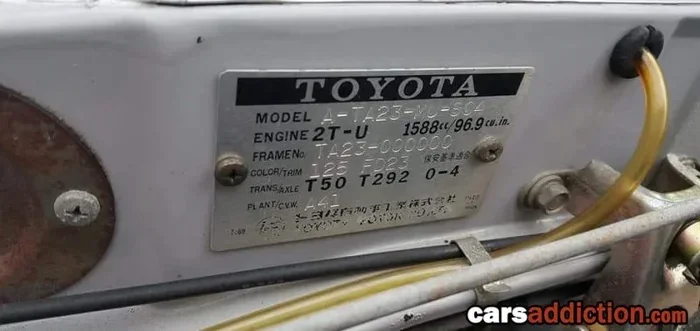
- Location matters: You can find the engine number stamped on the engine block, on the strut tower plate, or near the firewall in most Toyota models.
- Decoding is straightforward: The prefix identifies the engine family, the middle section shows displacement and design details, and the suffix indicates the model year and trim level.
- It helps with parts shopping: Knowing your exact engine code ensures you order the correct components, saving time and money.
- VIN and engine number are different: The vehicle identification number identifies the car as a whole, while the engine number is specific to the engine itself.
- Free lookup tools exist: You can use online Toyota engine number decoders and charts to quickly identify your engine specifications.
- Regular maintenance matters: Understanding your engine helps you make better decisions about checking your oil level and choosing the right oil viscosity for your engine.
📑 Table of Contents
What Is a Toyota Engine Number?
A Toyota engine number is a unique alphanumeric code stamped directly onto the engine block. It serves as the engine’s fingerprint. No two engines share the same number, which makes it a powerful tool for identification.
How Is It Different From the VIN?
Many people confuse the engine number with the vehicle identification number, or VIN. They are not the same thing. The VIN identifies the entire vehicle. It tells you the make, model, year, and factory where the car was built. The engine number, on the other hand, is specific to the engine itself. It tells you exactly which engine variant is installed.
Think of it this way. The VIN is like your home address. It tells people where you live. The engine number is like your Social Security number. It identifies the specific engine uniquely. Both are important, but they serve different purposes.
When you are looking up parts or trying to understand your engine’s specifications, the engine number gives you far more precise information than the VIN alone. That is why learning to decode it is so valuable.
What Information Does the Engine Number Contain?
The engine number typically contains several key pieces of information:
- Engine family code: This identifies the general engine family, such as the 2GR or 1GR series.
- Displacement: This tells you the engine size, usually measured in liters.
- Engine design details: Information about whether it is a turbocharged, naturally aspirated, or hybrid variant.
- Production sequence: A unique serial number that distinguishes your specific engine from others in the same production run.
- Assembly plant code: A letter or number that identifies where the engine was manufactured.
- Production date: Often encoded in the suffix, this tells you when the engine was built.
All of this information is packed into a single code, usually ranging from 8 to 12 characters long. Once you learn the format, reading it becomes second nature.
Where to Find Your Toyota Engine Number
Finding your engine number is the first step in the decoding process. The good news is that Toyota places it in fairly accessible locations across most of their models.
Common Locations Across Toyota Models
The engine number can be found in several places depending on your Toyota model. Here are the most common spots:
- Engine block: This is the most common location. Look for a stamped or etched number on the front or side of the engine block, near the cylinder head.
- Strut tower plate: In many Toyota sedans and SUVs, the engine number is stamped on a metal plate near the strut tower inside the engine bay.
- Firewall area: Some models have the engine number stamped on the firewall, which is the metal wall separating the engine compartment from the cabin.
- Engine mount area: Occasionally, you will find it near the engine mount on the passenger side of the bay.
If you have trouble locating it, check your owner’s manual. Toyota often includes a diagram showing the exact position for each model year. You can also look for a sticker on the engine bay that references the engine code.
Tips for Reading a Stamped Engine Number
Engine numbers are often stamped into metal, which can make them hard to read. Here are some tips to help:
- Clean the area with a rag and a little engine cleaner before you look.
- Use a flashlight and shine it at a low angle to make the stamps more visible.
- Take a photo with your phone and zoom in to read the characters more easily.
- If the number is worn, try making a rubbing with a pencil and paper over the stamped area.
Once you have the number written down or photographed, you are ready to start decoding it. That is where the real fun begins.
How to Decode Each Section of the Engine Number
Now that you have the number, let us break it down. Toyota engine numbers follow a consistent format, though the exact structure can vary slightly between engine families. The general pattern is prefix, middle section, and suffix.
Understanding the Prefix
The prefix is the beginning section of the engine number. It usually contains the engine family code and the engine type identifier. For example, in a number like 1ZZ-FE, the prefix portion tells you this is a 1ZZ family engine with the FE configuration.
The prefix often indicates:
- The engine family series
- The basic design platform
- The fuel type (gasoline, diesel, or hybrid)
Toyota uses letter and number combinations to represent different engine families. The 1ZZ, 2ZZ, 1GR, 2GR, and 3GR are just a few examples of the engine family codes you might encounter.
Decoding the Middle Section
The middle section of the engine number typically contains information about displacement and specific design features. This is where you will find details about the engine size and configuration.
For instance, a displacement indicator might show that the engine is a 1.8-liter, 2.4-liter, or 3.5-liter unit. The middle section may also include codes for:
- Number of cylinders
- Engine configuration (inline, V-shaped, or flat)
- Fuel delivery system (port injection, direct injection, or carbureted)
- Whether the engine uses variable valve timing
This section is crucial because it tells you exactly what kind of engine you have. When you are shopping for parts, this is the information mechanics and parts specialists need most.
What the Suffix Tells You
The suffix is the ending portion of the engine number. It often contains the production date, model year, and trim-specific details. Sometimes it also includes the sequence number that makes your specific engine unique.
The suffix can tell you:
- The model year the engine was designed for
- The specific trim level or market variant
- The production sequence number
- The assembly plant code
Understanding the suffix is especially helpful when you are trying to match parts to a specific production year. Two engines from the same family but different model years might have different suffixes, indicating slight design changes.
A Practical Example of Decoding
Let us look at a real example to make this clearer. Imagine you find the engine number 2AR-FE 123456 on your Toyota Camry. Here is what each part means:
- 2AR: This is the engine family code, indicating a 2.5-liter inline-4 cylinder engine.
- FE: This is the engine type suffix, indicating a fuel-injected, emissions-compliant variant.
- 123456: This is the unique production sequence number for your specific engine.
With this information, you now know you have a 2.5-liter 4-cylinder engine from the AR family. You can use this to find the exact parts you need. You can also verify that your engine matches what Toyota specified for your model year.
Some people also like to cross-reference their engine number with a Toyota engine number lookup tool available online. These tools can instantly pull up the full specifications for your engine, including horsepower, torque, and compatibility details.
Common Toyota Engine Codes and What They Mean
Toyota has produced dozens of engine families over the decades. While it is impossible to cover every single one, here are some of the most common engine codes you are likely to encounter.
Popular Toyota Engine Families
Here is a quick overview of some well-known Toyota engine codes:
- 1ZZ-FE: A 1.8-liter inline-4 engine found in many Corolla and Matrix models from the early 2000s. It is known for reliability and fuel efficiency.
- 2AR-FE: A 2.5-liter inline-4 engine used in the Camry, RAV4, and Avalon. It offers a good balance of power and economy.
- 1GR-FE: A 4.0-liter V6 engine commonly found in the Tacoma, 4Runner, and FJ Cruiser. It is a strong, durable engine built for towing and off-road use.
- 2GR-FE: A 3.5-liter V6 engine used in the Highlander, Sienna, and Camry V6. It delivers smooth power and decent fuel economy for a V6.
- 2JZ-GE: A legendary 3.0-liter inline-6 engine from the Supra and Lexus GS series. It is famous among enthusiasts for its tuning potential.
- 1KZ-TE: A diesel engine used in various Toyota commercial vehicles and SUVs in international markets.
Each of these codes tells you the engine family, displacement, and basic design. Once you know the code, you can look up the full specifications for your specific engine.
How to Use an Engine Code Chart
A Toyota engine chart is an invaluable tool for anyone trying to decode their engine number. These charts list all the common engine codes along with their specifications, including displacement, cylinder count, and the vehicles they were installed in.
You can find free engine charts online or in Toyota repair manuals. Simply match the prefix of your engine number to the chart, and you will get a detailed breakdown of your engine’s specifications. This is especially useful when you are trying to confirm whether a part is compatible with your vehicle.
Why Decoding Your Engine Number Matters
You might be wondering why all of this matters. After all, can you not just look up your car by its model and year? While that works for basic parts, it is not always accurate enough for engine-specific components.
Ensuring Parts Compatibility
Toyota produces many engines that share the same name but have different specifications for different markets. For example, a 2.4-liter engine sold in North America might have different internal components than the same 2.4-liter engine sold in Europe. The engine number tells you exactly which variant you have.
This level of precision matters when you are ordering parts like pistons, cylinder heads, or engine management components. Using the wrong part can lead to poor performance, reduced fuel efficiency, or even engine damage.
Verifying Vehicle Authenticity
Engine numbers also play a role in verifying your Toyota’s authenticity. When buying a used Toyota, matching the engine number to the VIN helps confirm that the engine is original and has not been swapped or replaced with a non-factory unit.
If you are buying a classic Toyota or a rare model, this verification becomes even more important. A mismatched engine number can be a red flag that the vehicle has undergone significant modifications or repairs.
Understanding Maintenance Requirements
Different Toyota engines have different maintenance needs. Knowing your engine code helps you follow the correct maintenance schedule and choose the right fluids and components. For instance, knowing your specific engine helps you determine the correct oil viscosity and whether you need regular oil level checks to keep your engine running smoothly.
It also helps you understand whether your engine requires special maintenance, such as timing belt replacements at specific intervals or specific spark plug types. All of this information is embedded in the engine number.
Quick Tips for Decoding Any Toyota Engine Number
Here are some practical tips to make the decoding process easier and more accurate:
- Always start with the prefix: The first few characters tell you the engine family. This is the most important piece of information.
- Use online lookup tools: Websites and apps dedicated to Toyota parts can decode your engine number instantly. Just enter the code and get the full specs.
- Cross-reference with your VIN: Your VIN can help confirm the engine type that Toyota originally installed in your vehicle.
- Keep a record: Write down your engine number and store it in your glovebox or phone. You will need it if you ever have to order parts or verify authenticity.
- Consult a Toyota dealer: If you are unsure about your decode, any Toyota dealer can look up your engine number and provide the full specifications.
- Join Toyota enthusiast forums: Communities of Toyota owners are incredibly knowledgeable and can help you decode even the most obscure engine numbers.
These tips may seem simple, but they can save you a lot of time and frustration. Even experienced Toyota owners use them regularly.
Another great resource is understanding your vehicle’s overall specifications. For example, knowing your fuel tank capacity and engine type together gives you a complete picture of your Toyota’s capabilities and maintenance needs.
Conclusion
Decoding your Toyota engine number is a surprisingly simple process that opens up a world of useful information. You now know where to find it, how to break it down, and why it matters for parts compatibility, authenticity verification, and maintenance planning.
The key is to remember the basic structure: prefix, middle section, and suffix. Each part of the code tells you something specific about your engine. With a little practice, you will be able to read any Toyota engine number quickly and confidently.
Start by locating your engine number today. Write it down, look it up, and familiarize yourself with what each section means. You will be glad you did the next time you need to order a part or verify your Toyota’s specifications. Understanding your engine is one of the best things you can do as a Toyota owner, and now you have all the tools to do it right.
Remember, every digit and letter on that engine block has a purpose. It is not random. It is a carefully structured code designed to give you the information you need. Take a few minutes to decode yours, and you will gain a deeper appreciation for the engineering that goes into every Toyota engine.
Frequently Asked Questions
Can I decode my Toyota engine number online for free?
Yes, there are several free online tools and websites that can decode your Toyota engine number. You simply enter the engine code, and the tool returns the full specifications, including displacement, cylinder count, and compatible vehicles. Toyota dealer websites and enthusiast forums also offer lookup resources.
Is the engine number the same as the engine code on the parts catalog?
They are related but not exactly the same. The engine number is the full stamped code on your physical engine, while the engine code in the parts catalog is a shortened reference used for ordering. The engine number contains more detailed information, including the production sequence number.
What if my engine number is too worn to read?
If the stamping is worn, try cleaning the area with a degreaser and using a bright flashlight at a low angle. You can also make a pencil rubbing over the stamped area to reveal the characters. If that does not work, your Toyota dealer can look up the engine number using your VIN.
Does the engine number change if my engine was replaced?
Yes, if your Toyota has had a replacement engine, the engine number will be different from the original. The new engine will have its own unique number stamped on it. This is important to know when verifying a used vehicle’s history or ordering parts.
How can I find out what year my engine was produced?
The suffix portion of your engine number often contains the production date or model year code. You can decode this using a Toyota engine chart or by entering the full engine number into an online lookup tool. Your Toyota dealer can also provide this information quickly.
Do all Toyota engines have a separate engine number from the VIN?
Yes, all Toyota vehicles have both a VIN and a separate engine number. The VIN identifies the entire vehicle, while the engine number identifies the specific engine. Both are important for parts ordering, maintenance, and verifying vehicle authenticity.
=== END FAQS ===