How to Add Freon to a 2007 Nissan Altima Step by Step
Adding Freon to your 2007 Nissan Altima is a simple DIY task that can save you money and restore cold air to your cabin. This guide walks you through every step, from gathering the right tools to checking for leaks and avoiding common mistakes. You do not need to be a mechanic to get the job done right.
Hot air blowing from your dashboard vents on a warm day is no joke. If your 2007 Nissan Altima AC is not cooling like it used to, the problem might be low Freon levels. Adding Freon to a 2007 Nissan Altima is one of the most common car maintenance tasks you can do at home. It takes about 30 minutes and costs a fraction of what a shop would charge. In this guide, we walk you through the entire process step by step, so you can get cold air back in your car without breaking the bank.
Before you start, it helps to understand a few basics about your car’s air conditioning system. The AC system uses a refrigerant, which is the substance that absorbs heat from inside your car and releases it outside. The 2007 Nissan Altima uses R-134a refrigerant, also known as Freon. When the level drops too low, the system cannot cool properly. Recharging the system means adding more refrigerant to bring it back to the correct level. Now, let us get into the details of how to do this safely and effectively.
Key Takeaways
- Know your refrigerant type: The 2007 Nissan Altima uses R-134a Freon, and using the wrong type can damage the system.
- Grab the right tools: You need a recharge kit, gloves, safety glasses, and a pressure gauge for a safe and successful recharge.
- Follow each step carefully: From locating the service port to monitoring pressure levels, every step matters for a proper recharge.
- Avoid common mistakes: Overfilling the system and ignoring leaks are the two most costly errors DIYers make.
- Know when to call a pro: If your AC still does not blow cold after a recharge, there may be a deeper issue that needs professional attention.
- Safety first: Always wear protective gear and work in a well-ventilated area when handling refrigerant.
📑 Table of Contents
- Why Your 2007 Nissan Altima AC Might Need Freon
- Tools and Materials You Will Need
- How to Add Freon to a 2007 Nissan Altima Step by Step
- Common Mistakes to Avoid When Adding Freon
- When to Call a Professional
- Tips for Maintaining Your Altima’s AC System
- How the 2007 Nissan Altima AC System Works
- Cost Comparison: DIY vs. Professional AC Recharge
- Final Thoughts on Adding Freon to Your 2007 Nissan Altima
Why Your 2007 Nissan Altima AC Might Need Freon
Air conditioning systems are not sealed forever. Over time, small amounts of refrigerant can escape through worn seals, hoses, or connections. A refrigerant leak is the most common reason your AC loses cooling power. Other factors include normal wear and tear on the AC compressor, a failing AC clutch, or even a clogged expansion valve. If you notice that your car cooling system is not blowing cold air after running for several minutes, low Freon is the likely culprit.
It is worth noting that a fully functioning Nissan Altima air conditioning system should blow air around 40 to 50 degrees Fahrenheit from the dashboard vents when outside temperatures are around 80 degrees. If your output feels warm or only slightly cool, a recharge is a great first step. However, if the system was recently serviced or if you see oil residue around any AC lines, there may be a leak that needs to be repaired before you add more refrigerant.
Tools and Materials You Will Need
Gathering everything before you start makes the job much smoother. Here is what you need for this project:
- R-134a refrigerant can: Make sure it is the correct type. The 2007 Altima does not use R-12 or any other refrigerant variant.
- AC recharge kit with gauge: Most universal kits include a can tap, hose, and pressure gauge. These are available at any auto parts store for around 20 to 40 dollars.
- Safety glasses: Refrigerant can cause eye irritation. Protect your eyes before you start working.
- Work gloves: The can and hose can get cold during the process. Gloves keep your hands safe.
- Thermometer: A simple thermometer helps you measure the temperature drop from the vents after the recharge.
- Clean rag or towel: You will use this to wipe down the service port and catch any drips.
When you buy a recharge kit, check that it includes a pressure gauge. The gauge is essential because it tells you when the system has enough refrigerant. Adding Freon without a gauge can lead to overfilling, which causes its own set of problems. A good kit also often comes with a can of leak sealant, which can help plug small leaks temporarily.
Where to Buy Your Supplies
You can find R-134a refrigerant and recharge kits at most big-box auto parts stores, online retailers, or even some gas stations. If you are unsure which kit to buy, look for one that is specifically labeled for R-134a systems. Avoid kits that claim to work with multiple refrigerant types, as mixing different refrigerants can damage your AC unit. The automotive AC recharge kits from brands like EZ Chill or Interdynamics are reliable and widely available.
How to Add Freon to a 2007 Nissan Altima Step by Step
Now for the part you have been waiting for. Follow these steps carefully, and your Altima’s AC will be blowing cold air in no time. This process works for the 2007 Nissan Altima and similar models that use R-134a refrigerant.
Step 1: Start the Car and Turn on the AC
Park your Altima in a well-ventilated area and turn the engine on. Set the air conditioning to the highest cool setting and turn the fan to maximum. This helps the system circulate the refrigerant as you add it. Let the engine idle for a minute or two so the AC compressor engages. You may hear a slight clicking sound when the compressor kicks in. That is normal and a good sign.
Check that the AC clutch on the compressor is spinning. The clutch is the part that connects the engine to the compressor. If it is not engaging at all, there may be a deeper electrical or mechanical issue that a simple recharge will not fix. In that case, it is best to visit a mechanic.
Step 2: Locate the Low-Pressure Service Port
Open the hood to access the engine bay. If you are not sure how to do this, check out our guide on how to open an exterior bonnet for a quick walkthrough. Once the hood is up, look for the low-pressure service port on the AC system.
The low-pressure port is located on the larger of the two AC lines near the compressor. It usually has a black or blue cap with an “L” or “LOW” marking. The high-pressure port is smaller and has an “H” or “HIGH” marking. Always use the low-pressure port when adding Freon. Connecting to the wrong port can damage the system.
Use a clean rag to wipe around the port before you remove the cap. This prevents dirt from entering the system, which can cause blockages or contamination.
Step 3: Connect the Recharge Hose
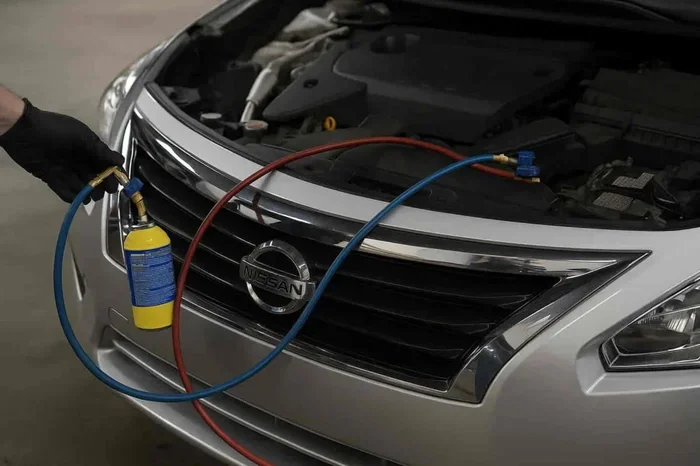
Attach the recharge hose from your kit to the low-pressure service port. Push the connector firmly onto the port until it clicks into place. You should feel a slight resistance. Make sure the connection is secure to prevent refrigerant from leaking out during the recharge.
Once connected, open the valve on the recharge hose slowly. This equalizes the pressure between the can and the system. Wait about 10 to 15 seconds before proceeding to the next step. You will hear a slight hiss as the pressures balance. This is normal.
Step 4: Add the Refrigerant
Now it is time to add the Freon. Turn the can upside down and slowly open the valve on the recharge hose. The refrigerant will flow into the system. Watch the pressure gauge on the hose closely as you add the refrigerant.
For the 2007 Nissan Altima, the target low-side pressure is typically between 25 and 45 PSI when the AC is running and the outside temperature is around 70 to 80 degrees Fahrenheit. Add refrigerant in short bursts and check the gauge frequently. Do not rush this step. Adding too much refrigerant is just as bad as adding too little.
As you add Freon, you should notice the AC vents getting colder. The compressor may also cycle on and off more smoothly as the pressure reaches the correct range. If you are unsure about the exact pressure, consult your owner’s manual or the sticker under the hood that lists the specifications for your Altima.
Step 5: Disconnect and Test the System
Once the pressure gauge reads within the recommended range, close the valve on the recharge hose and remove the hose from the service port. Replace the cap on the port immediately to prevent moisture from entering the system. Start the car and let the AC run for 5 to 10 minutes with the windows down.
Use a thermometer to measure the air temperature coming from the center dashboard vent. It should feel noticeably colder than before. If the air is still warm or only slightly cool, you may need to add a little more refrigerant. However, if the pressure gauge shows the system is already at the correct level, there could be a leak or another issue that needs attention.
Step 6: Monitor the System Over the Next Few Days
After your recharge, keep an eye on how the AC performs over the next several days. A properly recharged system should maintain consistent cooling. If the air starts getting warm again quickly, you likely have a refrigerant leak that needs to be found and repaired. Recharging without fixing a leak is only a temporary solution.
Common Mistakes to Avoid When Adding Freon
Even though adding Freon is a straightforward process, mistakes can happen. Here are the most common errors and how to avoid them.
- Overfilling the system: Too much refrigerant creates high pressure, which can damage the AC compressor or cause the system to malfunction. Always add refrigerant slowly and monitor the gauge closely.
- Using the wrong refrigerant type: The 2007 Altima uses R-134a. Do not use R-12 or any hybrid blend unless your system has been retrofitted. Mixing refrigerants can cause irreversible damage to the AC unit.
- Ignoring a leak: If your Freon keeps running low, simply recharging it over and over will not solve the problem. Find the leak and repair it first. Otherwise, you waste money and refrigerant every few weeks.
- Skipping safety gear: Refrigerant is cold and can cause frostbite on contact with skin. Always wear gloves and safety glasses. Work in a ventilated area since refrigerant fumes can be harmful if inhaled.
- Not running the AC during the recharge: The system needs to be running for the refrigerant to circulate properly. Adding Freon with the AC off can result in an uneven charge and poor cooling performance.
When to Call a Professional
There is no shame in calling a mechanic when the job is beyond a DIY recharge. If you have followed all the steps and your AC still does not blow cold air, the problem may be more serious. A failing AC compressor, a clogged expansion valve, or a major refrigerant leak all require professional tools and expertise to fix.
Also, if you notice any of the following signs, it is time to visit a shop:
- The AC compressor does not engage at all.
- You hear loud banging or grinding noises from the engine area.
- There is a visible oil leak near the AC lines.
- The system pressure readings are abnormally high or low even after a recharge.
- The AC blows cold for a few minutes and then stops.
A professional AC service can perform a full diagnostic, including a dye test or electronic leak detection scan. These tools can pinpoint leaks that are not visible to the naked eye. A proper repair will ensure your Nissan Altima air conditioning system lasts for years to come.
Tips for Maintaining Your Altima’s AC System
Prevention is always better than repair. Here are a few simple habits that keep your 2007 Altima’s AC running strong:
- Run the AC regularly: Even in winter, run the AC for 10 to 15 minutes once a week. This keeps the seals lubricated and prevents them from drying out and cracking.
- Check refrigerant levels annually: A quick check at the start of summer can catch low Freon before it becomes a bigger problem.
- Replace your cabin air filter: A dirty filter restricts airflow and makes the AC work harder, which can lead to uneven cooling and higher fuel consumption.
- Keep the condenser clean: The condenser sits in front of the radiator and can get clogged with dirt and debris. Hose it down gently during your regular car washes.
- Address small leaks early: If you notice the AC is not as cold as it used to be, do not wait. A small leak that is fixed early costs much less than a major repair later.
Taking care of your car cooling system also helps the overall performance of your vehicle. A well-maintained AC system reduces strain on the engine and can even improve fuel efficiency slightly. For general car care tips, check out our article on how to care for your auto tint to keep every part of your Altima in top shape.
How the 2007 Nissan Altima AC System Works
Understanding how your AC system works helps you troubleshoot problems more effectively. The system has five main components that work together to cool your cabin:
- Compressor: The compressor pumps refrigerant through the system and pressurizes it. It is driven by the engine via a belt and clutch.
- Condenser: Located in front of the radiator, the condenser releases heat from the hot, pressurized refrigerant, turning it into a liquid.
- Expansion Valve: This valve regulates the flow of refrigerant into the evaporator, reducing its pressure and temperature.
- Evaporator: Inside the dashboard, the evaporator absorbs heat from the cabin air, cooling it before it blows through your vents.
- Receiver/Drier: This component stores excess refrigerant and removes moisture from the system to prevent ice buildup and corrosion.
When any of these components fails or when the refrigerant level drops too low, the entire system suffers. That is why a simple AC recharge can often restore cooling performance. But it is also why persistent problems need a closer look at the individual components.
For reference on what kind of engine and fuel your 2007 Altima uses, you might find our guide on whether a Nissan Altima can use unleaded 88 gas helpful for understanding your vehicle’s overall specifications and maintenance needs.
Cost Comparison: DIY vs. Professional AC Recharge
One of the biggest advantages of doing a recharge yourself is the cost savings. Here is a quick comparison:
| Method | Cost | Time | Difficulty |
|---|---|---|---|
| DIY Recharge Kit | $20 – $50 | 30 – 45 minutes | Easy |
| Professional Shop Recharge | $100 – $200 | 30 – 60 minutes | None (shop does it) |
| Professional Leak Repair + Recharge | $200 – $500+ | 1 – 3 hours | None (shop does it) |
As you can see, a DIY recharge saves you a significant amount of money. However, it is important to remember that a recharge kit is a temporary fix if there is an underlying leak. Investing in a professional leak repair may save you from repeated recharges and further damage to the system.
Another thing to keep in mind is that some states have regulations about handling refrigerant. In many places, you do not need a certification to purchase an R-134a recharge kit for personal use. However, releasing refrigerant into the atmosphere is illegal in most areas. Always handle and store your refrigerant cans properly and dispose of empty cans according to local regulations.
Final Thoughts on Adding Freon to Your 2007 Nissan Altima
Recharging the Freon in your 2007 Nissan Altima is one of the easiest and most rewarding DIY car maintenance tasks you can do. With the right tools, a little patience, and the steps outlined in this guide, you can restore cold air to your cabin and avoid expensive shop visits. Adding Freon to a 2007 Nissan Altima does not have to be intimidating. Take it one step at a time, follow the pressure gauge, and never rush the process.
If you run into any issues or the AC problem persists after a recharge, do not hesitate to seek professional help. A qualified mechanic can diagnose deeper problems and get your Altima’s air conditioning running like new again. Stay cool out there, and enjoy the drive.
Frequently Asked Questions
What type of Freon does a 2007 Nissan Altima use?
The 2007 Nissan Altima uses R-134a refrigerant. Do not use R-12 or any other refrigerant type, as it can damage the AC system. Always check the label on the refrigerant can before purchasing.
How do I know if my Altima needs a Freon recharge?
If your AC is blowing warm or only slightly cool air instead of cold air, low Freon is the most likely cause. Other signs include the AC compressor cycling on and off frequently or a visible oil leak near the AC lines. A pressure gauge can confirm low refrigerant levels.
Can I overfill my Altima’s AC system with Freon?
Yes, overfilling is a real risk and can cause serious damage. Too much refrigerant creates high pressure that strains the AC compressor and can lead to costly repairs. Always add refrigerant slowly and monitor the pressure gauge throughout the process.
How long does a DIY Freon recharge last?
A recharge should last for several months or more if there are no leaks. If the Freon level drops again quickly, you likely have a refrigerant leak that needs to be repaired. A recharge without fixing a leak is only a temporary solution.
Do I need any special certification to add Freon myself?
In most states, you do not need a certification to purchase and use an R-134a recharge kit for personal vehicle use. However, regulations vary by location, so check your local laws. Always handle refrigerant safely and avoid releasing it into the atmosphere.
What should I do if the AC still does not work after a recharge?
If the AC does not improve after a recharge, there may be a deeper issue such as a failed compressor, a clogged expansion valve, or a major leak. At that point, it is best to visit a professional mechanic who can perform a full diagnostic and recommend the right repair.
=== CONCLUSION ===
Adding Freon to a 2007 Nissan Altima is a straightforward process that anyone can do with the right guidance and a little confidence. By following the steps in this article, you can save money, restore your car’s cooling power, and gain a better understanding of how your vehicle’s air conditioning system works. Remember to use the correct refrigerant, go slow with the gauge, and never ignore signs of a leak. Your Altima deserves to keep you cool and comfortable on every drive, and now you have the knowledge to make that happen.