How to Check BMW Coolant Level and Avoid Overheating
Checking your BMW coolant level is one of the simplest yet most important maintenance tasks you can do. This guide walks you through the exact steps to check your BMW coolant level safely, understand warning signs, and prevent engine overheating. Whether you own a BMW 3 Series, 5 Series, or X5, keeping your coolant at the right level saves you from expensive repairs and keeps your car running smoothly.
Your BMW is a finely tuned machine. Under the hood, a complex cooling system works hard to keep your engine at the right temperature. When that system fails, the results can be devastating. Engine overheating is one of the most common causes of serious car damage. And yet, so many BMW owners overlook the simplest thing they can do to prevent it. Checking your BMW coolant level takes just a few minutes. It could save you thousands of dollars in repairs. In this guide, we will show you exactly how to check BMW coolant level the right way. We will also cover what to do when the level is low, how to spot early warning signs, and simple tips to keep your engine cool all year long.
Whether you are a new BMW owner or have been driving one for years, this article has something for you. We will break everything down into easy steps. No confusing jargon. No unnecessary fluff. Just practical, actionable advice that you can use right away. Let us dive in and make sure your BMW stays cool and healthy.
Key Takeaways
- Coolant level checks should be done monthly and before long road trips to prevent engine damage.
- Never open the coolant cap when the engine is hot — wait until it cools down to avoid burns.
- Use the correct BMW-approved coolant type to ensure compatibility with your cooling system.
- Low coolant often signals a leak — inspect hoses, the radiator, and the water pump for damage.
- The coolant reservoir tank has MIN and MAX marks that make it easy to see if your level is low.
- Overheating can cause serious engine damage — act quickly if your temperature gauge rises.
- Regular coolant flushes every 2-3 years keep your BMW cooling system in top shape.
📑 Table of Contents
- Why Checking Your BMW Coolant Level Matters
- What You Need Before You Start
- Step-by-Step: How to Check BMW Coolant Level
- Common Signs of Low Coolant in a BMW
- Why Does BMW Coolant Level Drop?
- How Often Should You Check and Change BMW Coolant?
- Quick Tips to Prevent BMW Overheating
- When to See a Professional
- Conclusion
Why Checking Your BMW Coolant Level Matters
Coolant is the lifeblood of your BMW engine. It flows through the engine block and absorbs heat. Then it carries that heat to the radiator, where it cools down. This cycle repeats constantly while you drive. Without enough coolant, your engine cannot regulate its temperature. The result? Overheating. And overheating leads to cracked heads, blown gaskets, and warped engine blocks. These are not cheap fixes. In fact, a severe overheating event can total your BMW entirely.
Many people think coolant issues only happen in summer. That is not true. Cold weather can also cause problems. Coolant helps your engine warm up quickly and maintain a steady temperature in freezing conditions. So checking your BMW coolant level is a year-round task. It does not matter if it is July or January. Your cooling system needs the right amount of fluid to work properly.
What Happens When Coolant Runs Low
When your coolant level drops too low, several bad things can happen. First, your engine starts running hotter than normal. You might notice the temperature gauge climbing on your dashboard. Next, the coolant warning light may turn on. If you ignore these signs, your engine can overheat quickly. Here are the most common consequences of low coolant:
- Engine overheating — the most immediate and dangerous result
- Cracked cylinder head — a very expensive repair
- Blown head gasket — allows coolant to leak into the cylinders
- Warped engine block — can destroy your engine completely
- Damaged radiator — cracks and leaks develop under stress
The good news is that all of these problems are preventable. A simple coolant level check once a month can catch low fluid before it causes damage. Do not wait for the warning light to come on. By then, it might already be too late.
What You Need Before You Start
Before you check your BMW coolant level, gather a few things. You do not need any special tools. Just a few common items and a little bit of time.
Tools and Materials
- A clean rag or paper towel
- A flashlight (optional but helpful)
- The correct BMW coolant — check your owner manual for the exact type
- A clean container if you need to add fluid
- Gloves to protect your hands
Always use coolant that meets BMW specifications. Using the wrong type can damage your cooling system over time. BMW typically uses BMW Super Coolant or a compatible organic acid technology (OAT) coolant. Check your owner manual or ask your dealer if you are unsure. Never mix different coolant types. This can cause chemical reactions that clog your system.
Safety First
Safety is extremely important when working with coolant. The cooling system is pressurized. Opening the cap while the engine is hot can cause hot fluid to spray out and burn you. Always wait for the engine to cool down before opening anything. A good rule of thumb is to check your coolant level in the morning before you start driving. The engine will have had time to cool overnight.
Step-by-Step: How to Check BMW Coolant Level
Now let us get to the actual process. Checking your BMW coolant level is straightforward. Follow these steps carefully and you will be done in under five minutes.
Step 1: Park on a Level Surface
First, park your BMW on a flat, level surface. This ensures the coolant in the reservoir is at an even level. If you check it on a slope, the reading will be inaccurate. Turn off the engine and engage the parking brake. Wait at least 10 to 15 minutes for the engine to cool down.
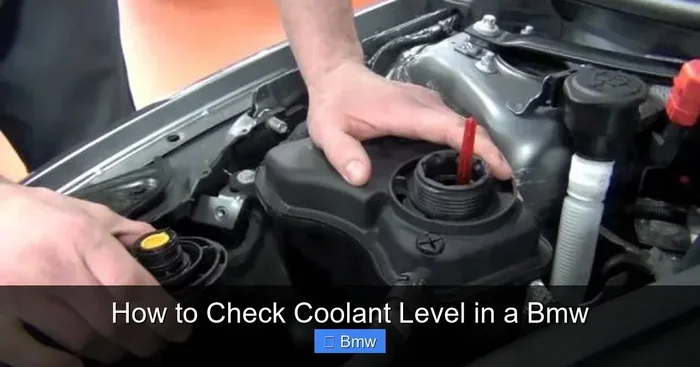
Step 2: Locate the Coolant Reservoir
Open the hood and find the coolant reservoir tank. On most BMW models, it is located on the left side of the engine bay. The tank is usually a translucent white plastic container with MIN and MAX markings on the side. If you have trouble finding it, consult your owner manual. The reservoir is connected to the radiator and engine through hoses.
On some BMW models, the reservoir cap has a warning label. This reminds you not to open it while the engine is hot. Always double-check that the engine is cool before touching the cap.
Step 3: Inspect the Coolant Level
Look at the side of the reservoir. The coolant should be between the MIN and MAX lines. If the level is near the MIN line or below it, your BMW needs more coolant. If the level is above the MAX line, you have too much coolant. Both situations can cause problems. Here is a quick reference:
- Level between MIN and MAX: Perfect. No action needed.
- Level near or below MIN: Add coolant slowly and carefully.
- Level above MAX: Too much fluid. You may need to drain some out.
Step 4: Check the Coolant Color and Condition
While you are looking at the reservoir, take a moment to inspect the coolant itself. Healthy coolant should be bright green, blue, or pink depending on the type. If the coolant looks rusty, brown, or muddy, it needs to be flushed. Contaminated coolant loses its ability to absorb and transfer heat effectively. This can lead to overheating even if the level is correct.
Also look for any oil floating on top of the coolant. This is a serious sign. It could indicate a head gasket failure. If you see oil in the coolant, do not drive the car. Have it towed to a mechanic immediately.
Step 5: Add Coolant If Needed
If your coolant level is low, you need to add more. Remove the reservoir cap slowly. Turn it counterclockwise and press down slightly to release any pressure. Then pour in the correct BMW coolant until the level reaches the MAX line. Do not overfill. Replace the cap tightly when you are done.
Important: If your BMW is low on coolant, find out why. A sudden drop in coolant level usually means there is a leak somewhere in the system. We will cover how to spot leaks in the next section.
Common Signs of Low Coolant in a BMW
Sometimes you do not need to open the hood to know your coolant is low. Your BMW gives you warning signs. Learning to recognize these signs early can prevent major engine damage.
Warning Lights on the Dashboard
The most obvious sign is the coolant temperature warning light on your dashboard. This light looks like a thermometer or a red temperature gauge. If it comes on, your engine is running too hot. Pull over safely and turn off the engine immediately. Do not keep driving. Continuing to drive with an overheating engine can cause catastrophic damage.
Another light to watch for is the check engine light. While this light can mean many things, a coolant-related issue is one of the common causes. If you see the check engine light and notice any other symptoms, check your coolant level right away.
Physical Signs to Watch For
Your BMW also gives physical signs when coolant is low. Pay attention to these:
- Steam or smoke coming from under the hood — this is a clear sign of overheating
- A sweet smell inside or outside the car — coolant has a distinct sweet odor
- Puddles under the car — coolant leaks often leave green, blue, or pink puddles on the ground
- The heater blowing cold air — your heating system uses coolant to generate heat
- The temperature gauge rising — watch your dashboard gauge while driving
If you notice any of these signs, check your coolant level as soon as possible. Ignoring them can lead to serious engine problems. In some cases, a coolant leak can cause your engine to overheat even when the level looks okay at first glance.
Why Does BMW Coolant Level Drop?
A low coolant level does not always mean you simply need to top it off. There is usually a reason. Understanding these reasons helps you address the root cause instead of just refilling the reservoir repeatedly.
Coolant Leaks
The most common reason for low coolant is a leak. Coolant leaks can happen in many places:
- Radiator hoses — these rubber hoses crack and degrade over time
- Radiator itself — rocks and debris can puncture the radiator
- Water pump — the seal around the pump can wear out
- Heater core — a leaking heater core can cause coolant to leak inside the cabin
- Thermostat housing — gaskets in this area can deteriorate
- Coolant reservoir tank — the plastic can crack with age
If you find a puddle of coolant under your parked BMW, you have a leak. The color of the puddle can help you identify the type of fluid. Coolant is usually bright green, blue, or pink. If you are unsure, a mechanic can perform a pressure test to find the exact source of the leak.
Evaporation Over Time
Even without a leak, a small amount of coolant evaporation is normal. BMW cooling systems are sealed, but microscopic amounts of fluid can escape over time. This is why it is a good practice to check your BMW coolant level regularly. Topping it off every few months keeps your system healthy.
However, if you are constantly adding coolant, something is wrong. There is likely a slow leak that you need to find and fix. Continuing to drive with a leak can eventually cause the engine to overheat. In extreme cases, running with no coolant at all will cause the engine to seize up completely.
Overfilling the Coolant System
Believe it or not, too much coolant can also cause problems. When coolant expands as it heats up, excess fluid needs somewhere to go. The system has an overflow hose that routes extra coolant back into the reservoir. But if you overfill the reservoir, the excess coolant can leak out onto the engine bay or the ground. This wastes coolant and can also damage engine components.
Some BMW owners also wonder if overfilling can cause overheating. While it is less common, excess pressure in the system can cause the coolant to boil at a lower temperature. This reduces its effectiveness. Always keep your coolant level between the MIN and MAX marks.
How Often Should You Check and Change BMW Coolant?
Regular maintenance is the key to a long-lasting cooling system. Here is a simple schedule you can follow for your BMW.
Checking Frequency
Check your BMW coolant level at least once a month. Also check it before any long road trip. This takes just a couple of minutes and can save you from unexpected breakdowns. Make it part of your routine car care habits.
Coolant Flush Schedule
Over time, coolant breaks down and loses its effectiveness. Old coolant becomes acidic and can corrode the inside of your cooling system. BMW recommends flushing and replacing the coolant every 2 to 3 years, or every 30,000 to 60,000 miles. Check your owner manual for the exact interval for your specific model.
A coolant flush involves draining the old fluid, flushing the system with water, and refilling it with fresh coolant. You can do this yourself if you have some mechanical experience. Otherwise, a BMW dealer or independent mechanic can handle it for you.
Quick Tips to Prevent BMW Overheating
Prevention is always better than repair. Here are some simple tips to keep your BMW from overheating:
- Check coolant level monthly — make it a habit like checking your oil
- Use the correct coolant type — BMW specifies certain formulations for a reason
- Inspect hoses and belts regularly — look for cracks, swelling, or wear
- Watch the temperature gauge — do not ignore it if it starts climbing
- Keep the radiator clean — remove bugs and debris from the front of the radiator
- Never ignore warning lights — the check engine light and coolant light exist for a reason
- Flush coolant on schedule — fresh coolant protects better than old coolant
These tips are simple but effective. They take very little time and can extend the life of your BMW engine significantly. A well-maintained cooling system is one of the best investments you can make in your car.
When to See a Professional
There are times when checking and topping off coolant is not enough. You should see a professional BMW mechanic if you experience any of the following:
- Your coolant level drops frequently even after refilling
- You see oil mixed with coolant
- The engine overheats repeatedly despite having enough coolant
- You notice a loud whining or grinding noise from the engine bay
- Steam or smoke comes from under the hood while driving
- The coolant reservoir tank shows signs of cracking or damage
These symptoms could indicate serious problems like a failing water pump, a blown head gasket, or a cracked engine block. These are not DIY fixes. A qualified mechanic has the tools and expertise to diagnose and repair these issues properly.
Regular BMW maintenance at a trusted service center also helps catch cooling system problems early. A professional inspection can spot small issues before they become big, expensive repairs. Do not wait until something goes wrong. Be proactive about your BMW cooling system health.
Conclusion
Checking your BMW coolant level is one of the easiest and most important things you can do as a BMW owner. It takes just a few minutes, requires no special skills, and can prevent thousands of dollars in engine damage. We have covered everything from the basic steps to check your coolant, to understanding warning signs, to knowing when to see a professional.
Remember to check your BMW coolant level regularly. Use the correct type of coolant. Watch for warning signs of low fluid or overheating. And never ignore the coolant temperature warning light on your dashboard. Your BMW cooling system works hard for you every time you turn the key. A little attention and care goes a long way toward keeping it running strong for years to come.
Stay on top of your BMW maintenance. Your engine will thank you. And your wallet will thank you too.
Frequently Asked Questions
Can I just add water to my BMW coolant reservoir?
You can add distilled water in an emergency, but it is not a long-term solution. Water does not have the same heat protection properties as proper BMW coolant. It also does not prevent corrosion. Always use the correct BMW-approved coolant for the best protection.
How do I know if my BMW is overheating?
The most obvious sign is the temperature gauge on your dashboard rising into the red zone. You may also see the coolant warning light illuminate. Steam or smoke from under the hood is another clear indicator. If you notice any of these signs, pull over safely and turn off the engine immediately.
What type of coolant does my BMW use?
Most modern BMWs use organic acid technology (OAT) coolant, often branded as BMW Super Coolant or a compatible equivalent. Check your owner manual for the exact specification. Never mix different coolant types, as this can cause chemical reactions that damage your cooling system.
How long does BMW coolant last before it needs to be changed?
BMW coolant typically lasts 2 to 3 years or 30,000 to 60,000 miles before it needs to be flushed and replaced. The exact interval depends on your BMW model and the type of coolant used. Always refer to your owner manual for the manufacturer recommended schedule.
Is it safe to drive my BMW with the coolant light on?
No, it is not safe. The coolant light means your engine is running too hot. Continuing to drive can cause severe engine damage including cracked heads, blown gaskets, and a seized engine. Pull over safely, turn off the engine, and let it cool down before checking the coolant level.
Can a coolant leak cause my BMW to overheat even if the level looks fine?
Yes, absolutely. A slow leak can cause coolant to escape gradually while you are driving. The level may appear normal when the engine is cold but drop as the system heats up and pressurizes. If you suspect a leak, have a mechanic perform a pressure test to find the source. This is especially important because coolant leaks are one of the leading causes of BMW overheating.