Everything You Need to Jump-Start a Mercedes-Benz Safely
Jump-starting a Mercedes-Benz is straightforward when you follow the right steps. This guide covers everything from locating the battery to connecting jumper cables safely. You will learn how to avoid costly mistakes and get your Mercedes running again quickly.
There is nothing more frustrating than turning your key and hearing nothing but silence. Your Mercedes-Benz sits there, completely dead, and you have somewhere to be. A dead battery can happen to anyone, regardless of how well you maintain your car. The good news is that jump-starting a Mercedes-Benz is a skill every owner should know. It takes just a few minutes once you understand the process.
Whether you are dealing with a cold morning in winter or you simply left a light on overnight, a car battery jump start can bring your Mercedes back to life. But doing it the wrong way can cause real damage. Mercedes vehicles have sensitive electrical systems, and a careless jump-start can fry electronics or trigger warning lights like the wrench light on your dashboard. That is why this guide walks you through every single step carefully.
In this article, we will cover exactly how to jump-start a Mercedes-Benz safely. You will learn where the battery is located on different models, the correct cable connection order, what to do after the jump, and how to prevent dead batteries in the future. We will also share expert tips that most guides skip. By the end, you will feel confident handling this situation on your own.
Key Takeaways
- Know your battery location: Mercedes-Benz models may have the battery in the trunk or under the hood, depending on the model.
- Use proper jumper cable order: Connecting cables in the wrong sequence can damage your electrical system.
- Avoid common jump-start mistakes: Letting cables dangle in engine bays or revving the donor car too high causes problems.
- Prepare for cold weather: Low temperatures reduce battery performance significantly.
- Consider a portable jump starter: A compact jump starter pack is a reliable backup for Mercedes owners.
- Check battery health regularly: A weak battery often signals bigger issues ahead.
- Know when to call for help: If jump-starting fails, professional diagnosis may be needed.
📑 Table of Contents
- Understanding Your Mercedes-Benz Battery
- What You Need Before Jump-Starting
- Step-by-Step Guide to Jump-Starting a Mercedes-Benz
- Common Mistakes to Avoid When Jump-Starting a Mercedes
- After the Jump: What to Do Next
- Preventing a Dead Battery in Your Mercedes-Benz
- When to Call for Professional Help
- Quick Tips for Mercedes Owners
- Expert Insight: Why Mercedes Electrical Systems Need Extra Care
- Key Takeaways
Understanding Your Mercedes-Benz Battery
Before you attempt any jump-start procedure, it helps to understand how your Mercedes battery works. Unlike some older vehicles, modern Mercedes-Benz models use advanced battery management systems. These systems monitor battery health, control charging, and protect sensitive electronics. When the battery dies, the system may display warning lights or limit certain functions.
Where Is the Battery Located?
One thing that surprises many Mercedes owners is that the battery is not always under the hood. Depending on your model, you might find it in one of two places:
- Under the hood: Many Mercedes sedans and SUVs keep the battery in the engine bay, usually on the right side. This makes jump-starting similar to most other vehicles.
- In the trunk: Some models, particularly certain C-Class and E-Class variants, hide the battery in the trunk to free up engine space. You will need to locate the trunk battery terminal before connecting cables.
Check your owner manual to confirm the battery location for your specific model. This small step saves time and prevents confusion when you are standing next to a dead car.
Why Do Mercedes Batteries Die?
Mercedes batteries fail for several common reasons. Understanding these causes helps you prevent future issues:
- Leaving lights or accessories on: This is the number one cause of dead batteries across all car brands.
- Extreme temperatures: Both hot and cold weather strain battery performance. Cold weather slows chemical reactions inside the battery, reducing its ability to hold a charge.
- Short trips: If you only drive short distances, the alternator may not fully recharge the battery between trips.
- Old age: Most car batteries last three to five years. After that, they gradually lose capacity.
- Parasitic drain: Some Mercedes models draw small amounts of power even when the car is off, especially if the key fob battery is weak.
If your battery keeps dying, it might be worth checking whether a bad battery can cause the wrench light to come on. The wrench light often appears when the car detects an electrical or charging system problem.
What You Need Before Jump-Starting
Gathering the right tools before you start makes the entire process smoother. You do not want to be standing in a parking lot searching for supplies while your Mercedes sits there useless.
Essential Equipment
- Jumper cables: Get heavy-duty cables rated for at least 400 amps. Thicker cables with larger gauge numbers transfer power more efficiently.
- A donor vehicle: You need another car with a working battery. The donor car should have a similar voltage system (12V).
- Safety glasses: Protecting your eyes from sparks or battery acid is always a smart move.
- Gloves: Rubber gloves protect your hands from electrical contact and battery acid.
Optional but Helpful Tools
- Portable jump starter: A compact jump starter pack is a lifesaver. You do not need another vehicle. These devices fit in your trunk and work in seconds.
- Battery terminal cleaner: Corrosion on battery terminals can prevent a good connection. A wire brush or terminal cleaner removes this buildup.
- Voltmeter: This tool lets you check battery voltage before and after the jump. A healthy battery should read around 12.6 volts.
Step-by-Step Guide to Jump-Starting a Mercedes-Benz
Now for the main event. Follow these steps carefully and in the correct order. The sequence matters because connecting cables incorrectly can damage your Mercedes electrical system.
Step 1: Position the Vehicles
Park the donor car close to your Mercedes but do not let the two vehicles touch. Turn both cars off and engage the parking brakes. If your Mercedes has start-stop technology, make sure the engine is completely off before you begin.
Step 2: Locate the Battery Terminals
Open the hood or trunk and find the battery. Identify the positive terminal (marked with a + or red) and the negative terminal (marked with a – or black). Clean any corrosion from the terminals with a wire brush if needed. A clean connection ensures proper power transfer.
Step 3: Connect the Jumper Cables
This is the most critical step. Follow this exact order:
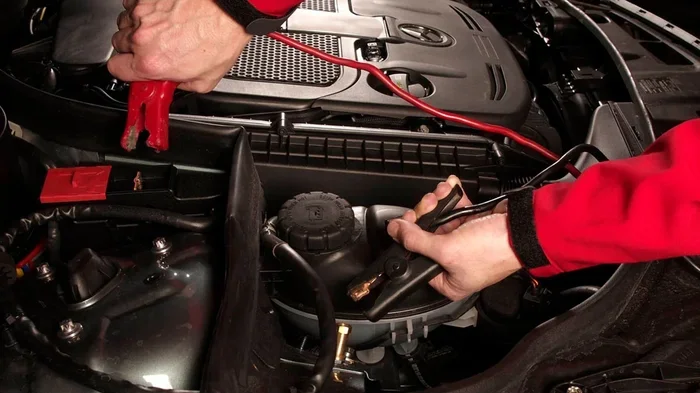
- Connect the red clamp to the dead Mercedes battery positive terminal.
- Connect the other red clamp to the donor car battery positive terminal.
- Connect the black clamp to the donor car battery negative terminal.
- Connect the remaining black clamp to an unpainted metal surface on the Mercedes engine block. Do not connect it directly to the negative battery terminal on the dead car. This reduces sparking near the battery, which could ignite hydrogen gas.
Make sure each clamp grips the terminal firmly. Loose connections will prevent proper power flow.
Step 4: Start the Donor Car
Start the donor vehicle and let it idle for about two to three minutes. This allows the alternator in the donor car to send a small charge to your dead Mercedes battery. Do not rev the donor engine high. A gentle idle is all you need.
Step 5: Start the Mercedes-Benz
Now try starting your Mercedes. Turn the key or press the start button. If the engine turns over but does not start immediately, wait a few seconds and try again. Do not hold the key for more than ten seconds at a time. Repeated attempts can overheat the starter motor.
Once the engine starts, let it run for at least fifteen to twenty minutes. This allows the alternator to recharge the battery. You can also drive the car around the block a few times to help build up charge.
Step 6: Disconnect the Jumper Cables
Remove the cables in the reverse order of how you connected them:
- Disconnect the black clamp from the Mercedes engine block.
- Disconnect the black clamp from the donor car battery negative terminal.
- Disconnect the red clamp from the donor car battery positive terminal.
- Disconnect the red clamp from the Mercedes battery positive terminal.
Keep the clamps apart from each other while removing them to prevent accidental sparking.
Common Mistakes to Avoid When Jump-Starting a Mercedes
Even experienced car owners make mistakes during jump-starts. Avoiding these errors protects both you and your Mercedes.
Mistake 1: Connecting Cables in the Wrong Order
Connecting the positive and negative cables out of sequence can cause electrical shorts. Always follow the positive-positive-negative-engine-block order. Reversing the sequence can blow fuses or damage the infotainment system and other sensitive electronics.
Mistake 2: Letting Cable Clamps Touch
When cables are connected, keep the clamps from touching each other. If the red and black clamps come into contact, it creates a spark that can damage both vehicles’ electrical systems.
Mistake 3: Jump-Starting a Frozen Battery
Never attempt to jump-start a battery that has been frozen by extreme cold. The battery case could crack or explode. Let the battery warm up to room temperature first.
Mistake 4: Using the Wrong Voltage
Mercedes-Benz vehicles use a 12-volt system. Never connect a 24-volt source to a Mercedes. Always verify the donor vehicle operates at 12 volts before attempting a jump.
Mistake 5: Ignoring Warning Lights After the Jump
If warning lights remain on after you successfully jump-start your car, do not ignore them. The wrench light or check engine light may indicate an underlying issue that a simple jump cannot fix.
After the Jump: What to Do Next
Getting your Mercedes started is only half the battle. Taking the right steps afterward ensures your battery stays healthy and your car runs properly.
Let the Engine Run
Drive your Mercedes for at least twenty to thirty minutes after a jump-start. This gives the alternator enough time to recharge the battery fully. Short trips right after a jump may not provide enough charging time.
Check the Battery Voltage
If you have a voltmeter, check the battery voltage after driving. It should read between 13.7 and 14.7 volts when the engine is running. This confirms the alternator is charging properly. If the voltage reads below 13 volts, your alternator might be failing.
Have the Battery Tested
Visit a Mercedes dealership or auto parts store to have your battery tested. Many places offer free battery testing. They can tell you whether the battery needs replacement or if something else caused the drain.
Also, keep in mind that if you have a Mercedes hybrid model, the process may differ slightly. Hybrid vehicles have both a traditional 12V battery and a high-voltage hybrid battery. Always consult your owner manual for model-specific instructions.
Preventing a Dead Battery in Your Mercedes-Benz
The best way to deal with a dead battery is to prevent one from happening in the first place. A few simple habits can save you from the hassle and stress of a dead battery.
Regular Maintenance
Have your battery inspected during every service appointment. Mercedes dealerships check battery health as part of routine maintenance. They can identify weak batteries before they fail completely.
Drive Your Mercedes Regularly
If you have a second car or your Mercedes sits idle for long periods, the battery will gradually lose charge. Try to drive your Mercedes at least two to three times per week for fifteen minutes or more. This keeps the battery topped off.
Use a Battery Tender
A battery tender or trickle charger connects to your Mercedes battery and maintains a steady charge. This is especially useful for vehicles that sit in a garage for extended periods, such as during vacations or seasonal storage.
Replace the Battery on Schedule
Most Mercedes batteries last between three and five years. Mark your calendar when you install a new battery and plan for replacement before it reaches the five-year mark. Waiting too long increases the risk of being stranded.
Keep the Key Fob Battery Fresh
A weak key fob battery can sometimes cause parasitic drain on your Mercedes battery. Replace the key fob battery annually to prevent this issue. If you are wondering if you need to do anything after replacing a key fob battery, the answer is usually no, but keeping it fresh helps your overall electrical system stay healthy.
When to Call for Professional Help
Sometimes jump-starting simply does not work. If you have followed all the steps correctly and your Mercedes still will not start, it is time to call for help. Persistent failure to jump-start may indicate a deeper problem.
You should call a professional if you notice any of the following:
- The engine cranks but will not fire up after multiple attempts.
- You smell sulfur or rotten eggs near the battery. This indicates a leaking battery.
- The battery case appears swollen or cracked.
- Warning lights persist after a successful jump-start.
- You have jump-started the same battery multiple times within a short period.
A certified Mercedes technician can diagnose whether the issue is a faulty alternator, a failing starter motor, or a battery that simply needs replacement. Do not keep attempting jump-starts on a damaged battery. This can cause further harm to your vehicle.
Quick Tips for Mercedes Owners
- Always keep a set of jumper cables in your trunk. You never know when you or someone else will need them.
- Invest in a portable jump starter. These compact devices cost less than a tow truck and work without another vehicle.
- Label your battery terminals. If you are unsure which terminal is positive or negative, take a photo for quick reference.
- Read your owner manual. Mercedes models vary in battery location and jump-start procedures. Your manual has model-specific instructions.
- Never attempt a jump-start in the rain. Water increases the risk of electrical shorts and personal injury.
Expert Insight: Why Mercedes Electrical Systems Need Extra Care
Mercedes-Benz vehicles come loaded with advanced technology. From the mbrace system to adaptive cruise control and ambient lighting, every feature relies on a stable electrical supply. A careless jump-start can disrupt these systems in ways that are not immediately obvious.
Experts recommend always connecting the final negative cable clamp to the engine block rather than the battery terminal. This practice, called the “grounding method,” directs the electrical current away from the battery and reduces the risk of sparking near hydrogen gas. Mercedes engineers designed their vehicles with sensitive voltage regulators, and sudden power surges during jump-starting can confuse these regulators.
If you ever feel unsure about the process, it is perfectly fine to ask a passing motorist for help or call a roadside assistance service. There is no shame in seeking help. The important thing is that you do not rush through the process or take shortcuts that could cost you hundreds of dollars in repairs.
One more thing worth noting: if you own a Mercedes hybrid or plug-in hybrid model, the jump-start process may involve additional steps. Some hybrids have a separate 12V battery access point specifically designed for jump-starting. Always refer to your owner manual for the correct procedure. Never attempt to jump-start the high-voltage hybrid battery directly.
Key Takeaways
- Know your battery location: Mercedes-Benz models may have the battery in the trunk or under the hood, depending on the model.
- Use proper jumper cable order: Connecting cables in the wrong sequence can damage your electrical system.
- Avoid common jump-start mistakes: Letting cables dangle in engine bays or revving the donor car too high causes problems.
- Prepare for cold weather: Low temperatures reduce battery performance significantly.
- Consider a portable jump starter: A compact jump starter pack is a reliable backup for Mercedes owners.
- Check battery health regularly: A weak battery often signals bigger issues ahead.
- Know when to call for help: If jump-starting fails, professional diagnosis may be needed.
Frequently Asked Questions
Can I jump-start a Mercedes-Benz using another car?
Yes, you can jump-start your Mercedes using another vehicle with a 12-volt battery. Make sure both cars are turned off before connecting the cables. Follow the correct cable connection order to protect your Mercedes electrical system.
How long should I let my Mercedes run after a jump-start?
Let your Mercedes engine run for at least fifteen to twenty minutes after a successful jump-start. This allows the alternator to recharge the battery. Driving the car for thirty minutes or more is even better for a full recharge.
Can a dead battery damage my Mercedes electronics?
A completely dead battery can sometimes cause voltage irregularities that affect sensitive electronics. However, following proper jump-start procedures minimizes this risk. If warning lights appear after a jump, have your vehicle inspected promptly.
Is it safe to jump-start a Mercedes in cold weather?
It is safe as long as the battery has not frozen. Cold weather reduces battery performance, which is why dead batteries are more common in winter. If the battery feels frozen or the case is cracked, do not attempt a jump-start.
What should I do if my Mercedes won’t start even after a jump?
If the engine still will not turn over after a proper jump-start, the problem may be a faulty alternator, starter motor, or a completely dead battery. Call a certified Mercedes technician for diagnosis. Repeated jump-start attempts can cause further damage.
Can I use a portable jump starter instead of another car?
Absolutely. A portable jump starter is a convenient alternative to finding a donor vehicle. These devices are compact, easy to store in your trunk, and work in seconds. Make sure the jump starter is rated for your Mercedes model and follow the device instructions carefully.
=== CONCLUSION ===
Jump-starting a Mercedes-Benz safely is a skill that every owner should have in their toolkit. It is not complicated, but it does require patience and attention to detail. By following the steps in this guide, you can get your Mercedes back on the road without unnecessary risk to your electrical system or your safety.
Remember to always connect cables in the correct order, let the engine run long enough to recharge, and have your battery tested if problems persist. Prevention is the best strategy. Keep your battery fresh, drive your Mercedes regularly, and consider investing in a portable jump starter for peace of mind.
A dead battery does not have to ruin your day. With the knowledge you have gained from this guide, you are now prepared to handle it like a pro. Stay safe, keep your Mercedes maintained, and never let a dead battery leave you stranded for long.