How to Jump-Start a Subaru Outback – Full Step-by-Step
Jump-starting a Subaru Outback is a straightforward process that can save you from a frustrating roadside breakdown. This guide walks you through every step, from locating the battery to safely connecting jumper cables and restarting your engine. You will also learn essential safety tips, common mistakes to avoid, and how to prevent a dead battery in the future.
There is nothing worse than turning the key in your Subaru Outback and hearing nothing but a clicking sound. A dead battery can leave you stranded, but the good news is that jump-starting your vehicle is easier than most people think. Whether you are a complete beginner or just need a refresher, this guide will walk you through every single step with clarity and confidence.
The Subaru Outback is a reliable and popular SUV, but like any vehicle, its battery can die. Cold weather, old age, and leaving lights on are the most common culprits. Knowing how to jump-start your Outback properly can save you time, money, and a lot of stress. In this article, we will cover everything you need to know, including safety precautions, cable connection order, and what to do after your engine is running again.
Before you grab your jumper cables, it helps to understand a little bit about how your Subaru battery works. The battery provides the electrical power needed to start your engine. When the battery loses its charge, the starter motor cannot turn over the engine. Jumper cables let you borrow power from another vehicle’s battery to get your engine running again. Once your engine is running, the alternator takes over and recharges the battery.
## Locating the Battery in Your Subaru Outback
The first step in the jump-start process is finding your battery. In most Subaru Outback models, the battery sits in the engine bay on the left side when facing the front of the vehicle. However, some newer models and trims may have the battery located in the trunk under a cover. Checking your owner manual is always a smart move if you are unsure.
### What You Need Before Starting
Before you begin, gather a few essential items. You will need a set of jumper cables, a donor vehicle with a working battery, and a pair of rubber gloves for safety. Some people also like to keep a portable jump starter in their trunk as a backup. Having these items ready before you need them makes the process much smoother.
### Opening the Hood Safely
To access the battery, you need to open the hood of your Subaru Outback. If you are not familiar with this process, you can refer to our detailed guide on How to Open an Exterior Bonnet for a walkthrough. The hood release lever is usually located inside the vehicle near the driver’s side footwell. Pull it, then release the safety latch under the front edge of the hood, and prop it open with the support rod.
## Safety Precautions You Must Follow
Safety is the most important part of jump-starting any vehicle. Batteries contain sulfuric acid and can produce flammable hydrogen gas. A single mistake with the cables can cause sparks, damage your electrical system, or even injure you. Taking a few extra minutes to follow safety guidelines is well worth it.
### Wear Protective Gear
Always wear rubber or insulated gloves when handling jumper cables. The cables carry electrical current, and accidental contact with live terminals can cause burns. Safety glasses are also a good idea, especially if your battery shows signs of corrosion or leakage.
### Park Both Vehicles Properly
Position the donor vehicle close enough that the jumper cables can reach both batteries, but do not let the two vehicles touch. Turn off the engine in both vehicles and engage the parking brakes on both cars. If either vehicle is in neutral or gear, shift it to park or neutral with the parking brake pulled.
### Check for Visible Damage
Before connecting anything, inspect both batteries for cracks, leaks, or visible damage. If either battery looks damaged, do not attempt to jump-start the vehicle. Instead, call for roadside assistance or a professional mechanic. A damaged battery can be dangerous and may need replacement rather than a simple boost.
## Step-by-Step Guide to Jump-Starting Your Subaru Outback
Now that you are prepared and safe, let us walk through the actual jump-start process. Follow these steps carefully and in the correct order.
### Step 1: Identify the Positive and Negative Terminals
Look at both batteries and identify the positive and negative terminals. The positive terminal is marked with a plus sign (+) and usually has a red cover or red cable. The negative terminal is marked with a minus sign (-) and typically has a black cover or black cable. Always double-check the markings before connecting cables. Mixing up positive and negative can cause serious damage to your electrical system.
### Step 2: Connect the Red (Positive) Cable to the Dead Battery
Take the red jumper cable and clamp one end to the positive terminal of your dead Subaru Outback battery. Make sure the clamp bites firmly into the terminal and does not wiggle loose. This is the first cable you will ever connect, so remember this order throughout the process.
### Step 3: Connect the Red Cable to the Donor Vehicle
Take the other end of the red cable and clamp it to the positive terminal of the donor vehicle’s battery. Again, ensure a secure connection. At this point, neither vehicle should be running, and the cables should not be touching each other or any metal surfaces.
### Step 4: Connect the Black (Negative) Cable to the Donor Vehicle
Now take the black jumper cable and clamp one end to the negative terminal of the donor vehicle’s battery. This completes the circuit on the donor side.
### Step 5: Connect the Black Cable to an Unpainted Metal Surface on Your Outback
This is the step many people get wrong. Instead of connecting the black cable directly to the negative terminal of your dead battery, attach it to an unpainted metal surface on your Subaru Outback’s engine block. This location is away from the battery and reduces the risk of sparks near flammable gases. A bolt or bracket on the engine block works perfectly for this purpose.
### Step 6: Start the Donor Vehicle
Have the driver of the donor vehicle start their engine and let it idle for about three to five minutes. This allows the working battery to send some charge through the cables to your dead battery. During this time, you can turn off all electrical accessories in your Outback, such as the radio, lights, and air conditioning, to reduce the load.
### Step 7: Try Starting Your Subaru Outback
After a few minutes, attempt to start your Subaru Outback. Turn the ignition key or press the push-start button and listen carefully. If the engine turns over and starts, great news! If it only clicks or refuses to start, wait another two to three minutes and try again. Sometimes the dead battery needs a bit more time to accept the charge.
### Step 8: Disconnect the Cables in Reverse Order
Once your Outback is running, disconnect the cables in the exact reverse order of how you connected them. Start with the black cable on your Outback’s metal surface, then the black cable on the donor vehicle, followed by the red cable on the donor vehicle, and finally the red cable on your Outback. Never let the cable clamps touch each other during this process.
## What to Do After Your Outback Starts
Getting your engine running is only half the battle. You need to take a few post-jump-start steps to ensure your battery recharges properly and stays healthy.
### Let the Engine Run
Keep your Subaru Outback’s engine running for at least 20 to 30 minutes after the jump-start. This gives the alternator time to recharge the battery. If you turn the engine off too soon, you may find yourself unable to start it again.
### Drive the Vehicle
If possible, take a short drive around the block. Driving puts more load on the alternator, which helps recharge the battery faster than idling alone. Aim for at least 15 to 20 minutes of driving time.
### Check the Battery Health
After your Outback is running, pay attention to how it starts the next time you use it. If it starts slowly or weakly, your battery may be failing and need replacement. A simple battery test at an auto parts store can tell you the voltage and condition of your battery. Most stores offer this service for free.
## Common Mistakes People Make When Jump-Starting
Even with the best intentions, people make mistakes during the jump-start process. Here are some of the most common errors and how to avoid them.
### Connecting Cables in the Wrong Order
This is the number one mistake people make. Connecting the negative cable to the dead battery’s negative terminal can cause sparks right next to the battery, which may ignite hydrogen gas. Always follow the correct order: positive to positive first, then negative to a metal surface on the dead vehicle last.
### Letting Cable Clamps Touch
If the red and black cable clamps touch each other at any point while connected to a battery, you will create a short circuit. This can damage both vehicles’ electrical systems and even melt the cable insulation. Keep the clamps separated and never let them dangle where they could touch.
### Not Running the Donor Vehicle Long Enough
Some people try to start the dead vehicle immediately after connecting the cables. This rarely works because the dead battery needs time to receive a charge. Be patient and let the donor vehicle run for at least three to five minutes before attempting to start your Outback.
### Ignoring a Failing Battery
If you find yourself needing a jump-start frequently, your battery is likely failing. Continuously jump-starting a bad battery will not fix the underlying problem. Have the battery tested and replaced if needed.
## How to Prevent a Dead Battery in the Future
The best way to deal with a dead battery is to prevent it from happening in the first place. A few simple habits can extend the life of your Subaru Outback battery significantly.
### Turn Off All Accessories Before Shutting Off the Engine
Before you turn off your Outback, make sure all lights, the radio, and any other electrical accessories are switched off. This reduces the strain on the battery when you start the car next time.
### Drive Your Vehicle Regularly
Batteries recharge while you drive. If your Outback sits unused for long periods, the battery will slowly lose its charge. Try to drive your vehicle at least a few times per week for 20 minutes or more.
### Check for Corrosion on Terminals
Over time, a white or greenish powdery substance can build up on your battery terminals. This corrosion prevents a good electrical connection and can cause starting problems. If you notice corrosion, clean the terminals with a mixture of baking soda and water, then rinse with clean water and dry thoroughly.
### Replace Your Battery on Schedule
Most car batteries last between three and five years. Check your battery’s age and consider replacing it before it dies unexpectedly. Many auto parts stores will test your battery for free and help you find the right replacement.
### Keep a Portable Jump Starter in Your Trunk
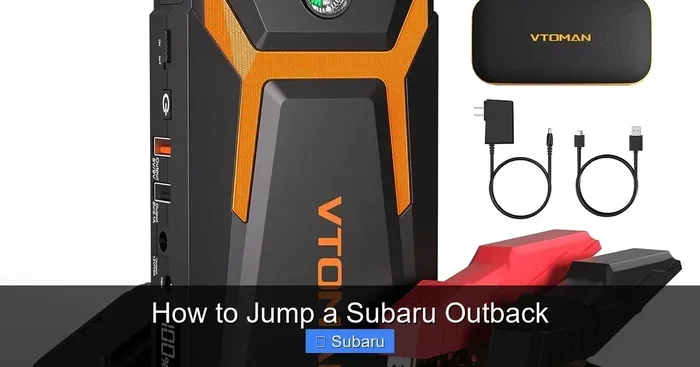
A portable jump starter is a compact device that can jump-start your vehicle without needing another car. These devices are affordable and easy to store. Having one in your trunk gives you peace of mind, especially on long trips or in remote areas.
## When to Call for Professional Help
While jump-starting a Subaru Outback is usually simple, there are situations where you should call a professional. If you follow all the steps correctly and your vehicle still will not start, the problem may be more than just a dead battery. A faulty alternator, a blown fuse, or a starter motor issue could be the cause. In these cases, it is best to contact a qualified mechanic or roadside assistance service rather than keep trying to jump-start the vehicle.
If you are uncomfortable with any part of the process, there is absolutely no shame in calling for help. A professional will handle the situation safely and quickly.
## Frequently Asked Questions
Can I jump-start a Subaru Outback by myself?
Yes, you can jump-start a Subaru Outback by yourself if you have a portable jump starter. However, using another vehicle and jumper cables requires a second person to help connect the cables safely. A portable jump starter eliminates the need for a second vehicle and another person, making it a convenient option for solo drivers.
How long should I let the donor car run before starting my Outback?
Let the donor vehicle run for at least three to five minutes before attempting to start your Subaru Outback. This gives the dead battery time to receive a partial charge. If the battery is completely drained, you may need to wait a bit longer, around five to ten minutes, before it has enough power to turn over the engine.
What happens if I connect the cables in the wrong order?
Connecting the cables in the wrong order can cause a short circuit, sparking, or damage to your vehicle’s electrical system. In the worst case, it can damage the alternator or fuse boxes in both vehicles. Always follow the correct order: positive to positive first, then negative to a metal surface on the dead vehicle last.
Is it safe to jump-start a Subaru Outback in the rain?
Yes, it is generally safe to jump-start your vehicle in light rain, but you should take extra precautions. Keep the jumper cables away from puddles and standing water. Make sure your hands are dry and that the cable clamps do not touch any wet surfaces. If the rain is heavy, it is better to wait for a covered area or call for assistance.
How do I know if my Subaru Outback battery needs replacing?
Signs that your battery needs replacing include slow cranking when you start the engine, dim headlights, frequent need for jump-starts, and a battery age of more than three to five years. You can also have the battery tested at an auto parts store, where they will check the voltage and overall health of the battery for free.
Can a dead battery damage my Subaru Outback’s electrical system?
A dead battery itself usually does not damage the electrical system. However, improper jump-starting techniques, such as reversing the cable connections or allowing the clamps to touch, can cause electrical damage. Following the correct procedures carefully will protect your vehicle’s electrical system throughout the jump-start process.
## Conclusion
Jump-starting a Subaru Outback is a valuable skill that every Outback owner should know. By following the correct cable connection order, taking proper safety precautions, and understanding what to do after your engine starts, you can handle a dead battery situation with confidence and ease. Remember to always connect positive cables first, connect the negative cable to a metal surface on the engine block, and let the donor vehicle charge your battery for a few minutes before attempting to start your Outback.
Prevention is always better than cure. Regular battery maintenance, driving your vehicle frequently, and replacing old batteries on schedule will help you avoid finding yourself stranded with a dead battery in the first place. Keep a set of jumper cables or a portable jump starter in your trunk, and you will always be prepared for the unexpected.
With the knowledge you have gained from this guide, you are now fully equipped to jump-start your Subaru Outback safely and effectively. The next time someone asks for help with a dead battery, you will be the person they call. Stay safe, stay prepared, and enjoy the open road in your trusty Outback.
Key Takeaways
- Know your battery location: The Subaru Outback battery is typically found in the engine bay, but some models may have it in the trunk.
- Follow the correct cable order: Always connect positive cables first and negative cables last to avoid sparks and damage.
- Safety comes first: Wear gloves, ensure both vehicles are off, and keep cables away from moving parts.
- Let the booster car run: Allow the donor vehicle to idle for a few minutes before attempting to start your Outback.
- Drive after jumping: Once started, drive your Subaru for at least 20 minutes to recharge the battery.
- Consider a portable jump starter: A compact jump starter pack can be a lifesaver when no other vehicle is nearby.
- Replace old batteries: If your battery is more than three to five years old, consider replacing it to avoid future issues.
Frequently Asked Questions
What is How to Jump-Start a Subaru Outback?
How to Jump-Start a Subaru Outback is an important topic with many practical applications.