Is the Rear View Mirror of Your Car Convex or Concave
The rear view mirror convex or concave question confuses many drivers. Most modern cars use a convex mirror on the passenger side to reduce blind spots. Understanding the shape helps you adjust your mirrors correctly and stay safe on the road.
Every time you hop into your car, you glance at the rear view mirror. It shows you what is happening behind you. But have you ever stopped to think about its shape? The question of rear view mirror convex or concave matters more than you might think.
Most drivers assume all mirrors are the same. They are not. The shape of your mirror changes how much you can see. It also changes how far away things look. Knowing whether your mirror is convex or concave helps you drive safer. It cuts down on blind spots. It helps you judge distance better. This guide will walk you through everything you need to know.
We will cover the two main types of mirrors. We will look at why car makers choose one over the other. You will learn how to spot the shape in your own car. You will also get simple tips to adjust your mirrors right. By the end, you will feel more confident on the road. Let us dive in.
Key Takeaways
- Convex mirrors are standard on the passenger side: They give a wider view of traffic behind you.
- Concave mirrors are rare and found in some luxury cars: They magnify objects but can distort distance.
- The shape affects your field of view: Convex mirrors show more area, while flat mirrors show true distance.
- You can tell the mirror type by its curvature: A bulging surface is convex; a caving surface is concave.
- Proper mirror adjustment reduces blind spots: Knowing the mirror type helps you set it correctly.
- Understanding mirror types boosts driving safety: It helps you judge distance and react faster.
📑 Table of Contents
- Why Your Rear View Mirror Shape Matters
- Convex Mirrors: The Standard Choice for Most Cars
- Concave Mirrors: The Rare Exception and Where You’ll Find Them
- How to Tell If Your Rear View Mirror Is Convex or Concave
- The Science of Curved Mirrors and Road Safety
- Adjusting Your Rear View Mirror for Maximum Visibility
- Conclusion: Why Mirror Shape Affects Your Safety
Why Your Rear View Mirror Shape Matters
The shape of your mirror is not just a design choice. It is a safety feature. Car engineers spend hours picking the right mirror curvature for each position. The goal is to give you the best driver visibility without hiding dangers. A wrong mirror shape can hide cars in your blind spot. It can make following distances look shorter than they are. That can lead to accidents.
Most vehicles use two types of mirrors. The interior mirror is usually flat. The exterior mirrors on the doors are often curved. The passenger side mirror is almost always a convex mirror. The driver side mirror may be flat or slightly convex. The rear view mirror itself is typically flat. But some cars use a concave mirror in special cases. Understanding this helps you use each mirror the right way.
When you know your mirror type, you adjust it with purpose. You stop relying on guesswork. You trust the mirror to show you what is there. This simple knowledge can save your life. It makes you a smarter driver.
What Does Convex Mean?
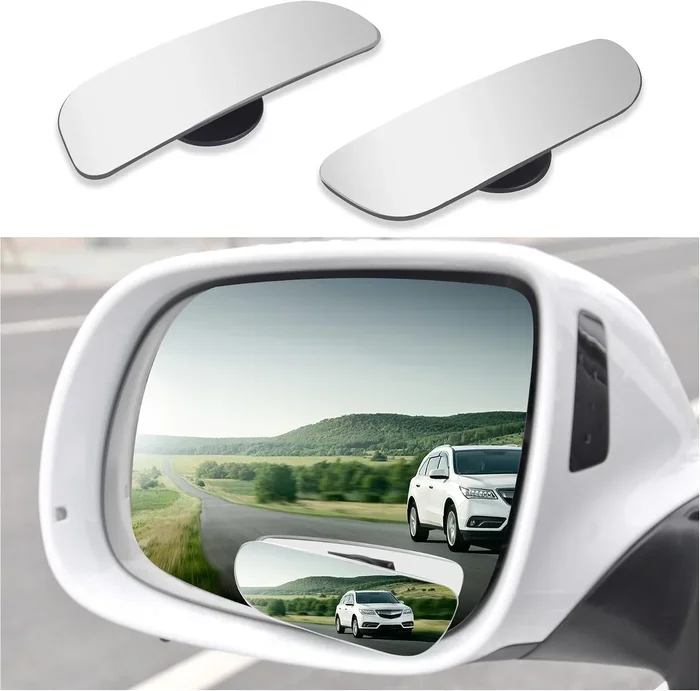
A convex mirror bulges outward. It curves toward you. Think of the back of a spoon. That shape spreads light out. It gives you a wider view. You can see more of the road behind you. The trade-off is that objects look smaller. They also look farther away than they really are. This is why you see the warning “Objects in mirror are closer than they appear” on many convex mirrors.
What Does Concave Mean?
A concave mirror caves inward. It curves away from you. Think of the inside of a bowl. This shape bends light inward. It can make objects look bigger. They also look closer than they are. Concave mirrors are rare in cars. You mostly find them in high-end luxury vehicles or special utility vehicles. They are not used for standard rear visibility.
Convex Mirrors: The Standard Choice for Most Cars
The convex mirror is the most common curved mirror in cars today. Almost every passenger side mirror uses this shape. Many driver side mirrors also use it. Car makers love convex mirrors because they offer a wide field of view. You can see more of the road without moving your head.
A wide-angle mirror is another name for a convex mirror. It shows you a broad view of traffic behind. This is especially helpful when you are changing lanes. You can spot cars in your blind spot faster. The curved surface captures light from a larger area. It reduces the need to turn your head and check over your shoulder.
Why Do Cars Use Convex Mirrors on the Passenger Side?
The passenger side mirror is farther from the driver. A flat mirror there would show a narrow view. You would have to lean forward to see anything. A convex mirror fixes this problem. It gives you a useful view from the driver seat. The curve makes the mirror smaller but wider. This fits nicely on the door without taking up much space.
The Trade-Off: Distortion and Distance
Every convex mirror has a downside. It distorts the size and distance of objects. Cars look smaller in a convex mirror. They also look farther away. This can trick new drivers. They may think a car is far away when it is actually close. That is why the warning label exists. It reminds you to judge distance carefully.
Experienced drivers learn to compensate for this distortion. They use the mirror as a guide, not a perfect ruler. They also check the side mirror and glance over their shoulder. This triple-check method keeps you safe. It works hand in hand with the convex mirror’s wide view.
Concave Mirrors: The Rare Exception and Where You’ll Find Them
A concave mirror is the opposite of a convex mirror. It curves inward like a cave. In cars, you rarely see this shape on the rear view mirror. But you can find it in a few special places. Some luxury cars use concave mirrors in the driver side exterior mirror. Some high-end vehicles use them in the interior rear view mirror. These mirrors make objects look larger and closer.
Why would a car maker choose a concave shape? It comes down to magnification. A concave mirror can make a car behind you look bigger. This helps you judge its speed and distance more accurately. However, the trade-off is a narrower field of view. You see less of the road around you. That is why concave mirrors are not the default choice.
Where Concave Mirrors Appear in Vehicles
You will mostly find concave mirrors in premium sedans and SUVs. Some high-end models use them as standard. Others offer them as an option in the mirror package. You might also see a concave shape in a vehicle’s side mirror on the driver side. But this is not common. Most mass-market cars stick with convex mirrors for the passenger side.
Concave mirrors also appear in some rearview camera systems. The camera lens might use a concave shape to focus light. But that is different from the mirror you look at. The mirror itself in your car is almost always flat or convex.
Concave vs Convex: A Quick Comparison
It helps to see the two shapes side by side. A convex mirror bulges out. A concave mirror caves in. Convex gives a wide view but shrinks objects. Concave gives a narrow view but enlarges objects. For driving, wide view is usually more important. That is why convex mirrors win in most cars.
How to Tell If Your Rear View Mirror Is Convex or Concave
You do not need a tool to figure out your mirror shape. You can tell by looking at it. The rear view mirror convex or concave test is simple. Just check the surface. If it bulges outward like a ball, it is convex. If it caves inward like a bowl, it is concave. Most interior rear view mirrors are flat. They have no curve at all.
The passenger side exterior mirror is almost always convex. You can see the bulge if you look at it from the side. The driver side mirror may be flat or slightly convex. Check the edge of the glass. A curved edge means it is convex. A flat edge means it is a regular flat mirror.
Visual Clues to Look For
- Bulging surface: The glass sticks out toward you. This is convex.
- Curved edge: The frame wraps around a curved glass piece.
- Warning text: If it says “Objects in mirror are closer than they appear,” it is convex.
- Flat glass: No curve at all. This is a flat mirror, not concave.
- Inward curve: The glass sinks in from the edges. This is concave and very rare.
The Label Test
Many convex mirrors have a small sticker or engraving. It says “convex” or “wide angle.” Check the back of the mirror housing. You might also find a symbol that looks like a curved arrow. That symbol means the mirror is convex. If you see no label, just look at the shape. The bulge is your best clue.
The Science of Curved Mirrors and Road Safety
The shape of a mirror changes how light bounces off it. This is basic physics, but you do not need to be a scientist to understand it. A convex mirror spreads light rays outward. That spread gives you a wider view. A concave mirror gathers light rays inward. That gathering makes things look bigger.
In driving, we care about two things: how much you can see, and how far away things look. A wide field of view helps you spot cars, bikes, and pedestrians. But if objects look too small, you cannot tell how fast they are moving. That is why mirror design is a balance. Car makers use math to pick the right curve. They call this curve the focal point. The focal point decides how much the mirror magnifies or shrinks things.
How Curvature Changes What You See
A flat mirror shows true size and true distance. It does not distort anything. That is why the interior rear view mirror is flat. It gives you an honest picture of what is behind you. A convex mirror sacrifices truth for width. It shows you more area, but things look smaller and farther. A concave mirror does the opposite. It shows things bigger and closer, but you lose side view.
For safe driving, you want to know what your mirror is doing. If you know it is convex, you mentally add distance. You think “that car is closer than it looks.” If you know it is flat, you trust the image more. This mental adjustment is a key part of driving safety.
Blind Spots and Mirror Curvature
A blind spot is an area you cannot see in your mirrors. It is a dangerous zone. The right mirror shape can shrink your blind spot. A convex mirror on the passenger side shows you cars that a flat mirror would hide. But it cannot remove the blind spot entirely. No mirror can show you everything. That is why you must also turn your head and check over your shoulder. The mirror helps, but it is not a replacement for a quick glance.
Adjusting Your Rear View Mirror for Maximum Visibility
Knowing your mirror shape is only half the battle. You also need to adjust it correctly. A poorly adjusted mirror hides cars behind you. Even the best convex mirror will not help if it points the wrong way. Take a few minutes to set each mirror the right way.
Adjusting the Interior Mirror
The interior rear view mirror is usually flat. Sit in your normal driving position. Look straight back through the rear window. Adjust the mirror so you can see the entire back window. You should not have to move your head much to use it. The mirror should show you the road behind you clearly. If you see the top of your headrest, move the mirror down.
Adjusting the Driver Side Mirror
The driver side mirror may be flat or slightly convex. Lean your head toward the center console. Adjust the mirror so you can just see the side of your car on the right edge. This gives you a good view of the lane next to you. Do not set it too wide or you will see too much of the lane next to you and not enough of the lane behind.
Adjusting the Passenger Side Mirror
The passenger side mirror is almost always convex. Lean your head toward the window. Adjust the mirror so you can just see the side of your car on the left edge. Because it is convex, you will see a wide view of the lane next to you and the lane behind. Remember that cars in this mirror will look farther away than they are. Always double check before you change lanes.
Quick Tips for Mirror Adjustment
- Adjust mirrors before you start driving. Do it while the car is parked.
- Clean your mirrors regularly. A dirty mirror hides details.
- Use the auto-dimming feature if your car has it. It reduces glare from cars behind you at night.
- Check your blind spot manually. Glance over your shoulder before every lane change.
- Replace cracked mirrors right away. A cracked mirror distorts your view.
Conclusion: Why Mirror Shape Affects Your Safety
The rear view mirror convex or concave shape is a small detail with a big impact. Most cars use a convex mirror on the passenger side. This gives you a wide view of traffic behind you. It helps you spot dangers in your blind spot. A concave mirror is rare and mostly found in luxury cars. It magnifies objects but narrows your view. Knowing the difference helps you drive smarter.
Adjust your mirrors correctly for your mirror type. Trust the convex mirror to show you more area, but remember that distances look off. Use the flat interior mirror for an honest view of what is behind. Add a quick shoulder check to cover any blind spots. These simple habits make you a safer driver. They can prevent accidents and save lives. Take a moment today to check your mirrors. You will be glad you did.
Frequently Asked Questions
Is the rear view mirror in my car convex or concave?
The interior rear view mirror is almost always flat. The passenger side exterior mirror is usually convex. The driver side mirror may be flat or slightly convex. Very few cars use a concave mirror in the rear view position.
Why does my side mirror say “objects are closer than they appear”?
This warning is on convex mirrors. The curve makes objects look smaller and farther away than they really are. It is a safety reminder to judge distance carefully before changing lanes.
Can a concave mirror be used as a rear view mirror?
Yes, but it is rare. Some luxury cars use a concave mirror on the driver side. It magnifies objects and makes them look closer. However, it narrows your field of view, so it is not the standard choice.
How do I know if my mirror is convex just by looking?
Look at the glass surface. If it bulges outward like the back of a spoon, it is convex. If it caves inward, it is concave. Most car mirrors have a slight outward bulge on the passenger side.
What is the best way to reduce blind spots with mirrors?
Use a convex mirror on the passenger side for a wider view. Adjust all mirrors correctly so you see the lanes next to you. Always turn your head and check over your shoulder before changing lanes. This three-step method covers what mirrors miss.
Do all cars have the same mirror shapes?
No. Most cars use a flat interior mirror and a convex passenger side mirror. Some cars use a flat driver side mirror too. Luxury or specialty vehicles may use a concave mirror in certain positions. Always check your own mirrors to be sure.