How to Choose the Best Remote Control Car Receiver
Choosing the right remote control car receiver can make or break your RC experience. This guide covers everything you need to know, from signal range and frequency to compatibility and binding. You will learn how to match your receiver with your transmitter and avoid common buying mistakes.
If you love flying remote control cars around your backyard or tearing up a track, you already know that the remote control car receiver is the unsung hero of your setup. It sits quietly inside your car, listening for signals from your transmitter. Without it, your fancy transmitter is just an expensive paperweight. Yet many RC enthusiasts overlook this small but mighty component when building or upgrading their rigs.
Whether you are a beginner buying your first RC car or a seasoned racer looking to squeeze out every ounce of performance, picking the right remote control car receiver matters a lot. The wrong one means laggy controls, dropped signals, or worse, a car that simply does not respond. This guide walks you through everything you need to know. We will cover how receivers work, what features to look for, and how to avoid the mistakes that trip up so many buyers.
By the end of this article, you will feel confident choosing a remote control car receiver that fits your needs, your budget, and your driving style. Let us dive in.
Key Takeaways
- Match frequency and protocol: Always pair your remote control car receiver with a compatible transmitter for seamless performance.
- Signal range matters: Choose a receiver with a range that fits your driving environment, whether indoor or outdoor.
- 2.4GHz is the standard: Most modern RC systems use 2.4GHz technology for better signal stability and less interference.
- Check compatibility first: Not all receivers work with all transmitters, so always verify before purchasing.
- Antenna design affects performance: A well-designed antenna on your remote control car receiver improves signal strength and response time.
- Latency impacts control: Low-latency receivers provide faster response, which is critical for racing and competitive driving.
- Size and weight count: A compact receiver fits better in smaller RC cars and improves overall balance and handling.
📑 Table of Contents
- What Is a Remote Control Car Receiver and How Does It Work?
- Key Features to Look for in a Remote Control Car Receiver
- Types of Remote Control Car Receivers
- How to Match Your Receiver with Your Transmitter
- Common Mistakes When Choosing a Remote Control Car Receiver
- Expert Tips for Getting the Most Out of Your Receiver
- Comparison Table: Popular Remote Control Car Receiver Types
- Conclusion
What Is a Remote Control Car Receiver and How Does It Work?
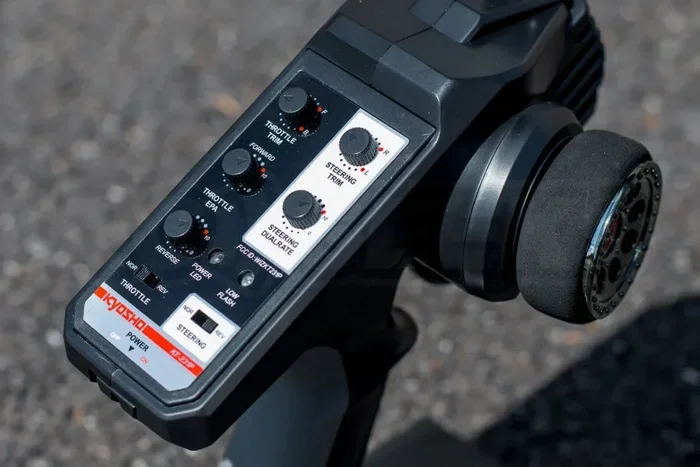
At its core, a remote control car receiver is a small electronic device inside your RC car. It picks up radio signals sent by your transmitter, which is the handheld controller you hold in your hands. The receiver then translates those signals into actions. When you push the throttle stick forward, the receiver sends a command to the motor. When you turn the steering wheel on your transmitter, the receiver tells the servo to turn the wheels.
The process happens in milliseconds. Modern RC car receiver modules work on specific radio frequencies, most commonly 2.4GHz today. Older systems used 27MHz or 49MHz bands, but those are largely outdated for serious hobbyists. The 2.4GHz frequency offers a longer range, better signal stability, and less chance of interference from other RC cars nearby.
The Role of the Antenna
Every remote control car receiver has at least one antenna. This is the thin wire or rod that sticks out from the receiver. The antenna picks up radio waves from your transmitter and passes them to the receiver chip. A longer antenna generally means better range. However, flexible stub antennas have become popular because they are more durable and less likely to snap off during a crash.
If your antenna gets bent or broken, your signal strength drops. This is one of the most common reasons RC drivers experience intermittent control. Always inspect your RC car receiver antenna before a drive session. A quick check can save you from losing control mid-run.
How Signal Transmission Works
Your transmitter sends out a continuous stream of data packets. These packets contain information about throttle position, steering angle, and any other functions you have programmed. The radio control receiver listens for these packets and decodes them in real time. If the signal drops, the receiver typically holds the last command or triggers a failsafe mechanism.
Failsafe is a critical safety feature. It tells the car what to do if the signal is lost completely. Most modern receivers allow you to set a custom failsafe. For example, you can program it to stop the motor and lock the steering when the signal drops. This prevents your RC car from running away uncontrollably.
Key Features to Look for in a Remote Control Car Receiver
Not all receivers are created equal. When shopping for a remote control car receiver, there are several important features to consider. Let us break them down.
Signal Range
The signal range tells you how far away your transmitter can be from the car and still maintain a solid connection. Entry-level receivers might offer 100 to 300 feet of range. Mid-range options can reach 500 to 1,000 feet. High-end racing receivers often boast ranges of 1,500 feet or more.
For casual backyard driving, a shorter range is usually fine. But if you race on large tracks or drive off-road in open fields, you need a receiver with a longer range. Always check the signal range specification before buying. Keep in mind that real-world range is often shorter than advertised due to obstacles like trees, buildings, and hills.
Response Time and Latency
Latency is the tiny delay between you moving the transmitter stick and the car responding. In most casual driving, this delay is barely noticeable. But in competitive racing, even a few milliseconds matter. A low latency receiver gives you instant control feel.
Look for receivers that advertise low-latency or high-speed processing. These are especially important for RC car racing where split-second reactions determine the outcome of a race. If you are serious about competition, do not skimp on receiver quality.
Number of Channels
Channels refer to the number of functions the receiver can control. A basic RC car receiver needs at least two channels: one for throttle and one for steering. But many modern cars have additional functions that require more channels.
These extra functions might include lights, winches, gear shifting, or even camera controls. If you plan to add accessories to your RC car, choose a receiver with extra channels. It is always better to have more channels than you need than to outgrow your receiver later.
Voltage Compatibility
Receivers come with different voltage ratings. Common options include 5V, 6V, and 7.4V. You need to match the receiver voltage to your battery pack. Using a receiver with the wrong voltage can damage both the receiver and other electronics in your car.
Always check the voltage specifications of your remote control car receiver and compare them to your battery. Most modern hobby-grade receivers are designed to handle a range of voltages, but it is still essential to verify before installation.
Build Quality and Size
Receivers come in various sizes. Full-size receivers are easier to wire and install. Micro receivers are perfect for small RC cars where space is tight. The build quality also matters. A well-built receiver can handle vibrations, impacts, and moisture much better than a cheap one.
If you drive in dusty or wet conditions, look for receivers with protective coatings or waterproof ratings. A durable RC receiver will last longer and perform more reliably in tough environments.
Types of Remote Control Car Receivers
The remote control car receiver market offers several types, each with its own strengths. Understanding these types helps you make a smarter buying decision.
PWM Receivers
PWM stands for Pulse Width Modulation. This is the oldest and most common type of RC car receiver. PWM receivers send individual pulses to each servo and speed controller. They are affordable, widely available, and easy to set up.
The downside is that PWM receivers have higher latency and are more prone to interference. For casual driving, they work just fine. But for competitive racing, you will want something faster.
PPM Receivers
PPM stands for Pulse Position Modulation. These receivers combine all servo pulses into a single signal stream. This reduces the number of wires running from the receiver to the servos and speed controllers. PPM receivers are slightly faster than PWM and offer a cleaner wiring setup.
Many mid-range RC systems use PPM technology. They offer a good balance between cost and performance. If you want a step up from basic PWM without spending a fortune, a PPM remote control car receiver is a solid choice.
SBUS Receivers
SBUS is a digital serial bus protocol used by advanced RC systems, particularly in drones and high-end cars. SBUS receivers are fast, lightweight, and offer the lowest latency available. They also support many more channels than PWM or PPM.
The trade-off is cost. SBUS receivers and compatible transmitters tend to be more expensive. They are also more complex to set up. However, if you want the best possible performance from your RC car receiver module, SBUS is the way to go.
CRSF Receivers
CRSF, or Crossfire Serial Protocol, is another digital protocol gaining popularity in the RC world. It offers long-range performance and very low latency. Many racers and serious hobbyists prefer CRSF for its reliability and range.
CRSF receivers work with specific transmitters that support the protocol. Make sure your transmitter and receiver both support CRSF if you go this route. The RC car receiver compatibility is key here.
How to Match Your Receiver with Your Transmitter
This is the most important step in the entire process. A remote control car receiver will not work properly unless it is compatible with your transmitter. Think of them as a matched pair. They need to speak the same “language.”
Check the Protocol
Every RC system uses a specific communication protocol. Common protocols include PWM, PPM, SBUS, CRSF, and FrSky ACCST. Your transmitter and receiver must support the same protocol to communicate. Mixing protocols will result in no signal or erratic behavior.
Before buying a new receiver, check which protocol your transmitter uses. Then find a receiver that supports that exact protocol. This is the number one rule of receiver compatibility.
Brand Matching
In many cases, you need to stick with the same brand for both your transmitter and receiver. For example, a Futaba transmitter works best with a Futaba receiver. A Spektrum transmitter pairs with Spektrum receivers. While some universal receivers exist, brand-matched pairs offer the most reliable performance.
If you are unsure, check the product packaging or the manufacturer’s website. Most brands clearly list compatible receiver models. This takes the guesswork out of the process.
Binding the Receiver to the Transmitter
Once you have a compatible pair, you need to bind them. Binding is the process of pairing the receiver with the transmitter so they can communicate. The process varies by brand and model, but it usually involves plugging a binding plug into a specific port on the receiver and then powering on both devices.
Always follow the binding instructions in the user manual. A properly bound remote control car receiver will give you a strong, stable connection every time. If binding fails, double-check that both devices support the same protocol and frequency.
Common Mistakes When Choosing a Remote Control Car Receiver
Even experienced RC drivers sometimes make mistakes when selecting a receiver. Here are the most common ones to avoid.
Ignoring Compatibility
The biggest mistake is buying a receiver without checking if it works with your transmitter. You might end up with a great receiver that is completely useless with your current setup. Always verify compatibility before making a purchase.
Skipping the Failsafe Feature
Some budget receivers do not include a failsafe feature or have a poorly implemented one. Without failsafe, a lost signal means your car keeps running, which can lead to crashes or lost vehicles. Always choose a receiver with a reliable failsafe mechanism.
Underestimating Range Needs
It is easy to assume that any receiver will work for your driving environment. But if you drive in large open areas, a short-range receiver will leave you frustrated. Always match the receiver range to your typical driving conditions.
Overlooking Size and Weight
A receiver that is too large can be hard to fit inside a small RC car. It can also throw off the car’s weight balance. Always check the receiver dimensions and weight before purchasing. A compact RC receiver module makes installation easier and improves car performance.
Buying the Cheapest Option
Saving a few dollars on a receiver might seem smart, but cheap receivers often have poor signal quality, high latency, and short lifespans. Investing in a quality remote control car receiver pays off in better performance and fewer headaches.
Expert Tips for Getting the Most Out of Your Receiver
Once you have chosen and installed your remote control car receiver, a few simple tips can help you get the best performance from it.
Keep the Antenna Straight
Always keep the receiver antenna straight and extended. A bent or folded antenna significantly reduces signal strength. If your receiver has a stub antenna, make sure it is not buried under tape or squeezed into a tight compartment.
Place the Receiver Properly
Where you place the receiver inside your car matters. Keep it away from the motor and battery, as these components can cause electromagnetic interference. A central location, mounted securely with double-sided tape or a receiver brace, works best for most setups.
Update Firmware When Available
Some advanced receivers allow firmware updates. These updates can improve performance, fix bugs, and add new features. Check the manufacturer’s website periodically for updates. Keeping your RC car receiver firmware current is an easy way to stay ahead.
Protect Your Receiver from Moisture
If you drive in wet or muddy conditions, consider adding a small waterproof pouch or conformal coating to your receiver. Moisture can corrode the circuit board and cause intermittent failures. A little protection goes a long way.
Test Before Every Session
Get in the habit of testing your receiver before every drive session. Walk a few feet away from the car and check that the controls respond smoothly. This quick habit can catch problems early and save you from an unexpected loss of control.
Comparison Table: Popular Remote Control Car Receiver Types
Here is a quick comparison of the main receiver types to help you decide.
- PWM Receivers: Affordable, widely compatible, higher latency, best for beginners.
- PPM Receivers: Mid-range cost, lower latency than PWM, cleaner wiring, good for intermediate users.
- SBUS Receivers: Fastest response, digital protocol, higher cost, best for competitive racers.
- CRSF Receivers: Long range, low latency, premium cost, ideal for serious hobbyists.
Conclusion
Choosing the right remote control car receiver does not have to be overwhelming. By understanding how receivers work, what features matter, and how to match them with your transmitter, you can make a confident and informed decision. Remember to check compatibility first, prioritize signal range and latency for your driving style, and never skip the failsafe feature.
A quality remote control car receiver is a small investment that makes a huge difference in your RC experience. It gives you reliable control, responsive handling, and peace of mind every time you hit the track or the backyard. Take your time, do your research, and pick the receiver that fits your needs. Your RC car will thank you for it.
Now that you have all the knowledge, go out there and find the perfect receiver for your setup. Happy driving!
Frequently Asked Questions
Can I use any remote control car receiver with any transmitter?
No, you cannot. The receiver and transmitter must support the same protocol and frequency to work together. Always check compatibility before purchasing. Mixing incompatible units will result in no signal or unpredictable behavior.
What is the best frequency for a remote control car receiver?
2.4GHz is the current standard and the best choice for most RC enthusiasts. It offers excellent range, strong signal stability, and minimal interference from other RC vehicles nearby. Older frequencies like 27MHz and 49MHz are still available but are mostly used in toy-grade models.
How do I know if my receiver has low latency?
Check the product specifications for latency ratings. Lower numbers mean faster response. SBUS and CRSF receivers typically offer the lowest latency. If you are into competitive racing, look for receivers that specifically advertise low-latency performance.
Can I upgrade the receiver in my existing RC car?
Yes, in most cases you can. Just make sure the new receiver is compatible with your current transmitter. You also need to check that the receiver fits physically inside your car and matches the voltage requirements of your battery pack.
What happens if my remote control car receiver loses signal?
If the receiver loses signal, it will typically hold the last command it received or trigger the failsafe. The failsafe is a safety feature you program beforehand. It tells the car what to do when the signal drops, such as stopping the motor or steering to a neutral position.
Do I need a waterproof remote control car receiver?
It depends on where you drive. If you race in wet or muddy conditions, a waterproof receiver is a smart investment. For indoor or dry outdoor driving, a standard receiver is usually fine. Adding protective coatings or pouches can also help extend the life of any receiver.