Watch Out for These Symptoms of a Bad Engine Air Filter
A bad engine air filter can cause serious problems for your car. You may notice rough idling, poor acceleration, reduced fuel economy, and even a glowing check engine light. Catching these symptoms early helps you avoid costly engine damage and keeps your vehicle running smoothly.
Your engine needs clean air to run well. Just like you need fresh air to breathe, your car’s engine needs a steady flow of clean air to combust fuel properly. When that air gets blocked by dirt and debris, your engine suffers. The symptoms of a bad engine air filter are easy to spot if you know what to look for.
Many drivers ignore their air filter until serious problems appear. This is a big mistake. A dirty air filter can reduce your fuel economy, hurt your engine, and even cause expensive repairs. The good news? You can prevent all of that with a simple air filter change.
So what happens when your engine air filter goes bad? Let’s walk through every symptom, every sign, and every warning your car gives you.
Key Takeaways
- Reduced airflow is the #1 sign: A clogged air filter restricts oxygen flow, hurting engine performance.
- Poor fuel economy often follows: Your engine works harder and burns more gas when the filter is dirty.
- Rough idling and misfires can occur: A bad air filter disrupts the air-fuel mixture, causing engine sputtering.
- Black exhaust smoke is a red flag: This signals a rich fuel mixture caused by restricted airflow.
- Check engine light may turn on: A clogged filter can trigger sensors and warning lights on your dashboard.
- Regular replacement is cheap prevention: Changing your air filter every 12,000 to 15,000 miles saves big repair costs.
- DIY inspection is easy: You can check your air filter at home with no tools in under five minutes.
📑 Table of Contents
- What Does an Engine Air Filter Do?
- Common Symptoms of a Bad Engine Air Filter
- How a Dirty Air Filter Affects Your Engine
- When and How Often to Replace Your Air Filter
- DIY Air Filter Check: What to Look For
- Can a Bad Air Filter Trigger Warning Lights?
- Common Mistakes Drivers Make With Air Filters
- How to Choose the Right Replacement Air Filter
- The Long-Term Cost of Ignoring a Bad Air Filter
- Conclusion
What Does an Engine Air Filter Do?
Before we dive into symptoms, let’s understand the basics. Your engine air filter sits inside a box near the engine. Its job is simple but critical. It traps dirt, dust, pollen, and debris before they enter your engine’s combustion chambers.
Clean air is essential for proper combustion. Your engine mixes air with fuel to create the explosions that power your car. If the air is dirty, those explosions get weaker. Over time, a clogged air filter starves your engine of oxygen. This leads to a long list of problems that every driver should know about.
Most air filters need replacing every 12,000 to 15,000 miles. However, driving in dusty or polluted areas can shorten that interval. Checking your air filter regularly is one of the easiest maintenance tasks you can do at home.
Common Symptoms of a Bad Engine Air Filter
Your car tells you when something is wrong. The key is paying attention. Here are the most common symptoms of a bad engine air filter that every driver should recognize.
1. Reduced Engine Performance
One of the first signs of a dirty air filter is a noticeable drop in engine power. Your car may feel sluggish when you press the gas pedal. You might struggle to climb hills or merge onto highways. This happens because your engine cannot get enough air to burn fuel efficiently.
Reduced airflow means your engine works harder for less result. You may feel like your car is “dragging” or slow to respond. This is especially obvious during acceleration. If your car feels weak or tired, a clogged air filter could be the cause.
2. Poor Fuel Economy
Are you filling up your gas tank more often than usual? A bad engine air filter can wreck your fuel economy. When your engine gets less air, it compensates by using more fuel. This creates a rich fuel mixture that burns through gas fast.
You might not notice small changes at first. But over time, the drop in miles per gallon becomes obvious. If your fuel consumption has spiked without a clear reason, check your air filter. A simple air filter replacement can restore your gas mileage and save you money at the pump.
3. Rough Idling or Engine Misfires
A healthy engine idles smoothly. If your car shakes, vibrates, or sounds rough when stopped, the air filter could be to blame. A dirty filter disrupts the balance of air and fuel in the combustion chamber. This imbalance causes misfires, which feel like small jolts or stumbling.
Rough idling is not just annoying. It can also signal deeper engine problems if left unchecked. If you notice your engine sputtering at a stoplight, inspect your air filter before the problem gets worse.
4. Black or Sooty Exhaust Smoke
This is one of the more alarming symptoms of a bad engine air filter. Black smoke coming from your exhaust pipe means your engine is burning too much fuel and not enough air. A clogged filter restricts oxygen flow, forcing the engine to run rich.
You might also notice a strong fuel smell near your car. Black exhaust smoke is bad for the environment and your engine. If you see it, get your air filter checked right away. Delaying repairs can lead to damaged catalytic converters and other expensive components.
5. Dashboard Warning Lights
Modern cars are packed with sensors. When something goes wrong, your dashboard lights up to warn you. A bad air filter can trigger several warning lights. The most common is the check engine light.
The difference between a check engine light and maintenance required light matters here. A check engine light often signals an actual problem with engine performance. A maintenance required light is more of a general service reminder. If your check engine light comes on, a dirty air filter could be the culprit.
You might wonder if you can reset the check engine light without disconnecting the battery. In some cases, yes. But if the underlying air filter issue is not fixed, the light will come back. Always address the root cause first.
How a Dirty Air Filter Affects Your Engine
A clogged air filter does more than just reduce power. It creates a chain reaction of problems inside your engine. Let’s break down exactly how a dirty air filter hurts your vehicle.
The Air-Fuel Balance Goes Wrong
Your engine needs a precise mix of air and fuel to run well. Engineers call this the air-fuel ratio. The ideal ratio is about 14.7 parts air to 1 part fuel. When your air filter gets clogged, less air enters the engine. The fuel system still delivers the same amount of fuel, so the mixture becomes too rich.
A rich fuel mixture causes several issues. It wastes gas, produces harmful emissions, and leaves carbon deposits on engine parts. Over time, these deposits can damage your spark plugs, oxygen sensors, and catalytic converter.
Engine Components Suffer Over Time
When your engine runs on a rich mixture for too long, damage builds up. Your spark plugs can become fouled and fail to ignite fuel properly. This leads to engine misfires and even engine damage in severe cases.
The oxygen sensor, which monitors exhaust gases, can also get damaged. A failing oxygen sensor sends wrong data to your car’s computer. This makes the problem worse and triggers more warning lights. What starts as a simple air filter change can turn into a costly repair if you ignore it.
Some drivers ask if they can still drive with a bad engine air filter. Technically yes, but you should not. Driving with a clogged filter puts extra strain on your engine. The longer you wait, the worse the damage becomes.
Reduced Horsepower and Acceleration
Your engine needs air to make power. When airflow is restricted, horsepower drops. You may notice your car feels slow, especially when you need quick acceleration. Passing other cars or merging onto fast roads becomes harder and more dangerous.
Studies show that a severely clogged air filter can reduce horsepower by up to 10 percent. That might not sound like much, but you will feel it. Replacing the air filter is a quick fix that restores lost power immediately.
When and How Often to Replace Your Air Filter
Prevention is always better than cure. Knowing when to replace your air filter saves you from all the symptoms listed above. Here is what you need to know about air filter replacement timing.
Most manufacturers recommend changing the engine air filter every 12,000 to 15,000 miles. However, this is just a guideline. Your actual replacement interval depends on several factors.
- Driving conditions: Dusty roads, construction zones, and heavy traffic all dirty out your filter faster.
- Vehicle age: Older cars may need more frequent filter changes.
- Filter type: Standard paper filters need replacing more often than high-performance aftermarket options.
- Climate: Dry, windy areas produce more airborne dust and debris.
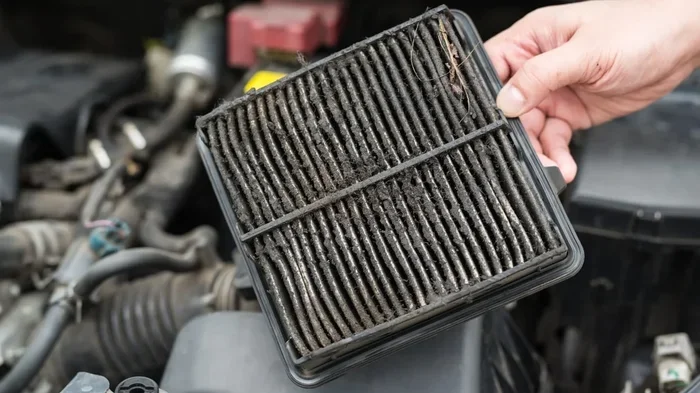
A good rule of thumb is to inspect your air filter every time you get an oil change. If it looks dark gray or black instead of clean white or light gray, it is time for a replacement. An air filter change is one of the cheapest maintenance tasks you can do. Most filters cost between 15 and 30 dollars. You can even do it yourself in your garage.
Not sure how to check it? Open your hood and locate the air filter box. It is usually a black rectangular box near the top of the engine. Unclip or unscrew the lid, pull out the old filter, and hold it up to sunlight. If light cannot pass through easily, replace it.
DIY Air Filter Check: What to Look For
You do not need a mechanic to check your air filter. Anyone can do it at home with no special tools. Here is a simple step-by-step guide to inspecting your engine air filter.
- Turn off your engine and let it cool for a few minutes.
- Open the hood and locate the air filter box. It usually has a large plastic or metal cover.
- Unclip the latches or remove the screws holding the lid in place.
- Pull the old air filter out carefully.
- Hold the filter up to a light source. Look for dirt, debris, and discoloration.
- If the filter is caked with grime or light does not pass through, replace it.
- Put the new filter in the correct orientation and snap the lid back on.
Quick tip: Always keep a spare air filter in your trunk. You never know when you will need it on a road trip or in a dusty area. This small preparation can save you from dealing with rough idling or poor performance on the side of the road.
Some drivers wonder if they can clean a cabin air filter instead of replacing it. That is a different filter and a different topic. The engine air filter is not designed to be cleaned. It should always be replaced when it gets dirty.
Can a Bad Air Filter Trigger Warning Lights?
Yes, a bad engine air filter can absolutely trigger dashboard warning lights. Your car’s computer constantly monitors engine performance. When the air-fuel mixture goes wrong because of a clogged filter, sensors detect the problem and flag it.
The check engine light is the most common warning associated with a bad air filter. However, you might also see the maintenance required light or other engine warning lights depending on your vehicle model.
If a warning light comes on, do not panic. Start with the simplest possible cause. Check your air filter first. If it is dirty, replace it. Then see if the light goes away. Sometimes a quick air filter change solves the problem completely.
Keep in mind that a check engine light can signal many different issues. If replacing the air filter does not clear the light, you may need a diagnostic scan. Visit a trusted mechanic or dealership for further inspection.
Common Mistakes Drivers Make With Air Filters
Even good drivers make mistakes when it comes to air filter maintenance. Here are the most common errors to avoid.
- Ignoring the problem: Many drivers notice symptoms but do nothing. A dirty filter only gets worse over time.
- Waiting too long between changes: Pushing past the recommended mileage interval risks engine damage.
- Using the wrong filter type: Not all air filters fit every car. Always check your owner’s manual for the correct part number.
- Installing the filter backwards: This sounds silly, but it happens. Make sure the airflow direction arrows match your engine’s intake.
- Confusing engine and cabin filters: The engine air filter and cabin air filter are two different parts. They serve different purposes and need separate attention.
Avoiding these mistakes keeps your engine healthy and your car running at its best. A little attention goes a long way when it comes to engine maintenance.
How to Choose the Right Replacement Air Filter
Not all air filters are created equal. When it is time for an air filter replacement, you have options. Here is a quick comparison to help you choose.
| Filter Type | Pros | Cons |
|---|---|---|
| Standard Paper Filter | Affordable, widely available, easy to replace | Needs frequent replacement, not reusable |
| High-Performance Paper Filter | Better filtration, slightly longer life | Costs more than standard filters |
| Reusable Cotton Filter | Washable, long-lasting, eco-friendly | Higher upfront cost, requires cleaning |
| OEM Factory Filter | Designed specifically for your car | May cost more at dealerships |
For most drivers, a standard OEM paper filter is the best choice. It is affordable, effective, and easy to find. If you drive in very dusty conditions, consider a high-performance option that offers better filtration. Whatever you choose, make sure it matches your vehicle’s specifications.
You can buy replacement air filters at most auto parts stores, online retailers, and even some gas stations. The air filter cost is very low compared to the potential engine repairs a dirty filter can cause.
If you ever need to visit a dealership for other issues, you might wonder if you can take a Toyota to any Toyota dealership. The answer is yes. Toyota dealerships service all Toyota vehicles regardless of where you bought them. This applies to air filter replacements and most routine maintenance tasks.
The Long-Term Cost of Ignoring a Bad Air Filter
Some drivers skip air filter changes to save a little money. This is a false economy. The cost of a new air filter is tiny compared to the repairs a neglected filter can cause.
A clogged air filter forces your engine to work harder. Over months and years, this extra strain leads to premature wear on critical components. Spark plugs foul out faster. Oxygen sensors fail. The catalytic converter can clog and fail entirely. Replacing a catalytic converter costs anywhere from 500 to 2,500 dollars. Compare that to the 20-dollar air filter you should have replaced months ago.
The lesson is simple. Stay on top of your air filter changes. It is one of the most cost-effective maintenance habits you can build. Your engine will last longer, perform better, and save you money on gas too.
Regular engine maintenance also includes checking other filters and fluids. If you have ever wondered how many man hours it takes to build a car, you can appreciate how complex modern engines are. Keeping them clean and well-maintained is the best way to protect your investment.
Some drivers also worry about whether a bad battery can cause the wrench light to come on. While that is a separate issue, it shows how many different systems in your car can trigger warning lights. Always start with the simplest explanation when a dashboard light appears.
One more thing to keep in mind. If you ever need to jump start a Toyota hybrid battery, a clean air filter ensures your engine is in the best possible condition to handle that process. Prevention and maintenance go hand in hand.
Conclusion
The symptoms of a bad engine air filter are clear and easy to spot. Reduced performance, poor fuel economy, rough idling, black exhaust smoke, and dashboard warning lights all point to a dirty filter. The good news is that fixing this problem is quick, easy, and incredibly affordable.
Do not wait until a small issue becomes a big repair. Check your air filter regularly and replace it on schedule. Your engine will thank you with better performance, improved fuel economy, and a longer lifespan. Take five minutes today to inspect your air filter. It might be the best maintenance decision you make all year.
Stay proactive with your car care. A clean air filter is the foundation of a healthy engine. Keep your filter fresh, your car running strong, and your driving experience enjoyable. You will feel the difference the moment you hit the road.
Frequently Asked Questions
Can a bad engine air filter cause a check engine light?
Yes, a severely clogged air filter can trigger your check engine light. When the air-fuel mixture becomes too rich due to restricted airflow, oxygen sensors detect the problem and alert your car’s computer. If your check engine light comes on, a dirty air filter is one of the simplest causes to check first.
How often should I replace my engine air filter?
Most manufacturers recommend replacing the engine air filter every 12,000 to 15,000 miles. However, if you drive in dusty or polluted conditions, you may need to replace it more often. A quick visual inspection every oil change can help you stay on track.
Can I clean my engine air filter instead of replacing it?
Engine air filters are not designed to be cleaned like cabin air filters. Paper-based engine filters should always be replaced when they get dirty. Attempting to clean them can damage the filter material and reduce its effectiveness. Always use a new filter for best results.
What happens if I drive with a bad air filter for too long?
Driving with a bad air filter for extended periods can cause engine damage. The rich fuel mixture can foul spark plugs, damage oxygen sensors, and even clog your catalytic converter. These repairs cost hundreds or thousands of dollars. Replacing a dirty air filter early prevents all of this.
Does a dirty air filter affect acceleration?
Yes, a dirty air filter directly affects acceleration. Restricted airflow means your engine cannot burn fuel efficiently. You will notice slower response when pressing the gas pedal, especially at highway speeds or when climbing hills. A fresh air filter restores smooth, responsive acceleration.
What is the air filter cost for a typical car?
A standard engine air filter costs between 15 and 30 dollars at most auto parts stores. If you replace it yourself, the only cost is the filter. If a mechanic does it, you may pay an additional labor fee, but the filter itself remains very affordable. This small investment pays for itself quickly through better fuel economy and engine protection.
=== KEY TAKEAWAYS ===
Key Takeaways
- Reduced airflow is the #1 sign: A clogged air filter restricts oxygen flow, hurting engine performance.
- Poor fuel economy often follows: Your engine works harder and burns more gas when the filter is dirty.
- Rough idling and misfires can occur: A bad air filter disrupts the air-fuel mixture, causing engine sputtering.
- Black exhaust smoke is a red flag: This signals a rich fuel mixture caused by restricted airflow.
- Check engine light may turn on: A clogged filter can trigger sensors and warning lights on your dashboard.
- Regular replacement is cheap prevention: Changing your air filter every 12,000 to 15,000 miles saves big repair costs.
- DIY inspection is easy: You can check your air filter at home with no tools in under five minutes.