What Are the Three Pedals on a Forklift For and Why
Understanding the three pedals on a forklift is essential for anyone operating a lift truck. The right pedal is the accelerator, the middle is the brake, and the left is the inching pedal. These forklift pedals control speed, stopping power, and hydraulic lifting to ensure safe cargo handling.
Have you ever looked at a forklift and wondered what all those controls do? The machine might look simple from the outside, but inside the cabin, there are many levers and pedals that do very different jobs. One of the most important parts of any forklift is the set of three pedals on the floor. These forklift pedals control how the machine moves, how fast it goes, and how it lifts heavy loads. If you do not know what each pedal does, operating the lift truck can be dangerous. That is why we are here today to break it all down for you.
In this guide, we will answer the question of what are the three pedals on a forklift for and why they matter. Whether you are a new warehouse worker or a seasoned operator, understanding these pedal controls is crucial for your safety. We will look at the right pedal, the middle pedal, and the left pedal in great detail. You will learn how each one works and how it helps you handle cargo safely. By the end of this read, you will have a clear picture of forklift operation and the role of each pedal. Let us dive right into the details of these essential forklift pedals.
Forklifts are the backbone of many warehouses and construction sites. They move heavy pallets that humans simply cannot lift on their own. But with great power comes great responsibility. The three pedals on a forklift are your main way of communicating with the machine. They tell the forklift when to go, when to stop, and when to lift the mast assembly. Mastering these industrial equipment controls is the first step to becoming a safe and efficient operator. Without proper knowledge of the pedal controls, even the simplest task can turn into a serious workplace hazard. That is why we will walk you through each pedal one by one.
Key Takeaways
- Three distinct pedals: Each forklift pedal has a specific job for controlling speed, stopping, and lifting.
- Safety first: Knowing how to use the pedals prevents workplace hazards and accidents.
- Inching pedal power: The left pedal controls the hydraulic system for precise lifting.
- Right foot rule: Always use your right foot for the accelerator and brake to maintain control.
- Training matters: Proper forklift training ensures you master these pedal controls safely.
📑 Table of Contents
Understanding the Basics of Forklift Pedals
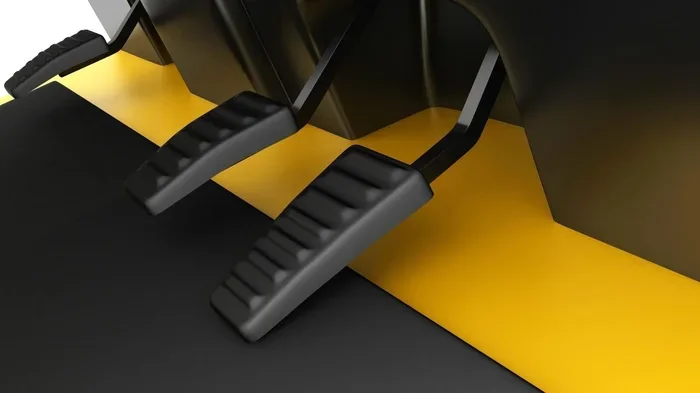
Before we get into the specific functions of each pedal, it helps to understand the overall layout. When you sit in a forklift, you will see three pedals under your feet. They are arranged from left to right in a very specific order. The left pedal is usually the smallest and is often called the inching pedal. The middle pedal is the brake pedal. The right pedal is the accelerator pedal. This layout is very similar to a standard car, but the left pedal has a completely different job. In a regular car, the left pedal is the clutch. In a forklift, the left pedal controls the hydraulic system. This is a key difference that every operator must remember.
Knowing this layout is the first step in forklift safety. You must always wear your seatbelt and keep your hands on the steering wheel. Your feet should rest lightly on the floor when you are not actively using the pedals. Never rest your foot on the brake pedal while driving, as this can wear out the brakes and cause them to overheat. Understanding the difference between the accelerator and the inching pedal is key to smooth forklift operation. The right foot controls the right two pedals, while the left foot is only used for the inching pedal in some models. However, most operators use the right foot for all three pedals to maintain consistent control. This right foot rule is a fundamental part of forklift training.
Why Pedal Layout Matters for Lift Trucks
The layout of the pedals is not random. It is carefully designed to prevent accidental movements and confusion. The accelerator is on the right because it is the pedal you use most often for forward motion. The brake is in the middle so you can easily tap it to slow down without moving your foot too far. The inching pedal on the left allows you to disengage the transmission and control the lift height without changing your speed. This separation of functions makes operating a forklift much safer. It reduces the risk of sudden acceleration or unexpected lifting while you are driving. When you understand why the pedals are placed where they are, you can operate the lift truck with much more confidence and precision.
Another reason the layout matters is ergonomics. Forklift operators spend hours on end sitting in the same seat. If the pedals are too close together or too far apart, it can cause leg strain and fatigue. Manufacturers design the pedal spacing to fit the average human foot size. This allows operators to switch between the accelerator, brake, and inching pedal smoothly. When the pedal controls feel natural under your feet, you can focus more on the task at hand and less on the machine. This leads to better cargo handling and fewer mistakes in the warehouse.
The Right Pedal: The Accelerator
The right pedal on a forklift is the accelerator. This is the pedal you press to make the forklift move forward or backward. It controls the engine speed and determines how fast the lift truck travels. Just like in a car, pressing the accelerator harder makes the forklift go faster. However, forklifts usually have a top speed limit to ensure safety in the warehouse environment. You should always accelerate gently to keep the cargo stable. Sudden pushes on the accelerator can cause the load to shift, which is a major workplace hazard that can lead to tip-overs.
How the Accelerator Controls Speed
When you press the accelerator pedal, you are telling the engine to burn more fuel and increase the revolutions per minute. This power goes to the wheels, moving the forklift forward or backward. The accelerator is essential for navigating through narrow aisles in a warehouse. You need to be able to speed up slightly to merge into traffic or pass other workers. However, you must always be aware of your surroundings. Pedal controls require a gentle touch. Heavy industrial equipment like a forklift can cause serious damage if it accelerates too quickly. Always ease onto the accelerator rather than slamming it down.
There is a common mistake new operators make with the accelerator. They treat it like a car accelerator and press it too hard. Forklifts are much heavier than cars, and their center of gravity is high because of the counterweight at the back. If you accelerate too fast, the forklift can tip over. This is especially true when you are carrying a heavy load on the forks. Always keep your speed low when the mast is raised high. The accelerator pedal should be used with caution and precision at all times. Remember, the goal is to move the cargo safely, not to race across the warehouse floor.
Quick Tips for Accelerator Use
- Start slowly: Always press the accelerator gently when starting from a complete stop.
- Watch the load: If the load is high, reduce your acceleration to prevent tipping hazards.
- Release smoothly: Take your foot off the accelerator slowly to avoid jerky movements.
- Use cruise control wisely: Some newer forklifts have cruise control, but you should still monitor your speed manually.
- Foot placement: Keep your right foot flat on the pedal so you can switch between the accelerator and brake quickly.
The Middle Pedal: The Brake
The middle pedal on a forklift is the brake pedal. This pedal slows the forklift down and brings it to a complete stop. It is arguably the most important pedal for forklift safety. When you lift your foot off the accelerator and press the middle pedal, the forklift’s wheels slow down and eventually stop. The brake system on a forklift is much stronger than in a regular car because the machine is so heavy. You must use the brake pedal to control your speed on downhill slopes and when approaching busy intersections in the warehouse.
Stopping Power and Safety Features
The brake pedal works by engaging the hydraulic brakes at each wheel. When you press down, brake pads clamp onto the rotors, creating friction. This friction stops the wheels from turning. In a forklift, you have the ability to brake with your right foot while the left foot operates the inching pedal if needed. However, most operators just use the right foot for both the accelerator and the brake. This is called the right foot rule. It prevents you from accidentally pressing two pedals at once. The brake pedal also has a parking brake feature that you should engage whenever you leave the forklift unattended. This prevents the lift truck from rolling away.
One of the biggest workplace hazards is failing to brake in time. Forklifts can weigh several thousand pounds when fully loaded with cargo. They cannot stop as quickly as a passenger car. You must always leave enough space between your forklift and the vehicle or person in front of you. The brake pedal requires anticipation. You should start slowing down well before you need to stop. This gives the brakes time to engage properly and prevents the load from sliding forward off the forks. Regular maintenance of the brake pads is also crucial for safe forklift operation. Worn-out brakes can fail when you need them most.
Common Mistakes with the Brake Pedal
Many operators make the mistake of riding the brake. This means keeping their foot lightly on the brake pedal while driving. This causes the brakes to overheat and wear out much faster. It also reduces your fuel efficiency over time. Another mistake is braking too hard at high speeds. This can cause the forklift to skid or the load to fall off the forks. Always apply the brake pedal smoothly and progressively. If you are carrying a very heavy load, you should brake even more gently to keep the cargo from shifting. Remember, the brake pedal is your primary tool for preventing accidents and protecting your coworkers.
The Left Pedal: The Inching Pedal
The left pedal on a forklift is the inching pedal, also known as the lift pedal or hydraulic pedal. This is the pedal that sets forklifts apart from regular cars. The inching pedal does not control the speed of the wheels. Instead, it controls the hydraulic system that raises and lowers the mast assembly. When you press the left pedal down, you are telling the forklift to lift the forks up or tilt the mast backward. This pedal is essential for precise cargo handling and efficient loading and unloading operations in any warehouse.
Hydraulic Control and Precision Lifting
The hydraulic system on a forklift uses pressurized fluid to create incredible lifting power. The inching pedal activates the hydraulic pump, which pushes fluid into the cylinders. This pressure lifts the heavy cargo off the ground with ease. The beauty of the inching pedal is that it allows you to lift the load without changing the speed of the forklift. You can drive forward at a slow speed while simultaneously raising the forks. This is incredibly useful when you are stacking pallets on high shelves. You can position the forklift and adjust the height all at the same time using the pedal controls.
However, the inching pedal must be used carefully. If you raise the forks too high while the forklift is moving, you risk destabilizing the machine. The higher the load, the more likely the forklift is to tip over. Always try to keep the load as low as possible when traveling. Only raise it to the necessary height when you are stationary or moving very slowly. The inching pedal gives you a lot of power, but with that power comes a great responsibility for safety. Always check the tilt function before lifting heavy loads to ensure the mast is perfectly vertical and stable.
Quick Tips for Using the Inching Pedal
- Keep it low: Only raise the forks to the height needed for the specific task at hand.
- Stop before lifting high: Come to a complete stop before raising the load to its maximum height.
- Use gentle pressure: Apply steady pressure to the inching pedal rather than stomping on it.
- Check the tilt: Make sure the mast is vertical before driving with a raised load.
- Practice in an empty area: Get a feel for the hydraulic response before operating in tight spaces.
Comparison of the Three Forklift Pedals
To help you visualize the differences, let us look at a quick comparison of the three pedals. Each pedal has a unique function, location, and impact on forklift safety. Understanding these differences is the core of any good forklift training program. The table below breaks down the right pedal, the middle pedal, and the left pedal so you can easily remember their roles and functions.
| Pedal Location | Pedal Name | Primary Function | System Controlled | Safety Impact |
|---|---|---|---|---|
| Right | Accelerator | Controls forward and backward speed | Engine and drivetrain | Prevents sudden acceleration and load shift |
| Middle | Brake | Slows down and stops the forklift | Wheel brakes | Prevents collisions and runaway loads |
| Left | Inching Pedal | Controls lifting and tilting of the mast | Hydraulic system | Prevents over-raising and tipping hazards |
As you can see from the comparison table, each pedal serves a completely different purpose. The right pedal moves the forklift. The middle pedal stops it. And the left pedal lifts the load. You must never confuse these pedals. Mixing up the accelerator and the inching pedal can lead to serious accidents. For example, if you press the left pedal when you meant to press the right pedal, the forks might suddenly rise while you are still moving. This shifts the center of gravity and can cause the forklift to tip over. Always look down at your feet before pressing a pedal to make sure you are hitting the right one.
Common Mistakes When Using Forklift Pedals
Even experienced operators can make mistakes with their pedal controls. The most common errors happen when operators get lazy or distracted. One of the biggest mistakes is failing to use the right foot for all pedals. Some operators try to use their left foot for the brake and their right foot for the accelerator. This is very dangerous because you might press both pedals at the same time. Always stick to the right foot rule for the accelerator and brake. Reserve your left foot only for the inching pedal if your specific forklift model requires it, though most operators use their right foot for all three pedals for better control.
Another common mistake is ignoring the inching pedal entirely. Some operators just use the accelerator and brake and try to lift the forks using a lever on the steering column. While some forklifts do have levers, the inching pedal is the primary way to control the hydraulic lift. Relying solely on levers can make your lifting jerky and imprecise. This lack of precision can damage the cargo or the forklift itself. You should also avoid resting your foot on the pedal when you are not using it. This habit can cause premature wear on the pedal mechanism and can lead to accidental acceleration if you bump the pedal with your leg while shifting your weight.
Riding the Brake and Other Bad Habits
Riding the brake is a bad habit that can cost you a lot of money in repairs. When you keep your foot on the brake pedal while driving, the brake pads stay engaged with the rotors. This creates constant friction and heat. Over time, this will wear out your brake pads very quickly. It also puts a strain on the engine because the brakes are slightly dragging. You will notice that your forklift uses more fuel than it should. To avoid this, keep your foot off the pedals when you are cruising at a steady speed. Only press the brake pedal when you actually need to slow down or stop. This simple habit can extend the life of your forklift significantly.
You should also avoid racing the engine by pressing the accelerator too hard. Forklifts are not sports cars. They are designed for controlled, steady movements. When you floor the accelerator, you put immense stress on the drivetrain and the tires. This can lead to premature mechanical failure and costly repairs. Furthermore, hard acceleration causes the load to shift backward, which can block your view of where you are going. Always accelerate smoothly and gradually. If you need to move quickly, do so in a safe, open area where there are no pedestrians or fragile inventory. Smooth pedal work is the hallmark of a professional forklift operator.
Expert Insights on Forklift Pedal Operation
We spoke with several experienced forklift instructors to get their best advice on pedal operation. Their number one tip is to always practice in a safe, empty area before tackling a busy warehouse. Get a feel for how the accelerator responds. Notice how much pressure it takes to get the forklift moving from a standstill. Learn how sensitive the brake pedal is and how much distance it takes to bring the machine to a complete stop. Every forklift is a little different, so taking the time to test the pedal controls before you start your shift is a great idea. This pre-operation check can save lives.
Pro Tips for New Operators
Our experts also emphasized the importance of seat position. If your seat is too far forward or too far back, you will not be able to press the pedals comfortably. You should be able to fully press the accelerator, brake, and inching pedal without having to stretch your leg. Your knee should have a slight bend when the pedals are fully depressed. This position gives you the best control and reduces leg fatigue during long shifts. Good posture is essential for safe forklift operation. Adjust your seat before you start the engine every single time.
Another pro tip is to always look in the direction you are traveling. When you are moving in reverse, turn your body and head to look out the back window. Do not rely solely on mirrors. And finally, never underestimate the power of the counterweight. The counterweight at the back of the forklift keeps the machine stable when you are carrying a heavy load. But if you raise the forks too high and accelerate too fast, the counterweight can actually cause the front of the forklift to lift off the ground. This is a very dangerous tip-over hazard that can be fatal. Respect the machine and its pedal controls at all times. The three pedals are your connection to the machine, so treat them with the respect they deserve.
Key Takeaways
Learning what are the three pedals on a forklift for is the foundation of safe forklift operation. The right pedal moves the forklift, the middle pedal stops it, and the left pedal controls the lift. Mastering these pedal controls takes time and practice, but it is essential for every operator. Always remember the right foot rule, avoid common mistakes like riding the brake, and respect the power of the hydraulic system. When you operate your lift truck with care and attention, you protect yourself, your coworkers, and the cargo. Safe forklift operation starts with understanding your pedal controls.
Forklift training should always include a thorough review of the pedal layout. Whether you are operating a counterbalanced forklift or a reach truck, the principles remain the same. Keep your feet positioned correctly, use gentle pressure on the pedals, and never mix up the accelerator with the inching pedal. By following these guidelines, you will become a confident and competent forklift operator. The three pedals are your connection to the machine, so treat them with the respect they deserve. Happy and safe lifting!
Frequently Asked Questions
What are the three pedals on a forklift for?
The three pedals control the forklift’s movement and lifting. The right pedal is the accelerator, the middle is the brake, and the left is the inching pedal for the hydraulic lift.
Which pedal is the inching pedal on a forklift?
The left pedal is the inching pedal. It controls the hydraulic system that raises and lowers the forks, allowing for precise cargo handling without changing the forklift’s speed.
Why is the right foot rule important for forklift pedals?
Using your right foot for the accelerator and brake prevents you from accidentally pressing two pedals at once. It ensures you always have full control over the forklift’s speed and stopping power.
What happens if you press the inching pedal while driving?
Pressing the inching pedal activates the hydraulic lift. If you do this while moving at high speeds, the load can shift and destabilize the forklift, creating a serious tip-over hazard.
How do you maintain forklift pedals?
Inspect the pedals daily for looseness or sticking. Keep them clean to prevent slipping, and replace worn pedal pads immediately. Report any broken components to the maintenance team right away.
Is the left pedal on a forklift a clutch?
No, the left pedal on most modern forklifts is the inching pedal, not a clutch. It controls the hydraulic lift, whereas a clutch disengages the engine from the wheels in a manual car.