Why Wont My Toyota Start Common Reasons and Fixes
Your Toyota won’t start for several common reasons, including a dead battery, faulty starter motor, fuel system problems, or key fob issues. This guide walks you through each cause with clear fixes you can try at home. Learning these troubleshooting steps saves time and money before you visit a mechanic.
There’s nothing more frustrating than turning the key or pressing the start button and hearing nothing. Your Toyota won’t start, and you’re left standing in the driveway wondering what went wrong. This happens to Toyota owners more often than you might think.
The good news? Most starting problems have simple explanations. You don’t need to be a mechanic to figure out what’s going on. In this guide, we’ll walk through every common reason your Toyota won’t start. We’ll also give you practical fixes you can try right now.
Whether you drive a Camry, Corolla, RAV4, or Tacoma, this article covers it all. Let’s get into it and get your Toyota running again.
Key Takeaways
- Dead Battery: The #1 reason Toyota won’t start. A simple jump-start or battery replacement often solves it.
- Faulty Starter Motor: Listen for a clicking sound. A worn starter needs professional replacement.
- Fuel System Issues: Empty tank, clogged filter, or failing fuel pump can all prevent startup.
- Key Fob Problems: A low battery in your key fob can stop a push-button start Toyota cold.
- Corrosion and Wiring: Dirty terminals and frayed cables interrupt power flow to the engine.
- Immobilizer and Security System: Toyota’s anti-theft system can block starting if it doesn’t recognize your key.
- Cold Weather: Low temperatures thicken oil and weaken batteries, making winter starts difficult.
📑 Table of Contents
Why Your Toyota Won’t Start: The Big Picture
When your Toyota won’t start, the problem usually falls into one of five categories. These are electrical, fuel, ignition, security, or mechanical. Each category has its own set of symptoms.
Understanding these categories helps you narrow down the cause fast. Instead of guessing, you can focus on the right area. Think of it like a detective game. You look for clues. The sound your car makes, the dashboard lights, and the weather all tell a story.
Before you panic, take a deep breath. Most starting issues are not expensive to fix. Many are things you can handle yourself in under ten minutes. Let’s break down each reason one by one.
Dead or Weak Battery
The number one reason a Toyota won’t start is a dead battery. Your battery powers everything. The lights, the radio, the ignition system. Without it, nothing happens.
Batteries don’t last forever. Most Toyota batteries last between three and five years. But cold weather, short trips, and leaving lights on can shorten that life fast.
Signs Your Battery Is the Problem
- The dashboard lights are dim or don’t come on at all.
- You hear a rapid clicking sound when you turn the key.
- The engine cranks very slowly or not at all.
- Your Toyota won’t start but has power (electronics work fine).
If you notice these signs, your battery is likely the culprit. You can test it with a multimeter. A healthy battery reads 12.6 volts or higher. Anything below 12.0 volts means it’s time for a recharge or replacement.
How to Fix a Dead Battery
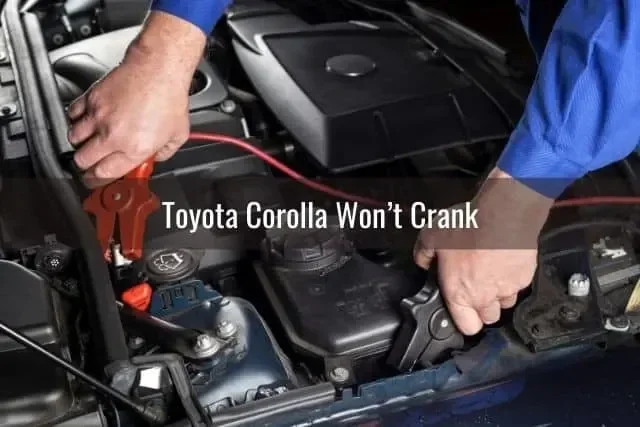
First, try a jump-start. Use jumper cables and another vehicle. Connect the red cable to the positive terminal on both batteries. Then connect the black cable to the negative terminal on the good battery and a metal ground on your Toyota.
Let the working vehicle run for a few minutes before trying to start your Toyota. Once it starts, drive for at least 15 minutes to recharge the battery.
If the battery keeps dying, it may need replacement. You can also check for corrosion on battery terminals. White or greenish buildup means your terminals need cleaning. A wire brush and a baking soda solution do the trick nicely.
Need more help with battery-related starting issues? Check out our article on My Car Won’t Start But Has Power for more troubleshooting tips.
Starter Motor Problems
The starter motor is what cranks your engine. When you turn the key or press the button, the starter engages and spins the engine. If it fails, your Toyota won’t start no matter how hard you try.
How to Spot a Bad Starter
- You hear a single loud click but the engine doesn’t turn over.
- The starter makes a grinding noise when you try to start.
- Your Toyota starts sometimes and sometimes it doesn’t (intermittent failure).
Intermittent starter failure is tricky. It often means the internal brushes are worn down. They work sometimes but not consistently. This is a clear sign the starter needs replacing.
Starter motors on Toyota vehicles typically last 100,000 miles or more. But heat, moisture, and electrical issues can wear them out faster. Replacement costs usually run between $300 and $500 for parts and labor.
If you suspect a starter problem, don’t keep trying to start the car. Repeated attempts can drain the battery further and damage the flywheel.
Fuel System Failures
Your Toyota needs fuel to run. If the fuel system isn’t delivering gas to the engine, it simply won’t start. This seems obvious, but people forget to check the basics.
Common Fuel System Issues
- Empty Tank: It sounds silly, but this happens all the time. The gauge can be inaccurate, especially in older Toyotas.
- Clogged Fuel Filter: A dirty filter restricts fuel flow. Toyota recommends replacing the filter every 30,000 to 40,000 miles.
- Failing Fuel Pump: The pump sits inside the tank and pushes fuel to the engine. When it dies, you get no fuel delivery.
- Dirty Fuel Injectors: Clogged injectors spray fuel unevenly, making startup hard.
A failing fuel pump often gives warning signs before it completely dies. You might notice your Toyota sputtering at high speeds or losing power under load. Some Toyotas also hesitate or stall at stoplights.
If you turn the key and the engine cranks but won’t fire up, the fuel system is a likely suspect. Have someone listen near the rear seat for a brief hum when you turn the key to the ON position. No hum means the fuel pump isn’t working.
Key Fob and Immobilizer Issues
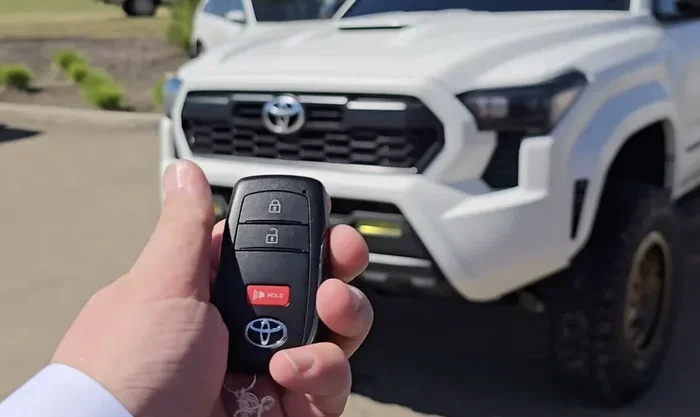
Modern Toyotas use smart key systems and push-button start. These systems rely on your key fob communicating with the car. When something goes wrong, your Toyota won’t start even with a full battery and plenty of fuel.
Low Key Fob Battery
The most common key fob problem is a weak battery. The fob can’t send a strong enough signal to the car’s computer. You might notice you need to press the button harder or hold it closer to the start button.
Replacing the fob battery is easy. Most Toyota key fobs use a CR2032 coin cell battery. Open the fob with a small flathead screwdriver, swap the battery, and you’re good to go.
For more details on identifying low key fob battery symptoms, read our guide on How Do I Know If My Key Battery Is Low.
Immobilizer System Malfunction
Toyota’s immobilizer is an anti-theft feature. It prevents the engine from starting unless it recognizes your specific key. If the system malfunctions, it can block startup even with the correct key.
This often happens after a battery change in the car or the key fob. The system needs to relearn the key’s signature. Try these steps:
- Insert the physical key (if your Toyota has one) and turn it to the ON position.
- Wait 10 seconds without touching the start button.
- Press the start button to attempt ignition.
If the immobilizer light stays on the dashboard, you may need a dealer to reprogram the system.
Electrical and Wiring Problems
Your Toyota has a complex network of wires and relays. Any break in that chain can prevent starting. Electrical problems can be frustrating because the symptoms often seem random.
Corroded or Loose Connections
Battery terminals aren’t the only connections that corrode. Ground wires and starter connections can also develop buildup over time. This creates resistance that blocks electrical flow.
Pop the hood and look at the battery terminals. If you see white, blue, or greenish crust, clean it off. A mixture of baking soda and water with an old toothbrush works great. Apply a thin layer of petroleum jelly after cleaning to prevent future corrosion.
Blown Fuses and Bad Relays
Your Toyota has fuse boxes under the hood and inside the cabin. A blown fuse in the starter circuit can stop your car from starting. Check the owner’s manual for the fuse box layout and which fuse controls the starter.
Relays act as switches for high-current circuits. A bad starter relay means the electrical signal never reaches the starter motor. Swapping the relay with an identical one is a quick and cheap fix.
Cold Weather and Starting Problems
Cold weather is tough on Toyotas. Low temperatures affect both the battery and the engine oil. In freezing conditions, your Toyota may struggle to start or refuse to start altogether.
Why Cold Weather Causes Starting Issues
- Thickened Oil: Cold oil moves slowly and puts extra strain on the starter motor.
- Weakened Battery: Chemical reactions inside the battery slow down in cold weather. A fully charged battery at 32°F has 35% less starting power.
- Fuel Line Issues: Moisture in fuel lines can freeze, blocking fuel delivery.
You can prevent many cold-weather starting problems with simple habits. Park in a garage when possible. Use a battery blanket or trickle charger during winter. Switch to a thinner viscosity oil if you live in a cold climate.
If your Toyota has a hybrid battery, you might wonder if jump-starting is safe. The answer is yes, but with precautions. Learn more in our article on Is It Okay to Jump Start a Hybrid Car.
When to See a Professional
Not every starting problem is a DIY fix. Some issues require professional tools and expertise. Here are signs you should take your Toyota to a mechanic or dealership.
- The engine cranks normally but won’t fire up after checking fuel and battery.
- You smell gasoline near the engine or under the car.
- The check engine light is flashing along with a no-start condition.
- Your Toyota starts sometimes and sometimes it doesn’t, even after troubleshooting.
Intermittent starting problems are especially hard to diagnose at home. A mechanic can use an OBD-II scanner to read error codes. These codes point directly to the failing component.
Also, if your Toyota is still under warranty, don’t attempt major repairs yourself. Visit a Toyota dealership to avoid voiding your coverage. You can use Toyota Care at any authorized dealership for routine maintenance and diagnostics.
Quick Tips to Prevent Starting Problems
Prevention is always easier than repair. Here are simple habits that keep your Toyota starting reliably for years to come.
- Drive your Toyota regularly. Short trips don’t fully recharge the battery. Take longer drives when possible.
- Turn off all electronics before shutting off the engine. Lights, radio, and USB chargers draw power even when the car is off.
- Replace your battery every 3 to 4 years. Don’t wait for it to die completely.
- Keep your key fob battery fresh. Replace it once a year or when you notice weak signal strength.
- Check for dashboard warning lights. The service light, battery light, and check engine light all provide early warnings.
- Use the right oil grade for your climate. Check your owner’s manual for the recommended viscosity.
These small habits add up to big savings. You avoid the stress of a no-start situation and extend the life of your Toyota.
Final Thoughts
A Toyota that won’t start can ruin your morning. But most of the time, the cause is something simple. A dead battery, a weak key fob, or a clogged fuel filter. You can fix many of these problems yourself with basic tools and a little patience.
Start with the battery. It’s the most common cause and the easiest to check. Then move through the fuel system, starter motor, and electrical connections. If none of that works, don’t hesitate to call a professional.
Keep this guide bookmarked for future reference. Share it with a friend who might need it. And remember, staying calm and systematic is the best approach when your Toyota won’t start. You’ve got this.
Frequently Asked Questions
Why does my Toyota start sometimes but not other times?
Intermittent starting usually points to a weak battery, failing starter motor, or corroded connections. The problem often gets worse in cold weather or after short trips. Have your battery and starter tested at an auto parts store for free.
Can a dead key fob battery prevent my Toyota from starting?
Yes, absolutely. Modern Toyotas with push-button start rely on the key fob’s signal. A low fob battery means the car can’t detect the key. Replace the CR2032 battery in your fob and try again.
Is it safe to jump-start a Toyota hybrid?
Yes, it is safe with proper precautions. Use the designated jump-start terminal under the hood, not the hybrid battery. Follow the owner’s manual instructions carefully to avoid damaging the electrical system.
How do I know if my Toyota’s fuel pump is bad?
Listen for a brief hum near the rear seats when you turn the key to ON. No sound suggests a dead fuel pump. Other signs include sputtering at highway speeds and loss of power under heavy load.
What should I do if my Toyota cranks but won’t start?
Check that you have fuel and a strong battery first. Then inspect the spark plugs and fuel injectors. If everything looks fine, the problem may be in the immobilizer or ignition system. A mechanic with a diagnostic scanner can pinpoint the exact cause.
Can cold weather really stop my Toyota from starting?
Yes, cold weather significantly impacts starting ability. Thickened oil and weakened battery power make it harder for the engine to turn over. Keeping your battery healthy and using the right oil grade prevents most cold-weather starting issues.