Can a Tesla Jump Another Car and Boost Other Vehicles
Can a Tesla jump another car? Yes, a Tesla can boost other vehicles using its 12V auxiliary battery or a portable power station. This guide covers Tesla jump start methods for every model, safety tips, and step-by-step instructions. You will learn exactly how to use your Tesla as a car battery booster in an emergency.
Have you ever been stranded on the side of the road with a dead battery? It is one of those moments that makes you wish you had a backup plan. Many Tesla owners wonder if their electric vehicle can serve as a car battery booster for another car. The short answer is yes. A Tesla can jump start another car, but there are important details you need to know first.
In this guide, we will walk you through everything about using a Tesla to boost other vehicles. We will cover which Tesla models can do it, the step-by-step process, safety warnings, and alternative options. Whether you drive a Tesla Model 3, Model Y, Model S, or Model X, this article has you covered.
Key Takeaways
- Tesla Can Jump Start Other Cars: Using the 12V battery or a DC inverter, a Tesla can provide enough power to boost a dead car battery.
- Not All Models Are Equal: Tesla Model 3 and Model Y have different 12V systems compared to Model S and Model X, affecting jump-start capability.
- Safety Comes First: Always follow proper jump-start procedures to avoid damaging the Tesla or the other vehicle.
- Portable Power Stations Work Too: A Tesla-compatible portable jump starter is a reliable backup for roadside emergencies.
- Know Your Limits: A Tesla cannot replace a dedicated car jump starter for every situation, especially for large trucks or SUVs.
- Keep a 12V Booster Handy: Storing a small portable booster in your Tesla frunk or trunk is a smart preventive measure.
📑 Table of Contents
- Can a Tesla Jump Another Car? The Short Answer
- How to Jump Start Another Car Using a Tesla
- Safety Tips for Jump Starting with a Tesla
- Using a Portable Power Station to Boost Other Cars
- What Vehicles Can a Tesla Jump Start?
- Can You Use a Tesla to Jump Start Another Tesla?
- Limitations of Using a Tesla as a Jump Starter
- Alternative Ways to Boost Other Vehicles
- Final Thoughts on Using a Tesla to Jump Start Other Cars
Can a Tesla Jump Another Car? The Short Answer
Can a Tesla jump another car? Yes, it can. But the method depends on the Tesla model and the type of vehicle you are trying to boost. A Tesla has two battery systems: a high-voltage traction battery that powers the electric motor, and a smaller 12V auxiliary battery that runs the lights, computer, and accessories. It is the 12V battery that can help jump start another car.
Most modern Teslas come with a 12V outlet or a set of jump-start terminals located in the front trunk, also known as the frunk. These terminals can connect to jumper cables and provide enough power to crank a traditional gasoline or diesel engine. However, there are limits. A Tesla cannot jump start a large truck or a severely depleted battery in every situation.
Let us break this down further so you understand exactly what is possible and what is not.
Why Teslas Can Jump Start Other Vehicles
The 12V battery in a Tesla is similar to the battery in any conventional car. It provides the initial power needed to start the engine. When you use a Tesla to boost another car, you are essentially using this 12V battery as a portable jump starter. The high-voltage battery pack keeps the 12V system charged, so as long as your Tesla has some charge, it can serve as a booster.
This feature is incredibly useful in emergencies. Imagine your friend’s car won’t start in a parking lot. Instead of calling roadside assistance, you can simply plug in a set of jumper cables and give them a boost. It is a great reason to keep jumper cables in your Tesla at all times.
How to Jump Start Another Car Using a Tesla
If you find yourself in a situation where you need to boost another vehicle, follow these steps carefully. Safety is the top priority, and doing it wrong can damage both cars.
Step-by-Step Jump-Start Process
Here is a simple guide to jump starting another car with your Tesla:
- Park both cars close together. Make sure they are not touching. Turn off the engines and all electronics in both vehicles.
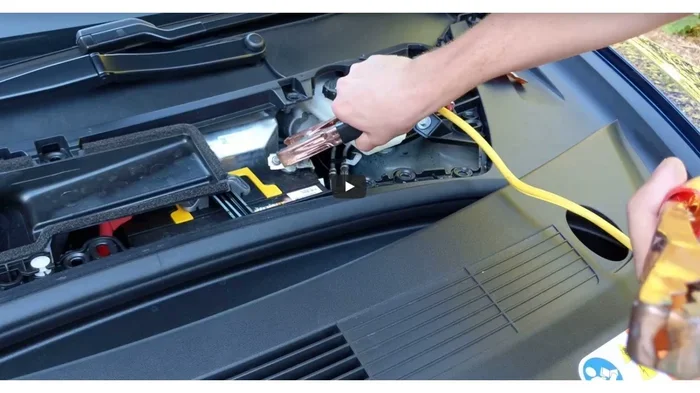
- Open the frunk of your Tesla. The 12V jump-start terminals are usually located near the front of the frunk, on the driver’s side.
- Connect the red jumper cable to the positive terminal on the Tesla. Then connect the other red clamp to the positive terminal of the dead car battery.
- Connect the black jumper cable to the negative terminal on the Tesla. Attach the other black clamp to an unpainted metal surface on the dead car, away from the battery.
- Start the Tesla. Let it idle for a few minutes to build up charge in the dead battery.
- Try starting the dead car. If it starts, let both cars run for a few minutes before disconnecting the cables.
- Disconnect the cables in reverse order. Remove the black clamps first, then the red ones.
That is it. It is a straightforward process, but you must follow the order exactly. Connecting cables in the wrong order can cause sparks or damage the electrical systems.
Which Tesla Models Support Jump Starting?
Most Tesla models from 2012 onward come equipped with 12V jump-start terminals. Here is a quick look at what each model offers:
- Tesla Model S: Features 12V terminals in the front trunk area. Reliable for jump starting most passenger vehicles.
- Tesla Model X: Similar setup to the Model S. The frunk houses the terminals and a 12V outlet.
- Tesla Model 3: Compact but capable. The 12V terminals are accessible and work well for standard cars and SUVs.
- Tesla Model Y: Nearly identical to the Model 3 in terms of 12V jump-start capability. Works great as a roadside booster.
All of these models can serve as a Tesla jump start source for other vehicles. The key is making sure your Tesla’s 12V battery is charged. If your Tesla itself has a low 12V charge, it may not have enough power to help another car.
Safety Tips for Jump Starting with a Tesla
Jump starting a car is generally safe, but it does come with risks. Here are some important safety tips every Tesla owner should know.
Common Mistakes to Avoid
- Never connect cables in the wrong order. This is the most common mistake and can fry the electrical systems of both cars.
- Do not jump start a Tesla with another car. While you can use a Tesla to boost other cars, you should never use a gasoline car to jump start a Tesla. The voltage regulator in a gas car can damage the Tesla’s electronics.
- Check the battery condition first. If the dead car’s battery is cracked or leaking, do not attempt a jump start. It could be dangerous.
- Keep the Tesla in park or neutral. Never attempt a jump start with the Tesla in drive.
- Wear safety gloves and goggles. Batteries produce hydrogen gas, which is flammable. Sparks near the battery can be hazardous.
Quick Safety Tips
- Always read the owner’s manual for your specific Tesla model before attempting a jump start.
- Keep jumper cables in your Tesla at all times. A good set of heavy-gauge cables makes the process much easier.
- If the dead car does not start after two attempts, stop and call for professional help.
- Make sure both cars are on a flat surface and the parking brakes are engaged.
Using a Portable Power Station to Boost Other Cars
Not everyone wants to rely solely on the Tesla’s 12V battery. A great alternative is using a portable power station or a DC power inverter with your Tesla. These devices plug into the Tesla’s charging port and convert the high-voltage battery power into usable 12V or 110V AC output.
Best Portable Options for Tesla Owners
Here are some popular options that work well with Tesla vehicles:
- Portable Jump Starters: Compact devices like the NOCO Boost Plus or TACKLIFE jump starters can be stored in the Tesla trunk or frunk. They are lightweight and powerful enough to boost most cars.
- DC Power Inverters: These plug into the Tesla charging port and convert the battery power to 12V DC output. You can connect jumper cables directly to the inverter.
- Portable Power Stations: Larger units like the EcoFlow Delta or Jackery Explorer can be charged from the Tesla and then used to boost other vehicles. They also double as a backup power source for camping or emergencies.
Using a portable power station is a great way to expand your Tesla’s capability as a roadside helper. It gives you more flexibility and power than relying solely on the 12V auxiliary battery.
What Vehicles Can a Tesla Jump Start?
A Tesla can jump start most standard passenger cars and SUVs. However, there are some limitations you should be aware of.
- Gasoline and diesel cars: These are the most common vehicles you can boost with a Tesla. The 12V output is sufficient for most engines.
- Hybrid vehicles: Teslas can also jump start hybrid cars, but you should check the hybrid battery status first.
- Motorcycles: Smaller vehicles like motorcycles require less power, so a Tesla can easily boost them.
- Large trucks and SUVs: These vehicles have much bigger engines and may require more power than a Tesla’s 12V system can provide. It is possible but not guaranteed.
- Diesel trucks: Diesel engines often need a strong initial crank. A Tesla may struggle with large diesel pickups like the Ford F-250 or RAM 2500.
The general rule is that a Tesla works best for boosting standard-sized cars and light SUVs. For larger vehicles, a dedicated jump starter is a better option.
Can You Use a Tesla to Jump Start Another Tesla?
Yes, you can use one Tesla to jump start another Tesla. Tesla vehicles use a 12V auxiliary battery just like conventional cars, and it can drain over time, especially if the car sits unused for a long period. If your Tesla won’t start because of a dead 12V battery, another Tesla can help.
The process is the same as jump starting a gas car. Connect the jumper cables to the 12V terminals and let the working Tesla charge the dead one for a few minutes. Once the dead Tesla has enough charge, you can start it and let it charge the 12V battery further.
This is a surprisingly common situation. Many Tesla owners have experienced a dead 12V battery after leaving lights on or after the car sits for weeks. Having another Tesla or a portable booster nearby can save the day.
Limitations of Using a Tesla as a Jump Starter
While a Tesla is a useful tool for boosting other cars, it is not a replacement for a dedicated jump starter. Here are some limitations to keep in mind.
When a Tesla May Not Work
- Very cold weather: Extreme cold reduces battery performance. A Tesla’s 12V system may not provide enough power in freezing temperatures.
- Completely dead battery: If the other car’s battery is completely drained and has been sitting for days, it may need more charge than a Tesla can provide in a single attempt.
- Large engines: As mentioned earlier, big diesel engines or V8 trucks may require more cranking power than a Tesla’s 12V system can deliver.
- Low Tesla charge: If your Tesla’s 12V battery is also low, it will not have enough reserve to help another car.
Expert Tips for Better Results
- Make sure your Tesla is at least 20% charged before attempting a jump start.
- Let the Tesla charge the dead battery for at least 5 to 10 minutes before trying to start the other car.
- Keep the Tesla engine off during the connection process to avoid electrical surges.
- Invest in a good set of heavy-duty jumper cables rated for at least 400 amps.
Alternative Ways to Boost Other Vehicles
If you do not want to use your Tesla to jump start another car, there are other options available. These alternatives can be just as effective, if not more so.
Roadside Assistance Services
Most Tesla owners have access to roadside assistance through Tesla’s service plan or their insurance provider. If you are ever stranded, calling for professional help is always a safe option. Tesla’s built-in navigation can connect you directly to roadside service with just a few taps on the screen.
Dedicated Portable Jump Starters
A dedicated portable jump starter is a compact device designed specifically for boosting cars. They are small enough to fit in the Tesla frunk and provide more power than the 12V auxiliary battery. Brands like NOCO, TACKLIFE, and DBPOWER make reliable units that work with all car types.
Jump Start Cables and Power Banks
Some companies make jump start power banks that double as portable chargers for phones and laptops. These are a great all-in-one solution for Tesla owners who want to be prepared for any roadside situation.
Final Thoughts on Using a Tesla to Jump Start Other Cars
Can a Tesla jump another car? Absolutely. A Tesla is a versatile vehicle that can serve as a reliable car battery booster in an emergency. Whether you use the built-in 12V terminals or a portable power station, you have the tools to help another driver when they need it most.
That said, it is important to understand the limitations and follow proper safety procedures. A Tesla is not a replacement for a dedicated jump starter in every situation, but it is a powerful backup that can get you and others back on the road.
Keep jumper cables, a portable booster, or a DC power inverter in your Tesla at all times. These small investments can make a huge difference when you least expect it. Being prepared is the best way to handle any roadside emergency with confidence.
So the next time someone asks you, “Can a Tesla jump another car?” you will know exactly what to say. Share this guide with your fellow Tesla owners and help them stay prepared for the unexpected.
Frequently Asked Questions
Can a Tesla Model 3 jump start another car?
Yes, a Tesla Model 3 can jump start another car using its 12V auxiliary battery and the jump-start terminals in the frunk. Simply connect jumper cables to the terminals and follow the proper steps to boost the other vehicle’s battery safely.
Can you use a Tesla to jump start a gas car?
Yes, you can use a Tesla to jump start a gas car. The Tesla’s 12V battery provides enough power to crank a gasoline engine. Just make sure to follow the correct cable connection order and safety guidelines to avoid any damage.
Is it safe to jump start a Tesla with another Tesla?
Yes, it is safe to jump start a Tesla with another Tesla. Both vehicles use a 12V auxiliary system, and the process is the same as boosting any other car. This is a common solution when a Tesla’s 12V battery dies after sitting unused.
Can a Tesla jump start a diesel truck?
A Tesla can attempt to jump start a diesel truck, but it may not have enough power for larger diesel engines. Diesel engines require more cranking power, so a dedicated jump starter is recommended for trucks and large vehicles.
Where are the jump-start terminals on a Tesla?
The jump-start terminals on most Tesla models are located in the front trunk, or frunk. Look for the positive and negative terminals near the driver’s side of the frunk. Refer to your owner’s manual for the exact location on your specific model.
Do I need special equipment to jump start another car with a Tesla?
You need a good set of jumper cables rated for at least 400 amps. Some Tesla owners also carry a DC power inverter or a portable jump starter for added flexibility. These tools make the process easier and safer in any situation.
=== CONCLUSION ===
Can a Tesla jump another car? Yes, and it is one of the most underrated features of owning an electric vehicle. A Tesla can boost other cars, help fellow drivers in emergencies, and even jump start another Tesla when needed. The 12V auxiliary battery, combined with the right tools like jumper cables or a portable power station, makes your Tesla a valuable roadside companion.
Remember to always follow safety procedures, know your model’s capabilities, and keep the right equipment on hand. A little preparation goes a long way in making sure you are ready for anything the road throws at you. Stay safe, stay prepared, and let your Tesla do more than just drive.