How Much Weight Can a Toyota Tundra Pull Full Guide
The Toyota Tundra can pull between 8,100 and 10,200 pounds depending on the year, trim, and engine. Understanding your truck’s towing capacity is essential for safe hauling. This guide covers every Tundra generation and helps you choose the right setup for your towing needs.
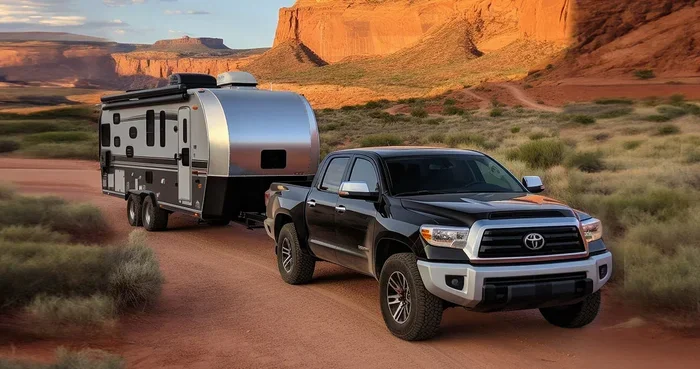
If you own a Toyota Tundra or are thinking about buying one, the big question is always the same. How much weight can a Toyota Tundra pull? The answer depends on the year, the trim level, and the engine option you choose. But here is the quick version. Your Tundra can handle towing between 8,100 and 10,200 pounds when properly equipped.
That range covers a lot of ground. It means you can pull a large travel trailer, a boat, or even a small fifth wheel with confidence. But knowing the number is only half the battle. You also need to understand what affects towing capacity and how to set up your truck the right way. This guide walks you through everything you need to know about Toyota Tundra towing in plain, simple terms.
We will cover every major Tundra generation, compare it to other popular trucks like the Ford F150 2.7 Ecoboost, and give you practical tips to get the most out of your truck. Let us dive in.
Key Takeaways
- Towing Range: The Toyota Tundra can tow anywhere from 8,100 to 10,200 pounds depending on the model year and configuration.
- Engine Matters: The 5.7L V8 delivers the highest towing numbers, while the i-FORCE MAX twin-turbo V6 offers strong modern performance.
- Trim Differences: Higher trims like the 1794 and Platinum come with enhanced towing packages that boost capability.
- Payload vs. Towing: Towing capacity and payload capacity are different — both matter for safe hauling.
- Proper Setup: Using the right hitch, brake controller, and weight distribution system makes a big difference in safety.
- Know Your Limits: Never exceed your Tundra’s maximum towing rating, as it can damage the truck and create dangerous situations.
📑 Table of Contents
Toyota Tundra Towing Capacity by Year and Trim
The Toyota Tundra has been a popular full-size pickup truck since it launched in 2000. Over the years, Toyota has updated the engine options, added new trims, and improved the towing specs. Here is a breakdown of what each generation can pull.
First Generation (2000-2006)
The original Tundra came with a 4.7L V8 or a 5.7L V8 engine. The 4.7L engine could tow up to 7,500 pounds. The 5.7L V8 bumped that number to around 8,100 pounds. These numbers were competitive for their time but feel modest compared to newer models.
If you own a first-generation Tundra, you are still capable of pulling a decent-sized trailer. Just make sure you check the exact specs for your trim and cab style. The Access Cab and Double Cab models had slightly different ratings.
Second Generation (2007-2021)
The second-generation Tundra saw some big improvements. Toyota kept the 5.7L V8 as the main engine and raised the towing capacity. Most second-generation Tundras could tow up to 10,000 to 10,200 pounds. The Tundra CrewMax and the 1794 Edition trim often came with enhanced towing features that made a real difference.
During this period, Toyota also added a 4.6L V8 as a base engine. The 4.6L had a lower towing capacity, around 7,400 to 7,600 pounds. So if you are shopping for a used second-gen Tundra, the engine choice matters a lot.
Third Generation (2022-Present)
The all-new 2022 Toyota Tundra brought a completely different powertrain lineup. Toyota replaced the traditional V8 options with the i-FORCE twin-turbo V6 and the i-FORCE MAX hybrid system. These new engines deliver serious towing power.
The standard i-FORCE twin-turbo V6 can tow up to 8,800 pounds. The i-FORCE MAX hybrid version pushes that number higher, reaching up to 10,200 pounds. Toyota also introduced a new 3.4L twin-turbo V6 that powers the Tundra, and it has proven to be a strong performer for truck towing.
The Tundra also offers a towing package that includes features like a wiring harness, a trailer sway controller, and an integrated trailer brake controller. These additions make towing safer and more convenient.
What Affects the Toyota Tundra’s Pulling Power
Towing capacity is not just about the engine. Several factors determine how much weight your Tundra can safely pull. Understanding these factors helps you make smarter decisions on the road.
Engine Size and Type
The engine is the biggest factor. A bigger, more powerful engine produces more torque. Torque is the twisting force that gets your trailer moving from a stop. The 5.7L V8 in older Tundras and the i-FORCE MAX in the newest models deliver the best towing numbers. A smaller engine like the 4.6L V8 will limit your pulling power.
Transmission and Drivetrain
The transmission plays a big role too. The Tundra uses a 10-speed automatic transmission that handles towing loads smoothly. Rear-wheel drive models have different towing ratings than four-wheel drive models. Generally, 4WD models have a slightly lower towing capacity because of the extra weight of the drivetrain components.
Payload and Tongue Weight
Here is something many people overlook. Payload capacity and towing capacity are not the same thing. Payload is the weight your truck can carry in the bed and cabin combined. Tongue weight is the downward force the trailer puts on the hitch ball. You need enough payload to handle the tongue weight of your trailer.
If you want to learn more about how weight distribution works in pickup trucks, check out our guide on how much weight you can put in a pickup truck.
Hitch and Towing Equipment
The hitch you use matters a lot. A Class V hitch is the standard for Tundra towing. It handles the heaviest loads. You should also consider adding a weight distribution hitch and a sway control system. These accessories help keep your trailer stable, especially in windy conditions or when passing large trucks on the highway.
Toyota Tundra Towing vs. Other Popular Trucks
How does the Tundra stack up against the competition? Let us compare it to a few other popular full-size trucks. This gives you a better sense of where the Tundra stands in the towing world.
| Truck | Max Towing Capacity | Engine |
|---|---|---|
| Toyota Tundra (2022+) | 10,200 lbs | i-FORCE MAX Hybrid V6 |
| Ford F150 (2.7L EcoBoost) | 13,500 lbs | 2.7L Twin-Turbo V6 |
| GMC Sierra 1500 | 13,200 lbs | 6.2L V8 |
| Dodge Ram 2500 | 19,780 lbs | 6.4L HEMI V8 |
| Toyota Tundra (2007-2021) | 10,200 lbs | 5.7L V8 |
As you can see, the Tundra holds its own in the half-ton truck segment. It may not match the heavy-duty trucks like the Dodge Ram 2500 in raw towing numbers. But for everyday towing needs like boats, travel trailers, and utility trailers, the Tundra does an excellent job.
The Ram 2500 is a heavy-duty truck with a much higher towing ceiling. But it also costs more, gets worse fuel economy, and is harder to park. For most families and weekend warriors, the Tundra’s towing capacity is more than enough.
If you want to see how the Tundra compares to another Toyota truck, we also have a detailed look at how much a Tacoma can tow. The Tacoma is a mid-size truck, so its numbers are lower, but the comparison is interesting.
How to Maximize Your Toyota Tundra’s Towing Weight
Want to get the most out of your Tundra’s towing ability? Follow these practical tips to stay safe and get the best performance.
1. Always Check Your Owner’s Manual
Your owner’s manual has the exact towing specifications for your specific truck. The numbers vary by trim, engine, and cab style. Do not guess. Read the manual and find the exact towing and payload ratings for your model.
2. Install the Right Hitch
A proper hitch is non-negotiable. Use a Class V receiver hitch rated for your truck’s maximum towing capacity. Make sure the hitch is installed correctly and all bolts are torqued to spec. A loose hitch is a safety hazard.
3. Use a Brake Controller
A trailer brake controller syncs the trailer’s brakes with your truck’s braking system. This gives you shorter stopping distances and better control. Most modern Tundras come with an integrated brake controller, but older models may need an aftermarket unit.
4. Distribute Weight Evenly
Load your trailer so the weight is balanced. Too much weight on the trailer tongue can cause the truck to sag at the rear. Too little tongue weight can make the trailer sway. Aim for about 10 to 15 percent of the total trailer weight on the hitch ball.
5. Check Tire Pressure
Proper tire pressure affects both towing safety and fuel economy. Underinflated tires can overheat when towing heavy loads. Check your tire pressure before every trip and follow the recommended PSI listed on the door jamb sticker.
6. Consider a Weight Distribution System
If you are towing near your Tundra’s maximum capacity, a weight distribution hitch helps level the truck. It transfers some of the tongue weight to the front axle and trailer axles. This improves handling and reduces wear on the rear suspension.
Common Towing Mistakes to Avoid
Even experienced truck owners make towing mistakes. Here are the most common ones and how to avoid them.
- Exceeding towing capacity: This is the number one mistake. Pushing your Tundra beyond its rated limit can cause engine damage, transmission failure, and brake problems.
- Ignoring tongue weight: Too much or too little tongue weight causes instability. Always check your tongue weight with a scale before hitting the road.
- Skipping the brake controller: Without a brake controller, your truck’s brakes do all the work. This wears them out faster and increases stopping distances.
- Not checking mirrors: Trailers block your rear visibility. Always use properly adjusted side mirrors to see what is behind and beside your trailer.
- Overloading the payload: Remember that your payload includes passengers, cargo, and the tongue weight of the trailer. Exceeding payload limits is just as dangerous as exceeding towing limits.
If you are curious about how much a similar truck weighs, we also have a detailed breakdown of how much a GMC Sierra weighs. Weight affects towing in more ways than most people realize.
Final Thoughts on Toyota Tundra Towing
The Toyota Tundra is a capable and reliable towing machine. Whether you have a first-generation model from the early 2000s or the brand-new 2024 Tundra with the i-FORCE MAX hybrid engine, your truck can pull a substantial amount of weight. The key is knowing your specific truck’s limits and setting up properly for every tow.
Always respect the towing capacity numbers. Do not try to push beyond them for the sake of hauling one more thing. The engineers at Toyota set those limits for a reason. They want you to stay safe and keep your truck running strong for years to come.
With the right hitch, the right weight distribution, and a little common sense, your Tundra will handle everything from weekend camping trips to hauling furniture across the state. Just remember to check your specs, load your trailer correctly, and drive with care. Happy towing.
Frequently Asked Questions
How much can a 2024 Toyota Tundra tow?
The 2024 Toyota Tundra can tow up to 10,200 pounds when equipped with the i-FORCE MAX hybrid engine and the proper towing package. The standard i-FORCE twin-turbo V6 maxes out at 8,800 pounds. Always check your specific trim and configuration for exact numbers.
What is the difference between towing capacity and payload capacity?
Towing capacity is the maximum weight your truck can pull behind it on a trailer. Payload capacity is the maximum weight your truck can carry in its bed and cabin combined. Both numbers matter, and exceeding either one can be dangerous and damage your truck.
Can a Toyota Tundra pull a fifth wheel trailer?
Yes, the Toyota Tundra can pull a fifth wheel trailer, but you need the right setup. A fifth wheel hitch is mounted in the bed of the truck and provides better stability than a standard hitch. Just make sure your Tundra’s towing capacity and payload can handle the weight of the fifth wheel setup.
Does 4WD reduce the Toyota Tundra’s towing capacity?
Slightly, yes. Four-wheel drive models are heavier because of the additional drivetrain components. This extra weight can reduce towing capacity by a small margin compared to rear-wheel drive models. Check your owner’s manual for the exact ratings.
Do I need a special license to tow with a Toyota Tundra?
In most states, you do not need a special license to tow with a Tundra as long as your combined vehicle and trailer weight stays within legal limits. However, some states have specific requirements for heavier loads. Always check your local laws before towing.
What towing accessories does the Toyota Tundra need?
At a minimum, you need a Class V hitch, a trailer brake controller, and proper wiring for trailer lights. A weight distribution hitch and sway control are highly recommended, especially when towing near your Tundra’s maximum capacity. These accessories make towing safer and more manageable.