How to Reset Toyota Airbag Light Without a Mechanic
The Toyota airbag light can be frustrating, but you can often reset it yourself without visiting a mechanic. This guide walks you through the causes, tools, and step by step process to clear the SRS warning light on your Toyota. Whether it is a loose seat belt, a faulty sensor, or a minor glitch, you will learn the safest ways to handle the Toyota airbag light reset at home.
If you have ever glanced at your Toyota dashboard and spotted that little airbag warning light staring back at you, you know how unsettling it feels. The Toyota airbag light, also called the SRS light, can pop up for many reasons. Sometimes it is a simple fix. Other times, it signals something that needs attention. The good news is that you do not always need to visit a mechanic to deal with it.
This guide will show you exactly how to reset Toyota airbag light without a mechanic. We will cover the most common causes, the tools you need, and the step by step methods that actually work. Whether you are a complete beginner or a weekend wrench turner, you will find practical advice here. Let us get into it.
Key Takeaways
- Easy DIY Reset: You can reset the Toyota airbag light using simple methods like disconnecting the battery, using an OBD2 scanner, or checking the seat belt system.
- Common Causes Identified: Most airbag light triggers come from seat belt sensors, crash sensors, or minor wiring issues that are easy to fix.
- Safety First: Always disconnect the battery before working on any airbag related components to avoid accidental deployment.
- No Mechanic Needed: With the right tools and guidance, resetting the SRS light is a task most car owners can handle on their own.
- Know When to Seek Help: Some airbag light issues require professional diagnostics, especially if the light stays on after a reset attempt.
- Related Dashboard Lights: Understanding how the airbag light relates to other warning lights like the VSC light or service light helps you diagnose problems faster.
📑 Table of Contents
- What Does the Toyota Airbag Light Mean?
- Tools You Will Need to Reset the Airbag Light
- How to Reset Toyota Airbag Light Without a Mechanic
- Common Mistakes People Make When Resetting the Airbag Light
- When Should You See a Professional Mechanic?
- Preventing the Toyota Airbag Light from Coming Back
- How the Toyota Airbag System Works
- Quick Tips for a Successful Airbag Light Reset
- Expert Insight: Why DIY Resets Work for Most Toyotas
- Final Thoughts on Resetting Your Toyota Airbag Light
What Does the Toyota Airbag Light Mean?
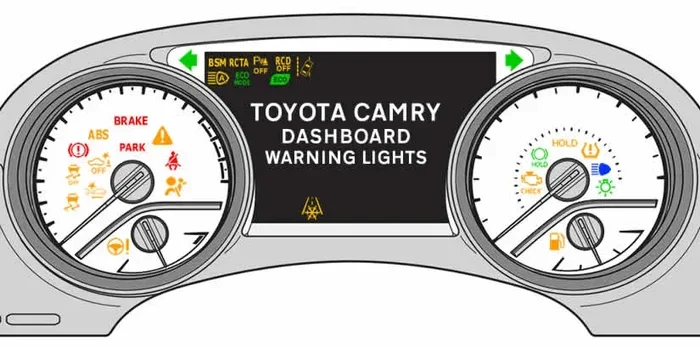
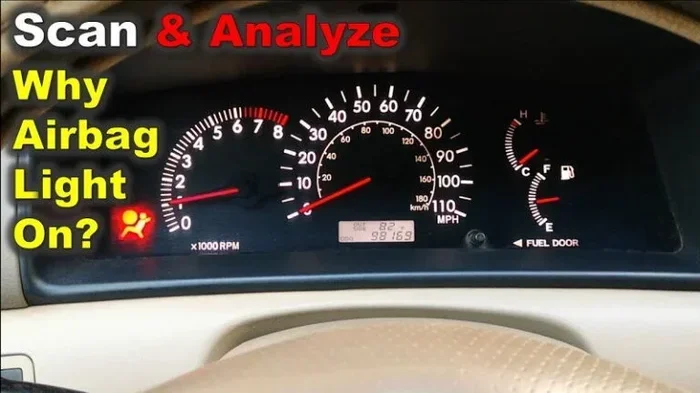
The airbag warning light on your Toyota dashboard looks like a seated figure with a circle in front of it. This symbol represents the Supplemental Restraint System, or SRS. When the light stays on, it means the system has detected a problem. The airbags may not deploy properly in a crash if the issue is not fixed.
Here are the most common reasons the Toyota airbag light comes on:
- Loose or faulty seat belt sensor: The seat belt latch sensor is one of the top triggers. If the belt does not click in properly, the system flags it.
- Crash sensor malfunction: Your Toyota has impact sensors located in the front and sides. A damaged or disconnected sensor will trigger the light.
- Airbag module error: The airbag control unit stores fault codes. Even after a minor bump, the module may keep the light on.
- Wiring or connector issues: Corroded or loose wires under the seats can disrupt the SRS circuit.
- Low battery voltage: A weak car battery can confuse the airbag system and cause the light to illuminate.
- Clock spring problem: The clock spring connects the steering wheel airbag to the car’s electrical system. Wear and tear can cause failures.
Tools You Will Need to Reset the Airbag Light
Before you start, gather the right tools. You do not need anything expensive or complicated. Most of these items are easy to find at any auto parts store.
Essential Tools
- OBD2 scanner: This device reads and clears fault codes from your Toyota’s computer. A basic model works great for airbag light resets.
- Wrench set: You will need a 10mm or 12mm wrench to disconnect the battery terminal.
- Multimeter: Helpful for checking voltage and continuity in the seat belt circuit.
- Clean cloth: Use this to clean connectors and terminals before reconnecting.
- Owner’s manual: Your Toyota manual has specific fuse locations and system diagrams that are very useful.
Optional but Helpful Tools
- Wire brush: Use this to clean corroded battery terminals.
- Electrical contact cleaner: Spray this on connectors to ensure a solid connection.
- Flashlight: You will be looking under seats and around tight spaces.
How to Reset Toyota Airbag Light Without a Mechanic
Now for the part you have been waiting for. Below are the most effective methods to reset the Toyota airbag light on your own. Each method works for different situations, so read through them and pick the one that fits your problem.
Method 1: Disconnect the Battery
This is the simplest and most common method. Disconnecting the battery clears the stored codes in the airbag control module. Here is how to do it safely.
First, turn off the engine and remove the key from the ignition. Open the hood and locate the negative battery terminal. Use your wrench to loosen the nut on the negative cable. Carefully pull the cable off the terminal and tuck it away so it does not touch the battery.
Wait at least 15 minutes. This gives the car’s electrical system time to fully discharge. After 15 minutes, reconnect the negative cable and tighten the nut. Start the engine and check if the airbag light has turned off.
Important safety note: Always disconnect the negative terminal first. Never work on the airbag system while the battery is connected. Airbags can deploy unexpectedly and cause serious injury.
Method 2: Use an OBD2 Scanner
An OBD2 scanner is the most precise way to handle an airbag light issue. It reads the specific fault code stored in your Toyota’s computer and allows you to clear it after the fix.
Plug the scanner into the OBD2 port under your steering column. Turn the ignition to the “ON” position without starting the engine. The scanner will connect to the car’s system. Look for the SRS or airbag section and read the stored codes.
Write down the codes. They will tell you exactly what triggered the light. Fix the underlying issue first. Then use the scanner to clear the codes. Start the engine and see if the light stays off.
If you are dealing with other dashboard warnings at the same time, check out our article on how to get rid of the service light on my dashboard for additional tips on handling multiple warning lights.
Method 3: Check and Fix the Seat Belt System
A faulty seat belt sensor is the number one reason the Toyota airbag light stays on. The seat belt system is connected directly to the SRS. If the sensor does not detect the belt is buckled, the light comes on.
Start by checking every seat belt. Pull each belt out fully and let it retract. Make sure the belt slides smoothly without getting stuck. Inspect the buckle for any debris or damage. A small piece of dirt or a coin stuck in the buckle can trick the sensor.
Next, check the seat belt pretensioner. This is the mechanism that tightens the belt during a sudden stop. If the pretensioner has fired or is faulty, it will trigger the airbag light. You can test the pretensioner connector with a multimeter to check for continuity.
Sometimes simply unplugging the seat belt sensor, waiting 30 seconds, and plugging it back in does the trick. This resets the sensor and clears the minor glitch that caused the light to come on.
Method 4: Inspect the Crash Sensors
Toyota vehicles have impact sensors located in the front bumper, sides, and sometimes near the doors. These sensors detect collisions and trigger the airbag deployment. If one of these sensors is damaged or has a loose connection, the airbag light will turn on.
Locate the front crash sensors. They are usually behind the front bumper cover on both sides. Check the wiring harness connected to each sensor. Look for frayed wires, corrosion, or loose plugs. Repair or replace any damaged connectors.
Side impact sensors are typically located near the doors or in the rocker panels. Access can be tricky. If you are not comfortable reaching these sensors, consider having a helper guide you through the process using your Toyota owner’s manual.
After inspecting the sensors, clear the codes with an OBD2 scanner and test drive the vehicle. If the light returns, the sensor may need to be replaced entirely.
Method 5: Reset After Replacing a Part
If you have already replaced a faulty airbag component, such as a seat belt sensor or a crash sensor, the light may still remain on. The airbag control module stores the fault code until you manually clear it.
Use your OBD2 scanner to erase the stored codes. Then start the engine and let the car idle for a few minutes. The SRS system runs a self test each time you start the car. If the repair was successful, the light will stay off.
In some Toyota models, you may need to perform a specific reset procedure. Check your owner’s manual or search for your specific model year online. Some Toyotas require a sequence of actions like turning the ignition on and off three times within a specific timeframe.
Common Mistakes People Make When Resetting the Airbag Light
Resetting the airbag light sounds simple, but mistakes happen. Avoid these common errors to keep yourself safe and get the job done right.
Mistake 1: Clearing the light without fixing the root cause. This is the biggest mistake people make. If the light comes back after a reset, the underlying problem is still there. Use the OBD2 scanner to read the code first, then fix the actual issue.
Mistake 2: Not disconnecting the battery properly. Always wait at least 15 minutes after disconnecting the battery. Some people reconnect too quickly, and the system does not fully reset.
Mistake 3: Ignoring other dashboard warning lights. If the airbag light is on along with the VSC light or traction control light, these systems may be connected. Learn more about driving with the VSC light on in our article is it safe to drive with the VSC light on. Multiple warning lights can indicate a broader electrical issue.
Mistake 4: Using the wrong OBD2 scanner. Not all scanners support the SRS system. Make sure your scanner specifically reads airbag codes. Basic code readers may only handle engine related codes.
Mistake 5: Working on airbag components with the battery connected. This cannot be stressed enough. Always disconnect the battery before touching any airbag wiring or components. A deployed airbag at the wrong moment can cause serious harm.
When Should You See a Professional Mechanic?
Resetting the airbag light on your own works for most minor issues. But some situations require a professional touch. Here are signs that you should take your Toyota to a mechanic or dealership.
- The light stays on after multiple reset attempts: This suggests a deeper electrical or sensor problem that needs advanced diagnostics.
- You hear a clicking or buzzing noise under the dashboard: This could indicate a failing airbag module or a short in the wiring.
- The airbag light flashes in a specific pattern: Flashing patterns are diagnostic codes. A professional scanner can decode these more accurately than a basic OBD2 tool.
- You were involved in a collision: Even a minor accident can damage the airbag system in ways that are not visible. Have the entire SRS system inspected.
- Multiple warning lights are on simultaneously: This could point to a wiring harness issue or a problem with the car’s main computer.
If you need to read diagnostic codes but do not have a scanner, check out our guide on how to read ABS codes without a scanner. The process for reading SRS codes is similar, and it can help you understand what the airbag light is trying to tell you.
Preventing the Toyota Airbag Light from Coming Back
Once you have successfully reset the light, you want to keep it off. Prevention is always better than repair. Follow these simple tips to maintain a healthy SRS system in your Toyota.
- Buckle up every time: This sounds obvious, but consistently using your seat belt keeps the seat belt sensor in good condition.
- Keep the battery terminals clean: Corroded terminals can cause voltage drops that confuse the airbag system. Clean them with a wire brush every few months.
- Avoid water damage under the seats: Spills and moisture can corrode the airbag connectors. Use floor mats and clean up any liquid spills quickly.
- Get regular diagnostics: Use an OBD2 scanner during routine maintenance. Catching small codes early prevents them from turning into bigger problems.
- Address warning lights promptly: Do not ignore any dashboard warning light. The longer you wait, the more damage it can cause to the SRS system.
How the Toyota Airbag System Works
Understanding how your Toyota’s airbag system works helps you appreciate why the light comes on and what the reset process does. The SRS is a network of sensors, modules, and deployable units that work together in milliseconds during a collision.
The system includes crash sensors in the front and sides, the airbag control module, seat belt pretensioners, and the airbag inflators themselves. When the crash sensors detect a sudden deceleration, they send a signal to the control module. The module then triggers the appropriate airbags to deploy.
Your Toyota constantly monitors all these components. If any part of the system fails a self test, the airbag light turns on to alert you. Resetting the light clears the stored fault code and turns off the warning. But the system will flag the same code again if the underlying problem has not been fixed.
This is why it is so important to diagnose the root cause before attempting a reset. Clearing the light without fixing the problem is like turning off a fire alarm without putting out the fire.
Quick Tips for a Successful Airbag Light Reset
- Always read the fault code first. Know what you are dealing with before you reset anything.
- Keep your Toyota owner’s manual nearby. It has specific fuse locations and system details for your model.
- Work in a well ventilated area. Airbag chemicals can be harmful if inhaled.
- Take photos of any connectors or wiring before you disconnect them. This makes reassembly much easier.
- Test drive your Toyota after the reset. Drive for at least 10 minutes to see if the light stays off.
- Keep a record of any fault codes you find. This helps you track recurring issues over time.
Expert Insight: Why DIY Resets Work for Most Toyotas
Toyota vehicles are designed with a user friendly approach to many maintenance tasks. The SRS system is no exception. Most airbag light issues stem from simple, accessible components like seat belt sensors and battery connections. These are problems you can fix without specialized training.
The airbag control module in Toyotas stores fault codes temporarily. Once the issue is resolved, clearing the codes allows the system to pass its self test and turn the light off. This design makes DIY resets a practical option for most Toyota owners.
That said, the airbag system is a safety critical component. If you ever feel unsure about any step in the process, do not hesitate to consult a professional. Your safety and the safety of your passengers always come first.
Final Thoughts on Resetting Your Toyota Airbag Light
Resetting the Toyota airbag light without a mechanic is entirely possible for most common issues. Whether it is a loose seat belt sensor, a low battery, or a minor wiring glitch, the methods in this guide give you the confidence to handle the problem yourself. Start with the simplest method, work your way through the diagnostic steps, and always prioritize safety.
Remember, the airbag light is a warning system. It exists to protect you. Taking the time to properly diagnose and fix the issue means your Toyota’s airbag system will be ready to protect you when you need it most. Do not ignore the light. Address it, reset it, and drive with peace of mind.
For more Toyota maintenance tips and dashboard light guides, check out our other articles on car care and troubleshooting. Keeping your Toyota in top shape does not require a dealership visit every time a light comes on. With the right knowledge, you can handle it yourself.
Frequently Asked Questions
Can I drive my Toyota with the airbag light on?
Technically you can drive with the airbag light on, but it is not recommended. The airbags may not deploy properly in a crash if the SRS system has a fault. Get the light diagnosed and reset as soon as possible to ensure your safety.
How much does it cost to reset a Toyota airbag light at a mechanic?
A mechanic typically charges between $100 and $200 to diagnose and reset the airbag light. The cost depends on the underlying issue. Simple fixes like a seat belt sensor replacement may cost less, while crash sensor repairs can be more expensive.
Will disconnecting the battery erase all Toyota warning lights?
Disconnecting the battery can clear many warning lights including the airbag light. However, if the root cause of the problem is not fixed, the light will usually come back after you reconnect the battery and start the car.
How long does it take to reset the Toyota airbag light?
The actual reset process takes only a few minutes if you are using an OBD2 scanner or disconnecting the battery. However, diagnosing and fixing the underlying issue can take longer depending on the problem.
Can a dead car battery cause the airbag light to come on?
Yes, a weak or dead battery can cause voltage fluctuations that trigger the airbag light. If your battery is old or has been struggling to start the car, replacing it may resolve the SRS warning light issue.
Is it safe to reset the airbag light myself?
It is safe as long as you follow proper safety precautions. Always disconnect the battery before working on any airbag related components. If you feel uncomfortable at any point, consult a professional mechanic for assistance.
=== CONCLUSION ===
Resetting the Toyota airbag light without a mechanic is a task you can absolutely handle on your own. With the right tools, a little patience, and the step by step guidance in this article, you can clear that annoying SRS warning light and get back to driving with confidence. Start by diagnosing the root cause, use the reset method that fits your situation, and always put safety first. Your Toyota’s airbag system is designed to protect you. Taking care of it yourself means you are taking an active role in keeping your car safe and road ready.