Can I Just Add Transmission Fluid Instead of Changing It
Can I Just Add Transmission Fluid Instead of Changing It? is an essential topic that provides valuable insights.
Key Takeaways
- Topping off is not a replacement: Adding transmission fluid without changing it does not remove contaminants or restore the protective additives your transmission needs.
- A full change is essential: Regular transmission fluid changes remove old fluid, debris, and sludge that accumulate over time and protect your transmission from damage.
- Watch for warning signs: Dark fluid color, burnt smell, slipping gears, and delayed engagement are all signs that your fluid needs attention.
- Use the right fluid: Always use the transmission fluid type specified in your owner’s manual. Mixing fluid types can cause serious harm.
- Follow the service interval: Stick to your manufacturer’s recommended transmission service interval to keep your transmission running smoothly for years.
- Prevention saves money: A routine fluid change costs a fraction of what transmission repairs or replacement costs. Stay ahead of maintenance to avoid big expenses.
- When in doubt, seek professional help: If you are unsure about your fluid condition or the proper maintenance schedule, consult a trusted mechanic for guidance.
📑 Table of Contents
- What Happens When You Just Add Transmission Fluid
- Why a Full Transmission Fluid Change Matters
- How to Tell If Your Transmission Fluid Needs Changing
- What Type of Transmission Fluid Should You Use?
- Common Mistakes People Make With Transmission Fluid
- Can You Change Transmission Fluid Yourself?
- How Often Should You Change Your Transmission Fluid?
- The Cost of Ignoring Transmission Fluid Maintenance
What Happens When You Just Add Transmission Fluid
When you top off your transmission fluid levels, you are only addressing the immediate low level. You are not removing the old, contaminated fluid that has been sitting in your system. Think of it like adding fresh water to a dirty fish tank. The water level goes up, but the tank is still dirty.
Here is what actually happens when you just add fluid without changing it:
- Old fluid mixes with new fluid: The fresh fluid dilutes the old fluid but does not replace it. The mixture is still below optimal performance.
- Contaminants remain in the system: Metal shavings, dirt, and sludge stay trapped inside your transmission pan and filter.
- Additives wear off: Transmission fluid contains detergents, friction modifiers, and anti-wear agents. These break down over time and cannot be restored by simply adding more fluid.
- You mask the real problem: Low fluid usually means there is a leak somewhere. Topping off without fixing the leak just delays the inevitable.
So the answer to can I just add transmission fluid instead of changing it is really no, not if you care about the long-term health of your transmission.
The Science Behind Fluid Degradation
Transmission fluid works under extreme conditions. It faces high heat, intense pressure, and constant friction from gear engagement. Over time, the fluid undergoes fluid degradation, which means its chemical composition breaks down. The additives that protect your transmission wear out. The fluid itself becomes darker and develops a burnt smell.
When you add new fluid to old fluid, the new additives mix with the depleted ones. The result is a fluid that performs somewhere in the middle. It is better than nothing, but it is far from what your transmission needs to operate at its best.
When Topping Off Is Actually Okay
There are a few situations where simply adding fluid is acceptable as a short-term measure:
- You are between service intervals: If your next transmission service interval is only a few weeks away, a top-off is fine to keep you safe.
- You discovered a small leak: You can add fluid temporarily while you arrange for repairs. But do not drive long distances this way.
- Your fluid is still in good condition: If the fluid is still red or pink, smells fine, and has not been in the system for very long, adding more is less risky.
Even in these cases, topping off is not a substitute for a proper transmission fluid change. Use it only as a bridge until you can get the full service done.
Quick Tip
Always check your owner’s manual before adding any fluid. Using the wrong transmission fluid types can cause serious damage. Your manual will tell you the exact specification your vehicle needs.
Why a Full Transmission Fluid Change Matters
A full transmission fluid change removes all the old, contaminated fluid and replaces it with fresh, clean fluid. This process restores the protective properties your transmission depends on. It also removes harmful debris that can clog passages and damage internal components.
Here is why a full change is so important:
- Complete contaminant removal: A full change flushes out metal particles, sludge, and other debris that accumulate over time.
- Restored lubrication: Fresh fluid provides proper lubrication between moving parts, reducing wear and friction.
- Better heat dissipation: Clean fluid absorbs and transfers heat more effectively, preventing transmission overheating.
- Smoother gear shifts: New fluid maintains the right friction characteristics for crisp, smooth gear changes.
- Extended transmission life: Regular fluid changes are one of the best ways to protect your transmission longevity.
Think of it this way. You would not just add oil to a dirty engine without ever changing it. Your transmission deserves the same respect.
Transmission Fluid Change vs. Transmission Fluid Flush
You may hear two terms thrown around: transmission fluid change and transmission fluid flush. These are not the same thing, and understanding the difference matters.
A fluid change typically involves draining the fluid from the transmission pan and replacing the filter. This removes about 40 to 50 percent of the old fluid. Some fluid remains in the torque converter and cooler lines.
A fluid flush uses special equipment to push out nearly all of the old fluid, including what is trapped in the cooler lines and torque converter. A flush removes about 90 to 100 percent of the old fluid.
| Factor | Fluid Change | Fluid Flush |
|---|---|---|
| Old Fluid Removed | 40-50% | 90-100% |
| Filter Replaced | Usually yes | Usually yes |
| Cost | Lower | Higher |
| Best For | Regular maintenance | Severely degraded fluid |
| Risk | Low | Low if done correctly |
| Time | 30-60 minutes | 60-90 minutes |
For most vehicles, a fluid change every 30,000 to 60,000 miles is sufficient. A flush is usually recommended when the fluid has never been changed or when it is severely degraded. Always consult a trusted mechanic to determine which method is best for your specific vehicle.
How to Tell If Your Transmission Fluid Needs Changing
Your transmission will give you warning signs when the fluid is no longer doing its job. Learning to recognize these signs early can prevent costly repairs. Here are the most common transmission warning signs to watch for:
Check the Fluid Color
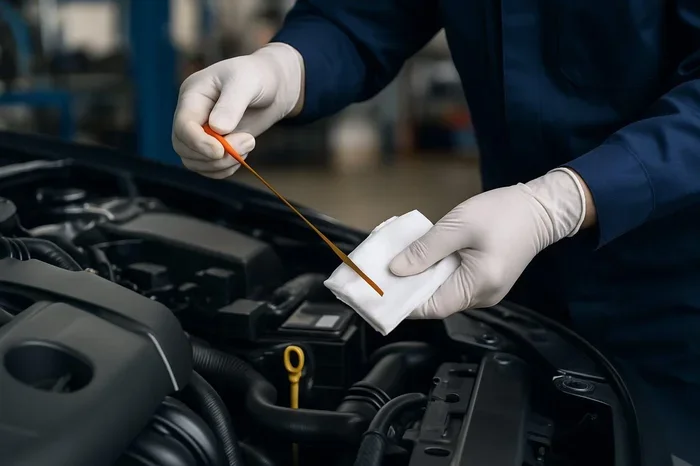
Healthy transmission fluid is typically red or pink. As it degrades, it turns brown and eventually dark brown or black. If your fluid looks dark or has a burnt appearance, it is time for a change. You can check the fluid yourself using the dipstick. Just make sure your car is running and warmed up before you check.
Smell the Fluid
Fresh fluid has a slightly sweet or neutral smell. If you notice a burnt or acrid odor, the fluid has broken down significantly. Burnt fluid means the internal components are likely overheating, and immediate action is needed.
Watch for Slipping Gears
One of the most noticeable transmission slip symptoms is when your engine revs but the car does not respond appropriately. This happens because degraded fluid can no longer maintain proper hydraulic pressure. Slipping gears are a serious warning sign that should never be ignored.
Listen for Unusual Noises
Grinding, whining, or clunking noises when shifting gears often point to low or contaminated fluid. Clean fluid allows gears to engage smoothly. Dirty fluid creates friction and wear that produces these sounds.
Notice Delayed Engagement
If your car hesitates or delays when shifting from park to drive or reverse, the fluid may be too old or too low. This delay means the fluid is not flowing properly through the transmission’s hydraulic system.
Expert Insight
Many mechanics recommend checking your transmission fluid every month. It takes just a few minutes and can catch problems early. Early detection of low or dirty fluid is one of the simplest ways to avoid expensive transmission repairs.
What Type of Transmission Fluid Should You Use?
Not all transmission fluid types are the same. Using the wrong fluid can lead to poor performance, increased wear, and even transmission failure. Here are the main types you will encounter:
- Dexron VI (ATF): This is the most common automatic transmission fluid used in modern vehicles. It is the standard for many GM, Ford, and Chrysler vehicles.
- Mercon LV: Used primarily in Ford vehicles. It is a low-viscosity fluid designed for newer transmissions.
- Honda ATF-DW1: Honda and Acura vehicles often require this specific fluid. Using a generic ATF can cause issues.
- Toyota WS: Toyota and Lexus vehicles use this synthetic fluid. It is not interchangeable with Dexron or Mercon.
- Continental TF: Used in some European vehicles, particularly those with ZF transmissions.
Always refer to your owner’s manual for the correct fluid specification. Mixing different fluid types can cause chemical reactions that damage your transmission. When in doubt, ask your mechanic or check with your dealership.
Common Mistakes People Make With Transmission Fluid
Even well-meaning car owners make mistakes when it comes to transmission fluid care. Here are the most common errors to avoid:
Ignoring Low Fluid Warnings
Many people notice low fluid and simply ignore it or just add a little without investigating why it is low. Low fluid is almost always a sign of a leak. Driving on low fluid causes severe internal damage because the transmission is not getting proper lubrication.
Overfilling the Transmission
Adding too much fluid is just as bad as adding too little. Overfilled fluid can foam, leading to poor lubrication and pressure issues. Excess fluid can also leak past seals and gaskets, creating a mess and potential damage.
Using the Wrong Fluid Type
As mentioned above, using the wrong transmission fluid types is a common mistake. The additives in different fluids are formulated for specific transmission designs. Mixing them or using the wrong type voids warranties and causes premature wear.
Skipping the Filter
When you change your fluid, always replace the transmission filter at the same time. The filter catches debris and prevents it from circulating through the system. A clogged filter defeats the purpose of fresh fluid.
Waiting Too Long Between Changes
Some drivers stretch their transmission service interval far beyond what is recommended. Old fluid breaks down and loses its effectiveness. Waiting too long between changes accelerates wear on internal components and shortens the life of your transmission.
Quick Tip
Set a reminder on your phone or calendar for your next transmission fluid change. Most vehicles need this service every 30,000 to 60,000 miles. Staying on top of your schedule is one of the easiest ways to protect your investment.
Can You Change Transmission Fluid Yourself?
Some car owners prefer to handle transmission maintenance at home. It is possible to do a fluid change yourself, but it requires the right tools, knowledge, and safety precautions.
Here is what you will need for a basic fluid change at home:
- A jack and jack stands or a lift to raise the vehicle safely.
- A drain pan large enough to catch all the old fluid.
- The correct type and amount of new transmission fluid.
- A new transmission filter and gasket.
- A socket wrench and the appropriate socket for the transmission pan bolts.
- A funnel for adding new fluid.
- Clean rags and gloves for handling the fluid.
The process involves draining the old fluid, removing the pan, replacing the filter and gasket, reinstalling the pan, and adding new fluid through the dipstick tube. It is not overly complicated, but it does require care and attention to detail.
If you are not comfortable working underneath your car, it is perfectly fine to take it to a professional. A fluid exchange at a shop typically costs between $150 and $300, depending on your vehicle and location. This is a small price to pay compared to a transmission rebuild, which can cost $2,500 or more.
Common Mistake
Do not attempt a fluid change if you have never done it before without proper guidance. One wrong move can lead to leaks, incorrect fluid levels, or damage to transmission components. When in doubt, trust a professional.
How Often Should You Change Your Transmission Fluid?
The answer to this question depends on several factors, including your vehicle type, driving conditions, and the type of fluid used. Here is a general guideline:
- Normal driving conditions: Change every 60,000 to 100,000 miles for most modern vehicles.
- Severe driving conditions: Change every 30,000 to 60,000 miles. Severe conditions include towing, heavy stop-and-go traffic, extreme temperatures, and off-road driving.
- Manual transmissions: These often need fluid changes every 30,000 to 60,000 miles, though some can go longer.
- Automatic transmissions: Many automakers claim their transmissions have “lifetime” fluid. However, most experts agree that changing the fluid around 60,000 to 80,000 miles is a smart preventive measure.
Always check your owner’s manual for the manufacturer’s recommended transmission service interval. Keep in mind that “lifetime” fluid often refers to the expected life of the vehicle under ideal conditions, which rarely matches real-world driving.
The Cost of Ignoring Transmission Fluid Maintenance
Skipping regular transmission fluid changes or just topping off instead of changing can lead to serious consequences. Here is what can go wrong:
- Transmission overheating: Degraded fluid cannot dissipate heat properly. Overheating damages seals, gaskets, and internal components.
- Gear wear and damage: Without proper lubrication, gears grind against each other, causing premature wear and eventual failure.
- Solenoid and valve body problems: Contaminated fluid clogs the small passages in the valve body, causing erratic shifting and transmission malfunction.
- Complete transmission failure: In the worst case, neglecting fluid maintenance leads to a total transmission failure. A rebuild or replacement can cost anywhere from $2,500 to $5,000 or more.
The cost of a routine transmission fluid change is a fraction of what you would pay for major repairs. Most fluid changes cost between $100 and $250 at a shop. Doing it yourself costs even less, typically $50 to $100 for the fluid and filter alone.
The choice is clear. Regular maintenance is far cheaper than repair or replacement.
Expert Insight
Many transmission failures are preventable with proper fluid maintenance. Experienced mechanics often say that a transmission fluid change is the single most cost-effective way to extend the life of your vehicle’s transmission. Do not wait for symptoms to appear. Be proactive with your transmission maintenance schedule.
Frequently Asked Questions
Can I just add transmission fluid instead of changing it?
Topping off your fluid is okay as a temporary measure, but it should never replace a full transmission fluid change. Adding fluid without changing it leaves old, contaminated fluid in the system. Over time, this leads to poor performance and potential transmission damage.
How do I know if my transmission fluid needs changing?
Check the fluid color and smell. Healthy fluid is red or pink and smells slightly sweet. If the fluid is dark brown or black, or if it smells burnt, it is time for a change. Other signs include slipping gears, delayed shifting, and unusual noises.
What happens if I overfill my transmission fluid?
Overfilling causes the fluid to foam, which reduces its ability to lubricate and maintain proper pressure. Foamed fluid can also leak past seals and gaskets. Always add fluid slowly and check the level with the dipstick to avoid overfilling.
How often should I change my transmission fluid?
Most vehicles need a transmission fluid change every 30,000 to 60,000 miles under severe driving conditions, or every 60,000 to 100,000 miles under normal conditions. Check your owner’s manual for the specific recommendation for your vehicle.
Is a transmission fluid flush better than a fluid change?
A flush removes more old fluid, typically 90 to 100 percent, compared to a change which removes about 40 to 50 percent. A flush is often recommended for vehicles that have never had their fluid changed or when the fluid is severely degraded. A standard change is sufficient for regular maintenance.
Can I use any transmission fluid in my vehicle?
No, you must use the specific transmission fluid type recommended by your vehicle manufacturer. Different transmissions require different formulations. Using the wrong fluid can cause poor performance, increased wear, and even transmission failure. Always check your owner’s manual.
=== CONCLUSION ===
So, can I just add transmission fluid instead of changing it? The answer is no, not as a permanent solution. Topping off your fluid might seem convenient, but it does not address the root cause of degraded fluid, contaminants, and lost additives. A full transmission fluid change is the only way to properly protect your transmission and keep it running smoothly.
Regular transmission maintenance is one of the simplest and most cost-effective things you can do for your vehicle. It prevents overheating, reduces wear, and extends the life of your transmission. Whether you do it yourself or visit a professional, staying on top of your fluid changes pays off in the long run.
Do not wait for warning signs to appear. Check your fluid regularly, follow your service schedule, and use the right fluid type. Your transmission works hard for you every day. Give it the care it deserves with proper transmission fluid maintenance. Your wallet and your vehicle will thank you for it.
Take action today. Schedule your next transmission fluid change and enjoy the peace of mind that comes with knowing your transmission is protected and performing at its best.