How to Check If a Vehicle Is Stolen for Free Right Now
Finding out if a car is stolen is easier than you think — and it costs nothing. You can run a free VIN check, use government databases, and cross-reference key records in just minutes. This guide walks you through every free method so you can protect yourself from buying a stolen vehicle or falling victim to car fraud.
Key Takeaways
- Free VIN checks are available: Several trusted websites let you run a VIN lookup at no cost.
- NICB is the top resource: The National Insurance Crime Bureau offers a free stolen vehicle search tool.
- Check multiple sources: No single database catches everything, so always cross-reference results.
- Look for red flags: Salvage titles, mismatched VIN plates, and low prices are warning signs.
- Act fast if you find a match: Contact local law enforcement immediately if a vehicle checks out as stolen.
- Prevention saves money: Regular VIN verification protects your investment and keeps you safe.
- Free tools work for everyone: Whether buying used or verifying your own car, these methods apply to all.
📑 Table of Contents
- How to Check If a Vehicle Is Stolen for Free Right Now
- Why Checking for Stolen Vehicles Matters
- What Is a VIN and Why It Is Your Best Tool
- Free Tools and Websites to Run a Stolen Car Check
- Step-by-Step: How to Perform a Free Stolen Vehicle Check
- Red Flags That Signal a Stolen or Problem Vehicle
- What to Do If You Find a Stolen Vehicle
- How to Protect Yourself from Vehicle Theft and Fraud
- Common Mistakes People Make When Buying Used Cars
- Expert Insights on Vehicle Theft Prevention
- Key Takeaways
- Final Thoughts
How to Check If a Vehicle Is Stolen for Free Right Now
You found a great deal on a car. The price looks too good to be true. Maybe it is. Every year, thousands of stolen vehicles slip through the cracks because buyers skip a simple stolen car check. The good news? You can verify any vehicle in minutes — and it costs you nothing.
Whether you are buying a used car from a private seller, picking up a deal online, or just want to make sure your own vehicle is not flagged wrongly, this guide has you covered. We will walk you through every free method available today. You will learn where to look, what to watch for, and how to protect yourself from car fraud detection scams.
Do not wait until it is too late. A quick VIN check free search could save you thousands of dollars and a world of headaches. Let us get started.
Why Checking for Stolen Vehicles Matters
Car theft is a big problem. The FBI reports hundreds of thousands of vehicle thefts every year in the United States alone. Many stolen cars get resold quickly — sometimes within days. Unknowing buyers end up losing their money and the vehicle gets towed away by police.
Here is why this matters to you:
- Financial loss: You pay for a car that gets seized by authorities. No refund. No recourse.
- Legal trouble: Possessing a stolen vehicle, even unknowingly, can lead to police investigations.
- Safety risks: Stolen vehicles may have been tampered with or involved in crimes.
- Insurance headaches: Your claim may get denied if the car turns out to be stolen.
- Wasted time: Registration, inspection, and title processes get delayed or denied entirely.
Running a vehicle history report and a stolen vehicle database search takes almost no time. It is one of the smartest things you can do before any vehicle purchase.
Who Is Most at Risk?
Anyone buying a used car is at risk. But certain situations raise the danger level. Private sales on platforms like Craigslist or Facebook Marketplace are common spots for stolen car deals. Imported vehicles with unclear car provenance also carry higher risk. And cars priced well below market value? That is a classic red flag for car fraud detection.
What Is a VIN and Why It Is Your Best Tool
Every vehicle has a unique identifier called the vehicle identification number, or VIN. Think of it as a car’s fingerprint. No two vehicles share the same VIN. It contains details about the make, model, year, engine type, and manufacturing location.
When you run a VIN lookup, you tap into a wealth of information. You can see if the car has a salvage title, been in accidents, or — most importantly — been reported stolen. A VIN decoder breaks down each character of the VIN and reveals the vehicle’s history.
You can find the VIN in several places:
- On the dashboard near the windshield (driver’s side)
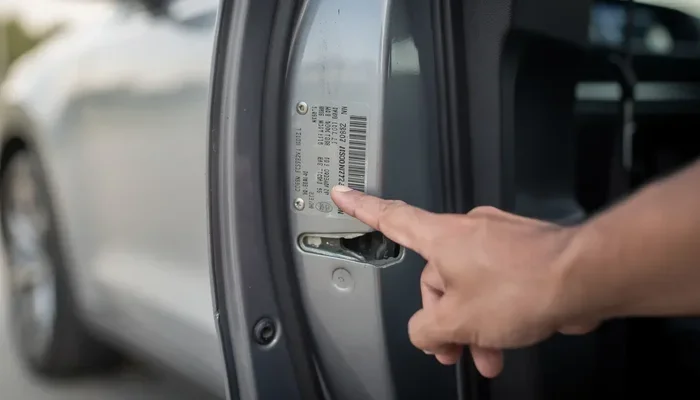
- On the driver’s side door jamb sticker
- On the vehicle title and registration documents
- On insurance cards and policy documents
Always double-check that the VIN on the car matches the VIN on the paperwork. Mismatched VINs are a major car fraud detection warning sign. Thieves sometimes swap VIN plates to disguise stolen vehicles.
How to Read a VIN
A VIN has 17 characters, made up of letters and numbers. Here is a quick breakdown:
- Characters 1-3: World Manufacturer Identifier — tells you the country and maker.
- Characters 4-8: Vehicle Descriptor Section — covers model, body type, and engine.
- Character 9: Check digit — a security code that validates the VIN.
- Character 10: Model year — tells you the year of production.
- Character 11: Assembly plant — shows where the car was built.
- Characters 12-17: Sequential number — the vehicle’s unique serial number.
You do not need to memorize all of this. Just know that a VIN decoder does the heavy lifting for you. Plug in the number and get instant results.
Free Tools and Websites to Run a Stolen Car Check
The best part about checking for stolen vehicles today is that many tools are completely free. You do not need to pay for a full vehicle history report to get basic stolen vehicle information. Here are the top free resources you should use right now.
1. National Insurance Crime Bureau (NICB)
The NICB is the go-to resource for stolen vehicle database searches in the United States. Their website offers a free VIN lookup tool that checks against their database of reported thefts. Simply enter the VIN and wait for the results.
Here is how to use it:
- Go to the NICB website.
- Enter the 17-digit VIN in the search box.
- Click search and review the results.
If the VIN comes back clean, that is a good sign. If it shows up as stolen or flagged, do not proceed with the purchase. Contact law enforcement immediately.
2. VinFreeCheck
VinFreeCheck is a popular free tool that provides basic vehicle history data. It pulls information from multiple sources, including insurance records and police reports. While it may not be as detailed as paid services like Carfax, it covers the essentials well.
Key features include:
- Free VIN lookup with no credit card required
- Stolen vehicle status checks
- Salvage title and flood damage alerts
- Odometer reading history
3. AutoCheck Free VIN Score
AutoCheck offers a free VIN score that gives you a quick snapshot of a vehicle’s history. The score is based on factors like title branding, accident history, and theft records. It is not as detailed as a full report, but it is a solid starting point for car fraud detection.
4. Government and State Databases
Many states offer free access to their vehicle registration and title databases. You can visit your state’s Department of Motor Vehicles (DMV) website and search for a vehicle by VIN or license plate. Some states also allow you to check for title branding — marks that indicate a vehicle was salvaged, flooded, or declared a total loss.
Pro tip: Always verify the title in person before buying. A clean title is essential for a safe purchase.
5. Vehicle Owners Information System (VOIS)
VOIS is a federal database that lets you search for vehicles by VIN. It is maintained by the Department of Motor Vehicles and is available to the public. While access varies by state, it is worth checking if your state supports it.
Step-by-Step: How to Perform a Free Stolen Vehicle Check
Now that you know the tools, let us walk through the actual process. Follow these steps every time you are considering a vehicle purchase.
Step 1: Get the VIN
Ask the seller for the VIN. Write it down or take a photo of it. Make sure it matches the VIN on the dashboard, door jamb, and title. If anything looks off, walk away.
Step 2: Run the NICB Check
Go to the NICB website and enter the VIN. Note the result. A clean result does not guarantee the vehicle is safe, but a flagged result is a hard stop.
Step 3: Use VinFreeCheck or Similar Tool
Run a second check using VinFreeCheck or another free VIN tool. Cross-referencing results from multiple sources gives you a clearer picture of the vehicle’s history.
Step 4: Check the Title and Registration
Ask to see the vehicle title and registration in person. Verify the owner’s name matches the seller’s name. Look for any title branding like salvage, rebuilt, or lemon. These brands tell a story about the vehicle’s past.
Step 5: Search Local Police Databases
Some local police departments offer free online stolen vehicle searches. Check your city or county police website for this feature. You can also call the non-emergency line and ask them to run a VIN check.
Step 6: Trust Your Gut
If something feels wrong, it probably is. Sellers who pressure you, avoid questions, or offer deals that seem impossible are red flags. Walk away and keep looking.
Red Flags That Signal a Stolen or Problem Vehicle
Not all stolen vehicles come with obvious warning signs. Some look perfectly normal on the surface. That is why knowing the red flags is so important. Here are the top warning signs to watch for during your used car buying tips research.
Pricing That Is Too Good to Be True
If a car is priced 30-50% below market value, something is wrong. Thieves know they need to sell fast, so they price stolen vehicles low to attract quick buyers. Use online tools like Kelley Blue Book or Edmunds to check fair market prices before you commit.
Mismatched VIN Numbers
Check the VIN on the dashboard, the door jamb, the title, and the registration. They all need to match exactly. Even one character off could mean the vehicle has been tampered with.
Missing or Altered Title
A clean, clear title is what you want. If the seller cannot produce a title, or if the title looks altered or photocopied, that is a serious warning sign. Never buy a vehicle without seeing the title first.
Recent Registration Changes
If the vehicle was recently registered in a different state or has multiple short-term registrations, that could indicate the seller is trying to distance the car from its theft history. Check the vehicle registration history carefully.
Scratches on the VIN Plate
Thieves sometimes scratch or alter VIN plates to avoid detection. Look closely at the VIN plate on the dashboard and the door jamb. Fresh scratches, uneven etching, or paint over the VIN are all suspicious.
No Service Records
A legitimate seller will usually have some maintenance records. If the seller has nothing — no receipts, no service history, no registration documents — be cautious. Lack of documentation is one of the most common used car buying tips warning signs.
What to Do If You Find a Stolen Vehicle
So you ran your checks and the vehicle came back as stolen. Now what? Do not panic. Here is exactly what you should do.
Do Not Purchase the Vehicle
This seems obvious, but it is worth repeating. Do not hand over any money. Do not sign any paperwork. Do not take the vehicle for a test drive without proper verification.
Document Everything
Save all communications with the seller. Take screenshots of listings, messages, and any advertisements. This evidence will be helpful if you need to report the situation.
Contact Local Law Enforcement
Call your local police department or the FBI’s Internet Crime Complaint Center (IC3) if the sale was online. Provide them with the VIN, the seller’s information, and any documentation you have gathered.
Report to the NICB
The National Insurance Crime Bureau also accepts tips about stolen vehicles and fraud. You can report your findings online or by phone. Your report could help recover stolen vehicles and catch criminals.
Warn Other Buyers
If you found the vehicle listed on a marketplace or classified site, report the listing to the platform. Most platforms have mechanisms for reporting fraudulent or illegal listings.
How to Protect Yourself from Vehicle Theft and Fraud
Prevention is always better than cure. Beyond running stolen car check tools before a purchase, there are steps you can take to protect yourself from vehicle theft and fraud on an ongoing basis.
Always Verify Ownership
Before you buy any vehicle, confirm the seller is the legal owner. Check the title, registration, and government-issued ID. All names should match.
Use Multiple Verification Sources
No single tool catches everything. Use at least two or three free resources to cross-check your results. The more sources you check, the safer you are.
Inspect the Vehicle in Person
Never buy a vehicle sight unseen. Meet the seller in a public place, inspect the vehicle thoroughly, and bring a trusted mechanic if possible.
Keep Your Own VIN Safe
Protect your own vehicles by keeping your VIN private. Do not share it publicly on social media or online listings. A stolen VIN can be used to clone a stolen vehicle.
Install Anti-Theft Devices
Steering wheel locks, GPS trackers, and immobilizers add layers of protection. They make your vehicle harder to steal and easier to recover if stolen.
Review Your Insurance Coverage
Make sure your auto insurance covers theft. Comprehensive coverage typically includes stolen vehicle protection. Review your policy annually to ensure you have adequate coverage.
Common Mistakes People Make When Buying Used Cars
Even with the best intentions, buyers make mistakes. Here are the most common errors and how to avoid them.
Skipping the VIN Check
This is the number one mistake. Some buyers skip the VIN check free step because they trust the seller or feel rushed. Never skip this step. It takes five minutes and could save you thousands.
Relying on a Single Source
One free tool is a good start, but it is not enough. Use multiple sources to build a complete picture of the vehicle’s history and car provenance.
Ignoring Title Branding
A salvage title or flood damage brand does not always mean the car is stolen. But it does mean the vehicle has a troubled history. Always read the fine print on the title.
Paying Before Verifying
Never send money before you have verified the vehicle’s status. Use secure payment methods and only pay after you are fully satisfied with your checks.
Not Asking Questions
Ask the seller detailed questions about the vehicle’s history. Where did they buy it? How long have they owned it? Why are they selling? Legitimate sellers have clear answers.
Expert Insights on Vehicle Theft Prevention
We spoke with automotive security experts to get their top tips for staying safe. Here is what they had to say.
Always run a VIN check — even if you trust the seller. Theft rings are sophisticated, and even well-meaning sellers can unknowingly sell a stolen vehicle. A simple stolen car check protects everyone involved.
Cross-reference multiple databases. The NICB is excellent, but it does not catch every case. Pair it with VinFreeCheck, state DMV records, and local police databases for the most thorough verification possible.
Pay attention to details. Thieves often make small mistakes — a VIN that does not match the paperwork, a title with unusual markings, or a seller who cannot explain basic ownership details. Trust your instincts and investigate further.
When in doubt, walk away. There are always more cars available. Do not let pressure or excitement push you into a bad decision. A vehicle recovery situation is never worth the risk.
Key Takeaways
- Free VIN checks are widely available: NICB, VinFreeCheck, and state DMV databases all offer free tools to verify a vehicle.
- The VIN is your most powerful tool: Always verify the VIN matches across the car, title, and registration documents.
- Cross-reference multiple sources: No single database is perfect. Check at least two or three sources for the best results.
- Watch for red flags: Low prices, missing titles, mismatched VINs, and pressure tactics are all warning signs of car fraud detection.
- Act quickly if you find a match: Contact law enforcement and report the situation immediately.
- Prevention is simple: A few minutes of due diligence before a purchase can save you from major headaches later.
- Stay informed and stay safe: The more you know about vehicle history reports and stolen vehicle databases, the better equipped you are to make smart decisions.
Final Thoughts
Checking if a vehicle is stolen for free is something everyone should do — not just car buyers. It takes minutes, costs nothing, and provides peace of mind. Whether you are a first-time buyer or a seasoned car shopper, running a stolen car check should be part of your routine.
The tools are out there. The NICB, VinFreeCheck, AutoCheck, and state databases are all free and easy to use. Combine them with good old-fashioned due diligence, and you will be in a strong position to make safe, smart vehicle purchases.
Remember: if a deal feels too good to be true, it probably is. Trust your instincts, verify everything, and never rush into a purchase. A few extra minutes of checking can save you from a world of trouble down the road.
Stay safe, stay informed, and always verify before you buy. Your wallet and your peace of mind will thank you.
Frequently Asked Questions
Can I really check if a car is stolen for free?
Yes, absolutely. Tools like the NICB VIN lookup, VinFreeCheck, and state DMV databases all offer free stolen vehicle searches. You do not need to pay for any of these basic checks.
How long does a free VIN check take?
A free VIN lookup takes less than five minutes. Enter the 17-digit VIN into any of the free tools mentioned in this guide, and you will get results almost instantly.
What should I do if a VIN comes back as stolen?
Do not proceed with the purchase. Contact local law enforcement and report your findings. Provide them with the VIN, the seller’s information, and any documentation you have gathered.
Are free VIN check tools as good as paid services?
Free tools cover the essentials well, including stolen vehicle status, title branding, and basic history. Paid services like Carfax offer more detailed reports, but for car fraud detection purposes, free tools are often enough.
Can a stolen car be cleared after purchase?
If you unknowingly buy a stolen vehicle, you will likely lose the car. However, if you can prove you purchased it in good faith, you may be able to recover some losses through insurance or legal channels. Prevention is always the best approach.
How often should I check my own vehicle’s VIN?
It is a good idea to run a VIN check free on your own vehicle once a year. This helps ensure your vehicle registration and records are clean and that no one has cloned your VIN for fraudulent purposes.