How Long Can Frozen Food Stay in a Car Before It Thaws
Frozen food can typically stay safe in a car for 30 minutes to 2 hours, depending on the outside temperature and your vehicle’s insulation. On a hot day, your car interior can reach over 100°F in just minutes, putting frozen food right into the temperature danger zone. Using a cooler, insulated bags, and ice packs can extend safe storage time significantly. Understanding how long frozen food stays safe in your vehicle helps prevent foodborne illness and reduces waste.
Have you ever grabbed a bag of frozen food from the trunk and wondered if it was still safe to eat? Maybe you were rushing home from the grocery store, or perhaps you packed meals for a road trip. Either way, the question matters a lot. How long can frozen food stay in a car before it becomes unsafe?
The answer might surprise you. On a mild day, you might have a small window of safety. But on a hot summer afternoon, your car becomes a ticking time bomb for frozen meals. Understanding the limits of frozen food storage in vehicles can save your dinner, protect your health, and reduce food waste.
In this guide, we will walk through everything you need to know. We will cover safe time limits, the science behind car heat, and practical tips to keep your frozen items fresh. Whether you are a busy parent, a college student, or someone who loves road trips, this article has you covered.
Key Takeaways
- Time Limit Matters: Frozen food should not stay in a car longer than 2 hours in warm weather and no more than 1 hour if temperatures exceed 90°F.
- Car Heat Is the Enemy: A parked car can reach 120°F or more on a sunny day, rapidly thawing frozen items.
- Insulation Helps: Using a quality cooler or insulated bag can double or triple the safe storage window.
- Ice Packs Are Essential: Adding reusable ice packs keeps frozen food colder for much longer than air alone.
- Know the Danger Zone: The temperature danger zone for food is between 40°F and 140°F, where bacteria grow rapidly.
- Check Before Eating: Always inspect frozen food for thawing signs before consuming it after a car trip.
- Plan Ahead: Minimizing the time frozen food spends in the car is the best strategy for food safety.
📑 Table of Contents
Why Car Temperatures Rise So Fast
Most people underestimate how hot a car can get. Even on a pleasant 75°F day, the interior temperature of a parked vehicle can climb past 100°F in less than 30 minutes. On a 90°F day, it can reach 120°F or higher within an hour.
This happens because a car acts like a greenhouse. Sunlight passes through the windows and heats up the seats, dashboard, and air inside. The heat has nowhere to escape, so temperatures keep rising. This is especially true for frozen food storage in vehicles, because frozen items absorb that heat quickly.
The Greenhouse Effect in Your Car
Here is a simple way to understand it. Think of your car as a glass box sitting in the sun. The sunlight comes in easily but the heat does not go back out efficiently. The result is a rapid buildup of thermal energy inside the cabin.
Even with the windows cracked open, the temperature inside a car can rise by 20 degrees in just 10 minutes. That is more than fast enough to start thawing frozen food. The car interior heat is the single biggest enemy of frozen items left behind.
What Happens to Frozen Food in Hot Cars
When frozen food starts warming up, the ice crystals inside begin to melt. This creates moisture, which changes the texture and taste of your food. More importantly, as the temperature crosses into the temperature danger zone (between 40°F and 140°F), bacteria start multiplying at an alarming rate.
Meat, poultry, and seafood are especially vulnerable. These items can become unsafe to eat within just one hour if left in a warm car. Even frozen vegetables and frozen meals lose quality quickly when they are not kept cold enough.
Safe Time Limits for Frozen Food in a Car
The safe storage time depends on several factors. The outside temperature is the biggest one. But the type of vehicle, whether the air conditioning is running, and how well the food is insulated all play a role.
General Time Guidelines
Here are the basic rules to follow for frozen food storage in vehicles:
- Under 60°F outside: You have about 2 to 3 hours before frozen food becomes risky.
- 60°F to 80°F outside: Limit the time to about 1 to 2 hours.
- 80°F to 90°F outside: Keep it under 1 hour.
- Above 90°F outside: Do not leave frozen food in the car for more than 30 minutes.
These numbers assume the food is sitting in the trunk or back seat without any extra cooling. If you use a cooler or insulated bag, you can stretch these times considerably.
Factors That Affect Thawing Speed
Not all frozen items thaw at the same rate. Several things determine how fast your food warms up inside the car:
- Type of food: Dense items like frozen meat take longer to thaw than small frozen dinners.
- Packaging: Vacuum-sealed or tightly wrapped food retains cold longer than loosely wrapped items.
- Quantity: A full cooler stays cold longer than a half-empty one because the mass holds the chill.
- Starting temperature: Food that was fully frozen solid will last longer than food that was already partially thawed.
- Sun exposure: A car parked in direct sunlight heats up much faster than one in the shade.
How to Keep Frozen Food Cold in Your Car
The good news is that you have many options to extend the safe storage window. With the right approach, you can keep frozen food at a safe freezer temperature for much longer than you might expect.
Use a High-Quality Cooler
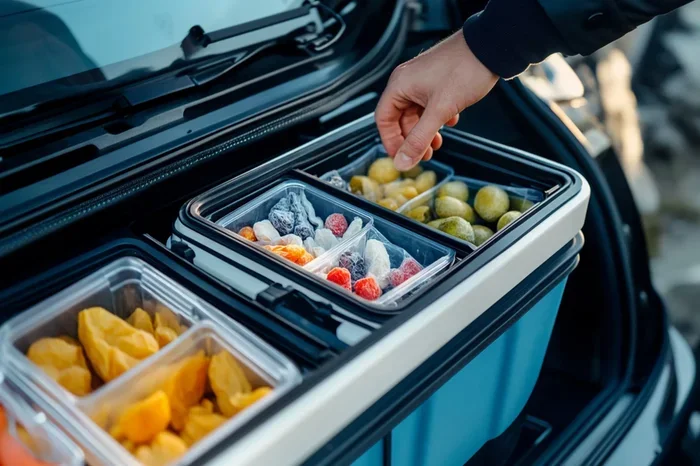
A good cooler is the best investment for frozen food storage in your car. Hard-sided coolers with thick insulation work the best. They can keep frozen items solid for 24 hours or more if packed properly.
Look for coolers with thick walls and tight-sealing lids. Some premium models are designed specifically for road trip food and long outings. A well-insulated cooler can be the difference between safe food and spoiled meals.
Pack Ice Packs and Frozen Gel Packs
Ice packs are a game-changer for keeping food cold. Unlike loose ice, they do not create a mess, and they last longer. Place them around and on top of your frozen items for maximum cooling effect.
For best results, freeze the ice packs solid before your trip. You can also use frozen water bottles, which double as drinking water as they melt. This is a smart tip for anyone who wants to keep perishable items safe during long drives.
Choose the Right Insulated Bags
If a cooler feels too bulky, insulated shopping bags are a great alternative. Many grocery stores provide them for free. They are not as effective as hard coolers, but they still add valuable insulation.
Some insulated bags come with built-in lining that reflects cold back toward the food. These are perfect for quick trips from the store to your home. They work well for frozen meals and smaller frozen items like frozen vegetables or ice cream.
Keep the Car Cool
If you are driving with frozen food in the car, keep the air conditioning running. Set the temperature to cold and direct the vents toward the back seat or trunk area where your food sits.
Park in the shade whenever possible. Use a windshield sunshade to block direct sunlight. These small steps can lower the car interior heat significantly and help your frozen items stay colder for longer.
Minimize Opening the Cooler or Bag
Every time you open a cooler, warm air rushes in and cold air escapes. This speeds up the thawing process dramatically. Try to plan your access to the food before you open the container.
If you are on a road trip, pack items in the order you plan to eat them. The last item you need should be at the bottom, where it stays coldest. This simple strategy keeps your frozen food storage more efficient throughout the trip.
The Temperature Danger Zone Explained
Food safety experts use a specific range called the temperature danger zone to describe when bacteria grow most rapidly. This zone spans from 40°F to 140°F. Within this range, harmful bacteria like Salmonella, E. coli, and Listeria can double in number every 20 minutes.
When frozen food starts to thaw in your car, it passes through this danger zone quickly. The problem is that you often cannot see, smell, or taste the bacteria that are growing. By the time the food smells off, it may already be unsafe to eat.
Why Bacteria Grow So Fast
Bacteria love warm, moist environments. As frozen food thaws, it releases moisture. That moisture, combined with the warmth of the car, creates the perfect breeding ground for germs. This is why food spoilage happens so fast in hot vehicles.
Meat and dairy products are the most risky. They carry the highest chance of causing foodborne illness if they are not kept properly cold. Always prioritize keeping these items at or below 40°F during transport.
How to Tell If Food Has Been Unsafe
It is not always easy to tell if food has spent too long in the danger zone. Here are some warning signs to watch for:
- The food feels slushy or partially liquid.
- The packaging is wet or has condensation inside.
- The food has an unusual or off smell.
- The texture feels softer than it should be.
- You left it in the car longer than the recommended time.
If you notice any of these signs, it is best to throw the food away. Do not take chances with food safety. The cost of replacing a meal is far less than the cost of food poisoning.
Frozen Food Storage for Road Trips
Road trips are one of the most common situations where frozen food ends up in a car. Whether you are packing meals for the journey or bringing groceries home from a distant store, planning ahead makes all the difference.
Meal Prep Tips for Road Trips
When you are prepping meals for a road trip, think about the entire timeline. How long will the food be in the car? Will you stop to eat? Will you need to keep the food cold for more than a few hours?
Here are some practical tips to make frozen food storage easier on the road:
- Freeze your meals completely the night before you leave.
- Use airtight containers to prevent freezer burn and moisture loss.
- Pack the cooler last so it stays coldest until you need it.
- Keep the cooler in the air-conditioned part of the car, not the trunk.
- Bring a thermometer to check that the food stays below 40°F.
Best Frozen Foods for Road Trips
Not all frozen foods travel well. Some items handle temperature changes better than others. Here are the best options for road trip food that starts out frozen:
- Frozen burritos and wraps (easy to reheat at rest stops)
- Frozen pizza (great for campfire or hotel room cooking)
- Frozen fruit and smoothie packs
- Frozen protein bars and snacks
- Frozen dumplings and spring rolls
These items are forgiving and tend to taste good even if they thaw slightly during transport. They are also easy to prepare with minimal equipment, which makes them ideal for travel.
Common Mistakes People Make
Even well-meaning people make mistakes when it comes to frozen food storage in their vehicles. Being aware of these common errors can help you avoid food waste and keep your family safe.
Leaving Grocery Bags on the Back Seat
This is one of the most common mistakes. People buy frozen groceries, toss them in the back seat, and forget about them. By the time they get home, the items may have thawed significantly. On a warm day, this can happen in less than an hour.
Always make the grocery run the last stop of your day. If that is not possible, use a cooler or insulated bag right away. Do not leave frozen food sitting in a warm car while you run other errands.
Assuming the Car AC Will Keep Food Cold
Some people think that because the car is running with the AC on, frozen food will stay frozen. This is not always true. The AC keeps the cabin cool, but it does not reach the same cold temperatures as a freezer.
Even with the AC blasting, the back seat or trunk area may not stay cold enough for long-term frozen food storage. Use a cooler as your primary method, and treat the car AC as a helpful bonus, not a reliable solution.
Not Checking the Food Before Eating
It is easy to assume that frozen food is still safe if it looks frozen on the outside. But the inside may have thawed, especially with thicker items like frozen meat or large meals.
Always check the internal temperature of the food before you eat it. If it feels soft or slushy throughout, it may have entered the danger zone. When in doubt, throw it out.
Expert Tips for Frozen Food Transport
We asked food safety experts for their top tips on transporting frozen food in vehicles. Here is what they recommend:
Use a Thermometer in Your Cooler
A small digital thermometer is one of the best tools for frozen food storage on the go. Place it inside the cooler so you can monitor the temperature at a glance. If the temperature rises above 40°F, it is time to either eat the food or find a way to cool it down.
Pre-Chill Your Cooler
Before you pack frozen food into a cooler, chill the cooler itself with ice or frozen gel packs for 15 to 30 minutes. A pre-chilled cooler maintains cold temperatures much better than a room-temperature one.
This small step can add hours of safe frozen food storage time. It is a pro tip that makes a real difference, especially on long trips.
Wrap Items in Aluminum Foil
Aluminum foil acts as an extra layer of insulation. Wrapping frozen items in foil before placing them in a cooler helps reflect cold back toward the food and slows down heat transfer.
This is a simple trick that costs nothing and works surprisingly well. It is especially helpful for frozen meals and frozen vegetables that you want to keep in top condition.
Drive With the Cooler Inside the Cabin
The trunk of a car is not temperature-controlled. It can get extremely hot on a sunny day. For the safest frozen food storage, keep your cooler inside the air-conditioned cabin of the vehicle.
If you must use the trunk, make sure the cooler is high-quality and well-insulated. But for best results, the cabin is always the better choice.
Key Takeaways
- Time Limit Matters: Frozen food should not stay in a car longer than 2 hours in warm weather and no more than 1 hour if temperatures exceed 90°F.
- Car Heat Is the Enemy: A parked car can reach 120°F or more on a sunny day, rapidly thawing frozen items.
- Insulation Helps: Using a quality cooler or insulated bag can double or triple the safe storage window.
- Ice Packs Are Essential: Adding reusable ice packs keeps frozen food colder for much longer than air alone.
- Know the Danger Zone: The temperature danger zone for food is between 40°F and 140°F, where bacteria grow rapidly.
- Check Before Eating: Always inspect frozen food for thawing signs before consuming it after a car trip.
- Plan Ahead: Minimizing the time frozen food spends in the car is the best strategy for food safety.
Conclusion
Knowing how long frozen food can stay in a car is more important than most people realize. The difference between a safe meal and a food safety risk often comes down to minutes and degrees. With the right approach, you can protect your food, your health, and your wallet.
Remember the basic rules. Keep frozen food out of the car as long as possible. Use coolers and ice packs. Check temperatures when you can. And never take chances with food that has been sitting in a warm vehicle for too long.
Whether you are running a quick errand or heading out on a cross-country road trip, these tips will help you keep your frozen items safe. A little planning goes a long way when it comes to frozen food storage in your vehicle. Stay cool, stay safe, and enjoy your meals with confidence.
Frequently Asked Questions
How long can frozen food stay in a car during summer?
During summer, when temperatures often exceed 85°F, frozen food should not stay in a car for more than 30 minutes to 1 hour. The interior of a parked car can reach over 120°F, which rapidly thaws frozen items and pushes them into the temperature danger zone where bacteria multiply quickly.
Is it safe to eat frozen food that partially thawed in the car?
If the food still feels frozen solid or only slightly slushy in the center, it is generally safe to refreeze or cook immediately. However, if the food has been in the temperature danger zone (40°F to 140°F) for more than 2 hours, it is best to discard it to avoid the risk of foodborne illness.
Can I leave frozen food in my car overnight?
No, leaving frozen food in a car overnight is not recommended. Even in winter, temperatures can fluctuate, and the food may partially thaw and refreeze, which degrades quality and safety. Always bring frozen items inside as soon as possible after purchasing them.
Does the type of frozen food affect how long it stays safe in a car?
Yes, it does. Dense items like frozen meat and whole meals take longer to thaw than small items like frozen vegetables or ice cream. However, all frozen food is at risk once the temperature rises above 40°F, so time limits apply to every type of frozen item.
What is the best way to transport frozen groceries from the store?
The best method is to use a high-quality cooler packed with frozen gel packs or ice. Place frozen items in the cooler, close the lid tightly, and keep the cooler in the air-conditioned cabin of your car. This approach keeps frozen food at a safe temperature for several hours.
How can I tell if my car is too hot for frozen food?
If the outside temperature is above 60°F and your car has been parked in the sun, the interior is likely too hot for safe frozen food storage. A simple rule of thumb is that if you would feel uncomfortable sitting in the car, your frozen food is also at risk. Using a cooler with ice packs is the best defense in these situations.