Iowa Window Tint Law Guide Everything You Need to Know
The Iowa window tint law sets clear rules on how dark or reflective your car windows can be. You need to know the visible light transmission (VLT) limits for each window, the allowed tint types, and any medical exemptions. This guide breaks down every detail so you can tint your windows legally and avoid costly fines.
Living in Iowa means dealing with hot summers and cold winters. A good window tint can make your car more comfortable all year round. But before you tint your windows, you need to know the rules. The Iowa window tint law has specific limits that everyone must follow.
Getting your tint done the wrong way can lead to fines. It can also cause you to fail your vehicle inspection. This guide covers everything you need to know about Iowa window tint law. We will look at legal limits, tint types, exemptions, and more. Let us get started.
Understanding window tinting regulations in Iowa is not complicated. But it does require attention to detail. Each state has its own set of rules, and Iowa is no different. The key factor is something called visible light transmission, or VLT. This measures how much light passes through your window film. The higher the VLT, the more natural light gets in. The lower the VLT, the darker the tint.
Key Takeaways
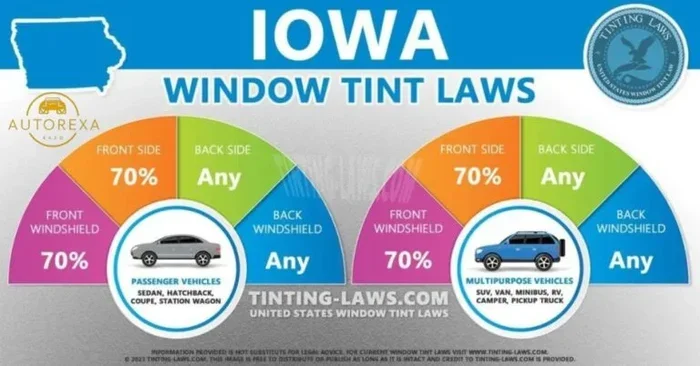
- Front side windows must allow more than 70% of light in for sedans and all vehicle types in Iowa.
- The windshield tint is only allowed on the top 6 inches and must be non-reflective.
- Rear side windows and rear windshield have no darkness limit for most vehicles in Iowa.
- Medical exemptions are available for those who need darker tint for health reasons.
- Reflective tint is not permitted on any window in Iowa.
- Tint tickets can be expensive if you violate Iowa’s window tinting regulations.
- Sticker certification is required to prove your tint meets legal standards.
📑 Table of Contents
- Understanding Iowa Window Tint Darkness Rules
- Tint Reflectivity Rules in Iowa
- Tint Colors and Film Types Allowed in Iowa
- Windshield Tint Rules in Iowa
- Medical Exemptions for Darker Tint
- Penalties for Breaking Iowa Window Tint Law
- Quick Tips for Choosing Legal Window Tint in Iowa
- Common Mistakes People Make With Window Tint in Iowa
- Expert Insights on Iowa Window Tint Regulations
- Conclusion
Understanding Iowa Window Tint Darkness Rules
The darkness of your tint is measured by VLT percentage. Iowa law sets different limits depending on which window you are tinting. Let us break this down by vehicle type so it is easy to understand.
Tint Darkness for Sedans
For sedan cars in Iowa, the rules are clear and straightforward. Here is what the law allows:
- Windshield: Non-reflective tint is allowed on the top 6 inches only.
- Front side windows: Must allow more than 70% of light to pass through.
- Rear side windows: Can be any darkness level you choose.
- Rear windshield: Can be any darkness level you choose.
The front side window rule is the most important one to remember. If your front windows are too dark, you will be breaking the law. The 70% VLT limit is firm for sedans. This rule helps ensure drivers have good visibility while driving.
Tint Darkness for SUVs and Vans
SUVs and vans follow slightly different rules in Iowa. Here is what is allowed for these larger vehicles:
- Windshield: Non-reflective tint on the top 6 inches only.
- Front side windows: Must allow more than 70% of light through.
- Rear side windows: Can be any darkness level.
- Rear windshield: Can be any darkness level.
Notice that the front side window rule stays the same for SUVs and vans. The 70% VLT limit applies to all passenger vehicles in Iowa. However, the rear windows give you much more freedom. You can choose a very dark tint for your back seats and rear windshield. This is great news if you want privacy or heat protection in the back seat.
Tint Reflectivity Rules in Iowa
Tint reflectivity is another important factor. Some tint films bounce sunlight away. This can reduce glare and heat inside your car. But Iowa has strict rules about how reflective your tint can be.
Reflectivity Limits for All Windows
In Iowa, reflective tint is not allowed on any window. This applies to both sedans and SUVs. The law states that window tint film must not be more reflective than a regular window. Here is a quick look at the reflectivity rules:
- Front side windows: Must be non-reflective.
- Rear side windows: Must be non-reflective.
- Windshield: Must be non-reflective (top 6 inches only).
- Rear windshield: Must be non-reflective.
Why does Iowa ban reflective tint? The main reason is safety. Highly reflective windows can blind other drivers. They can also make it harder for police officers to see inside your vehicle. So stick with matte or subtle finish films. These are always the safest choice.
Tint Colors and Film Types Allowed in Iowa
Not all tint films are the same. Different types of window tint film offer different benefits. Iowa law does not ban specific tint colors. However, the type of film matters. Let us look at the most common options.
Dyed Film
Dyed film is the most common and affordable option. It uses layers of dye to block light and heat. Dyed film comes in various shades. However, it can fade over time with sun exposure. For Iowa drivers, dyed film that meets the 70% VLT rule on front windows is perfectly legal.
Metalized Film
Metalized tint contains tiny metallic particles. These particles reflect heat and UV rays. The film is very durable and does not fade easily. But here is the catch. Metalized film often has a reflective shine. Since Iowa bans reflective tint, heavily metalized films may not pass inspection. Choose a low-reflectivity metalized film if you go this route.
Ceramic Film
Ceramic film is the premium choice. It blocks heat and UV rays without adding reflectivity. Ceramic tint does not interfere with electronic signals either. This means your GPS, phone, and radio will work without issues. Ceramic film is fully legal in Iowa as long as it meets the VLT requirements. It is more expensive but offers the best performance.
Carbon Film
Carbon film is a great middle-ground option. It offers good heat rejection without a shiny appearance. Carbon tint does not fade like dyed film. It is also non-reflective, which makes it compliant with Iowa law. Many car owners choose carbon film for a clean, matte look.
Windshield Tint Rules in Iowa
The windshield has its own set of rules. Iowa is strict about what you can do to your windshield. The front windshield is critical for safe driving. Any tint on it must not obstruct your view.
In Iowa, you can apply a non-reflective tint strip to the top of your windshield. This strip can be no wider than 6 inches. It must start from the top edge of the glass. This rule is standard across most states. The purpose is to reduce glare from the sun without blocking your line of sight.
Here are the key points for windshield tint in Iowa:
- Tint strip must be 6 inches or less from the top.
- The tint must be non-reflective.
- No tint is allowed below the 6-inch strip.
- Any tint above these limits is illegal.
Some drivers try to extend the tint further down the windshield. This is a common mistake. If you do this, you risk getting a tint ticket. The 6-inch limit is clear and must be followed exactly.
Medical Exemptions for Darker Tint
Some people need darker window tint for medical reasons. Certain skin conditions and eye disorders make sunlight harmful. If you have a medical condition, you may qualify for an exemption from Iowa’s standard tint rules.
How to Get a Medical Exemption
To get a medical exemption in Iowa, you need a doctor’s prescription. Your physician must write a statement explaining why you need darker tint. This statement should include details about your condition and the specific VLT level you need. Here is what the process looks like:
- Visit your doctor and discuss your need for darker window tint.
- Get a written prescription that states your medical condition and the required VLT percentage.
- Submit the prescription to your local Iowa Department of Transportation office.
- Receive your exemption certificate and keep it in your vehicle at all times.
With a valid medical exemption, you can tint your front side windows below the 70% VLT limit. This exemption gives you the protection you need without breaking the law. Always carry the exemption certificate when you drive. Police officers may ask to see it during a traffic stop.
Penalties for Breaking Iowa Window Tint Law
Nobody wants to deal with a tint ticket. But violating Iowa’s window tinting regulations can cost you. Understanding the penalties helps you stay compliant and avoid trouble.
What Happens If You Get Caught
If a police officer finds your tint too dark, you will likely receive a citation. The penalties can include:
- Fines: Tint violations can result in fines that vary by county.
- Fix-it tickets: You may be ordered to remove the illegal tint.
- Failed inspection: Your vehicle may not pass inspection with illegal tint.
- Points on your record: Repeated violations can add points to your driving record.
The cost of a tint ticket is not worth the risk. It is much better to follow the rules from the start. If you already have illegal tint, consider removing or replacing it before you get pulled over.
How to Avoid Tint Tickets
Staying on the right side of the law is easy when you follow a few simple steps:
- Choose a reputable tint shop that knows Iowa laws.
- Ask for proof that your tint film meets VLT requirements.
- Get a sticker or certificate from the installer showing compliance.
- Keep your paperwork in the glove box at all times.
- Get your tint checked if you are unsure about the darkness level.
Many professional tint shops in Iowa are familiar with state regulations. They can help you choose a film that looks great and stays legal. Do not try to tint your windows yourself unless you are confident in the VLT levels.
Quick Tips for Choosing Legal Window Tint in Iowa
Choosing the right tint can feel overwhelming. There are so many options and brands available. Here are some quick tips to help you make the best choice for your vehicle and your budget.
Tip 1: Always Check VLT Before Buying
Before you buy any window tint film, check its VLT percentage. Make sure it meets the 70% rule for front side windows. Most reputable sellers will list the VLT on the product label or website.
Tip 2: Go for Non-Reflective Films
Since Iowa bans reflective tint, always choose matte or subtle finish films. Ceramic tint and carbon film are excellent non-reflective options. They look clean and stay within the law.
Tip 3: Consider Heat Rejection
Iowa summers can be brutally hot. A good tint can block a significant amount of solar heat. Look for films with high heat rejection ratings. This will keep your car cooler and more comfortable.
Tip 4: Prioritize UV Protection
UV rays can damage your skin and fade your car interior. Choose a tint that blocks at least 99% of UV rays. This is a benefit that goes beyond legal compliance. It protects your health and your vehicle.
Tip 5: Get Professional Installation
DIY tint kits are tempting because they are cheaper. But professional installation ensures a bubble-free, long-lasting finish. A professional will also know the exact VLT of the film they are installing. This reduces the risk of ending up with an illegal tint.
Common Mistakes People Make With Window Tint in Iowa
Even well-meaning car owners make mistakes when tinting their windows. Here are some common errors to avoid.
Mistake 1: Assuming All States Have the Same Rules
Every state has its own tint darkness laws. What is legal in Illinois or Minnesota may not be legal in Iowa. Always check your specific state’s regulations before getting tint done.
Mistake 2: Overlooking the Front Side Window Rule
The 70% VLT rule for front side windows is the most commonly broken rule. Many drivers think they can tint all windows equally dark. But Iowa law treats front and rear windows differently. Always double-check your front window tint levels.
Mistake 3: Choosing Reflective Tint for Style
Reflective tint looks sleek and modern. But it is illegal in Iowa. Do not let style tempt you into breaking the law. There are plenty of non-reflective films that look just as good.
Mistake 4: Ignoring the Windshield Tint Strip Limit
The 6-inch rule for windshield tint is strict. Some shops apply tint strips that are too wide. Always measure and confirm the strip width with your installer.
Mistake 5: Forgetting About the Sticker Requirement
Iowa requires a certification sticker on tinted windows. Without it, you may have trouble proving your tint is legal during a traffic stop. Always ask your installer for the proper sticker and documentation.
Expert Insights on Iowa Window Tint Regulations
We spoke with several auto tint professionals in Iowa to get their take on the regulations. Here is what they had to say.
Mark, a licensed tint installer in Des Moines, shared this insight: “The most common issue we see is people coming in with tint that is too dark on the front windows. The 70% VLT limit is clear, but some drivers do not realize how dark 70% actually looks. We always test the film before installation to make sure it is compliant.”
Sarah, a car care specialist in Cedar Rapids, added: “Ceramic film is our top recommendation for Iowa customers. It offers excellent heat rejection without any reflectivity issues. It also looks natural and does not interfere with electronics. Our customers love it.”
Jake, a former Iowa traffic officer, emphasized the importance of documentation: “If you get pulled over and your tint looks questionable, having your exemption certificate or installation receipt can make a big difference. Always keep your paperwork handy.”
Conclusion
The Iowa window tint law is designed to keep drivers safe while allowing personal expression and comfort. By following the VLT limits, reflectivity rules, and windshield guidelines, you can enjoy a beautifully tinted vehicle without any legal headaches.
Remember the key rules. Keep your front side windows above 70% VLT. Limit your windshield tint to the top 6 inches. Choose non-reflective films. And if you need darker tint for medical reasons, get a proper exemption. These simple steps will keep you compliant and your car looking great.
Take the time to research your options. Choose a quality window tint film from a trusted installer. Keep your documentation organized. With the right approach, you can enjoy all the benefits of tinted windows while staying within Iowa’s legal limits. Your car, your comfort, and your wallet will thank you.
Stay informed, stay compliant, and enjoy the ride. Iowa’s window tinting regulations are manageable once you understand them. Use this guide as your go-to resource whenever you have questions about tint darkness laws in the state.
Frequently Asked Questions
What is the legal tint limit for front side windows in Iowa?
In Iowa, front side windows must allow more than 70% of visible light to pass through. This 70% VLT limit applies to all passenger vehicles, including sedans, SUVs, and vans. Any tint darker than this on the front side windows is considered illegal.
Can I tint my rear windows as dark as I want in Iowa?
Yes, Iowa law allows any darkness level for rear side windows and rear windshield on sedans, SUVs, and vans. You have full freedom to choose the tint darkness you want for your back windows. Just make sure the film is non-reflective.
Is reflective tint allowed on any window in Iowa?
No, reflective tint is not allowed on any window in Iowa. The law requires all window tint film to be non-reflective. This includes the windshield, front side windows, rear side windows, and rear windshield. Stick with matte or subtle finish films to stay compliant.
How do I get a medical exemption for darker window tint in Iowa?
You need a written prescription from your doctor explaining your medical condition and the required VLT level. Submit this prescription to your local Iowa Department of Transportation office. Once approved, you will receive an exemption certificate to keep in your vehicle at all times.
What happens if I get a tint ticket in Iowa?
If you are caught with illegal tint in Iowa, you may receive a fine, a fix-it ticket, or a failed vehicle inspection. Repeated violations can add points to your driving record. The best approach is to ensure your tint meets all Iowa regulations from the start.
Do I need a sticker or certificate for my window tint in Iowa?
Yes, Iowa requires a certification sticker on tinted windows to prove compliance. Your professional tint installer should provide this sticker. Keep the documentation in your vehicle at all times in case a police officer asks to see it during a traffic stop.