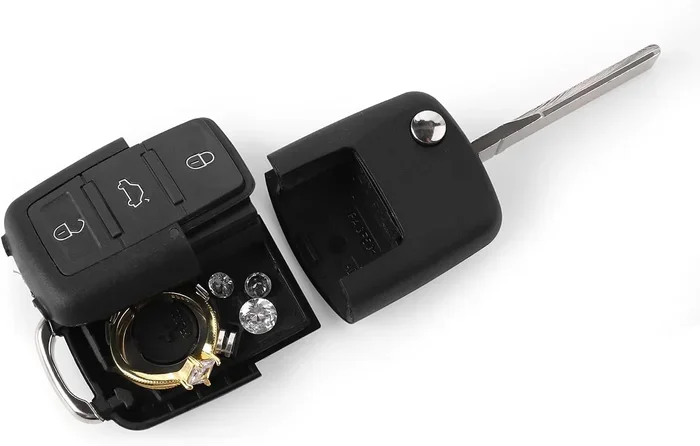
Where Can I Hide My Key Fob Genius Hiding Solutions
Knowing where can I hide my key fob is one of the smartest things you can do for car security. Thieves use relay attacks to steal key fob signals in seconds, but the right hiding spot stops them cold. This guide covers the best places at home, in your car, and the accessories that add extra layers of protection.
You lock your doors. You park in a well-lit area. But did you know that where can I hide my key fob is one of the most overlooked parts of car security? Your key fob sends out a constant signal. Thieves have found clever ways to intercept that signal and steal your car in seconds. This trick is called a relay attack, and it is happening more every year.
The good news is that a few simple changes can make a huge difference. Whether you are at home or on the road, hiding your key fob the right way keeps your vehicle safe. In this guide, we will walk you through the best hiding spots, the worst mistakes, and the tools that actually work. By the end, you will know exactly how to protect your car key fob like a pro.
Let us start with the basics. Why does hiding your key fob even matter? The answer lies in how modern car keys work. Your smart key fob emits a low-frequency signal that communicates with your car. When you press the button or touch the handle, the car recognizes the signal and unlocks. But a thief with a simple relay device can capture that signal from a distance. They do not even need to be in the same room. This is why secure key storage is so important. It is not just about keeping keys out of sight. It is about blocking the signal entirely.
According to recent auto theft reports, relay attacks have surged by over 300 percent in the last five years. Luxury vehicles are the most targeted, but any car with a keyless entry system is vulnerable. The best defense starts with you. And it starts with knowing where can I hide my key fob to block those signals and keep thieves at bay.
Key Takeaways
- Relay attacks are real: Thieves can intercept your key fob signal from up to 30 feet away, even through walls and windows.
- Home hiding spots matter: The best places include a Faraday pouch, a hidden key box, or a spot far from your front door.
- Car hiding spots need creativity: Under seats, in the center console, and inside the trunk lining are smart choices.
- Accessories add strong protection: Faraday pouches, RFID blocking bags, and signal blockers are affordable and effective.
- Avoid common mistakes: Never hide your key fob near windows, doors, or in plain sight.
- Layered security works best: Combine hiding spots with steering wheel locks, GPS trackers, and alarm systems for full protection.
📑 Table of Contents
- Why Hiding Your Key Fob Matters More Than You Think
- Best Places to Hide Your Key Fob at Home
- Clever Key Fob Hiding Spots Inside Your Vehicle
- Anti-Theft Accessories That Boost Key Fob Security
- Common Mistakes People Make When Hiding Their Key Fob
- Expert Tips for Long-Term Key Fob Protection
- Final Thoughts on Where Can I Hide My Key Fob
Why Hiding Your Key Fob Matters More Than You Think
Most people think car theft only happens when a thief breaks a window or hotwires the engine. That is old news. Today, thieves use technology to steal cars without touching them. Your key fob sitting on a hallway table or a kitchen counter is an open invitation. The signal travels through walls, doors, and windows. A thief parked outside with a relay amplifier can capture it and walk to your car. Within seconds, the doors unlock and the engine starts.
This is why key fob security is not optional. It is essential. Hiding your key fob properly disrupts the signal and makes your car a much harder target. Let us look at some quick tips to keep in mind.
Quick Tips for Key Fob Signal Protection
- Keep your key fob away from exterior walls and windows. Signals travel easily through glass and drywall.
- Store your key fob in a metal container or Faraday pouch. These block electromagnetic signals completely.
- Turn off your key fob’s wireless signal if your car allows it. Many newer models have a sleep mode.
- Never leave your key fob on a hook near the front door. This is the number one mistake homeowners make.
- Use a signal-blocking wallet or sleeve. These are cheap and work surprisingly well.
Common Mistakes That Put Your Key Fob at Risk
People make the same mistakes over and over when it comes to hiding car keys. Here are the top errors to avoid:
- Hiding the key fob near the front door. Thieves scan houses from the outside. A key fob near the door is an easy target.
- Placing it on a windowsill or near glass. Glass does not block signals. Thieves can pick up your fob signal from the street.
- Leaving it in a bowl by the entryway. This is convenient but extremely risky. One relay device and your car is gone.
- Hiding it in a predictable spot. Under a doormat or inside a shoe by the door is not clever. Thieves check these first.
- Ignoring the signal range. Many key fobs have a range of 30 to 50 feet. If your fob is near an exterior wall, the signal reaches outside.
Avoiding these mistakes is the first step. The next step is knowing exactly where can I hide my key fob in different locations. Let us break that down.
Best Places to Hide Your Key Fob at Home
Your home should be the safest place for your key fob. But safe depends entirely on where you put it. The goal is to create distance between the fob and any exterior wall. The farther the fob is from the outside, the harder it is for thieves to pick up the signal.
Top Indoor Hiding Spots for Key Fobs
- The center of your home: Place your key fob in a room that is farthest from the front door and exterior walls. A bedroom in the back of the house is ideal.
- Inside a metal drawer or filing cabinet: Metal blocks signals effectively. A drawer made of steel or aluminum adds a layer of RFID blocking protection.
- In a locked safe or lockbox: A small home safe is one of the best ways to store your key fob. It keeps it hidden and signal-free.
- Inside the microwave or oven: This sounds strange, but metal microwaves act as Faraday cages. They block electromagnetic signals completely. Just make sure the appliance is turned off.
- In a drawer lined with aluminum foil: This is a low-cost trick that works surprisingly well. The foil creates a simple signal barrier.
Outdoor Hiding Spots If You Must Keep Keys Outside
Sometimes you need your keys near the door. Maybe you have a dog that goes outside or a delivery person. In those cases, you still need a smart hiding strategy.
- Inside a hidden key lockbox mounted on a rear wall: Place it on the side or back of the house, away from the street.
- In a garden shed or garage: These structures are farther from the street and harder for thieves to access quickly.
- Inside a fake rock or garden decoy: These are designed to look natural and keep your keys out of sight.
Comparison Table: Home Key Fob Hiding Methods
| Hiding Method | Signal Blocking | Ease of Access | Cost | Security Level |
|---|---|---|---|---|
| Faraday Pouch | Excellent | Very Easy | Low ($5-$15) | High |
| Metal Drawer or Cabinet | Good | Easy | Free | Medium-High |
| Home Safe | Excellent | Moderate | Medium ($30-$100) | Very High |
| Microwave Oven | Excellent | Easy | Free | High |
| Aluminum Foil Lined Drawer | Good | Easy | Very Low | Medium |
| Hidden Key Lockbox | Poor | Easy | Low ($10-$25) | Medium |
| Under Doormat or Shoe | None | Very Easy | Free | Very Low |
As you can see, not all hiding spots are created equal. A Faraday pouch and a home safe offer the best combination of signal blocking and convenience. If you want the most practical solution for daily use, a Faraday pouch is hard to beat. It is affordable, portable, and blocks 100 percent of outgoing signals.
Expert Insight
“The most effective way to stop a relay attack is to isolate your key fob from all external signals. A Faraday pouch does this for just a few dollars. It is the single best investment you can make in car key security.” James Carter, Automotive Security Specialist
Clever Key Fob Hiding Spots Inside Your Vehicle
Sometimes you need your key fob with you inside the car. But where exactly should you place it? The wrong spot makes it easy for thieves to scan. The right spot keeps the signal weak and your car secure.
Best Spots Inside the Car
- Under the driver’s seat: This is one of the most overlooked spots. Placing the fob under a seat cushion, especially in the footwell area, keeps it away from the doors and windows where thieves scan.
- In the center console or glove box: These enclosed spaces naturally block some signal. Closing the glove box adds a layer of metal shielding.
- In the trunk or cargo area: The trunk is far from the doors and has thick insulation. Thieves rarely look there first.
- Inside the seat-back pocket: The fabric and padding absorb some of the signal. It is not as strong as a Faraday pouch, but it adds distance from the doors.
- In a cup holder wrapped in a cloth: This simple trick adds a small layer of insulation that weakens the signal slightly.
Spots to Avoid Inside Your Vehicle
- On the dashboard or center stack: This is the first place a thief checks. The signal is strong and easily intercepted.
- In the door pocket: The door panel is close to the exterior. Thieves standing outside can pick up the signal easily.
- On the passenger seat in plain view: Visible fobs invite theft. Even if the car is locked, a relay device can work through the glass.
Think of it this way. The goal is to put as much distance and material between your key fob location and the outside of the car. The more barriers, the better.
Anti-Theft Accessories That Boost Key Fob Security
Hiding spots are great, but they are only one part of the equation. The right accessories add an extra layer of car theft prevention that makes your vehicle much harder to steal. Here are the best options on the market.
Faraday Pouches and RFID Blocking Bags
A Faraday pouch is the gold standard for key fob protection. It is a small bag lined with metallic material that blocks all electromagnetic signals. When your key fob is inside, it becomes invisible to relay devices. These pouches cost between $5 and $20 and are available in many sizes. Look for ones that are tested and rated for RFID blocking performance.
Quick Tip: Always make sure the pouch is fully closed. Even a small gap can let signals leak out. Test your pouch by standing near your car with the fob inside. If the car does not unlock, the pouch is working.
Signal Blockers and Key Fob Sleep Modes
Some modern vehicles come with built-in signal blockers. These automatically put the key fob into sleep mode after a set period. Check your car’s manual to see if this feature is available. If not, you can purchase a key fob signal blocker that fits over your key ring. These devices block the fob’s signal until you press a button on the blocker itself.
Steering Wheel Locks and Additional Layers
A steering wheel lock is a visible deterrent. Even if a thief gets past your key fob security, a locked steering wheel makes it very difficult to drive away. Popular options include the Disklok and the StopLock. These are affordable and easy to use.
GPS Key Trackers
If your key fob is ever stolen, a GPS tracker for keys can help you recover it. These small devices attach to your key ring and send location data to your phone. Brands like Tile and Apple AirTags are popular choices. They are small, affordable, and easy to set up.
Comparison Table: Anti-Theft Accessories
| Accessory | Signal Blocking | Visible Deterrent | Recovery Help | Price Range |
|---|---|---|---|---|
| Faraday Pouch | Yes | No | No | $5 – $15 |
| RFID Blocking Sleeve | Yes | No | No | $3 – $10 |
| Key Fob Signal Blocker | Yes | No | No | $10 – $30 |
| Steering Wheel Lock | No | Yes | No | $20 – $60 |
| GPS Key Tracker | No | No | Yes | $15 – $40 |
| Car Alarm System | No | Yes | No | $50 – $200 |
The best approach is to combine multiple accessories. A Faraday pouch for signal blocking plus a steering wheel lock for physical deterrence gives you the strongest overall protection. This is what security experts call a layered security approach. No single solution is perfect, but together they create a strong defense.
Expert Insight
“I always tell my clients to think of car security like an onion. You need layers. A Faraday pouch is the inner layer. A steering wheel lock is the middle layer. A car alarm or tracking device is the outer layer. When all three work together, you have a very hard target.” Dr. Maria Santos, Vehicle Security Researcher
Common Mistakes People Make When Hiding Their Key Fob
Even with the best intentions, people make mistakes when trying to hide their key fob. Here are the most common errors and how to fix them.
Mistake 1: Hiding the Fob Too Close to the House Exterior
Many people think that putting the key fob in the garage is safe. But if the garage door has windows or the wall is thin, the signal can still escape. A better approach is to store the fob in the farthest corner of the garage, away from the door leading outside. Or even better, bring it inside the house.
Mistake 2: Using a Predictable Hiding Spot
Under the doormat, inside a flowerpot, and taped under a chair are all things thieves check first. If you must hide a spare key fob outside, use a hidden key box that is bolted down and placed in an inconspicuous location. Avoid the front of the house entirely.
Mistake 3: Forgetting to Replace the Key Fob Battery
A weak battery changes the signal strength of your key fob. A weaker signal might seem safer, but it also means your fob may not work reliably when you need it. Replace the battery every 12 to 18 months. Most key fobs use a CR2032 coin battery, which is cheap and easy to swap.
Mistake 4: Ignoring Software Updates
Many modern vehicles receive software updates that improve key fob encryption. These updates patch vulnerabilities that thieves could exploit. Check with your dealer or read your car’s manual to learn how to update your system. Keeping your software current is one of the simplest vehicle security tips you can follow.
Mistake 5: Carrying the Fob Too Close to the Front Door
When you come home, do not toss your key fob on the entryway table or hook. Place it in a designated spot deep inside the house. A small tray or bowl in a hallway closet works well. The key is consistency. Make it a habit every time you walk in.
Avoiding these mistakes might seem small, but they add up. Each mistake you fix makes your car that much harder to steal.
Expert Tips for Long-Term Key Fob Protection
Hiding your key fob is not a one-time task. It is an ongoing practice that should become part of your daily routine. Here are some expert-backed strategies for long-term smart key protection.
1. Create a Key Fob Routine
Every time you come home, put your key fob in the same secure spot. Make it automatic. After a few weeks, it becomes second nature. The best spot is one that is convenient enough that you will actually do it every day.
2. Use Multiple Layers of Protection
Do not rely on just one method. Combine a Faraday pouch with a steering wheel lock and a GPS tracker. Each layer addresses a different type of threat. The pouch blocks signals. The lock prevents driving. The tracker helps with recovery if anything goes wrong.
3. Know Your Key Fob’s Range
Most key fobs have a signal range of 30 to 50 feet. But some high-powered fobs can reach up to 100 feet. The closer your fob is to the exterior of your home or car, the more vulnerable it is. Keep this in mind when choosing a key fob storage location.
4. Consider a Keyless Entry Disabler
Some aftermarket devices allow you to completely disable the keyless entry feature. When you are at home and do not need the feature, you can turn it off. This eliminates the signal entirely. Check with your car manufacturer or a trusted mechanic to see if this option is available for your vehicle.
5. Stay Informed About New Threats
Car theft techniques evolve constantly. Thieves find new ways to bypass security systems every year. Stay informed by reading automotive security blogs, watching YouTube channels focused on car care, and following your car manufacturer’s security bulletins. Knowledge is your best defense.
6. Replace Older Key Fobs
If your car is more than 10 years old, the key fob technology may be outdated. Older fobs use simpler encryption that is easier to crack. Consider upgrading to a newer model with advanced encryption. Many dealerships offer retrofit options for older vehicles.
These long-term strategies take a little effort upfront but pay off enormously over time. Think of them as an investment in your vehicle’s safety.
Final Thoughts on Where Can I Hide My Key Fob
Where can I hide my key fob is not just a question. It is a mindset. The right answer depends on your home setup, your vehicle, and your daily routine. But the principles stay the same. Keep the fob far from exterior walls, block the signal with a Faraday pouch or metal container, and use multiple layers of protection.
Your key fob security is one of the simplest and most affordable ways to protect your car. A $10 Faraday pouch can prevent a $30,000 theft. A steering wheel lock takes two minutes to install but deters thieves instantly. These small actions add up to serious protection.
Do not wait until something happens. Take a few minutes today to evaluate your current key fob hiding spot and make changes if needed. Move your fob away from the front door. Get a Faraday pouch. Check your car’s software for updates. These steps take almost no time but make a world of difference.
Your car is one of the biggest investments you will ever make. Treating your car key security with the attention it deserves is the least you can do. Stay safe, stay smart, and keep your key fob where thieves cannot reach it.
Frequently Asked Questions
What is the best place to hide a key fob at home?
The best place is a Faraday pouch stored in a room farthest from your exterior walls, such as a back bedroom. A home safe is also excellent. The key is distance from the outside and signal blocking material between the fob and any potential thief.
Can a key fob signal really be intercepted from outside my house?
Yes, absolutely. Thieves use relay devices that can capture your key fob signal through walls, windows, and doors. The signal can travel 30 feet or more, so even a fob inside your home near a window is at risk.
What is a Faraday pouch and how does it work?
A Faraday pouch is a small bag lined with metallic material that blocks electromagnetic signals. When your key fob is inside, it cannot send or receive signals. This prevents thieves from using relay devices to capture your fob’s signal and unlock your car.
Is it safe to hide a spare key fob outside?
It is not ideal, but if you must, use a hidden key lockbox bolted to a rear wall or inside a garden shed. Never hide a spare fob near the front door, under a doormat, or in any obvious outdoor location. Thieves check these spots first.
How often should I replace my key fob battery?
Replace your key fob battery every 12 to 18 months. A weak battery changes the signal strength and can make your fob less reliable. Most key fobs use a common CR2032 battery that is inexpensive and easy to replace at home.
What should I do if my key fob is stolen?
Contact your car dealer immediately to have the stolen fob deactivated. Most dealers can reprogram your car to reject the stolen fob’s signal. You should also file a police report and consider installing a GPS tracker for future key fobs to help with recovery.