What Does Service AWD Mean on Your Dodge Journey Explained
The “Service AWD” message on a Dodge Journey means the all-wheel drive system needs attention. This warning light can appear for several reasons, including low fluid levels, faulty sensors, or worn drivetrain parts. Understanding what triggers this alert helps you address the problem early and avoid costly repairs down the road.
If you own a Dodge Journey, you have probably seen the “Service AWD” message pop up on your dashboard at some point. It can be confusing and even a little scary if you do not know what it means. The good news is that this warning does not always mean your vehicle is about to break down. However, it does mean that something in the all-wheel drive system needs your attention.
This guide breaks down everything you need to know about the Service AWD message. We will cover what it means, why it shows up, what causes it, and how to fix it. Whether you are a seasoned driver or new to the Dodge Journey, this article will help you understand your vehicle better.
The AWD system in the Dodge Journey is designed to send power to all four wheels. This improves traction, especially in slippery or uneven terrain. When the system detects a problem, it triggers the Service AWD warning to let you know something is off. Think of it as your vehicle asking for help before a small issue turns into a big one.
Key Takeaways
- Service AWD alerts drivers to a problem: The message indicates the AWD system is not functioning correctly and needs inspection.
- Common causes include low fluid and sensor issues: Transfer case fluid leaks, wheel speed sensors, and ABS sensors are frequent culprits.
- Driving with the light on is risky: Ignoring the warning can lead to further drivetrain damage and unsafe driving conditions.
- Repair costs vary widely: Simple fixes like sensor replacement cost less, while major drivetrain repairs can be expensive.
- Regular maintenance prevents the warning: Routine fluid checks and inspections keep the AWD system running smoothly.
- DIY diagnostics can help: Basic checks like inspecting fluid levels and looking for leaks can save time and money.
- Professional diagnosis is recommended: A qualified mechanic can use diagnostic tools to pinpoint the exact issue quickly.
📑 Table of Contents
- What Does Service AWD Mean on a Dodge Journey?
- Common Reasons the Service AWD Light Appears
- What Happens If You Ignore the Service AWD Warning?
- How to Diagnose the Service AWD Issue
- How Much Does It Cost to Fix the Service AWD Issue?
- Preventing Future Service AWD Warnings
- When to See a Professional Mechanic
- Final Thoughts on the Service AWD Warning
What Does Service AWD Mean on a Dodge Journey?
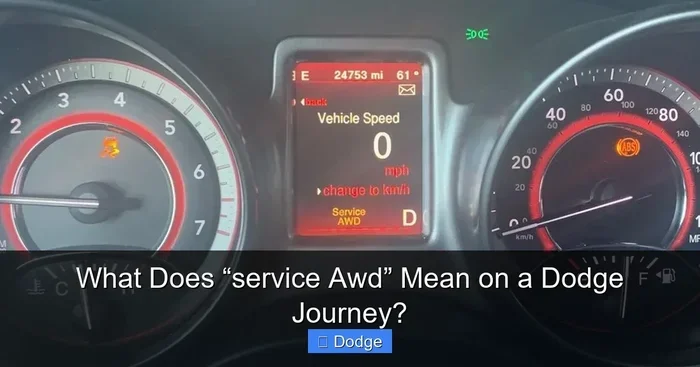
The Service AWD message is a dashboard alert that tells the driver the all-wheel drive system is not working as it should. It does not mean the AWD system has completely failed. Instead, it is a heads-up that something needs to be checked. The message may appear as a simple text notification on the instrument cluster or as a warning light shaped like a vehicle with wavy lines underneath.
The AWD system relies on several components working together. These include the transfer case, front and rear differentials, wheel speed sensors, and the electronic control module. When any one of these parts sends an error signal, the system activates the Service AWD warning. It is similar to how a wrench light can signal a broader vehicle issue — it is your car’s way of communicating that maintenance is needed.
How the AWD System Works in the Dodge Journey
The Dodge Journey uses an automatic AWD system. This means the vehicle normally sends power to the front wheels. When traction is needed, the system redirects power to the rear wheels automatically. A transfer case controls this distribution. Sensors monitor wheel speed, road conditions, and driver input to decide when to engage the rear wheels.
When the system detects a mismatch in wheel speed, a loss of fluid pressure, or a sensor failure, it flags the issue. The Service AWD message then appears on the dashboard. This early warning system is designed to protect the drivetrain from further damage.
Common Reasons the Service AWD Light Appears
Several issues can trigger the Service AWD warning on a Dodge Journey. Some are simple and easy to fix. Others require more involved repairs. Understanding the most common causes helps you know what to expect when you see this message.
Low Transfer Case Fluid
The transfer case is the heart of the AWD system. It holds special fluid that lubricates the gears and keeps everything running smoothly. Over time, this fluid can leak or burn off. When the fluid level drops too low, the system cannot function properly. The Service AWD message appears as a result.
Checking the transfer case fluid is one of the first steps when this warning shows up. The fluid should be clear and reddish in color. If it looks dark or smells burnt, it is time for a change. Keeping up with fluid changes is one of the easiest ways to prevent Service AWD warnings.
Faulty Wheel Speed Sensors
Wheel speed sensors monitor how fast each wheel is spinning. The AWD system uses this data to distribute power evenly. When a sensor fails or gets dirty, it sends incorrect readings to the control module. This confuses the system and triggers the Service AWD alert.
Wheel speed sensors are relatively inexpensive to replace. However, if left unchecked, they can cause bigger problems with the traction control and ABS systems. If you notice the Service AWD light along with other warning lights, the sensors are a likely suspect.
Worn Front or Rear Differential
The differential allows the wheels on each axle to spin at different speeds. This is essential for smooth turning. Over time, the gears inside the differential wear down. This can cause noise, vibration, and eventually trigger the Service AWD warning.
Differential wear is more common in older Dodge Journeys or vehicles that have been driven hard. Regular inspections can catch early signs of differential problems before they escalate into expensive repairs.
Electrical Issues and Wiring Problems
The AWD system depends on a network of wires and connectors. Corrosion, frayed wires, or loose connections can disrupt the flow of information between sensors and the control module. When the system loses communication, the Service AWD message appears on the dash.
Electrical issues can be tricky to diagnose because the symptoms are often intermittent. The light might come and go depending on driving conditions or temperature. A mechanic with the right diagnostic tools can trace these problems effectively.
Faulty Transfer Case Motor
The transfer case motor is responsible for shifting between two-wheel and four-wheel drive modes. When this motor fails, the AWD system cannot engage properly. The Service AWD warning is one of the first signs of a bad transfer case motor.
Replacing a transfer case motor is a moderate repair. The cost depends on the model year of your Dodge Journey. In some cases, the motor can be rebuilt instead of replaced, which saves money.
What Happens If You Ignore the Service AWD Warning?
It can be tempting to ignore a dashboard warning and just keep driving. After all, the Dodge Journey might seem to run fine. However, ignoring the Service AWD message can lead to serious consequences over time.
When the AWD system is not working correctly, the vehicle relies only on the front wheels for power. This puts extra stress on the front tires and drivetrain components. In wet or icy conditions, this can make the vehicle much harder to control. Safety should always come first.
Small problems also tend to grow when left unaddressed. A simple sensor replacement might cost around $100 to $200. But if that sensor issue damages the transfer case or differential, the repair bill can climb into the thousands. Addressing the Service AWD warning early is always the smarter choice.
Additionally, some drivers wonder whether they can still drive the vehicle safely. In most cases, yes, you can drive short distances with the Service AWD light on. However, you should avoid rough terrain, highway driving in bad weather, and long trips until the issue is resolved. Think of it the same way you would think about how long a car can idle safely — short periods are usually fine, but prolonged neglect causes damage.
How to Diagnose the Service AWD Issue
Diagnosing the Service AWD message starts with a few basic steps. You do not need to be a mechanic to perform these checks. However, if you are not comfortable working under the vehicle, a professional can handle everything for you.
Step 1: Check the Transfer Case Fluid
Locate the transfer case dipstick or fill plug. Check the fluid level and condition. Low or dirty fluid is one of the most common reasons for the Service AWD warning. Top off or change the fluid as needed and see if the message clears.
Step 2: Inspect for Leaks
Look under the vehicle for any signs of fluid leaks. The transfer case, front differential, and rear differential all have seals that can wear over time. Puddles of fluid underneath the vehicle are a clear sign that something needs attention.
Step 3: Use an OBD-II Scanner
An OBD-II scanner can read the error codes stored in the vehicle’s computer. These codes point directly to the source of the problem. Many auto parts stores offer free code reading services. The codes will tell you whether the issue is related to a sensor, the transfer case, or the electrical system.
Step 4: Inspect the Wiring and Connectors
Look at the wiring harnesses connected to the AWD components. Check for frayed wires, corroded connectors, or loose plugs. Sometimes the fix is as simple as cleaning a corroded connector or securing a loose wire.
How Much Does It Cost to Fix the Service AWD Issue?
The cost of repairing the Service AWD issue on a Dodge Journey varies depending on the root cause. Here is a general breakdown of what you can expect.
| Repair | Estimated Cost | Difficulty Level |
|---|---|---|
| Transfer case fluid change | $100 – $200 | Easy |
| Wheel speed sensor replacement | $100 – $250 | Moderate |
| ABS sensor replacement | $150 – $300 | Moderate |
| Transfer case motor replacement | $400 – $800 | Moderate to Hard |
| Differential repair or rebuild | $500 – $1,500 | Hard |
| Wiring harness repair | $100 – $400 | Varies |
These costs are estimates and can vary based on your location, the model year of your Dodge Journey, and whether you choose a dealership or independent mechanic. Labor rates tend to be lower at independent shops, but dealerships have access to factory tools and technical support.
Some owners also wonder if they can handle these repairs themselves. Simple tasks like checking fluid levels or replacing a sensor are doable for DIY enthusiasts. More complex jobs like differential rebuilds or transfer case motor replacement are best left to professionals. If you are unsure, it is always worth getting a second opinion before committing to a major repair.
Preventing Future Service AWD Warnings
The best way to deal with the Service AWD message is to prevent it from appearing in the first place. Regular maintenance goes a long way toward keeping the AWD system healthy and reliable.
- Check fluid levels regularly: Make it a habit to inspect the transfer case fluid every few months. Top it off as needed and change it according to the manufacturer’s schedule.
- Inspect for leaks during oil changes: Ask your mechanic to look under the vehicle for any signs of fluid leaks whenever you get an oil change or other routine service.
- Address warning lights promptly: Do not wait for multiple lights to appear. The moment you see the Service AWD message, get it checked out. Early action saves money.
- Drive smoothly: Avoid harsh acceleration, sudden braking, and aggressive cornering. Smooth driving reduces stress on the drivetrain components.
- Keep up with scheduled maintenance: Follow the Dodge Journey’s maintenance schedule closely. Regular service appointments catch small issues before they become big problems.
- Monitor tire condition: Uneven tire wear can put extra strain on the AWD system. Rotate your tires regularly and keep them properly inflated.
Taking care of your Dodge Journey’s AWD system also means taking care of the rest of the vehicle. For example, proper maintenance extends the life of many components, much like understanding how long it takes to fit a new bumper helps you plan for body repairs. Every part of the vehicle works together, and the AWD system is no different.
When to See a Professional Mechanic
While some Service AWD issues are simple to fix, others require professional expertise. If the warning light stays on after checking the fluid and inspecting for leaks, it is time to visit a mechanic. The same applies if you notice unusual noises, vibrations, or handling problems while driving.
A professional mechanic has access to advanced diagnostic equipment that can read error codes and pinpoint the exact cause of the Service AWD message. This saves time and prevents unnecessary part replacements. Dealership technicians are especially familiar with the Dodge Journey’s AWD system and can provide manufacturer-specific repairs.
If you are considering whether to visit a dealership or an independent shop, both have their advantages. Dealerships offer factory-trained technicians and genuine parts. Independent shops often provide faster service and lower labor costs. Choose whichever option gives you the most confidence in the repair quality.
Final Thoughts on the Service AWD Warning
The Service AWD message on a Dodge Journey is not something to panic about, but it is also not something to ignore. It is your vehicle’s way of telling you that the all-wheel drive system needs attention. Whether the cause is a simple low fluid level or a more complex sensor failure, addressing the issue promptly keeps your Journey safe and reliable.
Regular maintenance, attentive driving, and quick responses to warning lights are the keys to a long-lasting AWD system. The Dodge Journey is a capable and versatile vehicle, and with proper care, it will continue to deliver solid performance for many miles to come. Stay proactive, stay informed, and your vehicle will reward you with years of dependable service.
Frequently Asked Questions
Can I still drive my Dodge Journey with the Service AWD light on?
In most cases, yes, you can drive short distances with the Service AWD light on. However, the vehicle may not distribute power to all four wheels properly. Avoid rough terrain and bad weather until the issue is resolved. If you notice any handling problems, stop driving and seek help immediately.
How much does it cost to fix the Service AWD issue on a Dodge Journey?
The cost depends on the root cause. Simple fixes like fluid changes or sensor replacements can cost between $100 and $250. More complex repairs like a transfer case motor or differential rebuild can range from $400 to $1,500. Always get a detailed estimate before approving any major repair work.
What causes the Service AWD light to come on in a Dodge Journey?
The most common causes include low transfer case fluid, faulty wheel speed sensors, worn differentials, electrical wiring issues, and a bad transfer case motor. Each of these problems disrupts the AWD system’s ability to function correctly, triggering the warning message on the dashboard.
Can I reset the Service AWD light myself?
Resetting the light without fixing the underlying problem is not recommended. The warning will likely return once the system detects the same issue again. Use an OBD-II scanner to clear the code only after the repair is complete. This ensures the AWD system is truly functioning as it should.
Is the Service AWD warning the same as the check engine light?
No, the Service AWD warning is specific to the all-wheel drive system. The check engine light relates to the engine and emissions systems. However, both are important dashboard alerts that should be addressed promptly. A mechanic can read codes from both systems to determine the exact problem.
How often should I check my Dodge Journey’s AWD fluid?
It is a good practice to check the transfer case fluid every 5,000 to 10,000 miles or during every oil change. Regular checks help you catch low fluid levels early, which prevents the Service AWD warning and protects the drivetrain from unnecessary wear and tear.
=== CONCLUSION ===
The Service AWD message on your Dodge Journey is a clear signal that the all-wheel drive system needs attention. Whether it is a simple fluid top-off or a more involved sensor replacement, addressing the issue quickly keeps your vehicle safe and running at its best. Do not ignore the warning, and do not panic either. Use the steps outlined in this guide to diagnose the problem, understand the costs involved, and take the right action. Your Dodge Journey is built to perform, and with proper care, the AWD system will keep you confident on every road you travel.