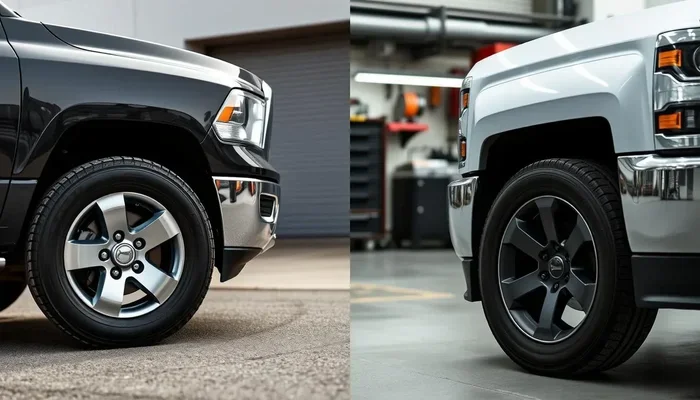
Will Chevy Rims Fit a Dodge Truck Or SUV Correctly
Will Chevy rims fit a Dodge? The answer depends on bolt pattern, wheel offset, hub bore, and rim width. While some Chevy and Dodge vehicles share the same 5x127mm bolt pattern, differences in hub bore and backspacing can cause fitment issues. This guide breaks down every spec you need to check before buying.
Key Takeaways
- Bolt pattern is king: A matching bolt pattern is the first and most important requirement for rim compatibility between Chevy and Dodge vehicles.
- Hub bore matters too: Even with the right bolt pattern, a mismatched hub bore will cause vibration and unsafe driving.
- Offset and backspacing affect clearance: Wrong offset can cause rubbing on fenders or suspension components.
- Adapters exist but have limits: Wheel adapters can solve some fitment problems, but they introduce additional risk if not installed correctly.
- Always measure twice: Check all specs before purchasing to avoid costly returns and safety hazards.
- Tire size changes handling: Switching rim sizes affects your speedometer accuracy and overall ride quality.
- Factory wheels are safest: Sticking with OEM specs ensures the best fit and performance.
📑 Table of Contents
- Will Chevy Rims Fit a Dodge Truck or SUV?
- Understanding Bolt Patterns
- Hub Bore Size: The Hidden Fitment Factor
- Offset and Backspacing Explained
- Rim Width and Tire Size Compatibility
- Can You Use Wheel Adapters to Make Chevy Rims Fit a Dodge?
- Step-by-Step Guide to Checking Rim Compatibility
- Common Mistakes People Make When Swapping Rims
- Expert Tips for Choosing the Right Rims
- How Does Rim Fitment Affect Your Dodge’s Performance?
- Final Verdict: Should You Put Chevy Rims on a Dodge?
Will Chevy Rims Fit a Dodge Truck or SUV?
So you want to swap rims between a Chevy and a Dodge. Maybe you found a great deal on a set of used Chevy wheels. Or maybe your Dodge needs a new look and those Chevy rims caught your eye. Either way, the big question is the same: will they actually fit?
The short answer is: it depends. Rim fitment is not a one-size-fits-all situation. Several specs must line up perfectly for a wheel to work safely on a different vehicle. Getting even one number wrong can lead to vibration, poor handling, or worse.
In this guide, we will walk through every spec you need to check. We will cover bolt patterns, hub bore sizes, offset, and more. By the end, you will know exactly whether those Chevy rims will work on your Dodge truck or SUV.
Before you start shopping, take a few minutes to understand the basics. Knowing what to look for saves time, money, and headaches. Plus, it keeps you safe on the road.
Understanding Bolt Patterns
The bolt pattern is the arrangement of lug holes on your wheel. It is the first thing you must match when swapping rims between brands. If the bolt pattern does not line up, the wheel simply will not attach to the hub.
What Is a Bolt Pattern?
A bolt pattern has two numbers. The first number tells you how many lug nuts the wheel has. The second number is the distance between opposite lug holes, measured in millimeters. For example, a 5x127mm pattern means five lug holes arranged in a circle that is 127 millimeters across.
Both Chevy and Dodge trucks commonly use a 5x127mm bolt pattern. This is great news if you want to mix and match. However, not all Chevy and Dodge vehicles share the same pattern. Some older models use different sizes. Always double-check your specific vehicle year and model.
Common Bolt Patterns for Chevy and Dodge
Here are the most common bolt patterns you will encounter:
- Chevy trucks (1500, 2500, 3500): 6×139.7mm for most heavy-duty models and 5x127mm for many lighter trucks
- Dodge Ram trucks: 5x127mm for most models from 2003 onward
- Chevy SUVs (Tahoe, Suburban): 5x127mm on most recent models
- Dodge SUVs (Durango): 5x127mm on current generation models
When both vehicles share the 5x127mm pattern, the bolt pattern check is complete. But remember, this is only one piece of the puzzle. You still need to verify other measurements.
Just like checking if a 4×8 sheet of plywood fits in a vehicle before loading it up, you need to confirm every dimension before mounting a new wheel.
Hub Bore Size: The Hidden Fitment Factor
Hub bore is the center hole of the wheel. It must match the hub on your vehicle’s axle. This is the part that centers the wheel when you bolt it on. Many people overlook this spec, but it matters a lot.
Why Hub Bore Matters
If the hub bore is too large, the wheel will not sit centered on the axle. This causes the wheel to wobble. You will feel vibration through the steering wheel, especially at highway speeds. Over time, this vibration can damage your suspension and steering components.
If the hub bore is too small, the wheel simply will not go on. This is less common but still worth checking before you buy.
Chevy vs Dodge Hub Bore Sizes
Here is where things get tricky. Chevy and Dodge often use different hub bore sizes, even when they share the same bolt pattern.
- Chevy trucks: Hub bore typically around 106.5mm to 110mm depending on the model
- Dodge Ram trucks: Hub bore typically around 114.3mm
These numbers are close but not the same. A Chevy rim made for a 106.5mm hub will not center properly on a Dodge hub that is 114.3mm. This is where hub-centric rings come in handy.
Using Hub-Centric Rings
Hub-centric rings are small spacer rings that fill the gap between the hub bore and the vehicle hub. They cost very little and are easy to install. These rings ensure the wheel sits perfectly centered.
However, hub-centric rings are a workaround, not a perfect solution. They work best when the difference is small. If the bore size is very different, rings alone may not provide a safe fit. Always consult a tire professional before using adapters or rings.
Think of it this way. If you are fitting a new bumper, you want every piece to line up perfectly. The same care applies to wheel fitment.
Offset and Backspacing Explained
Offset and backspacing determine where the wheel sits in relation to the fender and suspension. Even if the bolt pattern and hub bore match perfectly, wrong offset can cause serious problems.
What Is Wheel Offset?
Offset is the distance from the wheel’s mounting surface to its center line. It is measured in millimeters. There are three types of offset:
- Positive offset: The mounting surface is toward the front of the wheel. This pushes the wheel inward toward the fender. Most factory wheels on trucks and SUVs use positive offset.
- Negative offset: The mounting surface is toward the back of the wheel. This pushes the wheel outward, away from the fender. This looks aggressive but can cause rubbing.
- Zero offset: The mounting surface is at the center line of the wheel.
What Is Backspacing?
Backspacing is the distance from the mounting surface to the back edge of the wheel. It is basically the mirror image of offset. Higher backspacing means the wheel sits closer to the suspension. Lower backspacing means the wheel sticks out further.
Why This Matters for Chevy-to-Dodge Swaps
Chevy and Dodge trucks often have different suspension setups. Even small differences in offset can change how the wheel sits in the wheel well. A Chevy rim with the wrong offset on a Dodge might:
- Rub against the fender liner
- Hit the suspension components
- Stick out too far past the fender
- Throw off your alignment
Before buying, compare the offset specs of your current wheels to the wheels you want to buy. A difference of 5 to 10 millimeters can make or break the fitment.
If you are trying to fit something into a tight space, you know how important every inch is. The same logic applies when fitting a new wheel into a wheel well.
Rim Width and Tire Size Compatibility
Rim width affects tire shape and performance. A rim that is too wide or too narrow for your tire can cause unsafe driving conditions. This is especially important when mixing brands.
Recommended Rim Width Ranges
Every tire has a recommended rim width range stamped on the sidewall. Here are some common examples:
- 275/70R18 tire: Best fit on a rim between 7.0 and 9.0 inches wide
- 285/75R17 tire: Best fit on a rim between 7.5 and 9.5 inches wide
- 265/70R17 tire: Best fit on a rim between 6.5 and 8.5 inches wide
Chevy and Dodge trucks often use the same tire sizes on similar models. This makes rim width matching easier. But always verify the exact tire size on your Dodge before purchasing a Chevy rim.
How Rim Width Affects Ride Quality
A rim that is too wide for the tire creates a harsh ride. The tire has less sidewall flex, which means less cushioning. A rim that is too narrow causes the tire to bulge outward. This looks bad and can affect handling.
Stick within the recommended width range printed on the tire sidewall. This is the safest approach for any rim swap between brands.
Can You Use Wheel Adapters to Make Chevy Rims Fit a Dodge?
Wheel adapters are metal plates that change the bolt pattern or offset of a wheel. They can make a Chevy rim fit a Dodge truck in some cases. But they are not without risks.
How Wheel Adapters Work
An adapter bolts to your vehicle’s hub. It changes the lug pattern so a different wheel can attach to it. Adapters can also change the offset by pushing the wheel out or in.
For example, if your Chevy rim has a 6×139.7mm bolt pattern and your Dodge needs a 5x127mm pattern, a 6-to-5 adapter could work. These adapters are widely available and relatively affordable.
Are Wheel Adapters Safe?
This is where opinions differ. Many experts consider adapters safe when:
- They are made from high-quality materials like forged aluminum
- They are installed by a professional
- The correct torque specifications are used on all lug nuts
- They are inspected regularly for wear
However, adapters add an extra layer between the wheel and the vehicle. This can introduce play over time. For daily driving, many people prefer to avoid adapters altogether.
Think of it like fitting a 65-inch TV into a Honda Civic. You can make it work with the right setup, but the fit will never be as clean as the original design intended.
When Adapters Make Sense
Adapters can be a good option for show vehicles or occasional use. If you are going to a car show or off-road event and want a specific look, an adapter might be the answer. For daily driving and towing, stick with wheels that match your vehicle’s specs natively.
Step-by-Step Guide to Checking Rim Compatibility
Now that you understand the key specs, here is a simple step-by-step process to check if Chevy rims will fit your Dodge.
Step 1: Find Your Dodge’s Specs
Look up your Dodge vehicle’s specifications. You can find this information in your owner’s manual or on the manufacturer’s website. Write down the following:
- Bolt pattern (number of lugs and spacing)
- Hub bore diameter
- Factory rim width
- Factory offset
- Recommended tire size
Step 2: Find the Chevy Rim Specs
Check the Chevy rim you want to buy. The specs are usually stamped on the back of the wheel or listed in the product description. Look for:
- Bolt pattern
- Hub bore
- Rim width
- Offset
Step 3: Compare the Numbers
Line up the two sets of numbers. The bolt pattern must match exactly. The hub bore should match or be larger (with rings if needed). The offset should be within 5 millimeters of factory specs.
Step 4: Do a Physical Fitment Check
If possible, try the rim on the vehicle before fully committing. Check for:
- Clearance between the tire and fender
- No rubbing on suspension components
- Proper centering on the hub
- No interference with brake calipers
Step 5: Get a Professional Opinion
When in doubt, visit a tire shop. Most shops will check fitment for free. This is the safest way to ensure everything lines up correctly.
Common Mistakes People Make When Swapping Rims
Even experienced car enthusiasts make mistakes when swapping wheels between brands. Here are the most common errors to avoid.
- Assuming bolt pattern is enough: Matching the bolt pattern alone does not guarantee a proper fit. Hub bore, offset, and width all matter.
- Ignoring hub-centric fitment: Non-hub-centric wheels rely entirely on lug nuts to stay centered. This is less safe than hub-centric fitment.
- Guessing the offset: Never guess the offset. Measure it or buy wheels with specs clearly listed.
- Overlooking tire pressure monitoring sensors: Some aftermarket rims do not work with TPMS sensors. Check compatibility before buying.
- Skipping the test fit: Always test the wheel on the vehicle before driving away. This is the easiest way to catch problems early.
Avoiding these mistakes keeps you safe and saves you money. A few extra minutes of checking can prevent costly returns and dangerous driving conditions.
Expert Tips for Choosing the Right Rims
Want to make the best choice the first time around? Follow these expert tips.
- Stick close to factory specs. Deviating too far from OEM specs affects handling and safety. A difference of 1 to 2 millimeters in offset is usually fine. Anything more requires extra caution.
- Buy from reputable sellers. Reputable sellers provide accurate specs and good return policies. Avoid no-name brands with vague listings.
- Consider all-season use. If you use your truck or SUV year-round, choose rims that perform well in all conditions. Steel rims are durable and practical for daily driving.
- Check for recalls or complaints. Search online for any known issues with the rim model you are considering. Other owners will often share their experiences.
- Factor in the cost of new tires. If you are changing rim sizes, you may also need new tires. Budget for this when planning your purchase.
How Does Rim Fitment Affect Your Dodge’s Performance?
Rim fitment is not just about appearance. The right wheels improve your vehicle’s performance in several ways.
- Handling: Correct offset and width improve cornering stability and steering response.
- Braking: Proper fitment ensures brake calipers have clear access and do not interfere with the wheel.
- Fuel economy: Lighter rims reduce unsprung weight, which can improve gas mileage slightly.
- Ride comfort: The right rim width preserves the tire’s sidewall flex, giving you a smoother ride.
- Tire longevity: Correct fitment prevents uneven tire wear, which means your tires last longer.
On the flip side, wrong fitment can cause all of these problems to get worse. Vibrations, uneven tire wear, poor handling, and even safety hazards can result from a bad rim swap.
Just as you would carefully check whether a 4×8 sheet of plywood fits in a Toyota Highlander before loading it up, take the same care with wheel fitment. Every measurement counts.
Final Verdict: Should You Put Chevy Rims on a Dodge?
The answer comes down to the numbers. If the bolt pattern, hub bore, offset, and rim width all check out, then yes, Chevy rims can fit a Dodge truck or SUV. The shared 5x127mm bolt pattern on many models makes this more feasible than swapping between completely different manufacturers.
However, the hub bore difference is the biggest hurdle. Chevy and Dodge often use different center hub sizes. Hub-centric rings can solve this problem, but they add a layer of complexity.
If you are not comfortable checking all the specs yourself, visit a tire shop or wheel specialist. They have the tools and experience to confirm fitment quickly and accurately.
Remember, wheels are one of the most important safety components on your vehicle. Do not rush the decision. Take your time, do the research, and make a choice you feel confident about.
With the right information and a careful approach, you can find the perfect set of rims that look great and perform safely on your Dodge truck or SUV.
Frequently Asked Questions
Can I put any Chevy rim on any Dodge truck?
Not every Chevy rim will fit every Dodge truck. You must match the bolt pattern, hub bore, offset, and rim width. Many Chevy and Dodge trucks share the 5x127mm bolt pattern, which helps, but other specs still need to align for a safe fit.
Do I need hub-centric rings when putting Chevy rims on a Dodge?
You likely need hub-centric rings if the hub bore sizes differ between the Chevy rim and the Dodge hub. These rings fill the gap and keep the wheel centered. They are inexpensive and easy to install, and they greatly improve safety.
Will putting Chevy rims on my Dodge void the warranty?
It depends on your warranty terms and the dealer. Some manufacturers consider aftermarket wheel fitment issues as a warranty exclusion. Check your warranty documentation or ask your dealer before making the swap.
How much does it cost to buy hub-centric rings?
Hub-centric rings typically cost between $10 and $30 for a set. They are widely available at tire shops and online retailers. Some wheel sellers include them for free with the purchase of the rim.
Can wheel adapters damage my Dodge’s hub?
Poorly installed or low-quality adapters can damage the hub over time. High-quality adapters installed correctly by a professional are generally safe. Always have adapters torqued to the manufacturer’s specifications and inspected regularly.
What happens if the offset is wrong on my new rims?
Wrong offset can cause the tire to rub against the fender or suspension components. It can also throw off your wheel alignment and cause uneven tire wear. In worst cases, it can lead to loss of vehicle control. Always verify offset before purchasing new rims.
=== CONCLUSION ===
Will Chevy rims fit a Dodge? Yes, but only when all the key specs align. The bolt pattern, hub bore, offset, and rim width must all match or be compatible with your Dodge truck or SUV. While the shared 5x127mm bolt pattern makes this swap more possible than many other brand combinations, it is not automatic.
Take the time to measure and compare every spec. Use hub-centric rings if needed, and consider wheel adapters only as a last resort. When in doubt, consult a professional. The right fitment keeps you safe and ensures your wheels look and perform their best.
A little homework goes a long way. With the information in this guide, you are now equipped to make a smart, confident decision about your next set of rims.