Why Wont My Trunk Open Easy Solutions You Can Try Today
Having a trunk won’t open situation is frustrating, but most causes are simple to fix. Whether your car trunk release is stuck due to a dead key fob battery, a broken trunk latch, or a faulty trunk actuator, this guide has you covered. You’ll discover easy solutions you can try right now to get your trunk lid working again.
Having a trunk won’t open situation can throw a serious wrench into your day, especially when you’re carrying groceries, luggage, or anything else you need to store. Whether your car trunk release is unresponsive due to a dead battery or a broken trunk latch, the good news is that most problems are easy to fix yourself. This guide covers the most common reasons your trunk won’t open and gives you practical solutions you can try right now. You’ll learn simple troubleshooting steps, emergency workarounds, and when it’s time to call a professional. Let’s get your trunk back in working order.
Your car’s trunk is one of the most used parts of the vehicle, yet it’s also one of the most overlooked when it comes to regular maintenance. A trunk stuck closed can happen to anyone, regardless of the car’s age or model. Understanding how the trunk release system works and what commonly goes wrong will help you stay calm and solve the problem quickly. This article walks you through every possible cause and fix, so you never have to stand staring at a locked trunk again.
Key Takeaways
- Dead key fob battery is the most common reason a trunk won’t open and is the easiest fix.
- Trunk latch mechanism problems can often be solved with lubrication or a simple replacement part.
- Emergency trunk release handles are legally required in all vehicles and can save you when electronics fail.
- Trunk cable issues are a frequent hidden cause that many car owners overlook.
- Regular maintenance like lubricating the trunk latch can prevent most trunk problems before they start.
- Knowing when to call a mechanic can save you time and money on complex trunk lock repairs.
- Simple troubleshooting steps can resolve the issue in under 10 minutes in most cases.
📑 Table of Contents
Why Your Trunk Won’t Open: Common Causes Explained
When your trunk won’t open, the first thing to do is stay calm and think about what changed recently. Did you replace the batteries in your key fob? Did you hear a strange noise when you tried to open it? These clues can point you toward the right fix. Let’s look at the most common reasons a trunk lock or release stops working.
Dead Key Fob Battery
The number one reason a trunk won’t open is a dead key fob battery. Your remote key fob uses a small coin cell battery to send signals to your car. When that battery dies, the trunk release button on the fob stops working. This is incredibly common and happens to nearly every car owner at some point.
The good news is that replacing a key fob battery is one of the easiest trunk lock repairs you can do. Most key fobs use a CR2032 battery, which you can buy at any grocery store or pharmacy for under a dollar. Pop open the back of the fob, swap the old battery for the new one, and your trunk release should work again immediately.
If you have a smart key system, the same principle applies. The low battery indicator on your dashboard usually gives you a warning before the battery dies completely. If you see that warning light, replace the battery in your key fob as soon as possible to avoid getting stranded with a trunk stuck closed.
Faulty Trunk Lock Cylinder
The trunk lock cylinder is the physical lock mechanism on the outside of the trunk lid. Over time, dirt, rust, and debris can build up inside the cylinder, making it hard or impossible to turn your key. This is especially common in older vehicles or cars that sit outside in wet or salty conditions.
A worn-out lock cylinder can also cause your trunk latch to feel stiff or jammed. You might notice that your key sticks or requires a lot of force to turn. In some cases, the cylinder breaks entirely, leaving you with no way to open the trunk from the outside using a key.
Fixing a faulty lock cylinder usually involves replacing the entire cylinder. This is a relatively inexpensive repair, and you can often do it yourself with basic tools. Just make sure you get the right replacement part for your specific car model.
Broken Trunk Latch Mechanism
The trunk latch mechanism is the metal piece that connects the trunk lid to the car body. When the latch is working properly, it holds the trunk securely closed and releases when you press the open button. But when it breaks, the trunk can stay locked no matter what you do.
A broken latch can happen from normal wear and tear over time. It can also be caused by a sudden impact, like hitting a pothole hard or having something heavy fall on the trunk lid. Rust is another major culprit, especially for cars that live in areas with harsh winters or salty roads.
Signs of a broken trunk latch include a trunk that feels loose when you close it, a trunk that won’t latch properly, or a trunk that opens by itself while driving. If you notice any of these issues, address them right away because a loose trunk lid can be a serious safety hazard.
Trunk Cable and Linkage Problems
The trunk cable connects the interior release handle to the trunk latch. When you pull the release handle inside the car, the cable pulls the latch open. If the cable becomes frayed, stretched, or disconnected, the handle won’t do anything even though it looks like it should work.
Trunk cable problems are especially common in older vehicles or cars with high mileage. The rubber boot that protects the cable connection can dry out and crack, letting moisture get in and cause rust. This slowly degrades the cable until it eventually breaks.
Another issue is a misaligned linkage. The metal rods and levers that connect the release handle to the latch can bend or shift out of position. This often happens after a trunk repair or when something heavy presses down on the trunk lid. Realigning the linkage is usually straightforward, but it does require removing the trunk trim panel to access the components.
How the Trunk Release System Works
Understanding how your car trunk release system works can help you troubleshoot problems more effectively. The system is actually quite simple, and knowing how each part functions will make it easier to identify what went wrong.
The Interior Release Button
Every car has an interior trunk release button or handle located inside the cabin. In most vehicles, you’ll find it on the driver’s side dashboard, near the driver’s seat, or on the driver’s door. When you press the button or pull the handle, it sends a signal through the electrical system or mechanical linkage to release the trunk latch.
In newer cars with electronic trunk releases, pressing the button sends a wireless signal to a control module, which then activates the trunk actuator. In older vehicles, the button directly pulls a cable connected to the latch. Both systems are reliable, but they can fail for different reasons.
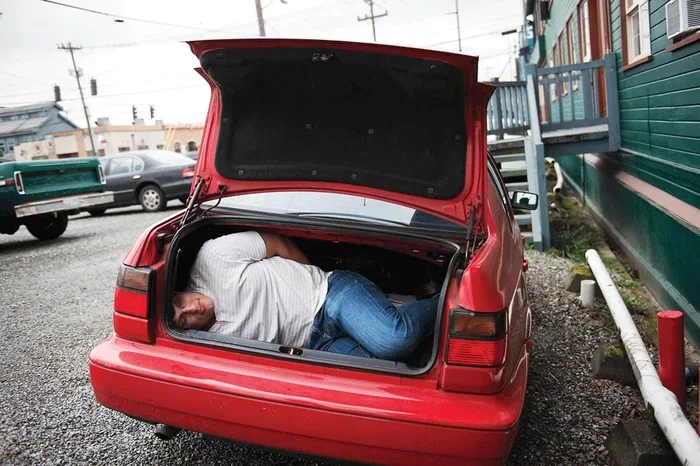
The interior release is also a safety feature. Federal law requires all cars to have an interior trunk release handle so that people, especially children, can escape from inside the trunk if they get locked in. This handle is usually a glow-in-the-dark bar located at the top of the trunk interior.
What the Trunk Actuator Does
The trunk actuator is a small electric motor that does the heavy lifting of releasing the latch. When you press the trunk release button, the actuator receives a signal and uses a gear mechanism to push or pull the latch open. It’s a simple but essential component of the trunk opener system.
Actuators can fail for several reasons. Electrical shorts, water damage, and general wear and tear are the most common causes. When an actuator goes bad, you might hear a clicking sound when you press the release button, but the trunk won’t actually open. This is a clear sign that the actuator needs to be replaced.
Replacing a trunk actuator is usually a moderately easy repair. The actuator is typically mounted near the latch mechanism, and accessing it usually requires removing the trunk trim or liner. Replacement actuators are widely available and affordable, making this a great DIY repair for people who are comfortable working on their cars.
Easy Fixes You Can Try Right Now
Before you call a mechanic or spend money on parts, try these simple fixes first. Many trunk won’t open problems can be solved with items you already have at home.
Step-by-Step Troubleshooting
Follow these steps in order to diagnose and fix the most common trunk problems:
- Check your key fob battery. Replace it with a fresh CR2032 battery and try again. This solves the problem more often than you might think.
- Try the interior release. Locate the trunk release handle or button inside the car and use it. If the trunk opens this way, the problem is likely with the key fob or the exterior lock, not the latch itself.
- Use the emergency trunk release. Every car has a glow-in-the-dark handle inside the trunk. If you’re locked out, you can access this from outside by folding down the rear seats (if applicable).
- Lubricate the trunk latch. Spray a small amount of silicone-based lubricant or white lithium grease into the latch mechanism. Work the trunk open and closed several times to distribute the lubricant evenly.
- Check the trunk cable. Open the trunk if possible and inspect the cable for fraying, stretching, or disconnection. Reconnect or replace the cable if needed.
- Reset the car’s electrical system. Disconnect the car battery for 10-15 minutes, then reconnect it. This can reset the trunk control module and clear any temporary electrical glitches.
Quick Tips
- Keep a spare key fob battery in your glove box so you’re never caught off guard.
- Spray your trunk latch with lubricant every 6 months to prevent sticking and corrosion.
- Never force a stuck trunk lid open with excessive pressure, as this can damage the hinges and latch.
- If your trunk opens with the interior handle but not the remote, the problem is almost always the key fob or its battery.
Using the Emergency Trunk Release
The emergency trunk release is one of the most important safety features in your car, and it can also be a lifesaver when you’re locked out. This handle is typically a bright, glow-in-the-dark bar or lever located at the top of the trunk interior, near the rear seats.
To use it from outside the car, you’ll need to fold down the rear seats if your vehicle has a fold-down rear seat back. Once the seats are folded, you can reach inside and pull the emergency release handle. The trunk latch should release, and the trunk lid will pop open.
This method works regardless of whether the electronic release or key fob is functioning. It’s a purely mechanical system that bypasses all the electronics. Every car sold in the United States is required to have this feature, so you can always rely on it as a backup.
Make sure you know where your emergency trunk release is located before you actually need it. Take a few minutes to familiarize yourself with the handle now, so you’re not searching for it in a stressful situation.
Comparison: Common Causes and Their Solutions
Not all trunk problems are created equal. Some are quick and easy to fix, while others require professional help. Here’s a comparison of the most common causes and what you can do about them.
| Cause | Symptoms | Difficulty to Fix | Estimated Cost |
|---|---|---|---|
| Dead key fob battery | Remote won’t work, but interior release works fine | Very Easy | $1-$3 for battery |
| Faulty trunk lock cylinder | Key won’t turn or gets stuck in the lock | Easy to Moderate | $20-$60 for part and labor |
| Broken trunk latch | Trunk feels loose, won’t latch, or opens by itself | Moderate | $50-$200 for part and labor |
| Frayed or broken trunk cable | Interior handle feels loose or doesn’t engage latch | Moderate | $20-$80 for cable and labor |
| Failed trunk actuator | Clicking sound when pressing button, no movement | Easy to Moderate | $50-$150 for actuator and labor |
| Electrical control module failure | No response from any release method | Hard | $150-$400 for diagnosis and repair |
As you can see from the table, most trunk problems are relatively inexpensive and easy to fix. The key is to diagnose the root cause correctly before spending money on parts or labor. Start with the simplest fix and work your way up the list.
When to Call a Professional Mechanic
While many trunk lock issues can be handled at home, some situations call for professional help. Knowing when to stop DIY troubleshooting and call a mechanic can save you time, money, and a lot of frustration.
Warning Signs You Shouldn’t Ignore
There are certain signs that indicate your trunk problem is beyond a simple fix. If you notice any of the following, it’s time to visit a trusted mechanic:
- The trunk release works intermittently, sometimes working and sometimes not. This often points to an electrical issue that needs professional diagnosis.
- You hear grinding or clicking sounds from inside the trunk when you try to open it. These sounds suggest internal mechanical damage that requires specialized tools to repair.
- The trunk lid is visibly damaged, bent, or misaligned. A warped trunk lid can prevent the latch from engaging properly, and fixing this often requires body shop expertise.
- Multiple electronic systems in your car are malfunctioning at the same time. This could indicate a broader electrical problem that affects the trunk release system.
- You’ve tried all the basic fixes and the trunk still won’t budge. Sometimes the problem is more complex than it appears, and a professional can find the root cause quickly.
Common Mistakes to Avoid
When dealing with a trunk stuck closed situation, it’s easy to make mistakes that make the problem worse. Here are the most common errors car owners make:
- Forcing the trunk lid open with excessive pressure. This can bend the trunk lid, damage the hinges, or break the latch mechanism entirely. Gentle, systematic troubleshooting always works better than brute force.
- Using the wrong lubricant. WD-40 is great for many things, but it’s not ideal for trunk latches because it can attract dirt and grime over time. Use a dedicated lubricant like silicone spray or white lithium grease instead.
- Ignoring warning signs. If your trunk has been feeling stiff or slow to open for weeks, don’t wait until it completely stops working. Early intervention can prevent a minor issue from becoming a major repair.
- Trying to fix electrical problems without proper knowledge. Working on your car’s electrical system can be dangerous if you don’t know what you’re doing. When in doubt, leave it to the professionals.
Expert Insights
Experienced auto technicians recommend treating your trunk release system with the same care you give your engine and brakes. Regular inspection of the trunk cable, latch, and actuator can catch small problems before they become expensive repairs. Many service centers offer a free trunk inspection as part of a routine oil change or vehicle checkup. Taking advantage of these services can extend the life of your trunk mechanism significantly.
Preventing Trunk Problems Before They Start
The best way to deal with a trunk won’t open situation is to prevent it from happening in the first place. A little regular maintenance goes a long way toward keeping your trunk working smoothly for years to come.
Simple Maintenance Habits
Here are some easy habits that can keep your trunk release system in top shape:
- Lubricate the trunk latch every six months. A quick spray of silicone lubricant keeps the mechanism running smoothly and prevents rust and corrosion.
- Replace your key fob battery proactively. Don’t wait until the fob stops working. Replace the battery once a year, or whenever you notice the signal getting weaker.
- Keep the trunk lid clean and dry. Wipe down the trunk seal and latch area regularly to prevent dirt buildup that can interfere with the mechanism.
- Check the trunk cable periodically. Look for signs of fraying or stiffness in the cable. Replacing a cable before it breaks can save you from being stranded.
- Don’t overload the trunk. Excessive weight can put unnecessary strain on the trunk lid, hinges, and latch mechanism. Stay within your vehicle’s recommended trunk capacity.
Expert Insights
Automotive experts suggest making trunk maintenance part of your regular car care routine. Just like you check your tire pressure and oil levels, a quick check of the trunk mechanism can prevent unexpected problems. Many car owners report that a simple 5-minute inspection every few months has kept their trunk working flawlessly for years. The small investment of time pays off big when you need your trunk to work reliably every day.
Conclusion
A trunk won’t open problem is almost always fixable, and in most cases, you can solve it yourself with basic tools and a little patience. Whether the culprit is a dead key fob battery, a sticky trunk latch, or a broken trunk cable, the solutions outlined in this guide cover the most common scenarios. Start with the simplest fixes and work your way up as needed.
Remember that prevention is the best medicine. Regular maintenance like lubricating the latch and replacing the key fob battery on schedule can keep your trunk release system working flawlessly for years. And when the problem does arise, you now have the knowledge to diagnose it and take action quickly.
Don’t let a stuck trunk ruin your day. Use the tips and solutions in this guide, and you’ll be back to loading up your car in no time. If the problem persists despite your best efforts, don’t hesitate to reach out to a professional mechanic who can diagnose and fix the issue efficiently.
Frequently Asked Questions
Why won’t my trunk open even with the key?
This usually means the trunk lock cylinder or trunk latch is damaged or corroded. Try lubricating the lock cylinder first. If that doesn’t work, the cylinder or latch mechanism may need to be replaced. A mechanic can diagnose this quickly and affordably.
Can I open my trunk from the inside of the car?
Yes, every car has an interior trunk release button or handle. Look for it on the driver’s side dashboard, the driver’s door panel, or near the driver’s seat. If the electronic release fails, the emergency trunk release handle inside the trunk can also be used as a mechanical backup.
How much does it cost to fix a trunk that won’t open?
The cost depends on the cause. A dead key fob battery costs just a few dollars. Replacing a trunk actuator typically runs $50 to $150. More complex repairs like a broken trunk latch or electrical module can cost $150 to $400. Always get a quote before authorizing major repairs.
Is it safe to drive with a trunk that won’t close properly?
No, it’s not safe. A trunk that doesn’t latch securely can open while driving, creating a hazard for you and other drivers. It can also damage your car’s rear visibility and aerodynamics. Fix the issue before driving the vehicle, or secure any loose items another way.
What should I do if my trunk is stuck closed and I’m locked out?
Use the emergency trunk release handle by folding down the rear seats and reaching inside the trunk. If that’s not possible, call a roadside assistance service or a locksmith. Most auto insurance policies and roadside assistance plans cover lockout services at no extra cost.
How do I know if my trunk actuator needs to be replaced?
If you hear a clicking or buzzing sound when you press the trunk release button but the trunk doesn’t open, the actuator is likely the problem. You can also test it by accessing the actuator and checking for power with a multimeter. If it receives power but doesn’t move, it needs to be replaced.