Everything You Need to Know About Vermont Window Tint Law
Vermont Window Tint Law sets clear rules for how dark or reflective your car windows can be. The state uses VLT percentage standards to regulate tint darkness for each window type, with stricter limits on the front side windows and windshield. Understanding these rules helps you avoid fines, pass inspections, and tint your vehicle with confidence.
If you live in Vermont or are planning to move there, you might be wondering about the rules around car window tinting. Vermont Window Tint Law sets specific regulations that every vehicle owner should understand. These rules determine how dark or reflective your windows can be, and breaking them can lead to fines and inspection failures. Whether you are tinting a new car or replacing old film, knowing the legal limits is essential.
The good news is that the Vermont tint law is straightforward once you break it down. This guide covers everything from legal tint limits to exemptions and penalties. By the end, you will know exactly what is allowed and what is not. Let us walk through the details so you can tint your windows with confidence.
Key Takeaways
- Front side windows must stay above 65% VLT: Vermont law requires the driver and front passenger windows to allow more than 65% of visible light through.
- Windshield tint is limited to a non-reflective strip: Only the top five inches or above the AS-1 line can have tint, and it must be non-reflective.
- Rear windows have no darkness limit: You can tint rear side windows and the rear window as dark as you want, but dual side mirrors are required.
- Reflective tint is illegal in Vermont: No window can have a mirrored or reflective finish under Vermont statute.
- Medical exemptions are available: If you have a qualifying condition, you can apply for a permit allowing darker tint than the standard limits.
- Penalties include fines and failed inspections: Breaking the rules can result in a tint ticket, court-ordered removal, and higher insurance premiums.
- Professional installation ensures compliance: Working with a knowledgeable Vermont installer helps you choose legal films and get proper documentation.
📑 Table of Contents
- What Is Vermont Window Tint Law?
- Vermont Legal Tint Limits by Window
- Understanding VLT and Tint Darkness
- Tint Exemptions and Special Permits
- Penalties for Breaking Vermont Tint Laws
- Tips for Staying Compliant with Vermont Tint Regulations
- Common Mistakes People Make with Vermont Window Tint
- Conclusion
What Is Vermont Window Tint Law?
Vermont Window Tint Law refers to the set of rules established by the Vermont Department of Motor Vehicles (DMV) and the Vermont Vehicle Code that govern how much tint can be applied to a vehicle’s windows. These regulations are designed to ensure driver safety, maintain visibility, and allow law enforcement officers to see inside vehicles during traffic stops. The rules apply to all passenger cars, SUVs, and vans registered in the state.
The Vermont tint law specifies limits for each window on the vehicle. These limits are measured using Visible Light Transmission (VLT) percentage. VLT refers to how much light the tint allows to pass through the glass. The lower the VLT number, the darker the tint. Understanding VLT is the first step to staying compliant with Vermont window tinting regulations.
Every state has its own approach to car window tinting, and Vermont is no exception. The Vermont statute on automotive tint balances the desire for privacy, UV protection, and glare reduction with the need for clear sightlines. When you understand the reasoning behind these rules, it becomes much easier to follow them and enjoy your tinted windows without worry.
Why Does Vermont Regulate Window Tint?
Safety is the primary reason Vermont regulates automotive tint. Dark or overly reflective windows can reduce a driver’s ability to see pedestrians, cyclists, and other vehicles, especially at night or in poor weather. The state also wants law enforcement officers to have clear sightlines into vehicles during routine stops. These concerns are why every state has some form of window tint regulation.
Beyond safety, Vermont also considers the aesthetic and functional aspects of automotive tint. Tint can reduce glare, block harmful UV rays, and keep your vehicle cooler in the summer. But the state balances these benefits with the need for clear visibility. That is why the Vermont window tint law sets specific VLT limits for each window position.
Vermont Legal Tint Limits by Window
The legal tint limits in Vermont vary depending on which window you are tinting. The state breaks down the rules by windshield, front side windows, rear side windows, and rear window. Here is a detailed look at what each window position allows under Vermont window tinting regulations.
Windshield Tint Rules
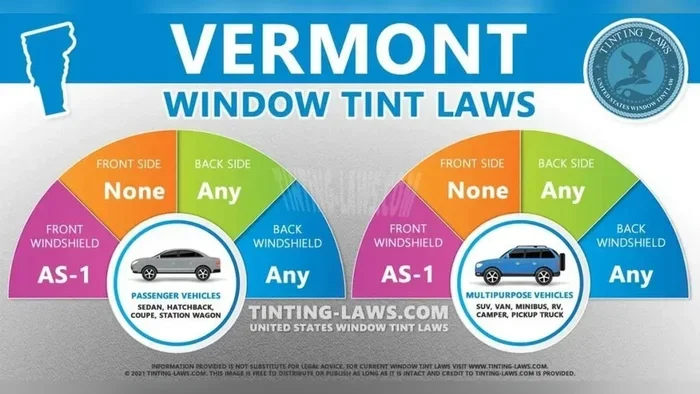
Vermont law is strict about windshield tint. The top portion of the windshield can have a non-reflective tint strip, but it must be above the manufacturer’s AS-1 line or the top five inches of the windshield, whichever comes first. This strip helps reduce sun glare without obstructing the driver’s view of the road. Any tint below this line on the windshield is not legal. The windshield tint must also be non-reflective.
Many drivers assume the entire windshield can be tinted, but that is a common misconception. The Vermont vehicle code is clear on this point. If you have a tinted windshield that extends below the AS-1 line, you could receive a tint violation during a routine stop or inspection.
Front Side Window Tint Rules
For the front side windows, Vermont requires that the tint must allow more than 65% of visible light to pass through. This means the window tint percentage for the driver and front passenger windows must stay above 65% VLT. This rule ensures that the driver has excellent visibility, especially during low-light conditions. If your front side windows are tinted darker than this limit, you risk a tint ticket.
This is the most restrictive rule in the Vermont tint law for passenger vehicles. Even if you prefer a darker look, the front side windows must remain relatively light. The reasoning is simple: the driver needs maximum visibility, and dark front side windows can impair that.
Rear Side and Rear Window Tint Rules
The rear side windows and rear window have more lenient rules in Vermont. These windows can have any level of tint darkness, including very dark tints. There is no specific VLT minimum for the rear windows on passenger vehicles. However, if the rear windows are tinted, the vehicle must have dual side mirrors to ensure the driver can see behind them clearly. This is an important detail that many people overlook when choosing dark window tint for their rear windows.
This flexibility makes Vermont more permissive than many other states when it comes to rear window tinting. If you want a privacy tint on your rear windows, Vermont allows it as long as you have the proper mirrors installed.
| Window | Legal VLT Limit | Reflective Tint Allowed? |
|---|---|---|
| Windshield | Non-reflective strip only (top 5 inches or above AS-1 line) | No |
| Front Side Windows | Must be over 65% VLT | No |
| Rear Side Windows | Any VLT allowed | No |
| Rear Window | Any VLT allowed | No |
This table shows the Vermont legal tint limits at a glance. Always double-check the current regulations before getting your windows tinted, as laws can change. You can verify the latest Vermont window tinting regulations with the Vermont DMV or a trusted local installer.
Understanding VLT and Tint Darkness
Visible Light Transmission, commonly known as VLT, is the standard measurement used in Vermont and across the country to determine legal tint darkness. VLT is expressed as a percentage. A higher VLT percentage means more light passes through the window, resulting in a lighter tint. A lower VLT percentage means less light passes through, creating a darker tint.
For example, a window with 65% VLT allows 65% of visible light to pass through and blocks 35%. A window with 20% VLT only allows 20% of light through and blocks 80%. When we talk about Vermont window tint darkness, we are always referring to the VLT percentage of the tint film.
What Is VLT Percentage?
VLT percentage is the key metric in Vermont tint law. The state uses this number to set legal limits for each window. Most factory-installed tint on new vehicles comes with a VLT between 70% and 80%. This is often called factory tint or original equipment tint. Aftermarket tint films vary widely in their VLT ratings, from about 5% (very dark, often called “limo tint”) to 90% (very light, nearly clear).
When shopping for automotive tint in Vermont, always ask the installer for the VLT rating of the film they use. This number will determine whether the tint is legal for your specific window. If you are unsure, a reputable Vermont tint shop can help you choose a film that meets the state’s requirements.
How Tint Darkness Is Measured
Tint darkness is measured using a tint meter, a device that shines light through the window and calculates the VLT percentage. During a Vermont vehicle inspection or traffic stop, a law enforcement officer may use a tint meter to check if your windows comply with the Vermont vehicle code. The measurement is taken on the inside surface of the tinted window.
It is important to note that tint darkness can change over time. Some tint films fade or discolor with sun exposure, which can alter the VLT. This means that a legal tint when installed might become non-compliant after several years of sun exposure. Regularly checking your tint’s condition is a good practice for any Vermont vehicle owner who wants to stay on the right side of the law.
Tint Exemptions and Special Permits
Not everyone can tint their windows to the standard legal limits in Vermont. Some vehicle owners qualify for a tint exemption based on medical needs or other special circumstances. Understanding these exemptions is important if you or a family member has a condition that makes you sensitive to sunlight.
Medical Exemption for Window Tint
Vermont allows a medical exemption for window tint for individuals with specific medical conditions that require protection from sunlight. Conditions such as lupus, porphyria, melanoma, or severe photosensitivity may qualify for an exemption. If you have one of these conditions, you can apply for a special permit that allows darker tint than the standard Vermont tint law allows.
To get a medical exemption, you will need a signed letter from a licensed physician explaining your condition and the medical necessity for darker window tint. This letter must be carried in the vehicle at all times. You should also submit the documentation to the Vermont DMV for proper registration of the exemption. The exemption typically allows tint darkness beyond the standard 65% VLT limit for front side windows.
Other Special Cases
There are a few other situations where Vermont’s window tinting regulations may differ. For instance, some vehicles used for specific purposes may have different rules. Law enforcement vehicles, emergency vehicles, and certain commercial vehicles may be exempt from standard tint limits. Additionally, vehicles with factory-installed tint that meets or exceeds Vermont’s requirements do not need any additional certification.
If you are unsure whether your situation qualifies for an exemption, contact the Vermont DMV directly. They can provide guidance on the application process and the documentation you will need. It is always better to get proper approval before having tint installed rather than risk a tint ticket.
Penalties for Breaking Vermont Tint Laws
Breaking Vermont tint laws can result in fines, failed inspections, and the requirement to remove non-compliant tint. The penalties are enforced to ensure all vehicles on Vermont roads meet the state’s safety standards. Understanding the consequences can help you make informed decisions about your vehicle’s tint.
Common Tint Violations
The most common tint violations in Vermont include tinting the front side windows below 65% VLT, applying reflective tint, tinting the windshield below the AS-1 line, and failing to have dual side mirrors when the rear windows are heavily tinted. Another frequent violation is having aftermarket tint that does not come with proper certification or labeling.
Tint tickets are typically issued during routine traffic stops or vehicle inspections. If an officer suspects your tint is too dark, they may use a tint meter to measure the VLT on the spot. If the measurement shows non-compliance, you will receive a citation. Repeated violations can lead to higher fines and additional legal consequences.
Fines and Consequences
The fine for a Vermont tint violation varies depending on the circumstances. First-time offenders typically face a moderate fine, and the court may order you to remove the non-compliant tint. Repeat offenses can result in higher fines and potential points on your driving record. In some cases, failing to comply with a tint violation can cause your vehicle to fail its annual inspection.
Beyond fines, a tint violation can also affect your insurance rates. Some insurance companies view tint violations as a sign of non-compliance with vehicle safety standards, which can lead to increased premiums. To avoid these costs, it is always best to ensure your tint meets Vermont’s legal requirements from the start.
Tips for Staying Compliant with Vermont Tint Regulations
Staying compliant with Vermont’s window tinting regulations is easier than you might think. With a little knowledge and the right approach, you can enjoy the benefits of tinted windows without worrying about legal issues. Here are some practical tips to help you navigate the process.
Choosing the Right Tint Film
When selecting a tint film for your vehicle, always choose one with a known VLT rating that meets Vermont’s requirements. For front side windows, look for films rated at 65% VLT or higher. For rear windows, you have more flexibility, but it is still wise to choose a film from a reputable manufacturer. High-quality automotive tint films often come with certification labels that prove they meet safety and optical standards.
Consider your goals when choosing tint darkness. If you want to reduce glare and UV exposure without breaking the law, a medium tint around 50% to 65% VLT on the rear windows is a great option. If you prefer a very dark look, remember that Vermont allows any darkness on rear windows, but you must have dual side mirrors installed.
Working with a Professional Installer
Hiring a professional window tint installer is one of the best ways to ensure compliance with Vermont tint law. A reputable installer will know the current regulations and can recommend films that meet the legal VLT requirements. They will also provide proper documentation and certification for the tint, which can be helpful if you are ever stopped or questioned by law enforcement.
Before you commit to an installer, ask them about their experience with Vermont tint regulations. A knowledgeable installer will walk you through the legal limits, help you choose the right film, and provide you with a certificate of compliance. This certificate can serve as proof that your tint meets Vermont standards if you ever need it.
Quick Tip: Always ask your installer for a written warranty and a tint certificate. These documents can protect you if you are ever questioned about your window tint darkness or if you need to prove compliance during a vehicle inspection.
Common Mistakes People Make with Vermont Window Tint
Even with the best intentions, many vehicle owners make mistakes when tinting their windows in Vermont. Being aware of these common errors can save you time, money, and frustration. Here are the mistakes to avoid.
Mistake 1: Assuming Factory Tint Is Always Legal. While most factory-installed tint meets Vermont standards, older vehicles or certain trim levels may have tint that is too dark for the front side windows. Always verify the VLT of your factory tint before assuming it is compliant.
Mistake 2: Ignoring the Mirror Requirement. If you tint your rear windows dark, Vermont law requires dual side mirrors. Many people forget this requirement and end up with a citation. Check your mirrors before or at the same time as your tint installation.
Mistake 3: Using Reflective Tint. Vermont does not allow reflective tint on any window. Some tint films have a mirrored or metallic appearance that can reflect light. Even if the VLT is within limits, reflective tint is illegal in Vermont. Always choose a non-reflective film for your car window tinting project.
Mistake 4: Not Keeping Documentation. If you have a medical exemption or a special permit, carry the documentation in your vehicle at all times. Without proper paperwork, you may be cited even if your tint is legally permitted under the exemption.
Mistake 5: DIY Tint Installation. While DIY tint kits are widely available, they often do not come with proper certification or meet Vermont’s VLT standards. Professional installation ensures that your tint is legal and properly applied, reducing the risk of bubbles, peeling, and non-compliance.
By avoiding these common mistakes, you can enjoy your tinted windows with peace of mind, knowing you are fully compliant with Vermont law.
Conclusion
Understanding Vermont Window Tint Law is essential for any vehicle owner in the state. The rules are clear and designed with safety in mind. From windshield tint limits to rear window darkness, each window has specific VLT requirements that you must follow. The good news is that with the right information, staying compliant is straightforward.
Whether you are looking for a light tint to reduce glare or a darker tint for privacy, Vermont offers options that work within the legal framework. Medical exemptions provide flexibility for those with special needs, and working with a professional installer ensures you get it right the first time. Always keep your documentation handy and stay updated on any changes to the Vermont vehicle code.
By following the guidelines in this guide, you can tint your vehicle’s windows confidently and avoid costly fines or violations. Vermont Window Tint Law does not have to be complicated. With a little research and the right approach, you can enjoy the benefits of quality automotive tint while staying fully compliant with state regulations. Take the time to understand the rules, choose the right tint, and drive with confidence knowing your vehicle meets every requirement.
Frequently Asked Questions
What is the legal VLT limit for front side windows in Vermont?
Front side windows must allow more than 65% of visible light to pass through, meaning the VLT must be above 65%. This is the strictest rule in Vermont’s window tinting regulations and applies to both the driver and front passenger windows.
Can I tint my windshield in Vermont?
Yes, but only the top portion. Vermont allows a non-reflective tint strip on the windshield, and it must be above the manufacturer’s AS-1 line or the top five inches, whichever comes first. The tint must also be non-reflective.
Is reflective tint legal in Vermont?
No. Vermont law prohibits reflective or mirrored tint on all windows. Any tint film applied must be non-reflective to comply with Vermont window tinting regulations.
Do I need dual side mirrors if I tint my rear windows?
Yes. If your rear side windows or rear window are tinted, Vermont law requires the vehicle to have functioning dual side mirrors. This ensures the driver has adequate visibility behind the vehicle.
Can I get a medical exemption for darker window tint in Vermont?
Yes. Vermont allows a medical exemption for individuals with conditions like lupus, porphyria, or severe photosensitivity. You will need a signed letter from a licensed physician and must register the exemption with the Vermont DMV.
What happens if I get a tint ticket in Vermont?
You may face a fine, and the court could order you to remove the non-compliant tint. Repeat violations can lead to higher fines, points on your driving record, and failed vehicle inspections. It is best to ensure your tint meets Vermont’s legal limits from the start.