Does Mitsubishi Still Make Sports Cars Today in 2025
Mitsubishi has scaled back its sports car offerings significantly, but the brand is not completely out of the game. The Mitsubishi Eclipse was discontinued in 2012, and the Lancer Evolution ended production in 2016. However, Mitsubishi still sells performance-oriented vehicles like the Eclipse Cross and continues to develop new models for the global market.
Does Mitsubishi still make sports cars? This is a question that has been on the minds of car enthusiasts for years. The short answer is yes, but with major caveats. Mitsubishi once dominated the sports car scene with legendary models that rally fans still talk about today. But the landscape has changed, and so has the brand.
In this article, we are going to break down everything you need to know about Mitsubishi’s sports car history, what they offer right now, and what might be coming next. Whether you are a longtime fan or just curious about this Japanese brand, you are in the right place. Let us dive in and explore the world of Mitsubishi performance vehicles.
Mitsubishi has been building cars since 1917, but its sports car legacy really took off in the 1980s and 1990s. The brand became famous for affordable, rear-wheel-drive performance machines that competed with much more expensive rivals. Models like the Mitsubishi Eclipse, the Lancer Evolution, and the 3000GT earned a special place in automotive history.
These cars were not just fast. They were also reliable, fun to work on, and surprisingly practical. For many young car enthusiasts, a used Mitsubishi Eclipse or Lancer Evolution was the first real sports car they could afford. That accessibility helped build one of the most loyal fan bases in the automotive world.
But times change. Rising development costs, shifting consumer demand, and tighter emissions regulations all played a role in Mitsubishi’s decision to step away from the traditional sports car market. Today, the brand focuses more on SUVs, crossovers, and practical daily drivers. So does this mean the sports car era is completely over for Mitsubishi? Not necessarily.
Key Takeaways
- Mitsubishi discontinued its iconic sports cars: The Eclipse and Lancer Evolution are no longer in production.
- The Eclipse Cross is the closest thing to a sports car Mitsubishi currently offers: It is a compact crossover with sporty styling and decent performance.
- Mitsubishi still builds cars in factories around the world: Production continues in Japan and other regions, though at a smaller scale than in past decades.
- The brand is shifting focus to SUVs and crossovers: This mirrors a broader industry trend away from traditional sports cars.
- Fans hope for a return of the Eclipse or a new sports car: Rumors and concepts have hinted at a possible revival.
- Used Mitsubishi sports cars remain popular: The Lancer Evolution and Eclipse hold strong value in the used market.
- Mitsubishi is investing in electrification: Future performance vehicles may come in hybrid or electric form.
📑 Table of Contents
- The Rise of Mitsubishi Sports Cars
- What Mitsubishi Offers Right Now
- Why Mitsubishi Stopped Making Sports Cars
- How Many Cars Does a Car Factory Make in a Day?
- Could Mitsubishi Bring Back a Sports Car?
- The Used Market for Mitsubishi Sports Cars
- Common Mistakes Mitsubishi Sports Car Buyers Make
- Expert Insights on Mitsubishi’s Future
- Key Takeaways
- Conclusion
The Rise of Mitsubishi Sports Cars
The Eclipse: A Legend Is Born
The Mitsubishi Eclipse first hit the market in 1989 and quickly became one of the most popular sports cars in America. It was affordable, stylish, and came with a range of engine options that appealed to both casual drivers and gearheads. The first-generation Eclipse was a front-wheel-drive coupe that offered a refreshing alternative to expensive European sports cars.
By the third generation, the Eclipse had gained a turbocharged engine and all-wheel drive. This made it a legitimate contender in the sports car segment. The Eclipse was also famous for being the car that inspired the popular movie franchise “The Fast and the Furious.” That cultural connection only boosted its popularity among younger buyers.
However, sales began to decline in the late 2000s. The global financial crisis hit hard, and Mitsubishi struggled to keep up with competitors who were pouring money into newer platforms. In 2012, the last Eclipse rolled off the assembly line, and the model was officially discontinued.
The Lancer Evolution: Rally Glory on the Street
No discussion of Mitsubishi sports cars would be complete without mentioning the Lancer Evolution. This legendary sedan was built for rally racing and then adapted for street use. Each generation brought more power, better handling, and more advanced technology. The Evo X, the final version, produced over 300 horsepower and could handle corners like a professional rally car.
The Lancer Evolution was never a mass-market car. It was niche, expensive, and built for enthusiasts who appreciated its raw driving dynamics. But that is exactly what made it special. When Mitsubishi ended production of the Evo in 2016, it marked the end of an era for the brand.
Many fans still consider the Evo to be one of the best sports sedans ever made. Its combination of rally-bred engineering and street usability has no real equal. Even today, used Evos command strong resale values and attract buyers from around the world.
The 3000GT and GTO: Japan’s Hidden Gem
Before the Eclipse and Evo became household names, Mitsubishi had another sports car that turned heads. The 3000GT, known as the GTO in Japan, was a grand touring coupe that debuted in 1990. It featured pop-up headlights, a sleek aerodynamic body, and a twin-turbo V6 engine that produced up to 320 horsepower.
The 3000GT was ahead of its time in many ways. It offered active aerodynamics, adjustable suspension, and all-wheel drive as standard. For its price point, it was one of the most technologically advanced sports cars on the market. But it never achieved the same level of fame as the Eclipse or Evo, partly due to limited marketing and distribution outside of Japan.
Today, the 3000GT is considered a sleeper classic. Enthusiasts who discover these cars often fall in love with their combination of performance and luxury features. They are a reminder that Mitsubishi was capable of building world-class sports cars long before the brand shifted its focus elsewhere.
What Mitsubishi Offers Right Now
The Eclipse Cross: The Closest Thing to a Sports Car
So what does Mitsubishi have on the market today that even comes close to a sports car? The answer is the Eclipse Cross. This compact crossover SUV borrows its name from the legendary Eclipse but is a very different vehicle in terms of purpose and design. The Eclipse Cross is a stylish, compact SUV with a sporty appearance and decent performance for its class.
Under the hood, the Eclipse Cross comes with a 1.5-liter turbocharged four-cylinder engine that produces around 150 horsepower. It is not a powerhouse, but it is enough for daily driving and occasional spirited runs. The car features a sleek coupe-like roofline, sporty styling cues, and a modern interior with good technology features.
The Eclipse Cross is not a traditional sports car by any stretch of the imagination. It is a crossover SUV with sporty ambitions. But for buyers who want a Mitsubishi-badged vehicle that looks and feels performance-oriented, it is the best option available today.
Other Current Mitsubishi Models
Beyond the Eclipse Cross, Mitsubishi’s current lineup is focused on practicality and value. The Outlander is a three-row SUV that competes with popular models like the Honda Pilot and Toyota Highlander. The Outlander Sport (known as the RVR in some markets) is a smaller crossover that offers good fuel economy and a low price point.
The Mirage is a tiny hatchback that is one of the most affordable new cars you can buy. It is not a sports car, but it is fun to drive in its own quirky way. The Mirage is perfect for city driving and commuting, and its small size makes it easy to park in tight spaces.
Mitsubishi also offers the Triton pickup truck in select markets, which is a rugged and capable off-road vehicle. While none of these models are sports cars, they show that the brand is still active and producing vehicles for the global market.
Why Mitsubishi Stopped Making Sports Cars
Rising Development Costs
Building a sports car is expensive. The engineering, testing, and tooling costs are significantly higher than for a basic economy car or even a crossover SUV. Mitsubishi, as a smaller automaker compared to Toyota or Honda, simply could not justify the investment needed to develop a new sports car platform.
The company needed to focus its limited resources on models that would sell in higher volumes. SUVs and crossovers offered better profit margins and appealed to a broader customer base. This is a strategic decision that many smaller automakers have had to make in recent years.
Shifting Consumer Demand
The automotive market has shifted dramatically over the past two decades. Consumers in most markets now prefer SUVs and crossovers over sedans and coupes. Sports cars have always been a niche segment, and that niche has gotten even smaller. Young buyers today are more interested in technology, practicality, and fuel efficiency than raw performance.
Mitsubishi adapted to this shift by investing in SUV development rather than sports cars. The company recognized that the future of automotive sales lies in the crossover and SUV segment, and it has made a strategic pivot accordingly.
Emissions and Regulations
Stricter emissions regulations around the world have also made it harder for automakers to develop and sell high-performance cars. Sports cars typically consume more fuel and produce more emissions than economy vehicles. Meeting modern emissions standards while maintaining the performance that enthusiasts expect is a significant engineering challenge.
Mitsubishi, like many other brands, has been investing heavily in electrification and hybrid technology. This shift toward cleaner powertrains means that any future sports car from the brand would likely need to be electrified or hybridized, which adds even more cost to development.
How Many Cars Does a Car Factory Make in a Day?
Mitsubishi builds vehicles in several factories around the world. A typical car factory can produce hundreds to thousands of vehicles per day, depending on the model, the factory, and the production schedule. However, Mitsubishi’s overall production volume has declined significantly compared to its peak years in the 1990s and early 2000s.
When Mitsubishi was producing the Eclipse and Lancer Evolution in larger numbers, the brand was part of the global top 10 automakers by volume. Today, Mitsubishi sells far fewer vehicles worldwide. The company has consolidated its production and focused on models that have strong demand in key markets like Japan, Southeast Asia, and parts of the Middle East.
Building a car is a complex process that involves many hours of labor. It takes a significant number of man hours to build a single vehicle, from welding the body to assembling the engine and finishing the interior. Even though Mitsubishi is producing fewer sports cars now, the ones they do build still go through the same rigorous manufacturing process as any other vehicle.
The Future of Mitsubishi Production
Mitsubishi has announced plans to invest in electric vehicle development and new platform technologies. The company is working on a new generation of crossovers and SUVs that will use modern platforms with electrified powertrains. While there are no confirmed plans for a new sports car, the brand’s commitment to innovation suggests that surprises could be in store.
The time it takes a factory to build a car varies by model and complexity, but Mitsubishi’s current production lines are optimized for efficiency. The company has been streamlining its manufacturing processes to reduce costs and improve quality across its entire lineup.
Could Mitsubishi Bring Back a Sports Car?
Rumors and Concepts
Over the years, there have been several rumors and concept cars that hinted at a Mitsubishi sports car comeback. The Mitsubishi e-Evolution Concept, shown in 2017, was an electric performance SUV that teased a return to the brand’s performance roots. While it was not a traditional sports car, it showed that Mitsubishi still has the desire to build exciting, performance-oriented vehicles.
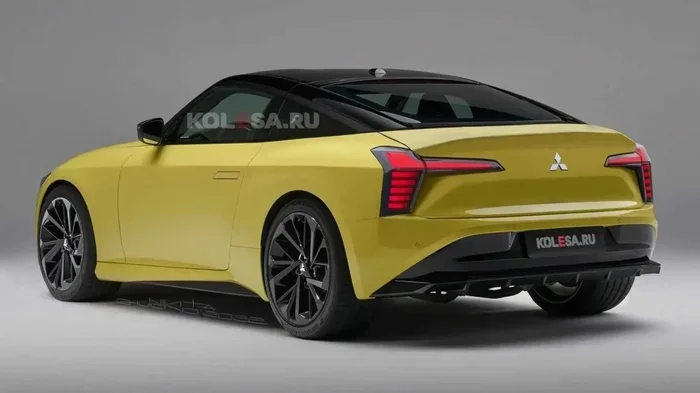
More recently, there have been whispers about a possible new Eclipse or a spiritual successor to the Lancer Evolution. These rumors have not been confirmed by Mitsubishi, but the brand has a history of surprising fans with unexpected comebacks. The Mitsubishi Outlander PHEV, for example, was considered a niche product when it launched but has become one of the brand’s best-selling models worldwide.
What Would a Modern Mitsubishi Sports Car Look Like?
If Mitsubishi were to build a new sports car today, it would likely be very different from the models of the past. A modern sports car from the brand would probably be electrified or hybridized, with a focus on instant torque and advanced technology. It might also be smaller and lighter than the heavy sports cars of the 1990s and 2000s.
The new car could use a front-wheel-drive platform with an electric motor for each axle, providing all-wheel-drive capability and excellent handling. It would likely be more focused on daily usability than outright track performance, making it accessible to a wider range of buyers. This approach would be similar to what other brands are doing with their new performance vehicles.
The key question is whether Mitsubishi has the resources and market confidence to invest in such a project. The company is still a relatively small player in the global automotive market, and every new model requires significant investment. A sports car would need to sell in meaningful numbers to justify the cost.
The Used Market for Mitsubishi Sports Cars
Why Used Mitsubishis Are Still Popular
Even though Mitsubishi no longer makes sports cars, the used market for these vehicles remains strong. The Eclipse and Lancer Evolution are still sought after by enthusiasts who appreciate their performance, reliability, and nostalgic value. A well-maintained used Mitsubishi sports car can provide years of driving enjoyment at a fraction of the cost of a new sports car.
One of the biggest advantages of buying a used Mitsubishi sports car is the low cost of ownership. Parts are generally affordable, and the mechanical simplicity of older models makes repairs manageable for DIY enthusiasts. The Eclipse, in particular, has a huge aftermarket support network with a wide range of performance upgrades available.
What to Look For When Buying Used
If you are considering buying a used Mitsubishi sports car, there are a few things to keep in mind. First, always get a pre-purchase inspection from a qualified mechanic. Look for signs of rust, especially on older models that may have been exposed to salt or harsh weather conditions.
Check the maintenance history carefully. Regular oil changes, timing belt replacements, and other scheduled services are essential for keeping these cars running well. A well-documented service history is a good sign that the previous owner took care of the vehicle.
For Lancer Evolution models, pay special attention to the transmission and clutch. These cars were built for spirited driving, and the drivetrain components can wear out over time. Also, check for any signs of turbo leaks or oil consumption issues, which are common on higher-mileage examples.
Common Mistakes Mitsubishi Sports Car Buyers Make
- Buying without a pre-purchase inspection: This is the most common and costly mistake. Always have a professional inspect the car before you buy.
- Ignoring maintenance history: A car without records is a gamble. Look for vehicles with documented service history whenever possible.
- Overlooking rust and corrosion: Older Mitsubishis can develop rust in vulnerable areas like the wheel arches, rocker panels, and subframes.
- Buying the cheapest option available: The lowest-priced car is not always the best deal. A slightly more expensive, well-maintained example will save you money in the long run.
- Neglecting insurance costs: Sports cars can be more expensive to insure, especially for younger or less experienced drivers. Get a quote before you buy.
- Underestimating modification costs: If you plan to modify the car, factor in the cost of parts, labor, and potential reliability issues that can arise from upgrades.
Expert Insights on Mitsubishi’s Future
Industry analysts believe that Mitsubishi will continue to focus on SUVs and crossovers for the foreseeable future. The brand’s strengths lie in its value proposition and its ability to deliver practical, reliable vehicles at competitive prices. A return to the sports car market would require a significant investment in new platforms and technology.
However, the growing interest in electric performance vehicles could open new opportunities for Mitsubishi. The brand has already demonstrated its ability to develop electrified powertrains with the Outlander PHEV. If Mitsubishi can apply this expertise to a new sports car or performance vehicle, it could carve out a niche in the growing EV performance segment.
Some experts also point to Mitsubishi’s partnership with other automakers as a potential path forward. Sharing platforms and technology with allies like Nissan or Renault could reduce the cost of developing a new sports car. This kind of collaboration has worked well for other brands and could be a viable strategy for Mitsubishi.
Key Takeaways
- Mitsubishi no longer produces traditional sports cars: The Eclipse and Lancer Evolution are both discontinued.
- The Eclipse Cross is the closest current model to a sports car: It is a compact crossover with sporty styling and adequate performance.
- The brand has shifted focus to SUVs and crossovers: This aligns with broader market trends and consumer preferences.
- Used Mitsubishi sports cars remain popular and affordable: The Eclipse and Evo hold strong value in the used market.
- Mitsubishi is investing in electrification: Future performance vehicles may come in hybrid or electric form.
- A sports car comeback is possible but not confirmed: Rumors and concepts suggest the brand has not completely abandoned the idea.
- The brand’s production volume has decreased: Mitsubishi builds fewer cars today than it did during its sports car heyday.
Conclusion
So, does Mitsubishi still make sports cars? The answer is complicated. The brand no longer produces dedicated sports cars like the Eclipse or Lancer Evolution, but it still sells performance-oriented vehicles like the Eclipse Cross. Mitsubishi has pivoted away from the traditional sports car market, but the spirit of performance and innovation that defined its best cars is still alive.
For fans of Mitsubishi sports cars, the used market offers a wealth of options. Whether you are looking for a turbocharged Eclipse, a rally-bred Lancer Evolution, or a luxurious 3000GT, there are great options available at various price points. These cars represent some of the best performance vehicles Mitsubishi has ever built, and they continue to be enjoyed by enthusiasts around the world.
Looking ahead, the future of Mitsubishi sports cars is uncertain but not impossible. The automotive industry is undergoing a massive transformation, with electrification and new technologies reshaping the landscape. If Mitsubishi can find the right formula, a new sports car could be on the horizon. Until then, fans will have to enjoy what the brand offers today and keep an eye out for any exciting announcements in the years to come.
The most important thing to remember is that Mitsubishi has a rich and exciting history in the sports car world. The Eclipse, the Lancer Evolution, and the 3000GT are more than just cars. They are symbols of an era when affordable, fun-to-drive performance machines were within reach of everyday enthusiasts. That legacy lives on, and it will always be a part of what makes Mitsubishi special.
Frequently Asked Questions
Does Mitsubishi still make the Eclipse?
No, Mitsubishi discontinued the Eclipse in 2012 after two decades of production. The last generation was the Eclipse SE, and it was replaced by the Eclipse Cross, which is a compact crossover SUV rather than a traditional sports car.
Is the Mitsubishi Eclipse Cross a sports car?
The Eclipse Cross is not a traditional sports car. It is a compact crossover SUV with sporty styling and a turbocharged engine. While it has performance-oriented features, it is designed primarily for daily driving and light off-road use rather than track performance.
What was the last Mitsubishi sports car?
The last dedicated Mitsubishi sports car was the Lancer Evolution, which ended production in 2016 with the final Evo X model. The Eclipse was discontinued earlier in 2012, making the Evo X the brand’s final true sports car offering.
Are used Mitsubishi sports cars worth buying?
Yes, used Mitsubishi sports cars like the Eclipse and Lancer Evolution are generally worth buying for enthusiasts. They offer great performance at an affordable price, and parts are still readily available. However, always get a pre-purchase inspection and check the maintenance history carefully.
Will Mitsubishi ever make a new sports car?
There is no official confirmation that Mitsubishi plans to build a new sports car. However, the brand has shown interest in performance vehicles through concepts like the e-Evolution. If consumer demand increases and technology costs decrease, a comeback is possible in the future.
How much does a used Mitsubishi Eclipse cost?
Used Mitsubishi Eclipse prices vary widely depending on the model year, condition, and mileage. You can find examples ranging from around $3,000 for high-mileage daily drivers to $15,000 or more for well-maintained, low-mileage examples. The Lancer Evolution typically commands higher prices, especially for rarer models.