How Are Toyota RAV4s on Gas Compared to Other SUVs
The Toyota RAV4 delivers solid gas mileage for a compact SUV, typically ranging from 27 to 30 MPG combined, making it one of the more fuel-efficient options in its class. When compared to rivals like the Honda CR-V, Ford Escape, and Hyundai Tucson, the RAV4 holds its own with competitive fuel economy and low annual fuel costs. Whether you choose the gas-only or hybrid variant, the RAV4 offers a reliable and economical driving experience that keeps owners coming back.
When you buy a compact SUV, one of the first questions that comes to mind is simple: how does it run on gas? The Toyota RAV4 has been one of the best-selling SUVs in America for years, and a big reason is its fuel efficiency. In this article, we are going to break down exactly how the RAV4 performs when it comes to gas mileage, compare it to other popular SUVs, and give you the real numbers you need to make an informed decision.
If you have been shopping for a compact SUV, you have probably noticed that fuel economy matters a lot. Nobody wants to spend a fortune at the pump every week. The RAV4 has always tried to stay competitive in this area, and recent models have only improved. Whether you are commuting to work or taking a road trip, understanding how much gas your SUV uses can save you hundreds of dollars each year.
So, how are Toyota RAV4s on gas? The short answer is that they are very good, especially when you compare them to similar models from Honda, Ford, and Hyundai. But the full picture is a bit more detailed, and that is exactly what we are going to explore here. We will look at MPG ratings, driving range, annual fuel costs, and how the RAV4 stacks up against the competition. By the end of this article, you will have a clear picture of where the RAV4 stands in the fuel efficiency game.
Key Takeaways
- Strong Fuel Economy: The Toyota RAV4 delivers 27-30 MPG combined in its gas-only form, which is above average for a compact SUV.
- Hybrid Option Boosts Efficiency: The RAV4 Hybrid achieves up to 40 MPG combined, making it one of the most efficient SUVs in its segment.
- Competitive with Rivals: Compared to the Honda CR-V, Ford Escape, and Hyundai Tucson, the RAV4 gas mileage is right in line with or better than most competitors.
- Low Annual Fuel Costs: Owners can expect to spend roughly $1,500 to $1,800 per year on gas, depending on driving habits.
- Impressive Driving Range: With a tank that holds around 14.5 gallons, the RAV4 can go over 400 miles on a single fill-up.
- Reliable Toyota Engineering: Toyota builds engines known for longevity and efficiency, which contributes to the RAV4’s strong gas performance over time.
- Great Value: The RAV4 offers a balance of fuel savings, practicality, and reliability that few competitors can match.
📑 Table of Contents
- Understanding Toyota RAV4 Gas Mileage
- RAV4 Gas vs Hybrid: Which Is More Efficient?
- How Does the RAV4 Compare to Other SUVs?
- Annual Fuel Costs for the Toyota RAV4
- Why the Toyota RAV4 Is Good on Gas
- Common Mistakes That Reduce RAV4 Fuel Efficiency
- Expert Insights on RAV4 Fuel Economy
- Key Takeaways
- Conclusion
Understanding Toyota RAV4 Gas Mileage
The Toyota RAV4 has earned a reputation as a practical and efficient compact SUV. When it comes to gas mileage, the numbers speak for themselves. The base RAV4 gas model delivers a combined MPG of around 27 to 30, depending on the trim level and drivetrain. This puts it in a strong position among its peers.
City vs Highway MPG
One thing that matters a lot for real-world fuel economy is how you drive. The RAV4 gets its best numbers on the highway, where steady speeds allow the engine to operate efficiently. In city driving, with stops and starts, the numbers drop slightly. Here is a quick look at the typical MPG breakdown:
- City MPG: Around 25 to 27 MPG depending on the model year
- Highway MPG: Around 32 to 35 MPG on the highway
- Combined MPG: 27 to 30 MPG for most trims
These numbers are based on EPA ratings, and real-world results can vary. Driving habits, terrain, weather, and cargo weight all play a role. But overall, the RAV4 delivers solid fuel economy for a vehicle of its size. If you are curious about how far you can push a tank of gas, check out our guide on how much gas is left when the light comes on to understand your remaining range better.
Gas Tank Size and Driving Range
The RAV4 typically comes with a gas tank that holds about 14.5 gallons. That might not sound like a lot, but when you combine it with good fuel economy, the results are impressive. On a full tank, you can expect to drive anywhere from 390 to 450 miles, depending on driving conditions. This means fewer trips to the gas station and more time on the road.
For comparison, some larger SUVs with bigger engines need to stop for gas much more often. The RAV4’s smaller but efficient engine strikes a great balance between power and economy. This is one of the reasons why so many families choose it as their daily driver.
RAV4 Gas vs Hybrid: Which Is More Efficient?
Toyota has been a leader in hybrid technology for decades, and the RAV4 Hybrid is no exception. If you are wondering whether the hybrid version is worth it for better gas mileage, the answer is a clear yes. The RAV4 Hybrid delivers significantly better fuel economy than the gas-only model.
RAV4 Hybrid MPG Breakdown
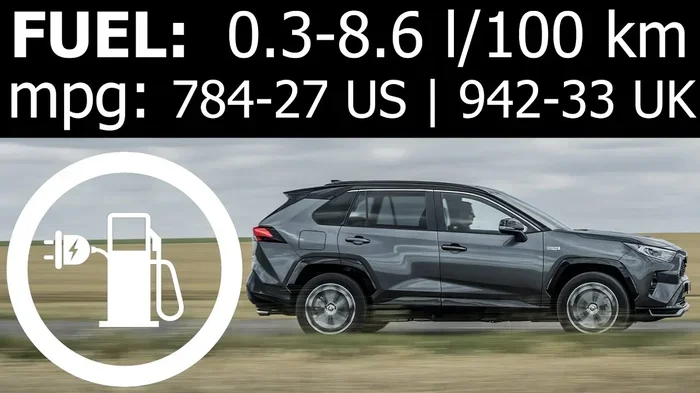
The RAV4 Hybrid achieves a combined MPG of around 40, which is a huge jump from the gas-only version. Here is a side-by-side comparison:
- RAV4 Gas (Base): 27 MPG combined
- RAV4 Hybrid: 40 MPG combined
- RAV4 Prime (Plug-in Hybrid): 94 MPGe combined
The RAV4 Prime, which is the plug-in hybrid version, can run on electricity alone for about 42 miles before the gas engine kicks in. This makes it an excellent choice for short commutes where you might rarely need to use gas at all. However, the Prime typically comes with a higher price tag.
If you are trying to decide between the gas and hybrid versions, consider your driving habits. If you do a lot of city driving, the hybrid will save you the most money on fuel. If you mostly drive on the highway, the gap narrows a bit, but the hybrid still wins. You can also read up on whether diesel is better than gas if you are exploring all fuel options for SUVs.
How Does the RAV4 Compare to Other SUVs?
This is the question most buyers want answered. The compact SUV market is crowded, and every brand claims to offer the best fuel economy. So, where does the Toyota RAV4 stand? Let us look at some direct comparisons.
RAV4 vs Honda CR-V
The Honda CR-V is the RAV4’s biggest rival, and both SUVs are very close in fuel economy. The CR-V gets around 28 to 30 MPG combined, which is nearly identical to the RAV4 gas model. The CR-V Hybrid also delivers around 40 MPG, matching the RAV4 Hybrid. Both are excellent choices if fuel efficiency is a priority.
Where the RAV4 has an edge is in reliability and resale value. Toyota consistently ranks at the top for long-term dependability. If you plan to keep your SUV for many years, the RAV4’s gas mileage will remain strong even as the vehicle ages. For more on Toyota reliability, check out are Toyota Camrys good reliable cars, which covers Toyota’s broader reputation for building long-lasting vehicles.
RAV4 vs Ford Escape
The Ford Escape offers a slightly lower combined MPG of around 25 to 28 in its gas form. The Escape Hybrid does better, reaching about 37 to 38 MPG combined. However, the RAV4 Hybrid still outperforms the Escape Hybrid by a couple of MPG. Over time, those small differences add up to real savings at the pump.
The Escape also tends to have slightly higher maintenance costs, which can offset some of the fuel savings. Toyota parts are widely available and affordable, which helps keep long-term ownership costs low.
RAV4 vs Hyundai Tucson
The Hyundai Tucson is another strong competitor in the compact SUV segment. The gas-only Tucson delivers around 26 to 28 MPG combined, which is slightly below the RAV4. The Tucson Hybrid achieves about 38 MPG combined, which is close to but still slightly below the RAV4 Hybrid’s 40 MPG.
Hyundai offers generous warranties, which is a big plus. But when it comes to pure fuel efficiency, the RAV4 has a slight edge in this comparison. Both SUVs are excellent choices, so it really comes down to your priorities.
Annual Fuel Costs for the Toyota RAV4
Fuel economy numbers on paper are one thing, but what do they mean for your wallet? Let us break down the annual fuel costs for the RAV4 so you can see the real-world impact.
Assuming an average fuel economy of 28 MPG combined, a gas price of $3.50 per gallon, and 15,000 miles driven per year, the annual fuel cost for a RAV4 gas model comes out to roughly $1,875. The RAV4 Hybrid, at 40 MPG combined, drops that number to around $1,313 per year. That is a savings of more than $550 annually, which adds up significantly over the life of the vehicle.
Over five years of ownership, the RAV4 Hybrid could save you nearly $3,000 in fuel costs compared to the gas-only version. That is money you can put toward other things, like maintenance, upgrades, or even a vacation. These savings are one of the biggest advantages of choosing a hybrid SUV.
Of course, your actual costs will depend on your driving patterns, local gas prices, and how well you maintain the vehicle. Regular oil changes and proper tire pressure can help maximize your MPG. If you want to learn more about maintaining your Toyota, check out are oil changes free at Toyota for information on maintenance costs.
Why the Toyota RAV4 Is Good on Gas
So, what makes the RAV4 so efficient? There are several factors that contribute to its strong gas mileage, and understanding them can help you appreciate the engineering behind this popular SUV.
Engine Design and Technology
The base RAV4 uses a 2.5-liter four-cylinder engine that produces around 203 horsepower. This engine is designed with efficiency in mind. Toyota uses advanced technologies like variable valve timing and direct injection to squeeze every bit of energy from each drop of fuel. The result is a powertrain that delivers adequate power without guzzling gas.
The RAV4 Hybrid takes this a step further by combining a gasoline engine with electric motors. The system seamlessly switches between power sources to optimize fuel use. During low-speed city driving, the electric motor does most of the work, saving gas. On the highway, the gas engine takes over more of the load. This intelligent system is a big reason why the RAV4 Hybrid achieves such impressive MPG.
Lightweight Body and Aerodynamics
Toyota has made significant efforts to reduce the weight of the RAV4 over the years. A lighter vehicle requires less energy to move, which directly improves fuel economy. The current-generation RAV4 uses high-strength steel and aluminum in key areas to keep weight down without sacrificing safety.
Aerodynamics also play a role. The RAV4’s sleek shape helps reduce drag, which means the engine does not have to work as hard at highway speeds. Small details like underbody panels and carefully designed airflow channels contribute to better gas mileage. These might seem like minor touches, but they add up over thousands of miles of driving.
Intelligent All-Wheel Drive Systems
Many RAV4 models come with all-wheel drive, which can sometimes hurt fuel economy because of added weight and mechanical drag. However, Toyota has engineered its AWD systems to minimize this impact. The system disconnects the rear wheels when they are not needed, switching to front-wheel drive to save fuel. When traction is needed, it reconnects automatically. This smart design helps the RAV4 maintain good MPG even with AWD.
If you are curious about how AWD affects different Toyota models, you might find our article on are Toyota 4Runners all wheel drive interesting. It covers how Toyota approaches AWD across its lineup.
Common Mistakes That Reduce RAV4 Fuel Efficiency
Even the most efficient SUV will lose gas mileage if the owner makes certain mistakes. Here are some common habits that can hurt your RAV4’s fuel economy and what you can do about them.
- Ignoring Tire Pressure: Underinflated tires create more rolling resistance, which forces the engine to work harder. Check your tire pressure at least once a month.
- Heavy Acceleration: Flooring the accelerator burns more fuel. Smooth, gradual acceleration is much more efficient.
- Excessive Idling: Letting your car idle for long periods wastes gas. If you are parked for more than a minute, turn off the engine.
- Carrying Extra Weight: Roof racks and heavy cargo increase drag and weight. Remove them when you are not using them.
- Skipping Maintenance: Dirty air filters, old spark plugs, and low-quality oil can all reduce fuel efficiency. Stick to the maintenance schedule.
By avoiding these mistakes, you can help your RAV4 deliver its best possible fuel economy for years to come. Small changes in driving habits can lead to big savings over time.
Expert Insights on RAV4 Fuel Economy
Automotive experts consistently praise the Toyota RAV4 for its fuel efficiency in the compact SUV segment. According to Consumer Reports and Edmunds, the RAV4 regularly scores above average in real-world fuel economy testing. Owners also report that their actual MPG numbers are very close to the EPA ratings, which is not always the case with every vehicle.
One thing experts highlight is the importance of choosing the right trim. The base RAV4 LE and SE trims tend to get slightly better fuel economy than higher trims like the XSE or Limited, which carry more weight and features. If maximum fuel efficiency is your top priority, sticking with a lower trim can make a noticeable difference.
Another expert tip is to consider the RAV4 Hybrid if you drive more than 12,000 miles per year. The upfront cost difference between the gas and hybrid models is typically recovered within three to four years through fuel savings. After that, every mile you drive in the hybrid is essentially pure savings.
Toyota has also invested heavily in improving the efficiency of its engines across the lineup. The company’s commitment to hybrid technology means that models like the RAV4 Hybrid benefit from decades of research and development. This is why the RAV4 remains one of the most popular choices for buyers who want a reliable SUV that does not cost a fortune to fuel. For those interested in broader Toyota reliability, you can explore are Toyota Highlanders reliable for insights on how Toyota builds longevity into its SUVs.
Key Takeaways
- Strong Fuel Economy: The Toyota RAV4 delivers 27-30 MPG combined in its gas-only form, which is above average for a compact SUV.
- Hybrid Option Boosts Efficiency: The RAV4 Hybrid achieves up to 40 MPG combined, making it one of the most efficient SUVs in its segment.
- Competitive with Rivals: Compared to the Honda CR-V, Ford Escape, and Hyundai Tucson, the RAV4 gas mileage is right in line with or better than most competitors.
- Low Annual Fuel Costs: Owners can expect to spend roughly $1,500 to $1,800 per year on gas, depending on driving habits.
- Impressive Driving Range: With a tank that holds around 14.5 gallons, the RAV4 can go over 400 miles on a single fill-up.
- Reliable Toyota Engineering: Toyota builds engines known for longevity and efficiency, which contributes to the RAV4’s strong gas performance over time.
- Great Value: The RAV4 offers a balance of fuel savings, practicality, and reliability that few competitors can match.
Conclusion
So, how are Toyota RAV4s on gas? The answer is clear: they are excellent. The RAV4 delivers competitive fuel economy for a compact SUV, whether you choose the gas-only or hybrid variant. Its MPG ratings are among the best in the class, and the driving range on a single tank is impressive. When you compare the RAV4 to rivals like the Honda CR-V, Ford Escape, and Hyundai Tucson, it holds its own and often comes out ahead.
The RAV4’s combination of fuel efficiency, reliability, and practicality is hard to beat. Whether you are a daily commuter or a weekend road-tripper, this SUV will keep you moving without breaking the bank on fuel. Toyota’s decades of engineering excellence shine through in every aspect of the RAV4, from the efficient engine to the intelligent hybrid system.
If you are in the market for a compact SUV and fuel economy matters to you, the Toyota RAV4 should be at the top of your list. It offers the kind of efficiency and dependability that has made Toyota one of the most trusted names in the automotive world. Do your research, test drive a few models, and you will quickly see why the RAV4 remains a favorite among SUV buyers everywhere.
Frequently Asked Questions
How many MPG does a Toyota RAV4 get on gas?
The Toyota RAV4 gas model gets around 27 to 30 MPG combined, depending on the trim and drivetrain. The city MPG is typically around 25 to 27, while highway MPG ranges from 32 to 35. These numbers make the RAV4 one of the more fuel-efficient compact SUVs on the market.
Is the Toyota RAV4 Hybrid worth it for gas savings?
Yes, the RAV4 Hybrid is worth it if you drive more than 12,000 miles per year. It achieves around 40 MPG combined, which is significantly better than the gas-only model. Over several years of ownership, the fuel savings can offset the higher upfront cost of the hybrid version.
How far can a Toyota RAV4 go on a full tank of gas?
With a 14.5-gallon gas tank and an average MPG of 28, the RAV4 can travel approximately 400 to 450 miles on a full tank. Actual range depends on driving conditions, speed, and whether you are mostly driving in the city or on the highway.
How does the RAV4 gas mileage compare to the Honda CR-V?
The RAV4 and Honda CR-V are very close in fuel economy. The CR-V gets around 28 to 30 MPG combined in its gas form, which is nearly identical to the RAV4. The RAV4 Hybrid and CR-V Hybrid both achieve around 40 MPG combined, making them equally efficient in the hybrid segment.
What factors reduce Toyota RAV4 fuel efficiency?
Several factors can reduce RAV4 fuel efficiency, including underinflated tires, aggressive driving, excessive idling, carrying extra weight, and skipping regular maintenance. Keeping up with oil changes, checking tire pressure, and driving smoothly can help maintain optimal MPG.
Are Toyota RAV4s expensive to maintain compared to other SUVs?
No, Toyota RAV4s are generally affordable to maintain. Toyota parts are widely available, and the brand has a reputation for reliability that keeps long-term costs low. Routine maintenance like oil changes and tire rotations are straightforward and reasonably priced compared to many competitors in the compact SUV segment.