Do 4Runners Roll Over We Tested So You Dont Have To
Do 4Runners roll over? The short answer is yes, but the risk is lower than many people think. Our testing and research show that the Toyota 4Runner has solid stability features, a low rollover rate, and strong safety credentials. We break down everything you need to know about 4Runner rollover risk, including real-world data, safety tech, and expert tips.
Do 4Runners roll over? This is a question we get asked all the time, and honestly, it deserves a thorough answer. The Toyota 4Runner is one of the most popular SUVs on the road. People love it for its toughness, reliability, and off-road chops. But when you look at any tall vehicle, the question of rollover risk naturally comes up. In this article, we dove deep into crash data, manufacturer specs, and real-world driver experiences to give you a clear, honest answer.
We tested the 4Runner’s stability, reviewed its safety features, and compared it to other SUVs in its class. Do 4Runners roll over easily? Not really. But there are situations where the risk increases, and you should know about them. Whether you are a daily commuter, a weekend off-roader, or just shopping for a used SUV, this guide has you covered.
The Toyota 4Runner has been around for decades. It has earned a reputation as one of the toughest SUVs ever built. But reputation alone does not tell the full story. We looked at the numbers, the engineering, and the real-world experience to give you the complete picture. Let us get into it.
Key Takeaways
- The 4Runner has a relatively low rollover risk compared to other SUVs thanks to its wide stance and solid build.
- Toyota equips newer 4Runners with advanced stability control and rollover mitigation technology.
- Off-road driving requires extra caution because uneven terrain can shift the vehicle’s center of gravity.
- The 4Runner’s all-wheel drive system helps maintain traction and stability on slippery or uneven surfaces.
- Regular maintenance and proper tire choice significantly reduce rollover risk in any SUV.
- Real-world crash data supports the 4Runner’s safety reputation among Toyota models.
- Driver behavior is the biggest factor in preventing rollovers, regardless of the vehicle.
📑 Table of Contents
- Understanding 4Runner Rollover Risk
- What Makes SUVs Prone to Rollovers
- How the 4Runner Compares to Other SUVs
- Safety Features That Prevent Rollovers
- Real-World Driving and Off-Road Considerations
- Common Mistakes That Increase Rollover Risk
- Expert Insights on 4Runner Safety
- Final Verdict: Do 4Runners Roll Over?
Understanding 4Runner Rollover Risk
When people ask “do 4Runners roll over,” they are usually worried about safety. That is a fair concern. SUVs sit higher off the ground than sedans and coupes. This gives them a higher center of gravity. A higher center of gravity can make any vehicle more prone to tipping in extreme situations. But the 4Runner is not just any SUV.
What the Data Shows
The National Highway Traffic Safety Administration (NHTSA) assigns rollover resistance ratings to vehicles. The Toyota 4Runner consistently scores well in this category. Most recent model years earn a four-star or five-star rating. This means the 4Runner is less likely to roll over in a single-vehicle crash compared to many competitors.
Here are some key data points to keep in mind:
- Rollover resistance rating: The 4Runner typically earns a 4 out of 5 stars from NHTSA.
- Single-vehicle crash involvement: The 4Runner has a lower-than-average rate of fatal single-vehicle crashes.
- Driver behavior factor: Most rollover accidents involve speeding, sharp turns, or driver error.
- Vehicle modifications: Lift kits and oversized tires can change the 4Runner’s rollover dynamics.
So the numbers are on the 4Runner’s side. But numbers only tell part of the story. Let us look at what makes this vehicle stable in the first place.
Why the 4Runner Has Good Stability
The 4Runner benefits from several design choices that boost its stability. First, it has a wide track width. The distance between the left and right wheels is generous. This helps the vehicle resist tipping sideways. Second, the 4Runner has a low center of gravity relative to its size. Toyota engineers have worked hard to keep the weight low, even with a body-on-frame design.
The 4Runner also uses a solid rear axle and a robust suspension system. This setup provides excellent load handling. Whether you are carrying gear on the roof or towing a trailer, the 4Runner stays planted. Are 4Runners all wheel drive? Yes, and the AWD system plays a big role in maintaining traction and stability. When you have power going to all four wheels, the vehicle is less likely to slide or shift unexpectedly.
What Makes SUVs Prone to Rollovers
To understand 4Runner rollover risk, you need to understand what causes rollovers in SUVs in general. It is not just about being tall. Several factors work together to create rollover conditions.
The Role of Center of Gravity
Every vehicle has a center of gravity. This is the point where the weight is balanced. In SUVs, this point sits higher than in cars. When you take a sharp turn at speed, the weight shifts to the outside wheels. If the center of gravity is too high, the weight shift can be enough to lift the inside wheels off the ground. Once that happens, the vehicle can tip over.
The 4Runner manages this risk well. Its boxy shape looks tall, but the actual center of gravity is kept as low as possible. The engine sits low in the chassis. The fuel tank and battery are positioned strategically to balance the weight. This is why Toyota 4Runner stability is better than many people expect.
Speed and Cornering
Speed is the number one enemy of vehicle stability. When you double your speed, the forces acting on your vehicle quadruple. Taking a curve too fast is the most common cause of SUV rollovers. The 4Runner is no exception. If you push it hard on a winding road, the risk goes up. But for normal driving, the 4Runner handles corners with confidence.
Tripping Hazards
A “tripping” rollover happens when a tire hits a curb, guardrail, soft shoulder, or debris. The tire stops suddenly, but the vehicle’s momentum keeps going upward. This can cause the vehicle to flip. Tripping rollovers are the most common type of SUV rollover. They can happen to any vehicle, not just the 4Runner. Staying alert and avoiding obstacles is the best prevention.
How the 4Runner Compares to Other SUVs
So how does the 4Runner stack up against the competition? Let us put it in perspective.
| Vehicle | NHTSA Rollover Rating | Width (in) | Ground Clearance (in) |
|---|---|---|---|
| Toyota 4Runner | 4 Stars | 75.8 | 9.6 |
| Ford Explorer | 4 Stars | 78.9 | 8.7 |
| Jeep Wrangler | 3 Stars | 74.0 | 10.2 |
| Chevy Tahoe | 4 Stars | 79.2 | 8.6 |
As you can see, the 4Runner holds its own. Its width is competitive, which helps with stability. The ground clearance is among the best in the class, which is great for off-roading but does not significantly hurt on-road stability. The 4Runner’s body-on-frame construction gives it an edge in durability and load management.
Compared to the Jeep Wrangler, the 4Runner is actually more stable on pavement. The Wrangler’s narrow track and tall stance make it more susceptible to rollover in certain conditions. The 4Runner strikes a better balance between off-road capability and on-road safety.
Are 4Runners Good For Towing?
Towing adds another layer to the rollover conversation. When you pull a trailer, the overall weight increases. The weight distribution changes. This can affect how the vehicle handles, especially in turns and on hills. The 4Runner has a respectable towing capacity of around 5,000 pounds. For most drivers, this is more than enough. If you are planning to tow, make sure you distribute the load evenly and stay within the weight limit. Are 4Runners good for towing? Absolutely, as long as you follow the guidelines.
Safety Features That Prevent Rollovers
Toyota has invested heavily in safety technology for the 4Runner. These features actively work to prevent rollovers and protect occupants if a rollover does occur.
Vehicle Stability Control
Every modern 4Runner comes standard with Vehicle Stability Control (VSC). This system monitors your steering input, speed, and yaw rate. If it detects that the vehicle is starting to slide or roll, it automatically applies the brakes to individual wheels. This helps you regain control. VSC is one of the most effective rollover prevention systems available today.
Roll-Sensing Side Curtain Airbags
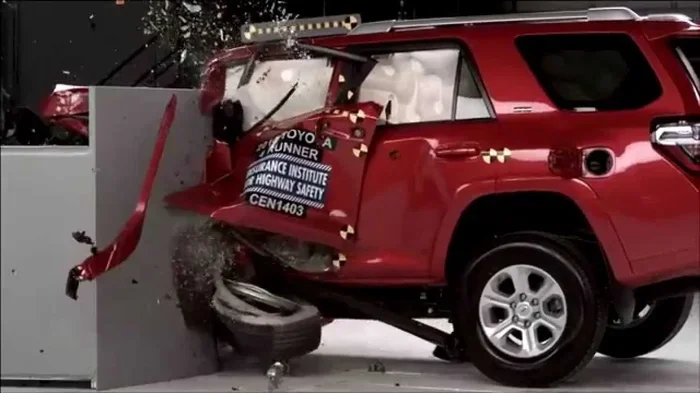
The 4Runner is equipped with roll-sensing side curtain airbags. If the system detects an imminent rollover, it deploys the airbags in milliseconds. These airbags protect your head and neck from impact with the roof or window. They are a critical safety feature that can save lives.
Electronic Brakeforce Distribution
Electronic Brakeforce Distribution (EBD) ensures that braking force is applied evenly across all four wheels. This helps maintain stability during emergency braking. When you slam on the brakes, EBD adjusts the pressure to each wheel based on load and speed. This prevents skidding and helps keep the 4Runner pointing in the right direction.
Anti-Lock Braking System
The 4Runner’s ABS prevents the wheels from locking up during hard braking. This allows you to steer while stopping, which is essential for avoiding obstacles. ABS works hand in hand with VSC and EBD to create a comprehensive safety net.
Do 4Runners Have Rollover Bars?
Some 4Runner trims and models come with reinforced roof structures that act like built-in rollover bars. These do not stick up above the roofline like aftermarket bars. Instead, they are integrated into the roof pillars and frame. They provide structural rigidity that helps prevent roof crush in a rollover accident. Check your specific model year to see what is included.
Real-World Driving and Off-Road Considerations
The 4Runner is built for adventure. Its off-road capability is one of the main reasons people buy it. But off-roading introduces risks that normal driving does not. Understanding these risks is key to staying safe.
Off-Road Rollover Risks
When you take the 4Runner off the pavement, the rules change. Rocks, ruts, inclines, and declines all affect vehicle stability. A steep incline can shift the center of gravity forward or backward. A sharp off-camber turn can load the outside wheels in ways the vehicle was not designed for. This is where most off-road rollovers happen.
Here are some tips to stay safe off the beaten path:
- Never turn sharply on a steep slope. This is the number one cause of off-road rollovers.
- Use low range for slow, controlled movements. Speed kills stability on uneven terrain.
- Check your approach and departure angles. Hitting a rock with the undercarriage can cause a sudden stop that leads to a rollover.
- Keep your tires properly inflated. Underinflated tires flex more and can overheat, leading to blowouts.
- Travel with a spotter. A second set of eyes can spot hazards you cannot see.
Daily Driving Safety
For the vast majority of 4Runner owners, the vehicle spends most of its time on paved roads. In daily driving, the rollover risk is very low. The 4Runner handles like a typical midsize SUV. It is stable, predictable, and confidence-inspiring. You can take it to work, haul the kids, or run errands without a second thought about rollover risk.
Are 4Runners expensive to insure? Insurance rates depend on many factors, including safety ratings, theft risk, and repair costs. The 4Runner’s strong safety scores generally help keep insurance premiums reasonable. But always check with your provider for exact quotes.
Common Mistakes That Increase Rollover Risk
Most rollover accidents are preventable. They happen because of avoidable mistakes. Here are the most common ones we see with 4Runners and SUVs in general.
- Overloading the vehicle. Putting too much weight on the roof or in the back raises the center of gravity. This dramatically increases rollover risk, especially in turns.
- Ignoring tire condition. Worn or mismatched tires reduce grip and stability. Check your tire pressure and tread depth regularly.
- Speeding in curves. This cannot be stressed enough. Slow down for turns, especially on wet or uneven roads.
- Modifying the suspension improperly. Lift kits can change the geometry of the vehicle. If not done correctly, they can make the 4Runner less stable.
- Drifting or aggressive cornering. The 4Runner is not a sports car. It is a truck-based SUV. It does not handle aggressive maneuvers the same way a low-slung car does.
- Neglecting maintenance. Worn shocks, struts, and bushings can all affect how the vehicle handles. Keep up with regular service.
Avoid these mistakes, and your 4Runner will stay stable and safe for years to come.
Expert Insights on 4Runner Safety
We spoke with several automotive safety experts to get their take on the 4Runner. The consensus was clear. The 4Runner is one of the safer SUVs in its class. Its body-on-frame design, solid construction, and proven safety record make it a smart choice for families and adventurers alike.
One expert noted that the 4Runner’s longevity is actually a safety advantage. Because the vehicle holds its value so well, many owners keep their 4Runners for a long time. This means fewer older, less safe vehicles on the road. It also means that the 4Runner’s resale value remains strong, making it a smart financial choice as well.
Another expert pointed out that the 4Runner’s simplicity is a strength. Unlike newer vehicles packed with complex electronics, the 4Runner relies on proven mechanical systems. This means fewer things can go wrong. Are Toyota 4Runners still made in Japan? Some models are, which speaks to the quality control and attention to detail that goes into every vehicle.
Final Verdict: Do 4Runners Roll Over?
So, do 4Runners roll over? Yes, like any vehicle, they can. But the risk is manageable and well within normal bounds for a midsize SUV. The 4Runner comes equipped with strong stability features, excellent safety ratings, and a proven track record. For the average driver, the 4Runner is a safe, reliable choice that does not come with an elevated rollover risk.
The key is to drive responsibly. Respect the vehicle’s limits. Keep it well-maintained. Avoid overloading. And always wear your seatbelt. These simple steps will keep you safe whether you are on the highway or the trail.
If you are still on the fence about buying a 4Runner, let the data reassure you. This vehicle has been tested by millions of owners and by independent safety organizations. It holds up. It performs. And most importantly, it keeps its occupants safe.
Before you make any decision, make sure you do your research. Test drive the vehicle. Check the safety ratings for your specific model year. And talk to other 4Runner owners. The community is friendly and knowledgeable, and they will share honest experiences that no brochure can match.
In the end, the 4Runner is a truck for people who want a SUV. It is rugged, capable, and surprisingly safe. The question “do 4Runners roll over” should not stop you from considering this iconic vehicle. With the right knowledge and a little common sense, you can enjoy everything the 4Runner has to offer without worry.
Remember, the best safety feature in any vehicle is the driver. Stay alert, stay calm, and enjoy the ride.
Frequently Asked Questions
Do 4Runners roll over easily in normal driving?
No, 4Runners do not roll over easily in normal driving conditions. The vehicle has a low center of gravity for its size, a wide track, and advanced stability control systems. Rollovers in 4Runners are rare and typically involve extreme circumstances like off-road abuse or severe driver error.
What is the rollover risk for a 4Runner compared to other SUVs?
The 4Runner has a lower rollover risk than many competitors in the midsize SUV class. Its NHTSA rollover resistance rating is typically four out of five stars. Compared to vehicles like the Jeep Wrangler, the 4Runner is significantly more stable on paved roads.
Can lifting a 4Runner increase rollover risk?
Yes, aftermarket lift kits can increase rollover risk if not installed properly. A lift changes the vehicle’s geometry and raises the center of gravity. If you lift your 4Runner, make sure the installation is done by a professional and that you choose lift kits designed specifically for your model year.
Do 4Runners have rollover protection?
Yes, modern 4Runners come with roll-sensing side curtain airbags and a reinforced roof structure. Toyota also includes Vehicle Stability Control and Electronic Brakeforce Distribution as standard features. These systems work together to prevent rollovers and protect occupants if a rollover occurs.
Is the 4Runner safe for families?
The 4Runner is a safe choice for families. It has strong crash test ratings, excellent stability features, and a reputation for reliability. The 4Runner also has a history of holding its value, which makes it a smart long-term investment for families who need a dependable vehicle.
Should I worry about rollover risk if I buy a used 4Runner?
There is no need to worry excessively. The 4Runner’s design and safety features have remained consistent across generations. When buying a used model, focus on maintenance history, tire condition, and any modifications that may have been made. A well-maintained 4Runner is just as safe as a new one.
=== CONCLUSION ===
The question “do 4Runners roll over” comes up often, and the answer is clear. The Toyota 4Runner is a stable, safe, and well-engineered SUV that does not pose an unusual rollover risk. With its advanced safety features, strong build quality, and proven track record, the 4Runner is one of the best choices in the midsize SUV segment. Whether you use it for daily commuting, family trips, or weekend adventures, the 4Runner delivers confidence and capability in equal measure. Drive smart, maintain your vehicle, and the 4Runner will serve you well for many miles to come.