Can a Car Still Run Without a Throttle Position Sensor
Can a car still run without a throttle position sensor? The short answer is yes, but not safely or reliably. A car with a bad throttle position sensor may start and idle, but it will likely experience rough idle, poor acceleration, stalling, and erratic engine behavior. Ignoring this problem can lead to serious engine damage and unsafe driving conditions.
You turn the key, and the engine turns over. But something feels off. The car shakes at a stoplight. It struggles to climb a hill. Or maybe it revs high for no reason. You wonder, can a car still run without a throttle position sensor?
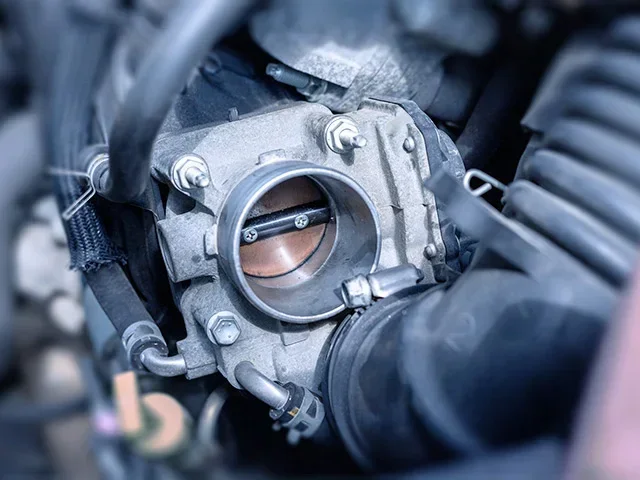
The throttle position sensor, or TPS, is a small but mighty component. It sits on the throttle body and watches how far you press the gas pedal. Then it sends that information to the engine control unit, or ECU. The ECU uses this data to decide how much fuel and air to mix into the engine. Without it, your car is basically flying blind.
So, can a car run without a throttle position sensor? Technically yes. But should you? Absolutely not. Let us break down exactly what happens, what to watch for, and what you should do about it.
Key Takeaways
- A car can technically run without a TPS: but the engine will not perform correctly and could become dangerous.
- Warning signs include rough idle, stalling, and poor fuel economy: these are your first clues that something is wrong.
- The throttle position sensor tells the ECU how much gas you need: without it, the engine control unit guesses, and it often guesses wrong.
- Driving with a failed TPS risks engine damage: rich fuel mixtures, misfires, and overheating are all possible outcomes.
- Replacing a throttle position sensor is affordable: most repairs cost between $100 and $350, including parts and labor.
- You can test a TPS at home with a multimeter: this saves time and money before visiting a mechanic.
📑 Table of Contents
- What Is a Throttle Position Sensor and Why Does It Matter
- Can a Car Still Run Without a Throttle Position Sensor
- Warning Signs That Your Throttle Position Sensor Is Failing
- What Happens When the TPS Completely Fails
- How to Diagnose a Bad Throttle Position Sensor
- How to Fix a Faulty Throttle Position Sensor
- Can You Drive With a Faulty Throttle Position Sensor
- Final Thoughts on Driving Without a Throttle Position Sensor
What Is a Throttle Position Sensor and Why Does It Matter
The throttle position sensor is part of your car’s electronic throttle control system. It is a simple sensor, but it plays a huge role in how your engine runs. When you press the accelerator pedal, the throttle plate opens. The TPS reads the angle of that plate and sends a voltage signal to the ECU.
Think of the TPS as the bridge between your foot and the engine. Your foot tells the gas pedal to move. The gas pedal moves the throttle plate. The TPS tells the ECU how much the plate has opened. Then the ECU adjusts fuel delivery and ignition timing accordingly. It is a loop that happens in milliseconds.
How the TPS Works in Everyday Driving
Here is a simple example. You are stopped at a red light. Your foot is off the gas. The TPS reads a closed throttle position and sends a low voltage signal. The ECU knows the engine is at idle. It adjusts fuel flow to keep the engine running smoothly at idle speed.
Now you press the gas to merge onto the highway. The throttle plate opens wider. The TPS sends a higher voltage signal. The ECU responds by adding more fuel. The engine accelerates. All of this happens so fast you never notice it.
But if the TPS fails, this entire system breaks down. The ECU no longer knows what your foot is doing. It may add too much fuel or too little. Either way, your car engine performance suffers.
Can a Car Still Run Without a Throttle Position Sensor
The direct answer to the question can a car run without a throttle position sensor is yes. Most modern cars have a failsafe mode. When the ECU detects that the TPS is not sending a signal, it switches to a backup program. This program uses data from other sensors to estimate how much fuel the engine needs.
However, this backup mode is far from ideal. It is like navigating with a blurry map. The car might move, but it will not drive well. Here is what typically happens when a TPS stops working:
- The engine may start but idle roughly.
- Acceleration feels sluggish or unpredictable.
- The car might surge forward without you touching the pedal.
- Engine stalling becomes common, especially at low speeds.
- The check engine light almost always comes on.
Why Some Cars Struggle More Than Others
Not all cars react the same way to a bad TPS. Older vehicles with cable-operated throttle bodies may still run relatively okay without a TPS. This is because the throttle cable mechanically connects the pedal to the plate. The engine still gets air, even if the sensor is dead.
Newer vehicles with electronic throttle control depend heavily on the TPS. These cars use drive-by-wire systems. There is no physical cable connecting the pedal to the throttle plate. The ECU controls everything based on sensor input. Without a working TPS, these cars will struggle significantly.
So if you are asking, can a car still run without a throttle position sensor, the answer depends on your vehicle’s age and design. But no matter what, you should not ignore a failing TPS.
Warning Signs That Your Throttle Position Sensor Is Failing
A bad TPS does not usually fail all at once. It degrades over time. That means you have time to catch it. Here are the most common warning signs.
Rough or Unstable Idle
Your car should hold a steady idle, usually between 600 and 1,000 RPM. If the engine shakes, hunts for RPMs, or surges up and down at a stop, the TPS could be the culprit. The ECU is receiving incorrect voltage signals and cannot maintain a smooth idle.
Poor Acceleration and Power Loss
When you press the gas and the car hesitates or refuses to accelerate, that is a red flag. A failing TPS sends wrong data to the ECU. The ECU then delivers the wrong amount of fuel. You feel this as sluggishness or a lack of power, especially when climbing hills or carrying heavy loads.
Unpredictable Surging or Jerking
One of the scariest symptoms is sudden surging. The car lurches forward for no apparent reason. Or it jerks when you try to maintain a steady speed. This happens because the TPS sends erratic signals. The ECU constantly adjusts the fuel mixture based on bad data, causing the engine to misfire or surge.
Increased Fuel Consumption
A failing TPS often causes the engine to run rich, meaning too much fuel. You will notice your fuel economy dropping fast. If you are filling up more often and your driving habits have not changed, a bad TPS could be wasting your gas.
The Check Engine Light
Modern cars are smart. When the ECU detects an abnormal TPS signal, it triggers the check engine light. It also stores a diagnostic trouble code, or DTC. Common codes related to TPS issues include P0121, P0122, and P0123. A mechanic can read these codes with an OBD-II scanner to confirm the problem.
What Happens When the TPS Completely Fails
If the throttle position sensor fails entirely, the effects get worse fast. A completely dead TPS sends no signal at all. The ECU goes into emergency mode and tries to run the engine on default values.
Engine Stalling and Failure to Start
In severe cases, the car will not start at all. Or it starts and immediately stalls. The ECU cannot determine the throttle position, so it cuts fuel delivery to protect the engine. You are left stranded, which is never a good place to be.
Engine Misfires and Damage Risk
Running with a dead TPS for an extended period can cause engine misfires. Misfires happen when the air-fuel mixture is wrong. Unburned fuel can damage the catalytic converter. It can also wash oil off the cylinder walls, increasing wear and tear on internal engine parts.
Over time, this leads to expensive repairs. What starts as a $150 sensor replacement can turn into a $1,000+ repair if you keep driving. So the answer to can a car run without a throttle position sensor is technically yes, but the cost of doing so can be very high.
Safety Risks on the Road
Let us talk about safety. A car that surges, stalls, or lacks power is dangerous. Imagine merging onto a highway and your engine suddenly loses power. Or stopping at a light and the engine dies and will not restart. These situations put you and others at risk.
If you notice any TPS symptoms, get the car checked right away. Do not wait for a complete failure.
How to Diagnose a Bad Throttle Position Sensor
You do not need to be a professional mechanic to check your TPS. With basic tools and a little patience, you can diagnose the problem yourself.
Step 1: Check for Trouble Codes
Buy or borrow an OBD-II scanner. Plug it into the diagnostic port under your dashboard. Turn the ignition to the on position and read the codes. If you see codes P0120 through P0124, the TPS is the likely problem.
Step 2: Inspect the Sensor and Wiring
Locate the TPS on the throttle body. Check the electrical connector for corrosion or loose pins. Look at the wiring harness for frayed or damaged wires. Sometimes the problem is not the sensor itself but a bad connection.
Step 3: Test with a Multimeter
Set your multimeter to the voltage setting. Back-probe the TPS connector with the ignition on and the throttle closed. You should read around 0.5 to 1.0 volts. Slowly open the throttle. The voltage should rise smoothly to about 4.5 to 5.0 volts.
If the voltage jumps around or stays flat, the TPS is faulty. A smooth, steady increase in voltage means the sensor is working correctly.
Step 4: Check the Throttle Body
Sometimes the TPS is fine, but the throttle body is dirty. Carbon buildup can restrict the throttle plate movement. This causes the TPS to read incorrect positions. Cleaning the throttle body with a proper cleaner can resolve many TPS-related issues.
How to Fix a Faulty Throttle Position Sensor
If you have confirmed that the TPS is bad, fixing it is usually straightforward. Most TPS sensors are held to the throttle body with one or two screws. You unplug the electrical connector, remove the screws, and swap in the new sensor.
After installation, you may need to reset the ECU. Disconnect the battery for about 15 minutes, then reconnect it. This clears any stored trouble codes and allows the ECU to relearn the new sensor’s baseline.
Some TPS sensors are adjustable. If yours is, you will need to set the idle voltage correctly using the multimeter before tightening the screws fully.
For those who prefer professional help, a mechanic can replace a TPS in under an hour. The parts themselves are inexpensive. Most TPS sensors cost between $20 and $100. Labor adds another $50 to $250 depending on your vehicle and location.
Can You Drive With a Faulty Throttle Position Sensor
The honest answer is you should not. A car with a bad TPS is unpredictable. It may drive fine for a few miles and then suddenly stall. It may surge without warning. These behaviors make it unsafe for you and everyone on the road.
If you must drive a short distance to get to a repair shop, do so with caution. Keep your speed low. Avoid highway driving. Stay in the right lane. Have someone else drive if possible.
But the best approach is simple. Replace the sensor as soon as you suspect it is failing. The cost is low. The repair is quick. The peace of mind is worth it.
Preventing TPS Problems in the Future
You cannot prevent all sensor failures. Electronics wear out over time. But you can take steps to protect your TPS and extend its life:
- Keep your engine bay clean and free of debris.
- Address engine vacuum leaks promptly.
- Replace air filters regularly to reduce contamination.
- Do not ignore the check engine light.
- Have your throttle body inspected during routine maintenance.
Regular car maintenance goes a long way. A clean engine runs better. A well-maintained throttle body keeps the TPS reading accurately for years.
The Role of the TPS in Fuel Economy
One benefit of a working TPS is better fuel economy. When the ECU receives accurate throttle position data, it delivers the exact amount of fuel needed. No more, no less. This precision saves gas and reduces emissions.
A bad TPS disrupts this balance. The ECU may dump extra fuel into the engine, wasting gas and increasing harmful emissions. Over time, this also damages other components like the oxygen sensor and catalytic converter. So fixing a TPS is not just about performance. It is also about protecting the rest of your engine.
TPS vs. Other Common Sensor Problems
It is easy to confuse TPS symptoms with problems from other sensors. The mass airflow sensor, or MAF sensor, controls fuel delivery based on air intake. The oxygen sensor monitors exhaust gases. The manifold absolute pressure sensor, or MAP sensor, measures intake manifold pressure.
All of these sensors work together with the TPS. If one fails, the others may compensate temporarily. But eventually, multiple sensor failures will cause serious drivability issues. That is why proper diagnosis is so important. Do not assume it is the TPS just because the symptoms seem similar.
Use an OBD-II scanner, perform voltage tests, and if needed, consult a trusted mechanic. Accurate diagnosis saves you money and prevents unnecessary part replacements.
Final Thoughts on Driving Without a Throttle Position Sensor
So, can a car still run without a throttle position sensor? Yes, it can limp along. But it should not. A car with a bad TPS is unreliable, inefficient, and unsafe. The symptoms are clear and noticeable. The fix is affordable and straightforward.
Do not let a small sensor problem turn into a big engine repair. Pay attention to the warning signs. Test the TPS early. Replace it quickly. Your car, your wallet, and your safety will all thank you.
The throttle position sensor is one of those parts you never think about until it stops working. And when it does, you will know. The rough idle, the surging, the stalling. They all point back to the TPS. Now you know what to look for and what to do about it.
Take care of your car, and it will take care of you. Start with the small stuff. Replace a failing sensor today before it becomes a major problem tomorrow.
Frequently Asked Questions
How far can you drive a car without a working throttle position sensor?
You can usually drive a short distance, but it is not recommended. The car may run rough, surge, or stall at any moment. Driving with a dead TPS for an extended period can cause engine damage and unsafe conditions on the road.
What happens if you unplug the throttle position sensor?
If you unplug the TPS, the ECU will switch to emergency mode. The car may start and idle, but acceleration will be poor. The engine may also set a check engine light and store diagnostic trouble codes related to the TPS circuit.
Can a bad throttle position sensor cause a car to stall?
Yes, absolutely. A failing TPS sends incorrect signals to the ECU. This can cause the engine to receive too much or too little fuel, leading to stalling, especially at idle or low speeds.
Is it expensive to replace a throttle position sensor?
No, it is quite affordable. The TPS sensor itself costs between $20 and $100. Labor for the replacement typically runs $50 to $250. Most repairs are completed in under an hour at a mechanic shop.
Can a dirty throttle body cause TPS problems?
Yes, carbon buildup in the throttle body can restrict plate movement. This causes the TPS to read incorrect throttle positions. Cleaning the throttle body often resolves these issues without needing a sensor replacement.
Will a car pass emissions testing with a bad throttle position sensor?
Probably not. A bad TPS causes the engine to run rich or lean, which increases harmful emissions. Most emissions testing will flag a faulty TPS through the check engine light and stored diagnostic codes.