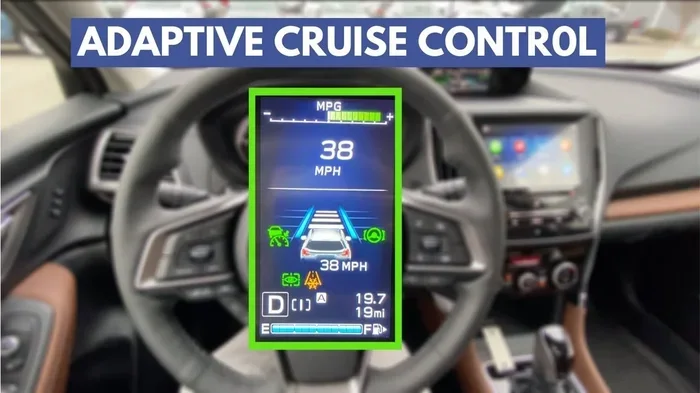
Can Adaptive Cruise Control Be Disabled In An Instant
Yes, adaptive cruise control can be disabled in an instant. Most vehicles let you turn off ACC with a simple button press or steering wheel toggle. Understanding how to deactivate your adaptive cruise control system gives you full manual control when you need it most.
Have you ever been cruising down the highway and thought, “I wish I could just turn this thing off?” You are not alone. Adaptive cruise control is a great feature, but sometimes you just need full control of your vehicle. The good news is that you can disable adaptive cruise control in an instant. Whether you are dealing with stop-and-go traffic, bad weather, or just prefer the classic driving feel, knowing how to turn off ACC is a must-have skill.
In this guide, we will walk you through everything you need to know about disabling your cruise control system. We will cover the different methods, the reasons you might want to turn it off, common problems you could face, and expert tips to keep you safe. Let us dive in and make sure you are always in the driver seat.
Key Takeaways
- Instant Deactivation: You can disable adaptive cruise control with a single button press in most vehicles.
- Multiple Methods: ACC can be turned off via the steering wheel, dashboard controls, or vehicle settings menu.
- Safety First: Knowing how to disengage ACC quickly is essential for safe manual driving.
- System Reset: After disabling ACC, the system may need a reset before you can use it again.
- Driver Override: Braking or pressing the cancel button always overrides the cruise control system.
- Vehicle Specifics: The exact method varies by make, model, and year of the vehicle.
📑 Table of Contents
- Understanding Adaptive Cruise Control
- Can You Disable Adaptive Cruise Control?
- Step-by-Step: How To Turn Off ACC
- When Should You Disable Adaptive Cruise Control?
- Common Problems When Disabling ACC
- Comparison: ACC vs Manual Driving
- Expert Tips For Managing Your Cruise Control System
- Frequently Asked Questions
- Conclusion
Understanding Adaptive Cruise Control
Before we get into how to turn it off, let us quickly understand what adaptive cruise control actually does. Unlike traditional cruise control, which just keeps your car at a set speed, adaptive cruise control uses sensors and radar to maintain a safe distance from the vehicle ahead of you. It adjusts your speed automatically. Pretty cool, right?
How Does ACC Work?
Your vehicle has a radar sensor or a camera system mounted near the front grille or behind the windshield. This sensor reads the road ahead and communicates with your car’s throttle control and braking system. When the car in front of you slows down, your ACC slows down too. When the road clears, it speeds back up to your set limit.
The system relies on a few key components working together:
- Radar or lidar sensors that detect objects ahead
- Electronic control unit that processes the data
- Throttle actuator that adjusts your speed
- Brake interface that can slow the car when needed
All of this happens in milliseconds. That is why adaptive cruise control feels so seamless when it is working properly. But here is the thing. Sometimes you need to take over. And that is where knowing how to disable it becomes important.
Why Do Drivers Want to Turn Off ACC?
There are plenty of valid reasons to turn off adaptive cruise control. Maybe you are driving through heavy rain and the sensors are not working well. Perhaps you are stuck in a long traffic jam and the constant braking is annoying. Some drivers simply prefer the hands-on feel of manual driving on familiar roads.
Here are the most common reasons drivers disable ACC:
- Bad weather conditions like heavy rain, fog, or snow
- Stop-and-go city traffic where the system overreacts
- Winding or hilly roads where sensors lose track
- Personal preference for full manual control
- System malfunction or warning lights appearing
- Towing a trailer which can confuse the sensors
No matter the reason, the ability to deactivate adaptive cruise control quickly and confidently is a critical driving skill.
Can You Disable Adaptive Cruise Control?
The short answer is yes. You can disable adaptive cruise control in virtually every modern vehicle. The methods vary slightly depending on your car’s make and model, but the basic options are the same across most brands. Let us break down the different ways you can turn off ACC.
Method One: The Cruise Control Button
The simplest way to turn off ACC is by pressing the cancel button on your steering wheel. Most vehicles have a dedicated “Cancel” or “CC” button right there where your hands naturally rest. Just tap it, and the system disengages immediately.
Here is what typically happens when you press cancel:
- The ACC indicator light on your dashboard turns off
- The set speed is cleared from memory
- You regain full manual control of acceleration and braking
- The system remains in standby mode and can be reactivated
Some cars also let you turn off ACC by pressing the “OFF” button. This is slightly different from cancel because it shuts the system down completely rather than just pausing it.
Method Two: The Brake Pedal Override
This is the most instinctive way to disable adaptive cruise control. When you press the brake pedal, the ACC system immediately disengages. This is actually a built-in safety feature that works in every vehicle with cruise control.
The brake override is designed to ensure that you always have the final say. No matter what the ACC system is doing, your foot on the brake takes priority. This is especially useful in emergency situations where you need to slow down or stop quickly.
Pro Tip: Get in the habit of tapping the brake lightly when you are approaching complex driving situations. This ensures the system is ready to hand over control if needed.
Method Three: Through the Vehicle Settings Menu
Many newer vehicles let you disable adaptive cruise control through the infotainment system. You can usually find this option in the vehicle settings or driver assistance menu. This method is useful if you want to keep ACC off for an extended period without accidentally reactivating it.
The steps vary by vehicle, but here is a general process:
- Press the “Menu” or “Settings” button on your dashboard screen
- Navigate to “Driver Assistance” or “Driving Aids”
- Find the “Adaptive Cruise Control” option
- Toggle it off or select “Off”
- Confirm your choice if prompted
Some vehicles also allow you to adjust the sensitivity of the system rather than turning it off completely. This is a great middle ground if you find ACC too aggressive but still want some assistance.
Method Four: Turning the Vehicle Off
The most obvious method is simply turning off your engine. When you shut down the vehicle, the adaptive cruise control system powers down completely. However, this is not practical for quick stops or short breaks. You would not want to turn off your engine every time you need to disable ACC.
That said, some drivers prefer to start the car with ACC off by default. You can usually set this preference in the vehicle settings so that every time you start the engine, the cruise control system remains inactive until you manually turn it on.
Step-by-Step: How To Turn Off ACC
Let us walk through a quick step-by-step process for the most common scenario. We will use the steering wheel cancel button as our primary method since it works across nearly all vehicles.
Step 1: Locate the Cancel Button
Look at your steering wheel controls. The cancel button is usually marked with a “C” or the word “Cancel.” On some vehicles, it shares a button with the “Resume” function. Check your owner’s manual if you are not sure where it is.
Step 2: Press the Button
Give the cancel button a quick press. You should see the ACC indicator light on your dashboard turn off or change color. The set speed will be cleared, and you will feel the system release its hold on the throttle.
Step 3: Confirm Manual Control
Now you are in full manual control. The vehicle speed will gradually decrease if you are not pressing the accelerator. You can now accelerate, brake, and steer exactly as you would without cruise control active.
Step 4: Reactivating ACC When You Are Ready
When you want to use adaptive cruise control again, simply press the “Resume” or “Set” button. The system will return to your previous settings or allow you to set a new speed and following distance. It is that easy.
Quick Tips for Disabling ACC Smoothly
- Always look for the ACC indicator on your dash to confirm the system is off
- Do not slam the brake unless it is an emergency. A light tap is enough to disengage ACC
- Check your owner’s manual for vehicle-specific instructions
- Practice in a safe area like an empty parking lot before you need to do it on the road
- Remember that braking always overrides ACC, no matter what
When Should You Disable Adaptive Cruise Control?
Knowing how to turn off ACC is only half the battle. You also need to know when it makes sense to disable it. Using the system in inappropriate conditions can reduce its effectiveness and even create safety risks.
Safety Reasons To Disable ACC
Safety should always come first. There are certain situations where adaptive cruise control simply cannot perform as well as a human driver. In these cases, you should turn it off without hesitation.
You should disable ACC when:
- Visibility is poor due to heavy rain, fog, or snow
- The road has sharp curves or steep grades
- You are driving on unpaved or poorly marked roads
- The radar sensor or camera is dirty or obstructed
- The ACC warning light is flashing or showing an error
- You are approaching a construction zone with lane changes
Driving Conditions That Call For Manual Control
Even if the weather is fine, some driving situations are better handled manually. Stop-and-go traffic is a prime example. Many ACC systems struggle with very low speeds and frequent stops. The constant engagement and disengagement can be jarring and sometimes unpredictable.
Similarly, if you are driving through a tunnel or under a dense canopy of trees, the radar sensor may lose its line of sight. In these cases, manual control gives you the confidence to respond to whatever comes your way.
Expert Insight: Many experienced drivers recommend using ACC on open highways and switching to manual control in urban areas, construction zones, and bad weather. This approach lets you enjoy the convenience of cruise control while staying safe in challenging conditions.
Common Problems When Disabling ACC
Most of the time, turning off adaptive cruise control is a breeze. But sometimes things do not go as planned. Here are the most common issues drivers face when trying to deactivate ACC and how to handle them.
ACC Warning Light Stays On
If you press cancel or hit the brake and the ACC warning light stays on, do not panic. This usually means the system has not fully reset. Try turning your steering wheel slightly or toggling the headlights. In most cases, this will clear the warning.
If the light persists, it could indicate a cruise control malfunction. Check for any error messages on your dashboard. Common causes include a dirty sensor, a blown fuse, or a software glitch. In these cases, a visit to your mechanic or a system reset may be needed.
The System Will Not Respond to the Cancel Button
Rarely, the cancel button may not work. This could be caused by a faulty switch, a wiring issue, or a problem with the electronic control unit. If you find that the cancel button is unresponsive, try pressing the brake pedal instead. That method should always work as a backup.
If neither method works, pull over safely and restart the vehicle. This often resets the system and restores normal function. If the problem continues, consult your owner’s manual or contact a dealership for assistance.
ACC Reactivates After You Disable It
Some vehicles have a feature where ACC automatically reactivates after a certain period. If you have disabled it but find it turning back on, check your vehicle settings. Look for an “Auto Resume” or “Auto Reactivate” option and turn it off.
Comparison: ACC vs Manual Driving
To help you understand when to use each approach, here is a quick comparison of adaptive cruise control versus full manual driving.
| Feature | Adaptive Cruise Control | Manual Driving |
|---|---|---|
| Speed Maintenance | Automatic | Driver controlled |
| Distance from Vehicle Ahead | Automatic | Driver judged |
| Response Time | Milliseconds | Human reaction time |
| Best For | Highways, open roads | City streets, bad weather |
| Driver Fatigue | Reduces fatigue | More tiring on long drives |
| Control Level | Partial | Full |
| System Failures | Possible | Not applicable |
As you can see, both approaches have their strengths. The key is knowing when to use each one. And that all starts with understanding how to disable adaptive cruise control whenever you need to.
Expert Tips For Managing Your Cruise Control System
Here are some insider tips from experienced drivers and automotive experts to help you get the most out of your adaptive cruise control system while staying safe.
Quick Tips
- Clean your sensors regularly. A dirty radar or camera can cause false readings and unexpected ACC behavior. A quick wipe with a microfiber cloth can make a big difference.
- Update your vehicle software. Manufacturers often release updates that improve ACC performance and fix bugs. Check with your dealer for the latest firmware.
- Set a comfortable following distance. Most systems let you adjust how close you follow the car ahead. More distance gives you more reaction time.
- Use the “resume” function wisely. After disabling ACC, be careful when pressing resume. Make sure the road ahead is clear first.
- Know your vehicle’s limits. Every ACC system is different. Some work down to a complete stop, while others disengage below 20 mph. Read your manual to understand your specific system.
Common Mistakes To Avoid
- Assuming ACC can handle all situations. It cannot. Always stay alert and keep your hands near the wheel.
- Ignoring warning lights. If the ACC warning light stays on, do not ignore it. Have the system checked by a professional.
- Relying on cruise control in heavy traffic. Stop-and-go traffic is where ACC is least reliable. Switch to manual control in these conditions.
- Forgetting to re-enable safety features. After disabling ACC, make sure other safety systems like lane keep assist are still active if you want them.
- Not reading the owner’s manual. Every vehicle is different. The manual is your best resource for understanding your specific cruise control system.
Expert Insight: Automotive engineers recommend treating adaptive cruise control as an assistive feature, not a replacement for active driving. Even when ACC is working perfectly, you should always be ready to take control at a moment’s notice. This mindset will keep you safe in any situation.
Frequently Asked Questions
Can You Disable Adaptive Cruise Control While Driving?
Yes, you can disable adaptive cruise control while driving. Simply press the cancel button on the steering wheel or tap the brake pedal. Both methods immediately disengage the system and give you full manual control. This is a built-in safety feature in all vehicles with ACC.
Does Disabling ACC Affect Other Safety Features?
No, disabling adaptive cruise control does not turn off other safety systems like automatic emergency braking or lane departure warnings. These features operate independently. However, some vehicles allow you to adjust settings for multiple driver assistance features together through the infotainment menu.
Can a Malfunctioning ACC Be Dangerous?
A malfunctioning ACC can be dangerous if it fails to respond correctly. For example, if the system does not slow down when traffic ahead decelerates, it could lead to a collision. This is why it is important to address any ACC warning lights or unusual behavior immediately. Have your vehicle inspected by a qualified mechanic.
How Do I Know if My ACC Sensor Is Dirty?
Common signs of a dirty ACC sensor include the system not detecting vehicles ahead, inconsistent speed adjustments, or a warning message on the dashboard. The sensor is usually located near the front grille or behind the windshield. A simple cleaning with a soft cloth can often resolve the issue.
Is It Legal to Drive with ACC Disabled?
Absolutely. Disabling adaptive cruise control is perfectly legal and is actually recommended in many driving conditions. There are no laws requiring you to keep ACC active. In fact, many driving safety experts encourage manual control in complex or unpredictable driving environments.
Will Disabling ACC Void My Vehicle Warranty?
No, turning off adaptive cruise control will not void your warranty. Disabling a driver assistance feature is considered normal vehicle operation. However, if you modify or tamper with the ACC hardware or software, that could potentially affect your warranty coverage. Always consult your dealer if you are unsure.
Conclusion
The ability to disable adaptive cruise control in an instant is one of the most important skills every driver should have. Whether you are dealing with challenging weather, complex road conditions, or simply prefer the feel of manual driving, knowing how to turn off ACC gives you confidence and safety.
We have covered the different methods to turn off adaptive cruise control, from the simple cancel button to the brake override and vehicle settings menu. We have explored when to disable it, common problems you might face, and expert tips to keep your system running smoothly.
Remember, adaptive cruise control is a helpful tool, but it is not a replacement for attentive driving. Always stay alert, keep your hands ready, and never hesitate to take manual control when the situation demands it. The road is unpredictable, and you are your best safety system.
Now that you know how to disable your cruise control system quickly and confidently, you can drive smarter, safer, and with greater peace of mind. Safe travels!