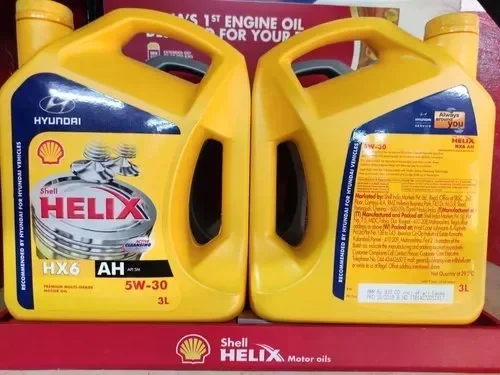
Can I Use 5W-30 Instead of 5W-20 in My Hyundai Engine
Using 5W-30 instead of 5W-20 in your Hyundai is possible in some cases, but it depends on your engine design, driving conditions, and model year. Hyundai generally recommends 5W-20 oil for most of its modern engines because it offers the best balance of fuel economy and engine protection. Before you make the switch, you need to understand what the numbers mean and how they affect your engine.
Have you ever stood in the auto parts store, staring at rows of engine oil, and wondered if 5W-30 instead of 5W-20 in your Hyundai would really make a difference? You are not alone. This is one of the most common questions car owners ask, especially when the recommended oil seems hard to find or costs a bit more than the alternative sitting right next to it on the shelf.
The truth is, oil viscosity matters more than most people realize. It directly affects how well your engine runs, how much fuel it uses, and how long the internals last. Hyundai engineers design their engines to work best with a specific oil weight, and straying from that recommendation can have real consequences. In this guide, we will break down everything you need to know about using 5W-30 instead of 5W-20 in your Hyundai, so you can make a confident decision for your car.
We will cover what the numbers mean, why Hyundai makes the recommendations it does, what could go wrong, and when it might actually make sense to switch. By the end, you will have a clear answer and the knowledge to protect your engine.
Key Takeaways
- Hyundai recommends 5W-20 oil for most of its newer engines to maximize fuel economy and protection.
- Using 5W-30 instead of 5W-20 is generally safe for short-term use but may affect long-term engine performance.
- The “W” stands for winter and refers to how the oil flows in cold temperatures, while the second number measures thickness at operating temperature.
- Always check your owner’s manual before switching oil weights, as using the wrong viscosity may void your warranty.
- 5W-30 can benefit older Hyundai models or engines with higher mileage that need a slightly thicker oil film.
- Synthetic oil blends offer flexibility and can help bridge the gap between different viscosity grades.
- Consult a certified Hyundai mechanic if you are unsure which oil weight is right for your specific vehicle.
📑 Table of Contents
What Do the Numbers 5W-20 and 5W-30 Actually Mean?
Before we dive into whether you can swap these oils, let us clear up what the numbers and letters even mean. The system used to label engine oil is called the viscosity grade, and it comes from the Society of Automotive Engineers, or SAE. It tells you how thick or thin the oil is at different temperatures.
Understanding the “W” in Oil Grades
The “W” stands for winter. The number before the W tells you how the oil flows when your engine is cold. A lower number means the oil flows more easily in cold weather. So both 5W-20 and 5W-30 have the same cold-start performance. They both pump quickly when you turn the key on a chilly morning, which is great for engine protection during those critical first few seconds of operation.
How the Second Number Affects Your Engine
The number after the W measures the oil’s thickness, or viscosity, at normal operating temperature. This is where 5W-20 and 5W-30 differ. A 5W-20 oil is thinner at high temperatures, while a 5W-30 oil is thicker. Thinner oil moves through engine passages more easily, which can improve fuel economy. Thicker oil creates a stronger film between moving parts, which can offer better protection under heavy stress.
Think of it like this. 5W-20 is like a light jogging jacket that lets you move freely. 5W-30 is like a heavier winter coat that gives you more warmth and protection but might slow you down a bit. Both have their place, but they serve different needs.
Why Hyundai Recommends 5W-20 Oil
Hyundai does not pick 5W-20 oil at random. The recommendation comes from years of testing and engineering. Every Hyundai engine is designed with specific clearances, tolerances, and performance goals in mind. The oil weight is chosen to match all of that.
Engine Design and Tolerances
Modern Hyundai engines are built with tight tolerances. The spaces between moving parts like pistons, bearings, and camshafts are very small. 5W-20 oil is thin enough to flow through these tight spaces quickly and evenly. This ensures that every component gets lubricated fast, reducing friction and engine wear right from startup.
Fuel Economy and Efficiency
One of the biggest reasons Hyundai uses 5W-20 oil is fuel economy. Thinner oil creates less drag inside the engine. Less drag means the engine does not have to work as hard. Over time, this adds up to real savings at the pump. Hyundai’s fuel economy ratings are based on the use of the recommended oil weight, so using a thicker oil could slightly reduce your miles per gallon.
Emissions and Environmental Standards
Thinner oil also helps engines reach optimal temperature faster. This leads to more complete fuel combustion, which reduces harmful emissions. Hyundai’s commitment to clean engines means every component, including the recommended oil weight, plays a role in meeting environmental standards.
Can You Use 5W-30 Instead of 5W-20 in Your Hyundai?
This is the big question, and the answer is not a simple yes or no. Using 5W-30 instead of 5W-20 in your Hyundai is possible in certain situations, but it comes with caveats. Let us look at when it works and when it does not.
Short-Term Use: Generally Safe
If you are in a pinch and the only oil available is 5W-30, you can use it for a short period without causing immediate damage. One oil change cycle with 5W-30 instead of 5W-20 is unlikely to harm your engine. Many drivers have done this accidentally and experienced no problems at all.
However, do not make a habit of it. If you regularly drive long distances or in demanding conditions, sticking with the recommended weight is the best approach.
Long-Term Use: Proceed With Caution
Using 5W-30 oil long-term in an engine designed for 5W-20 can lead to issues. The thicker oil may not flow as quickly through tight engine passages. Over time, this can affect oil pressure and reduce the efficiency of oil delivery to critical components.
Some drivers report a slight drop in fuel economy when switching to a heavier oil. Others notice the engine feels a bit sluggish during cold starts. These effects are usually minor, but they can add up over thousands of miles.
Which Hyundai Models Can Handle 5W-30?
Not all Hyundai vehicles react the same way to oil weight changes. Here is a general breakdown:
- Newer Hyundai models (2011 and later): Most are designed for 5W-20. Switching to 5W-30 is not recommended unless specifically advised by a mechanic.
- Older Hyundai models (2010 and earlier): Some older engines were more forgiving with oil weight changes and could handle 5W-30 without major issues.
- High-mileage engines: Engines with over 150,000 miles may benefit from the slightly thicker protection of 5W-30, especially if there is minor oil consumption or internal wear.
- Turbocharged Hyundai engines: These engines run hotter and may respond differently to oil weight changes. Always check the owner’s manual for turbo-specific recommendations.
Comparison Table: 5W-20 vs 5W-30 for Hyundai Engines
| Feature | 5W-20 | 5W-30 |
|---|---|---|
| Cold Flow | Excellent | Excellent |
| Hot Viscosity | Thin | Thick |
| Fuel Economy | Better | Slightly Lower |
| Engine Protection (Hot) | Good | Better |
| Best For | Modern Hyundai engines | Older or high-mileage engines |
| Warranty Impact | No issue | May void warranty |
What Happens If You Use the Wrong Oil Weight?
Using the wrong oil viscosity is not something to take lightly. While a one-time mistake might not cause disaster, repeated use of the wrong weight can lead to real problems over time.
Reduced Oil Pressure
Thicker oil moves more slowly through your engine. This can lead to lower oil pressure readings on your dashboard. Low oil pressure means less lubrication for critical components, which increases the risk of premature wear.
Increased Engine Wear
If the oil is too thin for the engine, it may not maintain a strong enough film between metal parts. If the oil is too thick, it may not reach all the tight spaces fast enough. Either scenario can increase engine wear over time.
Reduced Fuel Economy
Thicker oil creates more internal friction. Your engine has to work harder to pump it around. This means your fuel economy drops slightly, which adds up at the gas station over weeks and months of driving.
Warranty Concerns
This is a big one. If your Hyundai is still under warranty, using an oil weight not recommended by the manufacturer could give the dealer a reason to deny a warranty claim. Even if the oil weight did not cause the problem, the warranty department may point to it as evidence of improper maintenance.
Quick Tip: Always keep a copy of your owner’s manual in the glove box. If a mechanic or parts store clerk recommends a different oil weight, you can quickly check what Hyundai specifies for your engine.
Common Mistakes to Avoid
- Assuming all Hyundai models use the same oil: Different engines within the same brand can have different oil requirements. Always verify for your specific model and engine.
- Relying on advice from non-Hyundai sources: A mechanic who works on many different car brands may default to a general recommendation that does not apply to your Hyundai.
- Ignoring the owner’s manual: It is the single best source for your vehicle’s oil specifications. Do not skip this step.
- Switching oil weights based on a single bad experience: If you used 5W-30 once and everything was fine, that does not mean it is the right long-term choice.
When Might 5W-30 Be the Better Choice for Your Hyundai?
While 5W-20 is the standard for most Hyundai engines, there are situations where 5W-30 oil makes more sense. Understanding these scenarios can help you make the right call for your specific driving situation.
High-Mileage Engines
As engines age, internal clearances tend to widen. Parts wear down, and the tight tolerances from the factory are no longer as precise. In these cases, a slightly thicker oil like 5W-30 can help fill the gaps and maintain proper oil pressure. If your Hyundai has over 150,000 miles and you notice slight oil consumption or minor rattles, 5W-30 may be a smart upgrade.
Hot Climate Driving
If you live in a hot climate where temperatures regularly exceed 100 degrees Fahrenheit, your engine oil takes a beating. 5W-30 oil holds up better at extreme temperatures because it is thicker and less prone to thinning out. This can provide better protection during summer months or in desert driving conditions.
Towing and Heavy Loads
Hyundai trucks and SUVs like the Santa Fe and Palisade are sometimes used for towing. When your engine works harder, it runs hotter, and the oil needs to maintain its protective film under stress. In these cases, a slightly heavier oil weight can offer an extra layer of engine protection.
Oil Consumption Issues
Some Hyundai engines are known to consume a small amount of oil between changes. If you find yourself topping off the oil frequently, switching to 5W-30 may reduce consumption because the thicker oil is less likely to burn off or leak past worn seals.
Expert Insight: “I have seen many Hyundai owners switch to 5W-30 after 100,000 miles and notice a real difference in engine smoothness and oil consumption. It is not something I would recommend for a brand-new engine, but for a high-mileage vehicle, it can be a practical choice.”
Certified Hyundai Technician with 15 years of experience
Expert Recommendations and Final Verdict
So, what is the bottom line? Can you use 5W-30 instead of 5W-20 in your Hyundai? The short answer is: it depends on your situation.
For most Hyundai owners with relatively new vehicles, stick with 5W-20 oil. It is what the engine was designed for, and it delivers the best combination of fuel economy, engine protection, and emissions performance. Following the manufacturer’s recommendation also keeps your warranty intact.
If you own an older Hyundai with high mileage, or if you regularly drive in extreme heat or tow heavy loads, 5W-30 can be a reasonable alternative. Just make sure you understand the trade-offs, and monitor your oil pressure and fuel economy after making the switch.
Here are some final tips to keep in mind:
- Always use oil that meets Hyundai’s specification (look for the Hyundai certification on the bottle, such as API SP or GF-6).
- Change your oil regularly regardless of which weight you choose. Follow the intervals in your owner’s manual or the dashboard maintenance reminder.
- Pair your oil with a quality oil filter that matches your vehicle. A good filter removes contaminants and keeps your engine oil clean longer.
- Check your oil level monthly and top off as needed. This simple habit can catch problems early and extend the life of your engine.
- When in doubt, consult a Hyundai dealer or certified mechanic. They know your specific engine inside and out and can give you the best advice for your situation.
Making the right oil choice is one of the simplest things you can do to protect your Hyundai. Take the extra few minutes to check your manual, read the labels on the oil bottles, and make an informed decision. Your engine will thank you for it.
5W-30 instead of 5W-20 in your Hyundai is not the wrong choice in every situation. But it is not the default choice either. Know your engine, know your driving conditions, and you will make the right call every time.
Frequently Asked Questions
Will using 5W-30 instead of 5W-20 void my Hyundai warranty?
It can, if your vehicle is still under the manufacturer’s warranty. Hyundai specifies 5W-20 oil for most of its modern engines, and using a different weight may be grounds for denying a warranty claim related to engine damage. Always check with your dealer before making the switch if your car is still covered.
Can I mix 5W-20 and 5W-30 oil in my Hyundai?
In an emergency, mixing the two oils is unlikely to cause immediate harm. However, it is not a long-term solution. The mixed oil will have a viscosity somewhere between the two, and it may not provide the exact protection your engine was designed for. Stick to one weight for consistent results.
Is 5W-30 oil better for hot weather driving?
Yes, 5W-30 tends to hold up better in high temperatures because it is thicker and less prone to thinning out. If you live in a hot climate or do a lot of summer driving, 5W-30 can offer slightly better protection at operating temperature compared to 5W-20.
How often should I change my oil if I use 5W-30 instead of 5W-20?
The oil change interval does not change based on oil weight alone. Follow the schedule in your Hyundai owner’s manual, which is typically every 5,000 to 7,500 miles for synthetic oil. However, if you are using a non-recommended oil weight, consider sticking to shorter change intervals for extra safety.
Which Hyundai models specifically require 5W-20 oil?
Most modern Hyundai models including the Sonata, Elantra, Tucson, Santa Fe, and Kona are designed to use 5W-20 oil. Always double-check your owner’s manual or the oil cap under the hood for the exact specification for your model year and engine type.
What is the difference between synthetic 5W-30 and conventional 5W-30 for Hyundai engines?
Synthetic oil is engineered in a lab to provide more consistent performance, better thermal stability, and longer change intervals. Conventional oil is derived from crude oil and is less refined. For Hyundai engines, synthetic oil is always the better choice, regardless of the viscosity grade, because it offers superior engine protection and lasts longer between changes.