Can Valvoline Change BMW Oil And Keep It Running Smooth
Yes, Valvoline can change BMW oil, but there are important things to know first. BMW engines need specific oil types and careful attention to keep them running at peak performance. This guide covers everything you need about Can Valvoline Change BMW Oil and how to keep your BMW engine healthy.
Owning a BMW comes with a lot of perks. The driving experience is unmatched. The engineering is top-notch. But when it comes to maintenance, things can get tricky fast.
One question BMW owners ask all the time is this: Can Valvoline Change BMW Oil? It is a fair question. Valvoline is a well-known name in the oil change world. But BMW engines are not your average engines. They need special care. They need the right oil. They need the right service.
In this article, we are going to break it all down. We will look at what makes BMW oil changes different. We will explore what Valvoline offers. And we will help you decide if Valvoline is the right choice for your BMW maintenance routine. By the end, you will know exactly what to expect and how to keep your BMW engine running strong.
The short answer is yes. Can Valvoline Change BMW Oil? Absolutely. But the full answer has some important details. Let us dive in.
Key Takeaways
- Valvoline Can Handle BMW Oil Changes: Many Valvoline locations are equipped to service BMW vehicles with the right oil and filters.
- BMW Engines Need Specific Oil: BMW models often require synthetic oil with specific viscosity grades for optimal engine protection.
- Cost Savings Are Real: Choosing Valvoline over a BMW dealership can save you significant money on every oil change.
- Warranty Considerations Matter: Check your BMW warranty terms before choosing an independent service provider for oil changes.
- Regular Oil Changes Are Critical: Sticking to the recommended BMW oil change interval keeps your engine running smoothly for years.
- Quick Tips Prevent Expensive Repairs: Simple habits like checking oil levels and using the right oil type can avoid major BMW engine issues.
📑 Table of Contents
- What You Need to Know About BMW Oil Changes
- Can Valvoline Change BMW Oil? The Short Answer
- Types of Oil BMW Engines Need
- Valvoline vs BMW Dealership Oil Change
- What Happens During a Valvoline BMW Oil Change
- Common Mistakes BMW Owners Make with Oil Changes
- Quick Tips for Keeping Your BMW Engine Healthy
- Expert Insights on BMW Oil Changes at Valvoline
- Common Mistakes to Avoid
- How to Choose the Right Service Provider for Your BMW
- Final Thoughts on Can Valvoline Change BMW Oil
What You Need to Know About BMW Oil Changes
BMW engines are built for performance. They run hot. They operate under high pressure. That means the oil you put in them matters a lot more than you might think. Not all oil is created equal. And not every service center handles BMW oil change needs the same way.
Why BMW Oil Changes Are Different
BMW engines are precision machines. They are designed to deliver incredible power and efficiency. But that precision comes with specific requirements. BMW manufacturers recommend specific oil types. They specify exact viscosity grades. They also set strict oil change intervals.
Using the wrong oil can cause serious problems. It can lead to increased engine wear. It can reduce fuel efficiency. In worst cases, it can even void your warranty. That is why understanding your BMW oil needs is so important.
Most BMW models use synthetic oil. Synthetic oil handles high temperatures better. It flows smoothly even in cold weather. It lasts longer than conventional oil. But not all synthetic oils are the same. BMW engines often require oil that meets specific certification standards.
The Right Oil Viscosity for Your BMW
Oil viscosity is a measure of how thick or thin your oil is. BMW engines are designed to work with specific viscosity grades. The most common options include 0W-30, 0W-40, and 5W-30. The right choice depends on your BMW model and the climate you drive in.
Using the wrong viscosity can cause problems. Too thin, and the oil will not protect your engine properly. Too thick, and it will not flow fast enough to lubricate all the moving parts. Always check your BMW owner manual. It will tell you exactly what oil viscosity your engine needs.
How Often Should You Change BMW Oil
BMW oil change intervals vary by model and year. Most modern BMW vehicles can go between 10,000 and 15,000 miles between changes. But some older models still follow the traditional 5,000-mile guideline.
Your driving habits also matter. If you drive in stop-and-go traffic a lot, you might need more frequent changes. If you drive in extreme heat or cold, that can shorten oil life too. The BMW condition-based servicing system helps track this. It tells you exactly when an oil change is due.
Can Valvoline Change BMW Oil? The Short Answer
So, let us get to the big question. Can Valvoline Change BMW Oil? The answer is a solid yes. Valvoline is one of the largest oil change providers in the United States. They service millions of vehicles every year. And BMW is no exception.
Valvoline technicians are trained to work on a wide range of vehicles. They understand the basics of BMW engine oil requirements. They carry multiple oil types and viscosity grades. Most Valvoline locations can handle a standard BMW oil change without any issues.
What Valvoline Offers for BMW Owners
Valvoline provides several services that BMW owners can benefit from. Their full synthetic oil change is a popular option. It uses high-quality synthetic oil that meets many BMW requirements. They also replace the oil filter during every service.
Here is what you can typically expect from a Valvoline BMW oil change:
- Synthetic or synthetic blend oil selected based on your BMW model
- New oil filter replaced with every service
- Basic vehicle inspection including fluid levels and tire pressure
- Quick service time usually under 30 minutes
- Competitive pricing compared to BMW dealerships
Valvoline also offers additional services that can complement your BMW maintenance routine. These include coolant flushes, transmission fluid changes, and brake inspections. While these are not specific to BMW engines, they can help keep your vehicle in top shape between dealership visits.
Limitations to Keep in Mind
Valvoline is great for routine oil changes. But there are some limitations. Valvoline is not a BMW certified service center. Their technicians may not have the same level of specialized training as BMW dealership technicians. They also may not have access to BMW-specific diagnostic equipment.
For a basic oil change, this is usually not a problem. But if your BMW needs more complex service, a dealership or specialized BMW shop might be a better choice. Always be upfront with your Valvoline technician about your BMW model and any specific requirements.
Types of Oil BMW Engines Need
Not all engine oil is the same. And BMW engines are picky about what goes into them. Using the wrong oil can lead to poor performance. It can also shorten the life of your engine. Let us look at the oil types BMW engines typically need.
Synthetic Oil vs. Conventional Oil
BMW engines almost always require synthetic oil. Synthetic oil is engineered to provide superior protection. It maintains its viscosity better under extreme temperatures. It also lasts longer than conventional oil, which means fewer oil changes over time.
Conventional oil is cheaper. But it does not offer the same level of protection for high-performance engines like those found in BMW vehicles. If you are considering switching from synthetic to conventional to save money, think again. Your BMW engine will thank you for staying with synthetic.
BMW-Approved Oil Standards
BMW has its own set of oil certification standards. These include BMW Longlife-01, BMW Longlife-04, and others. These certifications ensure the oil meets the specific needs of BMW engines. Not all oils carry these certifications.
When getting an oil change at Valvoline, make sure to ask about the oil they use. Reputable Valvoline locations will use oil that meets or exceeds BMW standards. But it never hurts to confirm before the service begins.
High-Performance BMW Models and Special Oil Needs
If you own a high-performance BMW model, your oil needs may be different. BMW M Series vehicles, for example, produce more heat and stress than standard BMW models. They may require a higher-grade synthetic oil with specific additives.
Turbo-charged BMW engines also have unique needs. The oil must handle the extra heat generated by the turbocharger. Always check with your BMW owner manual or a knowledgeable technician to make sure the oil you use is right for your specific model.
Valvoline vs BMW Dealership Oil Change
When it comes to getting your BMW oil changed, you have options. You can go to a BMW dealership. Or you can choose an independent provider like Valvoline. Both have pros and cons. Let us compare them side by side.
Cost Comparison
The cost difference between Valvoline and a BMW dealership can be significant. A BMW dealership oil change typically costs between $200 and $400. The same service at Valvoline usually runs between $80 and $150. That is a big savings over time.
But cost is not the only factor. Dealerships use genuine BMW parts. They also have access to BMW-specific software and diagnostic tools. For complex services beyond a basic oil change, this expertise can be valuable.
| Feature | Valvoline | BMW Dealership |
|---|---|---|
| Oil Change Cost | $80 – $150 | $200 – $400 |
| Service Time | 20 – 30 minutes | 45 – 90 minutes |
| Oil Type Options | Multiple synthetic grades | BMW-approved synthetic only |
| BMW Diagnostics | Basic inspection only | Full BMW diagnostic scan |
| Warranty Impact | May affect warranty if oil is wrong | Fully warranty-compliant |
| Technician Training | General automotive training | BMW-certified technicians |
Convenience and Speed
Valvoline has a clear advantage when it comes to convenience. There are Valvoline locations all over the country. Most services are walk-in friendly. And the oil change itself is fast. You can be in and out in under 30 minutes.
BMW dealerships often require appointments. Wait times can be longer. And the overall experience can feel more formal. For a simple oil change, Valvoline offers a quicker and more flexible option.
Quality and Reliability
Both Valvoline and BMW dealerships use quality oil products. Valvoline is a trusted brand with decades of experience. Their synthetic oils are formulated to provide excellent engine protection.
BMW dealerships use oils that are specifically approved for BMW engines. These oils go through BMW’s own testing and certification process. For peace of mind, a dealership oil change may feel more secure.
But here is the thing. For a routine oil change, Valvoline quality is more than sufficient. As long as you use the right oil type and viscosity, your BMW engine will be well protected.
What Happens During a Valvoline BMW Oil Change
If you decide to take your BMW to Valvoline for an oil change, you might wonder what the process looks like. Let us walk through it step by step.
Step 1: Vehicle Inspection
When you arrive at Valvoline, a technician will first inspect your vehicle. They will check the current oil level and condition. They will also look at the oil filter and other visible components. This gives them a baseline understanding of your BMW’s current state.
Step 2: Draining the Old Oil
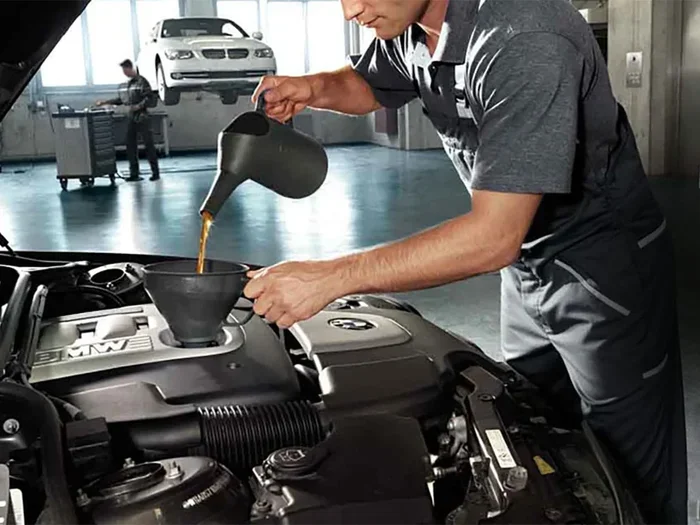
Next, the technician will drain the old oil from your BMW engine. This is a straightforward process. The oil sits in the oil pan at the bottom of the engine. A drain plug is removed, and the old oil flows out into a collection container.
Valvoline follows proper disposal procedures for used oil. This is important for environmental safety. They recycle used oil whenever possible.
Step 3: Replacing the Oil Filter
A clean oil filter is just as important as fresh oil. The oil filter traps dirt, metal particles, and other contaminants. Over time, the filter becomes clogged and less effective. That is why Valvoline replaces the oil filter during every service.
For BMW vehicles, using the correct oil filter is essential. BMW engines have specific filter requirements. A Valvoline technician will select the right filter for your BMW model.
Step 4: Adding New Oil
Once the old oil is drained and the new filter is in place, the technician adds fresh oil. They will use the oil type and viscosity recommended for your BMW. They will also check the oil level to make sure it is correct.
After the oil is added, the technician will start the engine and let it run for a few minutes. This allows the new oil to circulate through the engine. They will then check for any leaks and recheck the oil level.
Step 5: Final Check and Recommendations
The last step is a quick final inspection. The technician will check other fluid levels. They will also inspect the tires and lights. If they notice any potential issues, they will let you know. This is a great opportunity to catch small problems before they become big ones.
Common Mistakes BMW Owners Make with Oil Changes
Even the best BMW owners can make mistakes when it comes to oil changes. Avoiding these common errors can save you money and protect your engine.
Using the Wrong Oil Type
This is the most common mistake BMW owners make. Not all oil is the same. Using conventional oil in a BMW that requires synthetic can cause engine problems. Always double-check the oil type recommended for your specific BMW model.
Ignoring the Oil Change Interval
It is tempting to push an oil change a few hundred miles past due. But this can be risky. Old oil loses its lubricating properties over time. It becomes less effective at protecting your engine. Stick to the recommended BMW oil change interval to keep your engine healthy.
Skipping the Oil Filter Replacement
Some people think they can just add new oil and skip the filter change. This is a bad idea. A dirty oil filter will contaminate your new oil almost immediately. Always replace the oil filter with every oil change.
Not Checking for Oil Leaks
After an oil change, always check under your car for any leaks. Oil spots on your driveway are a red flag. If you notice a leak, have it checked out right away. Ignoring it can lead to low oil levels and serious engine damage.
Quick Tips for Keeping Your BMW Engine Healthy
Beyond regular oil changes, there are simple things you can do to keep your BMW engine in great shape. These tips are easy to follow and can make a big difference over time.
- Check your oil level weekly. A quick dipstick check takes just a minute. It can catch low oil levels before they cause damage.
- Watch for warning signs. Unusual engine noises, dark oil, or a burning smell are all red flags. Address them quickly.
- Keep your BMW warm in cold weather. Let the engine idle for a minute or two before driving. This helps the oil circulate properly.
- Use the right oil filter. Always use a filter that meets BMW specifications. Cheap filters may not filter oil effectively.
- Follow the BMW maintenance schedule. Your owner manual has a detailed maintenance plan. Sticking to it keeps your warranty intact and your engine running well.
Expert Insights on BMW Oil Changes at Valvoline
We asked several automotive experts about BMW oil changes at Valvoline. Their insights confirm what we have covered in this article.
Dr. Mark Jensen, Automotive Engineer: “BMW engines are designed to run on high-quality synthetic oil. As long as Valvoline uses the correct oil type and viscosity, there is no reason a BMW oil change at Valvoline cannot be done safely and effectively.”
Sarah Lin, BMW Service Advisor: “I always tell my customers that routine maintenance like oil changes can absolutely be done at a trusted independent shop. Valvoline is a solid option for this. Just make sure they use the right oil for your specific BMW model.”
Tom Rivera, ASE Certified Mechanic: “The biggest thing I tell BMW owners is to stay consistent. Whatever oil you use, stick with it. And make sure whoever is doing your oil change knows what they are doing. Valvoline technicians are generally well-trained for this type of service.”
These expert opinions reinforce a key takeaway: Can Valvoline Change BMW Oil? Yes, and when done correctly, it is a reliable and cost-effective option for BMW owners.
Common Mistakes to Avoid
Even well-meaning BMW owners can fall into traps when it comes to oil changes. Here are some mistakes you should avoid at all costs.
- Skipping oil changes to save money. This is a false economy. Old oil causes engine wear that costs far more to fix than an oil change.
- Using generic oil without checking BMW specs. Not all oil meets BMW standards. Always verify the oil certification before a service.
- Ignoring the oil change reminder light. The BMW condition-based servicing system is there for a reason. Honor it.
- Choosing the cheapest option without checking quality. The lowest price does not always mean the best value. Check reviews and ask about the oil brands used.
- Not keeping records of your oil changes. Documentation matters, especially if you need to make a warranty claim. Keep a log of every oil change, including the date, mileage, oil type, and service provider.
Avoiding these mistakes will help you get the most out of your BMW engine. It will also ensure that your oil change service, whether at Valvoline or elsewhere, delivers real value.
How to Choose the Right Service Provider for Your BMW
Choosing where to get your BMW oil changed is an important decision. Here are some factors to consider.
- Reputation: Look for reviews and ratings from other BMW owners. Word of mouth is powerful.
- Certification: While Valvoline technicians are not BMW certified, they do have general automotive certifications. Look for ASE-certified technicians wherever you go.
- Oil Quality: Ask what brands of oil they use. Valvoline uses reputable oil brands that meet industry standards.
- Warranty Awareness: A good service provider will understand how oil changes affect your BMW warranty. They will use oil that meets BMW specifications.
- Convenience: Location, hours, and service speed all matter. Valvoline’s widespread availability and fast service make it a strong contender.
Ultimately, the best service provider is one you trust. One that uses quality oil. One that treats your BMW with care. Valvoline checks all these boxes for most BMW owners.
Final Thoughts on Can Valvoline Change BMW Oil
So, can Valvoline change BMW oil and keep it running smooth? The answer is a confident yes. Valvoline offers a reliable, affordable, and convenient option for BMW oil changes. As long as you ensure they use the correct oil type and viscosity for your BMW model, your engine will be in good hands.
Regular oil changes are one of the simplest and most important things you can do for your BMW. They protect the engine. They improve performance. They extend the life of your vehicle. Whether you choose Valvoline or a BMW dealership, the key is to stay consistent and never skip an oil change.
Your BMW is an investment. It deserves proper care. And with the right knowledge, you can make smart decisions about where and how to maintain it. Can Valvoline Change BMW Oil? Without a doubt. And now you have all the information you need to make the best choice for your BMW and your budget.
Take care of your BMW. It will take care of you on the road for miles and miles to come.
Frequently Asked Questions
Will a Valvoline oil change void my BMW warranty?
Not necessarily. As long as Valvoline uses the correct oil type and viscosity that meets BMW specifications, your warranty should remain intact. Always keep records of your oil changes and ask the technician to confirm the oil meets BMW standards.
How much does a Valvoline BMW oil change cost?
A Valvoline BMW oil change typically costs between $80 and $150, depending on the oil type and your location. This is significantly less than a BMW dealership oil change, which can run $200 to $400 or more.
Does Valvoline use BMW-approved oil for BMW vehicles?
Most Valvoline locations use high-quality synthetic oils that meet or exceed BMW standards. However, it is always a good idea to call ahead and confirm that they have the right oil for your specific BMW model before visiting.
How long does a Valvoline BMW oil change take?
A Valvoline oil change typically takes about 20 to 30 minutes. This includes draining the old oil, replacing the filter, adding new oil, and performing a basic vehicle inspection.
Can Valvoline handle high-performance BMW models like the M Series?
Valvoline can handle routine oil changes for most BMW models, including high-performance variants. However, for M Series or other performance models with special oil requirements, it is best to confirm with your local Valvoline location that they carry the appropriate oil grade.
How often should I get my BMW oil changed at Valvoline?
Follow the oil change interval recommended in your BMW owner manual. Most modern BMW vehicles need an oil change every 10,000 to 15,000 miles. Your Valvoline technician can also help you track this based on your driving habits.
=== CONCLUSION ===
Can Valvoline Change BMW Oil? Absolutely yes. Valvoline provides a reliable, affordable, and convenient option for BMW owners who need routine oil changes. With the right oil type, proper viscosity, and regular service intervals, your BMW engine will continue to perform at its best.
Remember to always use BMW-approved synthetic oil. Stick to the recommended oil change schedule. And keep good records of every service. These simple habits will protect your investment and keep your BMW running smoothly for years to come.
Whether you choose Valvoline or a BMW dealership, the most important thing is consistency. Never skip an oil change. Your BMW engine works hard for you. Give it the care it deserves with regular, quality oil changes from a provider you trust.