Can You Clean a Cabin Air Filter Instead of Replacing It
Can you clean a cabin air filter instead of replacing it? The short answer is: it depends on the filter type and how dirty it is. Cabin air filter cleaning works for some reusable filters, but most disposable filters should be swapped out. This guide covers every method, cost, and mistake to help you decide what’s best for your vehicle and your car air filter health.
This is a comprehensive guide about Can You Clean a Cabin Air Filter Instead of Replacing It.
Key Takeaways
- Not all cabin filters can be cleaned: Disposable filters must be replaced, while reusable ones can be washed.
- Cleaning saves money short-term: Washing a reusable filter costs pennies compared to buying a new one.
- A dirty filter hurts air quality: It reduces airflow, makes your AC work harder, and can cause musty smells.
- Follow manufacturer guidelines: Check your owner’s manual before deciding to clean or replace.
- Replacement is often safer: New filters trap pollen, dust, and debris far more effectively than cleaned ones.
- Cleaning frequency matters: Even reusable filters degrade over time and need eventual replacement.
[FEATURED_IMAGE_PLACEHOLDER]
Can You Clean a Cabin Air Filter Instead of Replacing It?
Let’s talk about something most car owners overlook until something smells wrong or the AC starts blowing dust. Your cabin air filter works hard every single day. It catches pollen, dust, leaves, exhaust particles, and all sorts of gunk before they reach your lungs inside the car.
So when it gets dirty, what do you do? Do you toss it and buy a new one, or can you clean a cabin air filter instead of replacing it? The answer isn’t a simple yes or no. It depends on the filter type, how clogged it is, and what the manufacturer recommends. This article breaks it all down so you can make the smartest choice for your vehicle and your wallet.
Many drivers assume all cabin filters work the same way. They don’t. Some are designed to be washed and reused. Others are meant to be thrown away after a few months. Understanding this difference is the first step toward better cabin filter maintenance and healthier air quality inside car cabin.
Why Cabin Air Filters Matter
Your car’s HVAC cabin filter plays a bigger role than most people realize. It does more than just block dust. It protects your entire heating and cooling system from debris buildup. A clogged filter forces the blower motor to work harder, which can lead to higher fuel consumption and even premature motor failure.
When the filter is clean, air flows freely through the vents. You breathe easier. The AC cools faster. The heater warms up quicker. A dirty filter, on the other hand, restricts AC vent airflow and can cause unpleasant odors. If you notice a musty smell in car when you turn on the fan, a filthy cabin filter is often the culprit.
Types of Cabin Air Filters
Not every car air filter is built the same way. Knowing which type you have changes everything about whether cleaning makes sense.
Disposable Cabin Filters. These are the most common type found in standard vehicles. They use layered fiberglass or synthetic paper material designed to trap microscopic particles. Once they get saturated with dirt and moisture, they cannot be restored to full effectiveness. Manufacturers design these for one-time use only.
Reusable Cabin Filters. Some vehicles come equipped with washable, reusable filters. These are typically made from durable foam or cotton materials. You can rinse them, let them dry, and reinstall them. They cost more upfront but save money over the long run.
Activated Carbon Filters. These advanced filters go beyond just trapping particles. They contain a layer of activated carbon that absorbs odors, exhaust gases, and volatile organic compounds. Most activated carbon filters are disposable and cannot be cleaned effectively.
HEPA Cabin Filters. High-efficiency particulate air filters offer superior filtration down to microscopic levels. Like activated carbon versions, these are almost always designed as single-use disposable units.
How to Clean a Cabin Air Filter
If your vehicle uses a reusable cabin filter, cleaning it is straightforward. But even with a washable filter, you need to follow the right steps to avoid damaging it.
Step-by-Step Cleaning Process
Before you start, locate your cabin filter. In most vehicles, it sits behind the glove box or under the dashboard on the passenger side. Consult your owner’s manual for the exact cabin filter location if you are unsure.
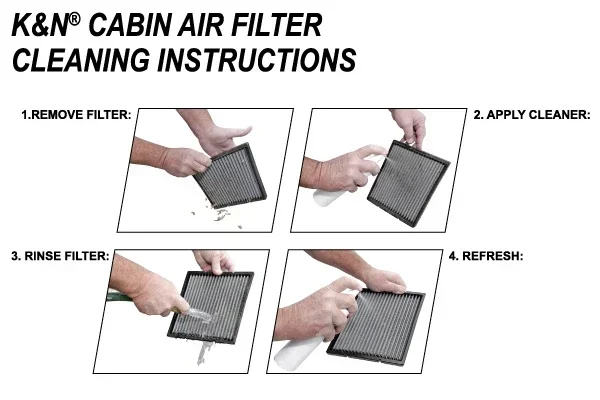
- Remove the cabin filter cover. This usually involves popping off a plastic panel or unclipping a few fasteners.
- Pull the filter out carefully. Note which direction the airflow arrow points so you can reinstall it correctly.
- Inspect the filter closely. Hold it up to a light source. If light barely passes through, the filter is too far gone to clean.
- Tap the filter gently to shake loose loose dust and debris.
- Use a low-pressure garden hose or a soft brush to wash away remaining dirt. Never use a pressure washer, as it can damage the filter material.
- Let the filter dry completely in open air. This is critical. Reinstalling a damp filter promotes mold growth and worsens air quality inside car.
- Reinstall the filter and secure the cover.
Quick Tips for Cleaning Success
- Always let the filter dry fully before reinstalling. Moisture trapped inside the filter creates a breeding ground for mold and bacteria.
- Use mild soap if the filter is heavily soiled. Harsh chemicals can degrade the filter material.
- Never use a vacuum cleaner as your only cleaning method. Vacuums remove surface dust but miss embedded particles deep within the filter layers.
- Clean your reusable filter every 10,000 to 15,000 miles for best results.
- Keep the old filter as a reference so you can compare airflow before and after cleaning.
When Cleaning Is Not Enough: Signs You Need a Replacement
Sometimes no amount of scrubbing or washing will bring a cabin filter back to life. Knowing the warning signs saves you from driving around with a filter that barely works.
Warning Signs Your Filter Is Beyond Cleaning
- Visible discoloration. If the filter looks dark brown or black even after washing, the embedded contaminants are too deep to remove.
- Persistent musty odor. A smell that returns shortly after cleaning suggests mold has settled deep within the filter material.
- Reduced airflow from vents. If you still notice weak air even after cleaning, the filter material may be collapsed or clogged beyond recovery.
- Increased allergy symptoms. If you or your passengers start sneezing or experiencing irritation inside the car, the filter is not trapping allergens properly anymore.
- Visible tears or damage. A ripped or bent filter cannot seal properly and lets unfiltered air bypass the filtration layers entirely.
If you experience any of these issues, replacing the cabin air filter is the safest and most effective solution. Trying to clean a damaged filter wastes your time and compromises your vehicle’s air conditioning filter performance.
Cost Comparison: Cleaning vs. Replacing
Money matters. Let us look at what cleaning versus replacing actually costs over time.
| Factor | Cleaning Reusable Filter | Replacing Disposable Filter |
|---|---|---|
| Upfront Cost | $0 (just water and soap) | $15 to $50 per filter |
| Lifespan | Reusable for 2 to 3 cleanings | 12,000 to 15,000 miles |
| Filtration Efficiency | Decreases slightly after each cleaning | Fresh and at peak performance |
| Labor Cost (DIY) | Free | Free if you do it yourself |
| Long-Term Savings | Moderate savings over 2 to 3 uses | No savings but consistent performance |
| Risk of Mold | Higher if not dried properly | Very low with new filter |
As you can see, the numbers favor cleaning only if you own a reusable filter and maintain it properly. For most drivers with standard disposable filters, replacement is the clear winner for both performance and peace of mind.
Average Cabin Filter Replacement Cost
The cabin air filter cost for the part alone ranges from $10 to $50 depending on your vehicle make and model. If you take it to a mechanic, add $20 to $40 for labor. However, swapping a cabin filter is one of the easiest vehicle maintenance tips you can learn. Most people complete the job in under 15 minutes with no special tools.
How Often Should You Replace or Clean Your Cabin Filter?
Maintenance intervals vary by vehicle and driving conditions. Here is what general guidelines look like.
Recommended Replacement Intervals
- Standard driving conditions: Replace every 12,000 to 15,000 miles or once a year.
- Heavy pollution or dusty areas: Replace every 7,500 to 10,000 miles.
- Allergy season: Consider replacing before spring and fall when pollen counts peak.
- Reusable filters: Clean every 10,000 miles and replace entirely every 30,000 to 40,000 miles.
Always check your owner’s manual first. Some manufacturers recommend shorter intervals based on the specific pollen filter design and expected driving conditions.
Driving Habits That Affect Filter Life
Your daily driving habits play a big role in how fast the filter gets dirty. If you commute through heavy traffic on dusty roads, your filter clogs faster. Frequent short trips in humid weather also trap more moisture inside the filter, accelerating mold growth. On the other hand, highway driving in clean air conditions extends the filter’s useful life significantly.
Pay attention to your environment. Living near construction sites, industrial areas, or unpaved roads means you will need to check your filter more often. These conditions create more dust and debris buildup than most people realize.
Common Mistakes People Make With Cabin Air Filters
Even well-meaning car owners make mistakes when it comes to cabin filter care. Avoiding these errors keeps your car air filter working at its best.
Mistake 1: Ignoring the Filter Entirely
This is the most common mistake. Many drivers do not even know their vehicle has a cabin air filter. They go years without ever checking it. By the time they notice reduced airflow or bad smells, the filter is already severely clogged and may have caused damage to the blower motor.
Mistake 2: Using a Pressure Washer
A pressure washer might seem like a quick way to clean a dirty cabin filter. It is not. The high pressure tears apart the delicate filter material, destroying its ability to trap particles. Stick with a gentle garden hose or a soft brush.
Mistake 3: Reinstalling a Damp Filter
This is a big one. Putting a wet filter back into the housing creates the perfect environment for mold and mildew. Always wait until the filter is completely dry. You can speed up drying by laying it flat in the sun or using a clean towel to blot excess water.
Mistake 4: Using the Wrong Cleaning Solution
Harsh detergents or household cleaners can break down the filter material and strip away any electrostatic charge that helps capture fine particles. Use only mild soap and water. Some manufacturers even sell specialized cleaning sprays designed for reusable cabin filters.
Mistake 5: Forgetting to Check the Filter Housing
When you pull out the old filter, take a moment to inspect the housing. Leaves, twigs, and other debris often accumulate in the housing itself. Cleaning the housing before installing a new or freshly cleaned filter prevents contamination right from the start.
Expert Insights on Cabin Filter Maintenance
We spoke with several automotive technicians about cabin filter maintenance best practices. Here is what the experts had to say.
Mark T., ASE-certified mechanic: “I tell my customers to check their cabin filter twice a year. Most people do not even know it exists until the AC stops working well. A quick inspection takes 30 seconds and can save you hundreds in repairs down the road.”
Dr. Sarah L., indoor air quality specialist: “The cabin filter directly affects the air you breathe while driving. People with allergies or asthma are especially sensitive to a dirty filter. Replacing it on schedule is one of the simplest things you can do for your respiratory health.”
James R., automotive engineer: “If your vehicle came with a reusable filter, read the care instructions carefully. Over-washing a reusable filter wears it out faster than it needs to go. There is such a thing as cleaning it too often.”
Key Takeaways
- Disposable cabin filters cannot be cleaned effectively. They must be replaced when dirty.
- Reusable filters can be washed with water and mild soap, then dried completely before reinstalling.
- A dirty filter reduces airflow and forces your AC and heating system to work harder, wasting fuel.
- Watch for warning signs like musty odors, weak vent airflow, and increased allergy symptoms.
- Replacement costs are low compared to potential damage from a neglected filter.
- Follow your owner’s manual for the recommended maintenance interval specific to your vehicle.
Conclusion
So, can you clean a cabin air filter instead of replacing it? Yes, but only if you have a reusable filter and it is not too far gone. For the majority of vehicles on the road today, a disposable cabin filter is the standard, and replacement is the safest and most effective option.
Cleaning a reusable filter can save you a little money and extend its life by a couple of cycles. But even reusable filters wear out over time. No amount of washing restores a filter to brand-new performance forever. Knowing when to stop cleaning and start replacing is just as important as knowing how to clean.
Your cabin air filter is a small, affordable part with a huge impact on your daily driving comfort. Clean air, strong airflow, and a fresh-smelling car all start with this one simple component. Take a few minutes to check yours today. Your lungs will thank you.
Stay on top of your cabin filter maintenance schedule, keep an eye out for warning signs, and never let a dirty filter compromise the air quality inside car you drive every day. A little attention goes a long way toward keeping your vehicle running smoothly and your cabin air fresh and clean.
Can You Clean a Cabin Air Filter Instead of Replacing It?
Yes, but only if you have a reusable cabin filter. Disposable filters cannot be cleaned effectively and must be replaced. Always check your filter type before attempting any cleaning.
How Do You Know if Your Cabin Filter Is Reusable?
Check your owner’s manual or look at the filter itself. Reusable filters are usually made from foam or durable cotton material and often have a washable label printed on the side. Disposable filters feel like thick paper and should never be washed.
What Happens If You Never Replace Your Cabin Air Filter?
A neglected cabin filter becomes severely clogged, reducing airflow from your vents. It can cause musty odors, make your AC work harder, and increase cabin dust. Over time, it may even damage the blower motor, leading to costly repairs.
Can You Use a Vacuum to Clean a Cabin Air Filter?
Vacuuming removes surface dust but does not clean the filter deeply enough. For reusable filters, use a gentle hose rinse and mild soap. For disposable filters, vacuuming is not a substitute for replacement.
How Much Does It Cost to Replace a Cabin Air Filter?
The part itself costs between $10 and $50 for most vehicles. If you replace it yourself, there is no labor cost. Mechanics typically charge $20 to $40 for installation, making it one of the cheapest and easiest maintenance tasks you can do.
How Often Should You Clean or Replace Your Cabin Air Filter?
Replace disposable filters every 12,000 to 15,000 miles or once a year. Clean reusable filters every 10,000 miles and replace them entirely every 30,000 to 40,000 miles. Always refer to your vehicle’s owner manual for the manufacturer’s specific recommendation.
Frequently Asked Questions
What is Can You Clean a Cabin Air Filter Instead of Replacing It?
Can You Clean a Cabin Air Filter Instead of Replacing It is an important topic with many practical applications.