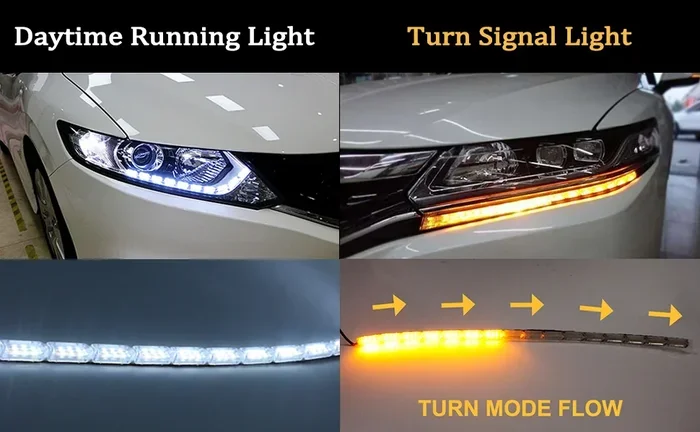
Why Car Daytime Running Lights Matter for Safe Driving
Car daytime running lights are a simple yet powerful safety feature that every driver should understand. These front lights automatically turn on when you start your engine, making your vehicle more visible to others on the road. This guide covers everything from how DRLs work to why they matter for your daily commute and long road trips.
You might not think much about the lights on your car during the day. But car daytime running lights are one of the simplest and most effective safety features ever added to modern vehicles. These are the front lights that automatically switch on when you start your engine, even when the sun is shining bright.
The idea behind daytime running lights is straightforward. Make your car easier to see so other drivers can spot you sooner. This small change has saved countless lives on roads around the world. Whether you drive through city traffic or open highways, these lights work silently in the background every single day.
Not every vehicle comes equipped with them, though. Older cars and some budget models still lack this feature. That is exactly why understanding car daytime running lights matters so much. In this article, we will walk you through everything you need to know about how they work, why they matter, and how you can add them to your own ride.
Key Takeaways
- Enhanced Visibility: Car daytime running lights make your vehicle easier to spot during the day, giving other drivers more reaction time.
- Proven Safety Benefits: Studies show that daytime running lights reduce the number of daytime multi-vehicle accidents on the road.
- Automatic and Convenient: DRLs activate on their own when you start the engine, requiring zero extra effort from the driver.
- Energy Efficient: Modern LED-based DRLs use very little power and do not drain your car battery or hurt fuel economy.
- Easy to Retrofit: If your older vehicle lacks DRLs, affordable aftermarket kits let you add this safety feature quickly.
- Not a Headlight Replacement: DRLs are for daytime visibility only. Always switch on your full headlights when it gets dark.
- Growing Global Adoption: Europe and Canada mandate DRLs on new vehicles, and the U.S. is moving toward wider acceptance.
📑 Table of Contents
What Are Car Daytime Running Lights?
Car daytime running lights, often called DRLs, are lighting devices mounted on the front of a vehicle. They turn on automatically when the engine starts and turn off when the headlights are activated. Unlike regular headlights, DRLs are designed to be dim enough that they do not blind other drivers but bright enough to be seen during daylight hours.
The Basic Definition
Daytime running lights are not the same as your standard headlights. They serve a different purpose. While headlights illuminate the road ahead for you, DRLs are all about making your vehicle visible to others. Think of them as a visibility enhancement tool that works around the clock during the day.
Most car lighting systems today include DRLs as a standard feature in newer models. They are typically located near the headlights, fog lights, or even integrated into the grille area. The goal is simple. Help other drivers notice your vehicle sooner, especially in low-light conditions like dawn, dusk, or overcast days.
How They Differ from Regular Headlights
There are a few key differences between daytime running lights and your regular low beam headlights. First, DRLs are much dimmer. They are not meant to light up the road. Second, they activate automatically. You do not need to flip a switch. Third, they turn off when you switch on your full headlights.
This automatic behavior is what makes DRLs so convenient. You get added road safety without lifting a finger. The system handles everything for you. It is one of those vehicle safety features that works best when you forget it is even there.
The Safety Benefits of Daytime Running Lights
The main reason car daytime running lights exist is safety. Studies have shown that making vehicles more visible during the day reduces the number of accidents. This section breaks down the specific safety benefits you get from having DRLs on your vehicle.
Improved Road Visibility
When you drive during the day, your car can blend into the background. Gray sedans, white trucks, and silver SUVs can be hard to spot, especially at a distance. Daytime running lights solve this problem by adding a visual cue that draws the eye.
Other drivers can see your vehicle from farther away when your DRLs are on. This extra daytime visibility gives them more time to react. Whether you are merging onto a highway or pulling out of a parking lot, being seen early is a huge advantage.
Think about driving on a long stretch of highway on a slightly hazy day. Your auto headlights might not turn on because there is still enough daylight. But your DRLs are working hard, making sure you stand out against the scenery. That is the power of visibility enhancement in action.
Accident Prevention Research
Multiple studies support the effectiveness of daytime running lights for accident prevention. Research from countries like Canada and Sweden, where DRLs have been mandatory for years, shows a notable drop in daytime multi-vehicle crashes.
One study found that vehicles equipped with DRLs were involved in fewer side-impact and head-on collisions. The reason is clear. When drivers can see approaching vehicles earlier, they have more time to make safe decisions. This is especially true at intersections, where many daytime accidents occur.
The driving safety community widely supports the use of DRLs. Organizations like the Insurance Institute for Highway Safety have noted that vehicle exterior lighting improvements, including DRLs, contribute to lower crash rates. It is not just about seeing the road. It is about being seen.
Why Other Drivers Can See You Better
Human eyes are naturally drawn to light sources, even during the day. This is why car daytime running lights are so effective. They create a contrast between your vehicle and the surrounding environment.
Even on bright sunny days, your DRLs help other drivers pick you out in their peripheral vision. This is especially helpful for motorcycles, bicycles, and pedestrians who share the road with you. When your front lights are glowing, you become a moving beacon that catches attention.
Consider this scenario. You are driving on a two-lane road. A car is approaching from the opposite direction, and a tree line blocks the view at a curve. Your DRLs give the other driver an early warning that a vehicle is coming. That extra second of awareness can prevent a serious collision.
How DRLs Work: The Technology Behind Them
Understanding the technology behind car daytime running lights helps you appreciate how clever this feature really is. The system is designed to be simple, reliable, and efficient.
Auto Headlight Systems Explained
Most modern vehicles use an automatic lighting system that controls the DRLs. When you turn the ignition key or press the start button, a signal tells the DRL module to activate. The lights stay on until you manually turn on your headlights or the ambient light sensor detects that it is dark enough for full headlights.
The system relies on a few key components. There is the DRL module, which acts as the brain. There are the light bulbs or LEDs themselves. And there are sensors that monitor ambient light conditions. Everything works together seamlessly in the background.
You do not need to do anything special to use daytime running lights. They are designed to be a set-and-forget feature. As long as your engine is running and your headlights are off, the DRLs do their job automatically. This kind of automatic lighting is what makes modern driving so much safer and more convenient.
LED Lights vs. Halogen Bulbs
Not all DRLs use the same technology. The two most common bulb types are LED lights and halogen bulbs. Each has its own advantages and trade-offs.
LED lights have become the standard in newer vehicles. They use energy-efficient lighting technology that draws very little power from the electrical system. LEDs also last much longer than traditional bulbs, sometimes exceeding 50,000 hours of use. They light up instantly, which is important for safety.
Halogen bulbs are the older technology. They produce a warm, yellowish light and generate more heat. They are cheaper to replace but less efficient than LEDs. Many older vehicles and budget models still use halogen-based DRL systems.
If you are choosing between vehicles or considering an upgrade, LED-based DRLs are the better choice. They offer superior light-emitting diode performance, consume less energy, and provide brighter, more consistent light output. The initial cost difference is worth it over time.
The DRL System in Your Vehicle
The DRL system in your car is integrated into the broader car lighting system. It works alongside your headlights, tail lights, and turn signals. The system is designed to be fail-safe, meaning if one component fails, the others continue to function normally.
Most DRL systems operate at about 20 to 30 percent of the brightness of your regular headlights. This is enough to make your vehicle visible without causing glare or distracting other drivers. The system also ensures that the DRLs dim or turn off when your headlights are switched on, preventing any interference with your night driving visibility.
Types of Daytime Running Lights and Installation
Not all DRLs are created equal. There are different types of daytime running lights systems, and knowing the differences helps you make informed decisions about your vehicle.
Factory-Installed DRLs
Most new cars sold today come with factory-installed daytime running lights. These are built into the vehicle’s design from the start. They are integrated into the headlight assembly, grille, or bumper area and are wired directly into the car’s electrical system.
Factory DRLs are the most reliable option. They are designed specifically for your vehicle model and undergo rigorous testing. They meet all safety standards and work seamlessly with the rest of your car lighting system. If you buy a new car, chances are it already has DRLs.
Aftermarket DRL Kits
If your vehicle does not come with factory DRLs, you can install an aftermarket DRL kit. These kits are widely available and come in a range of styles and prices. Some kits include LED strips, while others use adaptors that tap into your existing headlight wiring.
Aftermarket kits are a popular choice for DRL retrofit projects. They are relatively easy to install and can make a noticeable difference in your vehicle exterior lighting. Just make sure you buy a kit that is compatible with your vehicle make and model.
Retrofitting Your Current Vehicle
Retrofitting means adding DRLs to a vehicle that did not originally have them. This is a common practice for owners of older cars or vehicles in markets where DRLs are not standard.
The process typically involves wiring a DRL module into your existing headlight circuit. Some kits come with their own wiring harness, making the job straightforward. Others may require more technical knowledge. If you are not comfortable working with electrical systems, it is best to have a professional handle the installation.
Retrofitting is a worthwhile investment in your driving safety. The cost is usually modest, and the safety benefits are significant. Even a basic aftermarket kit can dramatically improve your daytime visibility on the road.
Common Mistakes and Maintenance Tips
Even though car daytime running lights are low-maintenance, there are common mistakes drivers make. Understanding these pitfalls helps you get the most out of your DRLs.
Mistakes Drivers Make with DRLs
The biggest mistake is assuming DRLs replace your headlights. They do not. DRLs are only for daytime use. When it gets dark, you must switch on your full headlights. Relying solely on DRLs at night is dangerous and often illegal.
Another mistake is ignoring dim or flickering DRLs. If you notice one of your front lights is not working properly, get it checked right away. A burnt-out DRL bulb reduces your visibility and defeats the purpose of the system.
Some drivers also make the mistake of using high-powered aftermarket lights that are too bright. This can blind other drivers and create a safety hazard. Always choose DRLs that comply with local regulations and are designed for daytime use only.
Keeping Your Lights in Top Shape
Maintaining your car daytime running lights is simple. Start by checking them regularly. Make sure all bulbs are working and that the lenses are clean. Dirt and grime can significantly reduce the effectiveness of your DRLs.
Replace bulbs as soon as you notice dimming or flickering. For LED-based systems, the bulbs last a long time, but the DRL module can occasionally fail. If your DRLs stay on even when you turn your headlights on, the module may need inspection.
Keep an eye on your wiring connections too. Corroded or loose connections can cause intermittent DRL operation. A quick visual inspection under the hood every few months can catch these issues early.
Quick Tips for Maximum Effectiveness
Here are a few quick tips to get the most from your daytime running lights:
- Keep your DRL lenses clean and free of dirt and debris.
- Replace dim or burnt-out bulbs promptly.
- Never rely on DRLs as your only light source at night.
- Choose LED-based DRLs for better energy efficiency and longevity.
- Make sure aftermarket kits are properly installed and road-legal.
- Check your DRLs during routine vehicle inspections.
- Do not modify DRLs to be brighter than factory specifications.
DRL Regulations Around the World
The rules around car daytime running lights vary from country to country. Understanding these regulations helps you stay compliant and safe, whether you are driving at home or abroad.
European Standards
Europe has been a leader in DRL regulation. The European Union has required DRLs on all new passenger vehicles since 2011. This mandate was based on strong evidence showing that DRLs reduce daytime accidents. Countries like Sweden and Canada had already adopted similar rules years earlier.
European DRL standards specify brightness limits, activation methods, and color requirements. DRLs must emit white or selective yellow light and must not interfere with the function of headlights or fog lights. These standards ensure that DRLs enhance road safety without creating glare problems.
North American Rules
In the United States, DRLs are not federally mandated for passenger vehicles. However, many automakers include them as standard equipment because of consumer demand and the proven safety benefits. Canada, on the other hand, has had mandatory DRL requirements for new vehicles since 1990.
The lack of a U.S. mandate does not mean DRLs are unimportant. Many safety organizations in the United States strongly advocate for wider adoption of daytime running lights. The Insurance Institute for Highway Safety continues to push for regulations that would require DRLs on all new vehicles sold in America.
What the Future Holds
The trend is clearly moving toward wider DRL adoption. As energy-efficient lighting technology improves and costs decrease, more vehicles will come standard with DRLs. Automakers are also exploring adaptive DRL systems that adjust brightness based on weather and traffic conditions.
Some manufacturers are experimenting with matrix LED systems that can selectively illuminate areas of the road without blinding other drivers. These advanced systems represent the next generation of vehicle exterior lighting. They combine DRL functionality with cutting-edge light-emitting diode technology to deliver unprecedented levels of driving safety.
Conclusion
Car daytime running lights are a simple yet powerful tool for safer driving. They make your vehicle more visible, help prevent accidents, and work automatically without any effort on your part. Whether your car has factory-installed DRLs or you add an aftermarket kit, the safety benefits are clear and well-documented.
Take a moment to check your own vehicle. Do you have daytime running lights? Are they working properly? If not, consider upgrading. The small investment pays off in improved road visibility and peace of mind every time you hit the road.
Driving safely is about more than just following the rules. It is about using every tool available to protect yourself and others. Car daytime running lights are one of those tools. They are always on, always working, and always making a difference. Make sure yours are doing their job.
Frequently Asked Questions
Are daytime running lights the same as headlights?
No, car daytime running lights are not the same as headlights. DRLs are designed to be dimmer and are meant only for daytime use. They make your vehicle visible to other drivers without lighting up the road ahead. Headlights, on the other hand, are brighter and are used at night or in low-visibility conditions.
Do DRLs drain my car battery?
No, daytime running lights are designed to use very little power. Most modern DRLs use LED technology, which is highly energy-efficient lighting. The power draw is so small that it has no noticeable effect on your battery or fuel economy. In fact, the improved driving safety far outweighs any minimal energy cost.
Can I install DRLs on an older car?
Yes, you can. Many aftermarket DRL kits are designed for easy installation on older vehicles. These kits often come with universal wiring harnesses that connect to your existing headlight circuit. Just make sure the kit is compatible with your vehicle and that the installation complies with local regulations.
Why don’t all cars have DRLs?
While DRLs are standard on most new vehicles sold in Europe and Canada, the United States does not have a federal mandate requiring them. Some automakers include them as standard equipment, while others offer them only on higher trim levels. However, the trend is moving toward universal adoption as the safety benefits become more widely recognized.
Do DRLs help in foggy or rainy conditions?
Daytime running lights provide some benefit in fog and rain by making your vehicle more visible. However, they are not a substitute for fog lights or low beam headlights. In heavy fog or rain, you should switch on your appropriate lights. DRLs work best as a supplementary visibility enhancement tool during normal daytime driving conditions.
Are DRLs mandatory in the United States?
No, car daytime running lights are not federally mandated in the United States. However, many automakers include them as standard equipment on new vehicles. Canada has had mandatory DRL requirements since 1990, and the European Union has required them since 2011. Safety organizations in the U.S. continue to advocate for wider adoption of this life-saving feature.