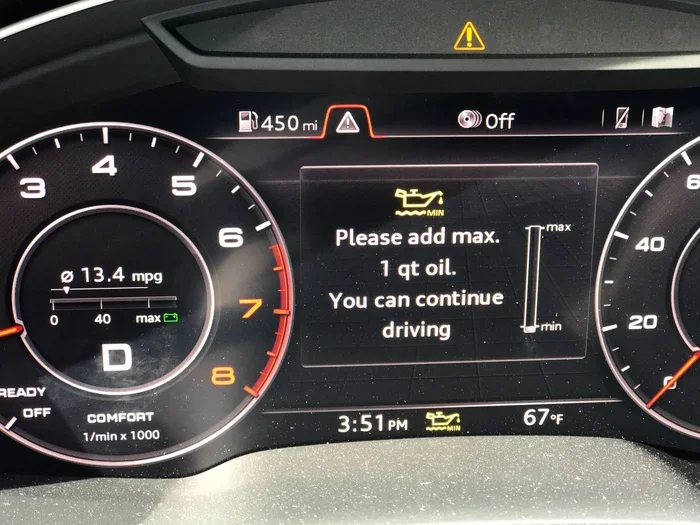
How Far Can You Drive on Minimum Oil in an Audi Today
Driving an Audi on minimum oil is risky but sometimes unavoidable. Most Audis can go roughly 100 to 300 miles on the absolute lowest oil level before serious damage starts. However, this depends heavily on your oil type, engine model, and driving conditions. This guide breaks down everything you need to know about minimum oil levels and keeping your Audi engine safe.
Key Takeaways
- Minimum oil is not zero oil: Even a small amount of oil on the dipstick is not the same as running completely dry.
- You can typically drive 100 to 300 miles on minimum oil: But this varies by Audi model, oil type, and driving conditions.
- Synthetic oil lasts longer under stress: Full synthetic oil handles heat better than conventional oil when levels are low.
- Warning signs appear early: Oil pressure warnings, engine noise, and overheating are red flags you should never ignore.
- Prevention is always cheaper than repair: Regular oil checks and timely changes save you from costly engine damage.
- Reset your oil change light after topping off: Follow proper steps to keep your Audi’s maintenance system accurate.
📑 Table of Contents
- How Far Can You Drive on Minimum Oil in an Audi?
- Understanding Your Audi Oil System
- How Far Can You Really Go on Minimum Oil?
- What Happens to Your Engine on Low Oil?
- Warning Signs Your Audi Is Running Low on Oil
- How to Check and Maintain Proper Oil Levels
- Common Mistakes Audi Owners Make with Low Oil
- When to See a Professional
- Quick Tips to Avoid Low Oil Problems
- Final Thoughts on Driving Audi on Minimum Oil
How Far Can You Drive on Minimum Oil in an Audi?
Here is a question that Audi owners ask more often than you might think. You are driving along, and your dashboard tells you the oil level is low. Maybe you are between oil changes. Maybe you just forgot to check. Either way, the question remains the same: how far can you actually drive on minimum oil in an Audi?
The short answer is that most Audis can go somewhere between 100 and 300 miles on the bare minimum oil level. But that number comes with a big asterisk. It depends on your specific Audi model, the type of oil you use, how you drive, and the conditions on the road. Some Audis will warn you early. Others will not give you much notice at all.
This article covers everything you need to know about driving on low oil in an Audi. We will look at how the oil system works, what the risks are, and what you should do right now if your oil light is on. By the end, you will have a clear picture of how to protect your engine and avoid expensive repairs.
If you have ever wondered whether it is safe to keep driving when the oil level drops, you are in the right place. Let us break this down in simple terms that every Audi owner can understand.
Understanding Your Audi Oil System
Before we talk about distances, it helps to understand how your Audi handles oil. Modern Audis use a sophisticated oil life monitoring system that tracks your driving habits and engine conditions. This system estimates when your oil needs changing, but it does not directly measure your oil level all the time.
Most Audi engines use a wet sump oil system. This means the oil sits in a pan at the bottom of the engine. A pickup tube draws oil from this pan and sends it through the engine. When the oil level drops too low, the pickup tube cannot reach the remaining oil. This is when problems start.
How the Oil Level Sensor Works
Your Audi has an oil level sensor that sits in the oil pan. When the oil drops below a certain point, the sensor sends a signal to your dashboard. You will see a warning light or a message on the display. However, these sensors are not always perfectly accurate. Sometimes they trigger late. Other times, they give you plenty of early warning.
If you have ever seen the oil warning on your dash and wondered if you could just keep going, you are not alone. The answer is: it depends. And that is exactly what we are going to explore.
How Far Can You Really Go on Minimum Oil?
Let us get into the numbers. When we say minimum oil, we mean the oil level is at or near the bottom mark on the dipstick. This is not zero oil, but it is dangerously close.
Here is a general breakdown of what you can expect:
- At the minimum mark on the dipstick: You may be able to drive 100 to 300 miles depending on conditions.
- Just above the minimum mark: You have a bit more buffer, maybe 200 to 400 miles.
- Below the minimum mark: You are in the danger zone. Engine damage can start within just a few miles.
These numbers are estimates. Your actual mileage will vary. Aggressive driving, hot weather, and stop-and-go traffic all reduce the distance you can safely travel on low oil.
Factors That Affect Your Driving Range on Low Oil
Several things change how far you can go when your oil is low:
- Oil type: Full synthetic oil performs better under low levels than conventional oil. It handles heat better and lasts longer.
- Engine model: Larger Audi engines like the 3.0L V6 burn more oil than smaller 2.0L engines.
- Driving style: Hard acceleration and high speeds increase oil consumption fast.
- Temperature: Hot weather thins oil and makes it burn off faster.
- Road conditions: Highway driving is easier on a low-oil engine than city driving with lots of stops.
If you want to know more about how far you can push your car when warning lights come on, check out this helpful guide on Can I Still Drive With The Oil Change Light On. It covers similar situations with other vehicles.
What Happens to Your Engine on Low Oil?
Running an Audi on minimum oil is not something the engine was designed for. Oil does more than just lubricate. It also cools engine parts, cleans away debris, and prevents corrosion. When the oil level drops, all of these functions suffer.
Increased Friction and Heat
Without enough oil, metal parts inside the engine rub against each other. This creates friction. Friction creates heat. Too much heat can warp engine components. In the worst cases, it can cause a seized engine. That is a repair that costs thousands of dollars, and in many cases, it means a full engine replacement.
Oil Starvation
Oil starvation happens when the oil pump cannot pull enough oil from the pan. This usually occurs when the oil level is below the pickup tube. Even a few seconds of oil starvation can cause damage to bearings, camshafts, and crankshafts. The scary part is that you might not hear any warning signs before the damage is done.
Some Audi models are known to burn oil more than others. If you own an older Audi, you might notice the oil level drops faster than expected. Regular checks become even more important in these cases.
Long-Term Damage You Cannot See
Even if you make it to the nearest gas station on low oil, there may be hidden damage. Microscopic wear on engine internals adds up over time. Running on low oil repeatedly shortens your engine life significantly. It is like running your body on just a few glasses of water a day. You might survive, but you will not be healthy.
Warning Signs Your Audi Is Running Low on Oil
Your Audi gives you clues when the oil is running low. Learning to recognize these signs early can save you from a major breakdown.
- Oil pressure warning light: This is the most serious warning. If this light comes on, pull over safely and turn off the engine immediately.
- Check engine light: This can be triggered by many things, but low oil is one of them. If you see it, check your oil level.
- Engine knocking or ticking sounds: This often means the oil is not reaching all the parts that need it.
- Reduced engine performance: Sluggish acceleration or rough idling can be a sign of low oil pressure.
- Oil smell inside the car: This could indicate an oil leak or oil burning on hot engine parts.
- Overheating temperature gauge: Low oil means less cooling, which can cause the engine to run hot.
If any of these signs appear, do not keep driving. Find a safe place to stop and check your oil level. If you are unsure about what to do next, you might want to read up on Can You Drive A Car With Transmission Problems for general guidance on driving with warning lights.
How to Check and Maintain Proper Oil Levels
The best way to avoid running on minimum oil is to check your oil regularly. It takes about two minutes and can save you hundreds or even thousands of dollars in repairs.
Step-by-Step Oil Check
- Park your Audi on a flat surface and turn off the engine.
- Wait a few minutes for the oil to settle back into the pan.
- Open the hood and locate the dipstick.
- Pull the dipstick out and wipe it clean with a cloth.
- Reinsert the dipstick fully, then pull it out again.
- Check the oil level against the minimum and maximum marks.
- If the level is near or below the minimum mark, add oil immediately.
How Often Should You Check?
Most Audi experts recommend checking your oil at least once a month. If you drive an older Audi or one with higher mileage, check it every two weeks. Oil consumption varies from model to model. Some Audis burn through oil faster than others, especially turbocharged models.
After you add oil or get an oil change, you should Do You Have To Reset The Light After An Oil Change on your Audi. This keeps your maintenance system accurate and prevents false warnings.
Choosing the Right Oil for Your Audi
Not all oil is the same. Audis generally require full synthetic oil that meets specific Volkswagen Group standards. Using the wrong oil can lead to increased consumption and poor engine protection. Always check your owner manual for the correct oil specification. Using the right oil helps your engine last longer, even when oil levels are low.
If you are curious about how long synthetic oil can actually last, this article on Can I Go 10000 Miles On Synthetic Oil might give you useful insights.
Common Mistakes Audi Owners Make with Low Oil
There are some habits that make low oil situations worse. Here are the most common mistakes Audi owners make:
- Ignoring the oil warning light: This is the number one mistake. The warning light is there for a reason. Ignoring it can lead to catastrophic engine failure.
- Only topping off without changing the oil: Adding oil is not the same as changing it. Old oil loses its protective properties over time.
- Checking oil when the engine is hot: Hot oil expands and rises in the engine. Always check when the engine is cool for an accurate reading.
- Using the wrong oil type: Mixing oil types or using the wrong viscosity can cause poor lubrication and increased wear.
- Waiting too long between checks: By the time you notice symptoms, the damage may already be done.
Another common mistake is assuming that the oil life monitoring system tells you everything you need to know. The system tracks oil quality based on driving patterns, but it does not directly tell you the current oil level. You still need to check the dipstick manually.
When to See a Professional
There are times when a DIY approach is not enough. If you notice any of the following, it is time to visit a qualified mechanic or Audi dealership:
- Your oil level drops frequently, even after topping off.
- You see blue or gray exhaust smoke, which can indicate oil burning.
- The oil pressure warning light stays on even after adding oil.
- You hear persistent knocking or grinding noises from the engine.
- Your Audi overheats regularly, even with adequate oil levels.
Regular maintenance at a trusted service center can catch oil-related problems early. If you want to learn more about taking your Audi for service, you might find this article on Can You Use Toyota Care At Any Dealership helpful for understanding dealership service programs in general.
Quick Tips to Avoid Low Oil Problems
- Check your oil level at least once a month.
- Keep a quart of the correct oil in your trunk for emergencies.
- Reset your oil change reminder after every service.
- Watch for oil spots under your parked car.
- Do not ignore any dashboard warning lights.
- Follow your Audi maintenance schedule strictly.
- Use only manufacturer-recommended oil and filters.
Final Thoughts on Driving Audi on Minimum Oil
So, how far can you drive on minimum oil in an Audi? The honest answer is that you should not drive far at all. The 100 to 300 mile range is an emergency buffer, not a recommendation. Treat low oil as a serious issue that needs immediate attention.
Your Audi engine is a precision machine. It needs the right amount of clean oil to run properly. Running on minimum oil might get you to the next gas station, but it is not a long-term solution. Make oil checks a regular habit. Keep track of your oil consumption. And never ignore the warning signs your car gives you.
Taking care of your oil is one of the simplest and most cost-effective things you can do for your Audi. It protects your engine, saves you money on repairs, and keeps your car running smoothly for years to come. Stay proactive, stay informed, and your Audi will thank you for it.
Frequently Asked Questions
Can I drive my Audi if the oil light is on?
If the oil pressure warning light is on, you should stop driving immediately and check your oil level. Continuing to drive with the oil light on can cause severe engine damage. If you need more guidance on this topic, check out our article on Can I Still Drive With The Oil Change Light On for general advice.
How much oil does an Audi engine typically hold?
Most Audi engines hold between 5 and 8 quarts of oil, depending on the model and engine size. Always refer to your owner manual for the exact capacity. Using the correct amount of oil ensures proper lubrication and cooling throughout the engine.
What happens if I let my Audi run completely out of oil?
Running completely out of oil will cause the engine to seize within a very short distance. Metal parts grind against each other without lubrication, causing irreversible damage. A seized engine usually requires a full replacement, which is extremely expensive.
How often should I change the oil in my Audi?
Most Audi manufacturers recommend an oil change every 10,000 miles or once a year, whichever comes first. However, if you drive in harsh conditions like extreme heat or heavy traffic, you may need to change it more frequently. Always use the oil type recommended by Audi for your specific model.
Can low oil cause the check engine light to come on?
Yes, low oil can trigger the check engine light in many Audi models. The engine control unit monitors oil pressure and level. When these drop below safe thresholds, the system activates the warning light. If your check engine light is on, checking the oil level should be one of your first steps.
Is it okay to just add oil without changing it?
Adding oil is fine as a temporary fix, but it is not a substitute for a full oil change. Old oil breaks down over time and loses its protective additives. Eventually, you need a complete oil and filter change to keep your Audi engine healthy and protected.
=== CONCLUSION ===
Driving your Audi on minimum oil is a gamble you should not take. While you might get 100 to 300 miles out of a low oil situation, the risk of engine damage is real and serious. The best approach is simple: check your oil regularly, top off when needed, and never ignore warning lights. Your Audi engine is worth the extra few minutes of attention. Stay on top of your oil maintenance, and your car will reward you with reliable performance for many miles to come.