How Much Can a 40L Ford Ranger Tow and Haul Safely
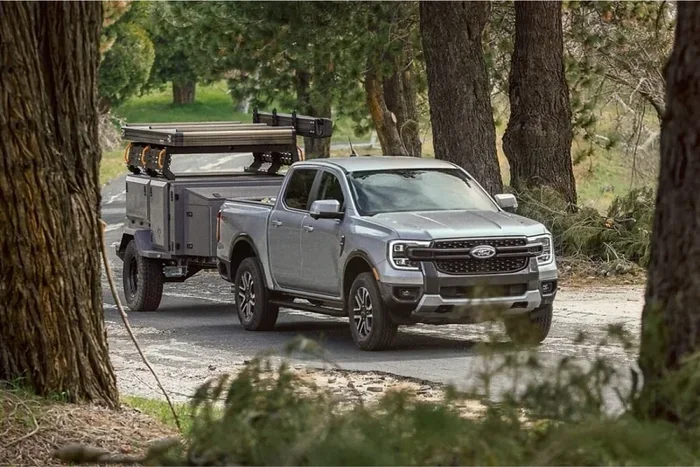
The 4.0L Ford Ranger tow capacity reaches up to 6,000 pounds when equipped with the right towing package. Understanding your towing capacity and payload limits keeps you safe and prevents costly damage. This guide covers ratings, gear, loading tips, and common mistakes for the 4.0L Ford Ranger.
Key Takeaways
- Max Towing Capacity: The 4.0L Ford Ranger can tow up to 6,000 pounds with proper equipment.
- Payload Matters Too: Your truck bed and suspension have weight limits that affect safe hauling.
- Right Gear Is Essential: A proper hitch, towing mirrors, and brake controller make a big difference.
- Tongue Weight Should Be 10-15%: This keeps your trailer stable and your steering responsive.
- Avoid Common Mistakes: Overloading, skipping pre-trip checks, and ignoring weight distribution cause most towing problems.
- Compare Before You Buy: The 4.0L Ford Ranger competes well with trucks like the Tacoma and others in its class.
📑 Table of Contents
- Understanding the 4.0L Ford Ranger Towing Capacity
- What Affects Your 4.0L Ford Ranger Tow Rating
- Towing Gear You Need for the 4.0L Ford Ranger
- How to Load Your Trailer Safely
- Comparing the 4.0L Ford Ranger to Other Trucks
- Common Towing Mistakes and How to Avoid Them
- Final Thoughts on 4.0L Ford Ranger Towing
Understanding the 4.0L Ford Ranger Towing Capacity
If you own or are thinking about buying a 4.0L Ford Ranger, you probably want to know what it can pull. The 4.0L Ford Ranger tow rating is one of the most asked questions among truck owners and buyers. Whether you plan to haul a boat, a pop-up camper, or a utility trailer, knowing your limits is the first step toward safe and confident towing.
The Ford Ranger towing capacity depends on several factors. These include your engine setup, transmission, towing package, and the type of trailer you are pulling. The base 4.0L V6 engine in the Ranger produces solid torque and is well-suited for light to medium-duty hauling tasks. But simply having the engine is not enough. You need the right combination of parts and preparation to reach the full maximum towing capacity.
Most people search for how much can a Ford Ranger tow because they want a clear number. And that number is 6,000 pounds for the 4.0L Ford Ranger when properly equipped. But that number comes with conditions. Let us break down exactly what those conditions are and what you need to know.
What Is the Maximum Towing Capacity?
The 4.0L Ford Ranger tow rating of 6,000 pounds applies to models with the towing package installed. This package typically includes a heavy-duty radiator, upgraded cooling fans, a wiring harness for trailer lights, and a Class III or Class IV towing hitch. Without this package, your towing capacity may drop significantly.
Here are the key numbers to remember:
- Maximum Towing Capacity: 6,000 pounds
- Payload Capacity: Around 1,400 to 1,600 pounds depending on the model
- Tongue Weight Rating: 600 pounds maximum
- Recommended Hitch Class: Class III or Class IV
These numbers are for the 4.0L V6 Ford Ranger models from the mid-2000s through the final production years. Always check your specific model year and trim level. The Ford Ranger specs can vary slightly between different generations and configurations.
Payload Capacity vs. Towing Capacity
Many people confuse payload capacity with towing capacity. They are two very different things, and both matter for safe hauling. Your payload capacity is the weight your truck can carry in the cab and bed combined. This includes the driver, passengers, cargo, and any accessories you add.
Your towing capacity is the maximum weight of a trailer you can pull behind the truck. The trailer weight includes everything inside the trailer, plus the trailer itself.
Here is a simple way to think about it. If your truck weighs 4,500 pounds and has a payload rating of 1,500 pounds, your total gross vehicle weight rating (GVWR) is 6,000 pounds. You cannot exceed that number with people, cargo, and gear combined. And when you add a trailer, the tongue weight of the trailer counts against your payload.
What Affects Your 4.0L Ford Ranger Tow Rating
Several factors determine your actual 4.0L Ford Ranger tow performance on the road. Understanding these factors helps you stay within safe limits and get the best results from your truck.
Engine and Transmission Setup
The 4.0L V6 engine is the heart of the Ranger’s towing ability. This engine produces around 210 horsepower and 235 pound-feet of torque. That torque is what gives you the pulling power you need when you hit the highway with a loaded trailer.
The transmission also plays a role. The 5-speed automatic transmission in the Ford Ranger was designed to handle towing loads. It has a tow/haul mode that holds gears longer and prevents excessive shifting under heavy loads. If your Ranger has a manual transmission, it can also tow effectively, but the automatic is generally more convenient for long hauls.
Towing Package and Equipment
Not every Ford Ranger comes with a towing package from the factory. If your truck does not have the factory towing package, you may need to add some components yourself. The essential items include:
- A Class III or Class IV towing hitch rated for at least 6,000 pounds
- A wiring harness for trailer lights and brakes
- A heavy-duty radiator for better cooling
- Upgraded cooling fans to prevent overheating on long grades
Adding these components can bring your Ranger up to its full towing potential. However, if you are unsure about what your truck needs, consult a Ford dealer or a qualified mechanic. They can help you identify the right parts for your specific model year.
Trailer Type and Weight Distribution
The type of trailer you pull matters just as much as the truck. A flat utility trailer distributes weight differently than a boat trailer or a pop-up camper. Trailers with uneven weight distribution can cause dangerous swaying and handling issues.
For example, a boat trailer with a heavy motor at the back puts more weight on the rear of your truck. This can exceed your rear axle weight rating and make the truck unsafe to drive. Always check the trailer weight and make sure it is evenly distributed across the axles.
Towing Gear You Need for the 4.0L Ford Ranger
Having the right gear makes a huge difference in your towing experience. The 4.0L Ford Ranger tow setup is not just about the hitch. It involves a full system of components that work together to keep you safe on the road.
Hitches and Receivers
Your hitch is the most important piece of towing equipment. For the 4.0L Ford Ranger, a Class III hitch is the standard choice. This hitch is rated for up to 6,000 pounds of towing capacity and 600 pounds of tongue weight.
Here are the hitch classes and what they mean for your Ranger:
- Class II Hitch: Rated for 3,500 pounds towing. Good for small utility trailers.
- Class III Hitch: Rated for 6,000 pounds towing. This is the sweet spot for the 4.0L Ranger.
- Class IV Hitch: Rated for 10,000 pounds towing. Overkill for the Ranger but useful if you upgrade later.
Make sure your hitch is properly installed and rated for your truck. A cheap hitch that is not rated for the weight can fail on the highway. That is a risk no one should take.
Towing Mirrors and Visibility
When you pull a trailer, your side mirrors become essential. Standard truck mirrors may not give you enough visibility to see the full width and length of your trailer. Towing mirrors extend outward and give you a clear view of your trailer and the road behind you.
Many states require extended mirrors when towing a trailer that extends beyond the rear of the vehicle. Check your local laws before hitting the road. Good visibility is one of the simplest ways to improve towing safety.
Brake Controllers and Wiring
If your trailer has its own brakes, you need a brake controller in your truck. The brake controller syncs your truck’s braking with the trailer’s brakes. This gives you shorter stopping distances and better control, especially on steep downhill grades.
The wiring harness connects your truck’s lights to the trailer. This includes brake lights, turn signals, and running lights. A complete wiring setup is not just a safety feature. It is also the law in most states.
How to Load Your Trailer Safely
Loading your trailer correctly is just as important as having the right truck and hitch. A poorly loaded trailer can cause swaying, fishtailing, and even jackknifing. These are serious safety hazards that can ruin your trip or worse.
Tongue Weight Matters
Tongue weight is the downward force the trailer puts on your hitch. As a general rule, tongue weight should be between 10% and 15% of the total trailer weight. So if your trailer weighs 4,000 pounds, your tongue weight should be between 400 and 600 pounds.
Too little tongue weight causes trailer sway. Too much tongue weight overloads your truck’s rear axle and reduces steering control. Use a tongue weight scale to check your setup before every trip. This simple step can prevent a lot of trouble on the road.
Loading Tips for Beginners
If you are new to towing, start with these basic loading tips:
- Place heavier items over the trailer axles, not at the front or back.
- Secure all cargo with straps and tie-downs.
- Check your tire pressure on both the truck and the trailer before every trip.
- Do a full walk-around inspection before you leave.
- Practice driving with the trailer in an empty parking lot before hitting traffic.
These habits take just a few minutes but pay off big time in safety and peace of mind.
Comparing the 4.0L Ford Ranger to Other Trucks
The 4.0L Ford Ranger holds its own in the compact truck segment. But how does it stack up against some of the other popular trucks on the market? Let us take a quick look.
When it comes to truck towing capacity, the Ranger competes with trucks like the Tacoma and the Colorado. The 4.0L Ford Ranger tow rating of 6,000 pounds is comparable to what the base 4-cylinder Tacoma can achieve with a pop-up camper or small utility trailer. For those considering a Tacoma, you can check out how a 4-cylinder Tacoma handles pop-up campers for a helpful comparison.
Some drivers wonder if a truck like the Subaru Forester can tow at all. The answer is yes, but with much lower limits. The Forester has a towing capacity of around 1,500 pounds, which is far below what the Ranger can handle. If you are looking for serious hauling power, the Ranger is the clear choice. You can read more about the Forester’s towing abilities here.
For truck enthusiasts who own a Tacoma, you might also want to compare towing setups. Check out what a Tacoma can pull with a 4,000-pound load to see how it compares to the Ranger’s capabilities.
| Truck Model | Engine | Max Towing Capacity | Payload Capacity |
|---|---|---|---|
| Ford Ranger 4.0L | 4.0L V6 | 6,000 lbs | 1,400-1,600 lbs |
| Toyota Tacoma (4-cyl) | 2.7L 4-Cyl | 6,400 lbs | 1,465 lbs |
| Chevy Colorado | 2.8L Turbo Diesel | 7,700 lbs | 1,555 lbs |
| Subaru Forester | 2.5L 4-Cyl | 1,500 lbs | 1,145 lbs |
| Honda Odyssey | 3.5L V6 | 5,000 lbs | 1,400 lbs |
As you can see, the 4.0L Ford Ranger holds a strong position in this comparison. It may not be the absolute highest in towing capacity, but it offers a great balance of capability, reliability, and affordability. For those wondering about the Honda Odyssey, you can read more about how much the Honda Odyssey can tow as a point of reference for family-oriented vehicles.
Common Towing Mistakes and How to Avoid Them
Even experienced truck owners make towing mistakes. The good news is that most of these mistakes are easy to avoid with a little knowledge and preparation.
Overloading the Trailer
The most common towing mistake is simply loading too much weight. It is tempting to fill up every inch of your trailer, especially when you are moving or hauling gear. But exceeding your maximum towing capacity puts stress on your engine, transmission, brakes, and suspension.
Overloaded trucks take longer to stop. They handle poorly in wind and on curves. And in the worst case, a mechanical failure on the highway can cause a serious accident. Always weigh your trailer and cargo before you leave. Stay within the rated limits of your truck and hitch.
Ignoring Weight Distribution
Another mistake is loading the trailer with all the weight at the front or the back. This causes the trailer to sway or the truck to sag at the rear. A weight distribution hitch can help solve this problem. It spreads the trailer weight more evenly across all axles of both the truck and the trailer.
If you regularly tow heavy loads, a weight distribution system is a worthwhile investment. It improves stability, handling, and braking performance.
Skipping the Pre-Trip Check
Before every towing trip, do a quick but thorough check. Look at your tire pressures, inspect your hitch connections, test your trailer lights, and make sure your cargo is secure. This takes about five minutes and can save you from a breakdown or accident miles down the road.
Many towing accidents happen because of something that could have been caught with a simple pre-trip inspection. Make it a habit, and you will tow with confidence every time.
Final Thoughts on 4.0L Ford Ranger Towing
The 4.0L Ford Ranger tow capacity of 6,000 pounds makes it a capable and versatile truck for a wide range of hauling tasks. Whether you are pulling a small boat, a utility trailer, or a pop-up camper, the Ranger can handle the job when properly equipped.
Remember that your towing capacity depends on more than just the engine. Your hitch, wiring, mirrors, brake controller, and loading habits all play a role in safe and successful towing. Take the time to set up your truck correctly, and you will enjoy many years of reliable hauling.
Always stay within your rated limits, do your pre-trip checks, and invest in quality towing gear. The 4.0L Ford Ranger is a hardworking truck that rewards proper care and smart towing practices. Follow these guidelines, and you will be ready for whatever you need to haul.
Frequently Asked Questions
What is the maximum towing capacity of a 4.0L Ford Ranger?
The 4.0L Ford Ranger tow capacity is up to 6,000 pounds when equipped with the factory towing package and a Class III hitch. Always check your specific model year, as ratings can vary slightly between different Ranger generations and configurations.
Can a 4.0L Ford Ranger tow a travel trailer?
Yes, the 4.0L Ford Ranger can tow a travel trailer within its rated capacity. A travel trailer weighing up to 6,000 pounds is well within the Ranger’s towing limits. Just make sure you have the proper hitch, wiring, and weight distribution setup for a safe trip.
Do I need a brake controller to tow with a Ford Ranger?
You need a brake controller if your trailer has its own electric brakes. Most trailers over 1,500 pounds come with brakes. The brake controller syncs the trailer brakes with your truck’s brakes for shorter stopping distances and better control.
How much payload can a 4.0L Ford Ranger carry?
The payload capacity of a 4.0L Ford Ranger is typically between 1,400 and 1,600 pounds. This includes the weight of the driver, passengers, cargo in the bed, and the tongue weight of any trailer you are towing.
What type of hitch do I need for a 4.0L Ford Ranger?
A Class III hitch is the standard choice for the 4.0L Ford Ranger. It is rated for up to 6,000 pounds of towing capacity and 600 pounds of tongue weight. Make sure the hitch is properly installed and compatible with your specific Ranger model year.
Can I tow a boat with a 4.0L Ford Ranger?
Yes, the 4.0L Ford Ranger is well-suited for towing boats within its weight limits. A bass boat or small aluminum boat under 5,000 pounds is a great match for the Ranger’s towing and payload capabilities. Always secure the boat properly and check your trailer weight before heading out.