How to Know if a Car Is a Good Deal Without Getting Scammed
Learning how to know if a car is a good deal saves you thousands of dollars and prevents costly mistakes. This guide covers everything from fair pricing research to spotting hidden defects and negotiating like a pro. By the end, you will feel confident making a smart, scam-free car purchase every time.
Buying a car is one of the biggest purchases most people ever make. It is exciting, but it can also be stressful and risky. The last thing anyone wants is to drive off the lot feeling great, only to realize weeks later that they overpaid or bought a lemon.
That is exactly why learning how to know if a car is a good deal matters so much. Whether you are buying from a dealer, a private seller, or an online marketplace, the same basic principles apply. You need to know the fair price, check the vehicle’s history, inspect it thoroughly, and negotiate with confidence.
This guide walks you through every step of the process in plain, simple language. No jargon. No fluff. Just practical advice you can use right away. By the time you finish reading, you will have a clear checklist to follow every single time you buy a car.
Key Takeaways
- Research the market value first: Use tools like Kelley Blue Book and Edmunds to find the fair price before you visit any dealer or seller.
- Always get a vehicle history report: Services like Carfax and AutoCheck reveal accidents, title issues, and hidden problems that sellers may hide.
- Schedule a pre-purchase inspection: A trusted mechanic can spot defects that even experienced buyers might miss.
- Watch for common red flags: Pressure tactics, mismatched VIN numbers, and too-good-to-be-true prices are major warning signs.
- Negotiate with confidence: Knowing the invoice price and depreciation helps you offer a fair deal without overpaying.
- Consider certified pre-owned vehicles: They offer warranties and peace of mind that private sales usually cannot match.
📑 Table of Contents
Why Knowing the Fair Price Is the First Step
The single most important thing you can do before buying any car is to research its fair market value. Without this knowledge, you are essentially guessing. And guessing is how people get scammed or overpay by thousands of dollars.
Every vehicle has a general price range based on its year, mileage, condition, and trim level. When you know this range ahead of time, you walk into any negotiation with an advantage. Sellers and dealers respect buyers who do their homework.
Use Trusted Pricing Tools
Start with well-known resources like Kelley Blue Book (KBB) and Edmunds. These sites give you a fair purchase price based on real market data from your local area. You can also check Cars.com and TrueCar for additional comparisons.
Here is how to use them effectively:
- Enter the exact make, model, and trim of the car you are considering.
- Adjust the mileage and condition to match the specific vehicle.
- Look at both the “fair purchase price” and the “good deal” range.
- Compare prices across multiple tools to get a clear picture.
Do not just look at one number. Prices vary by region, season, and demand. A car that is a great deal in one city might be overpriced in another. Always compare local listings to understand what buyers in your area are actually paying.
Understand MSRP, Invoice Price, and Depreciation
When buying a new car, you will hear terms like MSRP (Manufacturer’s Suggested Retail Price) and invoice price. The MSRP is the sticker price the dealer lists. The invoice price is what the dealer actually paid the manufacturer.
Your goal should be to pay somewhere between the invoice price and the MSRP. Paying full MSRP is rarely a good idea unless the car is in extremely high demand and short supply.
For used cars, depreciation plays a huge role. Most cars lose about 15% to 25% of their value in the first year and roughly 15% each year after that for the next several years. This means a three-year-old car can be 40% to 50% cheaper than a brand-new version of the same model. That depreciation is your friend as a buyer.
How to Research a Car’s True Value
Research is your best defense against overpaying. But it is not just about looking up a price number. You need to dig deeper and understand what makes one vehicle worth more or less than another.
Check Local and National Listings
Browse websites like AutoTrader, CarGurus, and Facebook Marketplace to see what similar cars are listed for in your area. Pay attention to the mileage, condition descriptions, and asking prices.
If every similar car in your area is listed around $18,000 and one seller asks $12,000, that should trigger a red flag. The price might be too good to be true, and it probably is.
Consider Total Cost of Ownership
The purchase price is only part of the equation. A cheap car that guzzles gas or breaks down constantly can end up costing more than a slightly pricier, reliable option. Think about fuel efficiency, insurance costs, maintenance history, and expected repair costs.
Some cars are cheap to buy but expensive to maintain. Others cost a bit more upfront but save you money in the long run. Always look at the full picture before deciding if a deal is truly a good one.
Look at Reliability Ratings
Websites like Consumer Reports and J.D. Power publish reliability ratings for almost every vehicle on the road. A car with a strong reliability score is less likely to put you in the shop with expensive repairs. This directly affects whether the deal is actually a good one or a headache waiting to happen.
Also check recall information on the NHTSA (National Highway Traffic Safety Administration) website. A car with unresolved safety recalls is never a good deal, no matter how low the price is.
Red Flags That Signal a Bad Deal
Not every seller is honest. Some are outright scammers, and others simply do not know they are hiding problems. Either way, you need to know the warning signs before you hand over your money.
The Price Is Too Good to Be True
This is the oldest trick in the book, and it still works. If a car is priced significantly below market value, there is almost always a reason. The car might have flood damage, a rebuilt title, hidden mechanical issues, or a rolled-back odometer.
Remember this simple rule: if it looks too good to be true, it probably is. Walk away from deals that make you feel suspicious. There will always be another car.
Pressure Tactics and Urgency
A trustworthy seller gives you time to think. A scammer creates a sense of urgency. They might say things like “someone else is interested” or “I need to sell this today.” These tactics are designed to make you rush and skip important steps like inspections or price research.
Never let anyone pressure you into a quick decision. Take your time. A real deal will still be there tomorrow.
VIN Mismatches and Title Issues
Always verify the Vehicle Identification Number (VIN). It should match on the dashboard, the door jamb sticker, the title, and the registration. If any of these do not match, walk away immediately.
Also check the title carefully. Look for brands like “salvage,” “flood,” or “rebuilt.” These titles mean the car was declared a total loss at some point. While some rebuilt vehicles are fine, they often come with hidden problems that are expensive to fix.
Vague or Evasive Answers from the Seller
Pay attention to how the seller communicates. If they avoid your questions, give vague answers, or seem uncomfortable when you ask about the car’s history, that is a problem. A reputable seller has nothing to hide and will gladly share information.
Ask specific questions like:
- Why are you selling the car?
- Do you have service records?
- Has the car ever been in an accident?
- Are there any mechanical issues I should know about?
Their answers will tell you a lot about whether this is a fair deal or a scam.
The Test Drive and Inspection Process
A test drive is not just about seeing if you like the way the car feels. It is a critical opportunity to spot problems that no listing or conversation could reveal.
What to Check During the Test Drive
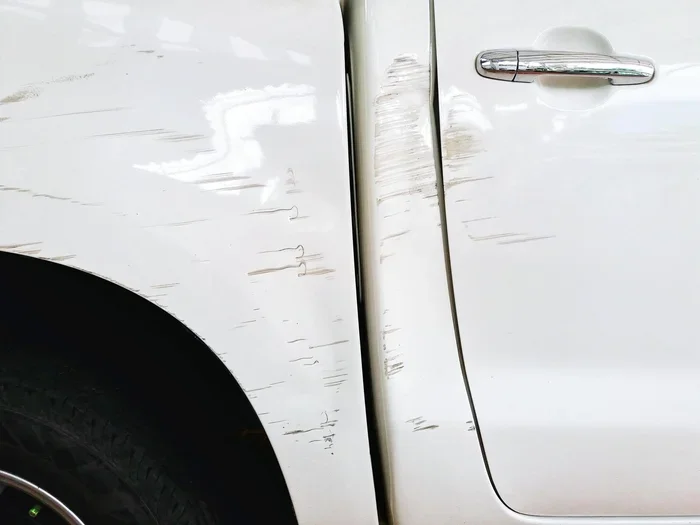
Before you start the engine, walk around the car and look for obvious damage. Check the tires for uneven wear, look at the paint for mismatched panels, and inspect the headlights for cracks or condensation inside.
Once you are driving, pay attention to these things:
- Engine sounds: Listen for knocking, ticking, or unusual noises when you start the car and while idling.
- Brakes: The car should stop smoothly without pulling to one side or making grinding sounds.
- Transmission: Shifts should be smooth. Any slipping, jerking, or delay is a warning sign.
- Steering: The car should drive straight without pulling to the left or right.
- Suspension: Listen for clunking or rattling over bumps.
- Climate control: Test both the heater and air conditioning to make sure they work.
- Electronics: Check the windows, locks, mirrors, infotainment system, and all dashboard warning lights.
Drive on both city streets and highways if possible. Different driving conditions reveal different problems.
Get a Pre-Purchase Inspection
This is one of the most important steps most buyers skip. A pre-purchase inspection (PPI) is a thorough check-up performed by an independent mechanic. It typically costs between $100 and $200, but it can save you thousands.
The mechanic will check the engine, transmission, brakes, suspension, electrical systems, and look for signs of previous accidents or water damage. They will give you an honest assessment of the car’s condition and estimate any upcoming repairs.
If the seller refuses to let you get an inspection, that is a huge red flag. A seller who has nothing to hide will welcome this step.
Negotiation Tips That Actually Work
Negotiation can feel intimidating, but it does not have to be. The key is preparation and confidence. When you know the fair price, you have leverage.
Start Below the Fair Price
Always make your first offer below the fair market price. This gives you room to negotiate upward while still landing at a price that is fair to both sides. A good starting point is around 10% to 15% below the fair purchase price you found in your research.
Use the Vehicle History Report as a Tool
If the vehicle history report shows any issues, use them to your advantage during negotiation. A minor accident, high mileage, or a needed repair gives you valid reasons to ask for a lower price. Be polite but firm about it.
Be Ready to Walk Away
This is the most powerful negotiation tactic of all. If the seller will not come down to a fair price, be willing to walk away. There are plenty of other cars out there. Walking away often makes the seller reconsider, especially if they know you have done your research and are serious about the fair value of the car.
Certified Pre-Owned vs. Private Sale
Where you buy the car matters just as much as the car itself. Different buying channels come with different levels of risk and protection.
Certified Pre-Owned (CPO) Vehicles
Certified pre-owned vehicles are used cars that have been inspected, reconditioned, and certified by the manufacturer or dealer. They usually come with an extended warranty and roadside assistance.
The benefits of a CPO vehicle include:
- A thorough multi-point inspection process.
- An extended warranty that covers repairs for a set period.
- Roadside assistance if something goes wrong.
- Potentially better financing options through the manufacturer.
The downside is that CPO vehicles often cost more than similar private-party sales. But the extra cost is usually worth it for the added protection and peace of mind.
Buying from a Private Seller
Buying from a private seller can save you money because there is no dealer markup. However, it also means you take on more risk. There is no warranty, no dealer inspection, and no customer service if something goes wrong after the sale.
If you go the private route, be extra diligent with your research and inspection. The vehicle history report and pre-purchase inspection become even more important in this scenario.
Common Mistakes That Lead to Bad Deals
Even the most careful buyers can make mistakes. Here are the most common ones to avoid:
- Skipping the vehicle history report. This is the fastest way to buy a car with hidden problems. Always get a report from Carfax, AutoCheck, or a similar service.
- Not test driving the car. Never buy a car without driving it yourself. Even if a friend or family member drove it, you need your own experience behind the wheel.
- Focusing only on monthly payments. Dealers sometimes stretch the loan term to lower the monthly payment, which means you pay much more in interest over time. Always negotiate on the total price, not the monthly payment.
- Ignoring your gut feeling. If something feels off, trust your instincts. No car is worth that uneasy feeling.
- Rushing the decision. Take your time. The best deals come to patient buyers who do their homework.
Conclusion
Learning how to know if a car is a good deal is one of the most valuable skills you can develop as a car buyer. It protects your wallet, reduces stress, and gives you confidence in every purchase you make.
The process comes down to a few core principles. Research the fair price using trusted tools. Always get a vehicle history report. Inspect the car thoroughly, including a professional pre-purchase inspection. Watch for red flags and never let anyone pressure you into a quick decision. And negotiate with the knowledge and confidence that comes from doing your homework ahead of time.
No deal is perfect, and no car is flawless. But with the right approach, you can find a vehicle that fits your budget, meets your needs, and gives you years of reliable service without any scams or regrets. Use the tips in this guide every time you buy, and you will always be in a strong position to make a smart choice.
Frequently Asked Questions
What is the best way to check if a car price is fair?
Use trusted pricing tools like Kelley Blue Book, Edmunds, and Cars.com to compare the local market value. Look at multiple listings of similar cars in your area with matching mileage and condition. If the price is significantly below the fair range, be cautious and investigate further.
How much should I spend on a pre-purchase inspection?
A pre-purchase inspection typically costs between $100 and $200, depending on your location and the mechanic. This small investment can save you thousands by uncovering hidden issues before you finalize the purchase. Always insist on this step, especially when buying from a private seller.
Is it safe to buy a car from a private seller online?
It can be safe if you take the right precautions. Always get a vehicle history report, meet in a public place, have the car inspected by an independent mechanic, and verify the title and VIN match. Never wire money or send gift cards before you have thoroughly checked the vehicle.
What should I do if a seller refuses a pre-purchase inspection?
Walk away. A seller who refuses an inspection has something to hide. This is one of the clearest red flags in car buying. There are plenty of other cars available from sellers who are transparent and willing to let you verify the vehicle’s condition.
Are certified pre-owned vehicles worth the extra cost?
In most cases, yes. Certified pre-owned vehicles come with manufacturer warranties, extended coverage, and a thorough inspection process. The extra cost is often worth the peace of mind, especially if you plan to keep the car for several years or want protection against unexpected repairs.
How can I avoid falling for a car scam?
Research the fair price before you look at any cars. Always get a vehicle history report and a pre-purchase inspection. Never rush the decision, never send money before seeing the car in person, and trust your instincts if something feels wrong. Scammers rely on urgency and emotion, so staying calm and methodical is your best defense.