How to Jump-Start a BMW X1 – Simple Steps to Follow
Jump-starting a BMW X1 is straightforward when you follow the right steps and stay safe. This guide walks you through locating the battery, connecting jumper cables correctly, and getting your engine running again without any hassle. You will also learn the most common mistakes to avoid and when it is time to seek professional help.
There is nothing quite like the sinking feeling when you turn the key or press the start button and nothing happens. Your BMW X1 battery is dead, and you are stuck. Whether you left the lights on overnight or the cold weather has taken its toll, a dead battery can ruin your morning in seconds. The good news is that jump-starting a BMW X1 is a skill anyone can learn with a little guidance.
This guide will take you through every step of the process, from finding your battery to safely getting your engine running again. We will also cover the tools you need, the mistakes you should avoid, and the signs that tell you it is time for a new battery. By the end, you will feel confident handling this situation on your own.
Before we dive in, it is worth noting that jump-starting procedures can vary slightly depending on your specific BMW X1 model year. Always refer to your owner’s manual first. That said, the core process remains very similar across most generations of the X1.
Key Takeaways
- Know your battery location: The BMW X1 battery is typically found in the trunk or under the hood, depending on the model year.
- Use the right tools: Jumper cables or a portable jump starter are essential, and safety gear like gloves and goggles is a must.
- Follow the correct cable order: Connecting positive to positive and negative to ground prevents sparks and damage.
- Avoid common mistakes: Never reverse cable connections, and do not jump-start a visibly damaged battery.
- Let the engine run after jumping: Driving or idling for at least 15 minutes helps recharge the battery.
- Know when to call a pro: If your battery is old or frequently dies, replacement may be the better long-term solution.
📑 Table of Contents
- Understanding Your BMW X1 Battery
- Tools You Will Need to Jump-Start a BMW X1
- Step-by-Step Guide to Jump-Starting Your BMW X1
- What to Do After Jump-Starting Your BMW X1
- Common Mistakes to Avoid When Jump-Starting a BMW X1
- When to Seek Professional Help
- Preventing Future Battery Problems
- Final Thoughts
Understanding Your BMW X1 Battery
The first step to successfully jump-starting your BMW X1 is understanding where the battery is and what kind of battery your car uses. BMW engineers design their vehicles with specific battery placements, and the X1 is no different. Knowing this before you need to jump-start can save you a lot of stress in the moment.
Where Is the Battery Located?
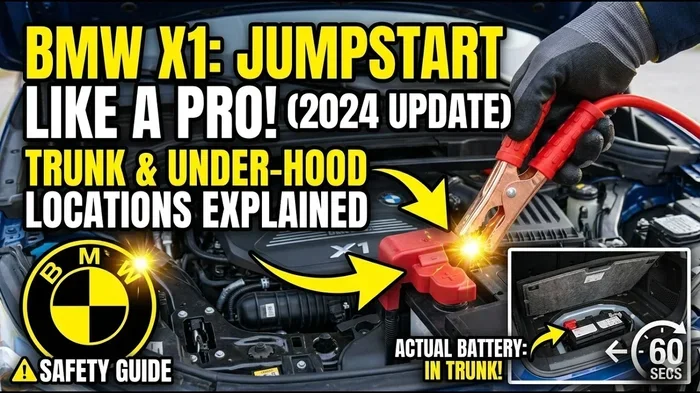
In most BMW X1 models, the battery is located in the trunk, on the right-hand side. This is different from many other vehicles where the battery sits under the hood. BMW places the battery in the trunk to free up space in the engine bay and to keep the weight balanced. However, some older model years may have the battery under the hood, so it is always a good idea to double-check your owner’s manual.
To find the trunk battery, open the rear trunk and look for a plastic cover on the right side. Remove the cover, and you should see the battery terminals clearly. Having a flashlight handy can help, especially if you are doing this at night or in a dimly lit parking lot.
What Type of Battery Does the BMW X1 Use?
The BMW X1 typically uses a standard 12-volt lead-acid battery. Some newer models may use an AGM (Absorbent Glass Mat) battery, which is a more advanced type that handles deeper discharges better. AGM batteries are common in modern BMWs because they support the car’s electronic systems and start-stop technology.
If you are unsure what type of battery your X1 has, check the label on the existing battery. It will clearly state the battery type, capacity, and cold cranking amps (CCA). This information is helpful when you go to replace the battery later.
Common Signs Your BMW X1 Battery Is Dead
Recognizing the signs of a weak or dead battery early can save you from being stranded. Here are the most common indicators:
- No response when you turn the key: The dashboard lights up, but the engine does not crank.
- Slow cranking: The engine turns over very slowly before dying.
- Dashboard warning lights: The battery light or check engine light illuminates on the dashboard.
- Electrical issues: Power windows move slowly, headlights dim, or the infotainment system behaves erratically.
- Corrosion on terminals: You may notice a white or blueish powdery substance on the battery terminals.
If you notice any of these signs, it is a good idea to address the battery issue quickly. A bad battery can cause the wrench light to come on in some BMW models, which is another clear signal that something is wrong with your electrical system.
Tools You Will Need to Jump-Start a BMW X1
Jump-starting a car is not complicated, but you do need the right tools. Having these items in your trunk at all times is one of the best things you can do for peace of mind. Let us go through what you need and why each item matters.
Jumper Cables
Standard jumper cables are the most common tool for jump-starting. Look for cables that are at least 10 gauge and have a length of 12 to 20 feet. Thicker cables (lower gauge numbers) carry more current and work better, especially in cold weather. Make sure the cable clamps are sturdy and the insulation is intact.
Portable Jump Starter
A portable jump starter is a compact device that fits in your trunk and can jump-start your car without needing another vehicle. These devices are incredibly convenient and are becoming a popular choice for BMW owners. Many models also include USB ports for charging your phone, which is a nice bonus when you are stranded.
If you frequently deal with dead batteries or live in an area with cold winters, a portable jump starter is a worthwhile investment. It eliminates the need to flag down another driver and keeps you self-sufficient.
Safety Gear
Safety should always come first when working with car batteries. Wear protective gloves and safety goggles to guard against acid splashes or sparks. Avoid wearing metal jewelry that could accidentally touch the battery terminals. Keep flammable materials away from the battery, as hydrogen gas can be released during charging.
It is also worth noting that jump-starting procedures for different vehicles share many similarities. If you have ever wondered about jump-starting a hybrid like a Toyota, the basic safety principles are the same, though the battery location may differ.
Step-by-Step Guide to Jump-Starting Your BMW X1
Now that you have your tools and understand your battery, it is time to get your BMW X1 running again. Follow these steps carefully and in the correct order. Rushing or skipping steps can damage your electrical system or even cause injury.
Step 1: Position the Vehicles
If you are using another vehicle to jump-start, park both cars close enough so that the jumper cables can reach. Make sure both cars are in park (or neutral for manual transmissions) and that the ignitions are off. Turn off all electrical accessories in both vehicles, including the radio, headlights, and air conditioning.
Step 2: Locate the Battery Terminals
Open the trunk of your BMW X1 and locate the battery. Identify the positive terminal (marked with a plus sign or red cover) and the negative terminal (marked with a minus sign or black cover). Clean any corrosion off the terminals with a wire brush if needed. A clean connection ensures the best electrical flow.
Step 3: Connect the Jumper Cables
This is the most critical step, and the order matters a lot. Follow this sequence exactly:
- Connect the red clamp to the positive terminal of your dead BMW X1 battery.
- Connect the other red clamp to the positive terminal of the working vehicle’s battery.
- Connect the black clamp to the negative terminal of the working vehicle’s battery.
- Connect the remaining black clamp to an unpainted metal surface on your BMW X1’s engine block. This serves as a ground and reduces the risk of sparks near the battery.
Never let the clamp ends touch each other once they are connected to a battery. This can cause sparks and potentially damage the electrical systems.
Step 4: Start the Working Vehicle
Start the engine of the working vehicle and let it idle for about two to three minutes. This allows the alternator in the working vehicle to send a charge through the cables to your dead battery. You do not need to rev the engine; a steady idle is perfectly fine.
Step 5: Start Your BMW X1
After letting the working vehicle run for a few minutes, try starting your BMW X1. Press the start button or turn the key as you normally would. If the engine cranks and starts, you have successfully jump-started your car. If it does not start after a few attempts, wait another two to three minutes and try again. Giving up too quickly can drain the working vehicle’s battery as well.
Step 6: Disconnect the Jumper Cables
Once your BMW X1 is running, carefully disconnect the jumper cables in the reverse order of how you connected them:
- Remove the black clamp from the unpainted metal surface on your BMW X1.
- Remove the black clamp from the working vehicle’s negative terminal.
- Remove the red clamp from the working vehicle’s positive terminal.
- Remove the red clamp from your BMW X1’s positive terminal.
Keep the clamps away from each other as you remove them to avoid any sparks.
What to Do After Jump-Starting Your BMW X1
Getting your engine started is only half the battle. What you do after jump-starting matters just as much for the health of your battery and electrical system. Here is what you should do to make sure everything is in good shape.
Let the Engine Run
After a successful jump-start, keep your BMW X1 engine running for at least 15 to 20 minutes. This gives the alternator time to recharge the battery. If you have a portable jump starter, you can turn off the engine and let the jump starter do its job for a few minutes before restarting.
How long you need to drive depends on how dead the battery was and the condition of your alternator. As a general rule, letting a car idle safely for 15 to 20 minutes after a jump-start is a good practice. If you are in a hurry, driving at a moderate speed for 20 to 30 minutes achieves the same result.
Check the Battery Voltage
If you have a multimeter, check the battery voltage after the engine has been running for a while. A healthy battery should read between 12.4 and 12.7 volts with the engine off. With the engine running, the voltage should be between 13.7 and 14.7 volts, which means the alternator is charging properly.
If the voltage reads below 12 volts even after running the engine, your battery may be too far gone and need replacement. A battery that cannot hold a charge after being jumped is a clear sign of aging or internal damage.
Monitor for Warning Lights
Keep an eye on your dashboard after jump-starting. If the battery light stays on or the wrench light comes on, there may be a deeper issue beyond a simple dead battery. These warning lights can indicate problems with the alternator, the charging system, or other electrical components that need professional diagnosis.
Common Mistakes to Avoid When Jump-Starting a BMW X1
Jump-starting is a simple process, but it is easy to make mistakes that can cause damage or even danger. Here are the most common errors people make and how to avoid them.
Connecting Cables in the Wrong Order
This is the number one mistake people make. Connecting the cables out of order can cause short circuits, blow fuses, or damage the electrical systems in both vehicles. Always follow the positive-positive-negative-ground order we outlined earlier. It may feel tedious, but this sequence exists for a very good reason.
Letting the Clamps Touch
Never let the positive and negative cable clamps touch each other, especially when they are connected to a battery. This creates a short circuit that can spark, melt cable insulation, or even cause a fire. Keep the clamps separated and handle them by the insulated handles.
Jump-Starting a Damaged Battery
If you can see cracks, leaks, or bulging on your battery case, do not attempt to jump-start. A damaged battery can leak acid or even explode during the charging process. In this case, call for roadside assistance or have the battery replaced.
Forgetting to Turn Off Accessories
Before you start the jump-start process, make sure all electrical accessories are turned off in both vehicles. Headlights, radios, air conditioning, and phone chargers all draw power and can interfere with the charging process.
When to Seek Professional Help
Most of the time, jump-starting a BMW X1 is a quick and simple fix. However, there are situations where professional help is the better choice. Knowing when to call for assistance can save you time, money, and frustration.
Your Battery Is Old or Frequently Dies
BMW X1 batteries typically last between three and five years, depending on driving habits and climate. If your battery is older than four years and you find yourself needing jump-starts regularly, it is time for a replacement. A new battery will give you reliable starts and reduce the risk of being stranded again.
The Alternator May Be Failing
Sometimes a dead battery is not the battery’s fault at all. A failing alternator cannot properly charge the battery while you drive, which means the battery will keep dying. If you jump-start your X1 and the battery dies again shortly after, have the alternator checked by a qualified mechanic.
You Are Uncomfortable Doing It Yourself
There is absolutely no shame in calling for roadside assistance if you are unsure about any part of the process. Many insurance plans and car manufacturer warranties include roadside assistance for this exact reason. Professional technicians have the experience and equipment to handle the job safely and quickly.
BMW X1 owners who are unsure about any electrical work should also consider visiting a certified BMW dealership. They have specialized diagnostic tools and trained technicians who understand the unique electrical systems in BMW vehicles.
Preventing Future Battery Problems
The best way to deal with a dead battery is to prevent one from happening in the first place. Here are some simple habits that can extend the life of your BMW X1 battery and keep you on the road with confidence.
- Turn off all lights and accessories before shutting off the engine. This is the simplest and most effective habit you can build.
- Drive your car regularly. Batteries slowly lose charge when a car sits unused for long periods. If you have a secondary vehicle, start it and let it run for 15 minutes at least once a week.
- Check the battery terminals regularly. Clean any corrosion with a baking soda and water solution and a wire brush.
- Invest in a battery maintainer. Also called a trickle charger, this device keeps your battery topped off when the car is not in use for extended periods.
- Have the battery tested annually. Most auto parts stores offer free battery testing. This can alert you to a weakening battery before it dies completely.
Taking care of your battery is one of the easiest ways to avoid the hassle of a dead battery. A little prevention goes a long way toward keeping your BMW X1 running smoothly.
Final Thoughts
Jump-starting a BMW X1 is a practical skill that every car owner should have in their toolkit. With the right tools, the correct cable connection order, and a little patience, you can get back on the road in no time. Remember to always prioritize safety, follow the steps in order, and know when to call for professional help.
A dead battery does not have to ruin your day. Armed with the knowledge in this guide, you are now prepared to handle the situation confidently. Keep jumper cables or a portable jump starter in your trunk, maintain your battery regularly, and you will be ready for whatever comes your way. Safe driving, and here is to many more worry-free starts in your BMW X1.