How to Put Toyota 4Runner in 4 Wheel Drive Right Now
Putting your Toyota 4Runner in 4 wheel drive is simple once you know the steps. This guide covers every model and drivetrain option so you can shift into 4WD with confidence. Whether you need 4HI for slippery roads or 4LO for tough trails, we have you covered. You will learn the exact gear positions, common mistakes to avoid, and pro tips to keep your 4Runner running strong.
So you just bought a Toyota 4Runner or maybe you have had one for years but never really used the 4 wheel drive system. Either way, you are in the right place. Learning how to put Toyota 4Runner in 4 wheel drive is one of the most useful skills any 4Runner owner can have. It opens up a whole new world of driving. Whether you face snow, mud, rocks, or steep hills, 4WD gives you the traction you need to keep moving.
The Toyota 4Runner is one of the most popular SUVs on the road. It is tough, reliable, and built to handle rough terrain. But here is the thing. Many owners never touch the 4WD controls. They drive their 4Runner in 2WD all year long. That is a missed opportunity. The 4Runner drivetrain is designed to be versatile. It works on the highway, in the city, and on the toughest trails. You just need to know how to use it properly.
In this guide, we will walk you through every step. We will cover the different 4WD modes, how to shift between them, and what each mode does. We will also share common mistakes and tips from real 4Runner owners. By the end, you will feel confident engaging 4 wheel drive every time you need it. Let us get into it.
Key Takeaways
- Know your drivetrain: Not all 4Runners are the same. Understanding your model helps you choose the right 4WD mode.
- 4HI vs 4LO matters: Each mode serves a different purpose. Use 4HI for highways and 4LO for extreme off-road terrain.
- Speed matters when shifting: You must slow down before engaging 4WD. Shifting at high speed can damage your transfer case.
- Check your locking hubs: Manual locking hubs need to be engaged on older models. Newer models do this automatically.
- Avoid common mistakes: Leaving 4WD on dry pavement or shifting while moving fast are the top errors drivers make.
- Maintenance keeps it working: Regular checks of your drivetrain fluid and components ensure long-term reliability.
📑 Table of Contents
- Understanding Your Toyota 4Runner Drivetrain
- How to Put Toyota 4Runner in 4 Wheel Drive Step by Step
- When to Use 4HI vs 4LO
- Common Mistakes When Using 4WD
- Tips for Maintaining Your 4Runner 4WD System
- Expert Tips for 4Runner 4WD Owners
- How to Know If Your 4Runner Is in 4WD
- Quick Tips for Shifting Into 4WD
- Conclusion
Understanding Your Toyota 4Runner Drivetrain
Before you learn how to shift into 4 wheel drive, you need to understand the basics. The 4Runner comes with different drivetrain options depending on the model year and trim. Not every 4Runner has the same system. Knowing what you have makes a big difference.
Part-Time vs Full-Time 4WD
Most Toyota 4Runner models use a part-time 4WD system. This means the truck normally runs in 2WD, usually rear-wheel drive. You switch to 4WD when you need extra traction. Part-time 4WD is great for fuel economy. It also saves wear on your drivetrain when you do not need it.
Some newer 4Runner trims come with a full-time 4WD system. This system sends power to all four wheels all the time. It uses a center differential to balance the power between the front and rear wheels. Full-time 4WD is more convenient. You do not have to shift in and out of 4WD. But it uses more fuel than part-time 4WD.
You can check your specific model to see which type you have. Look at your owner manual or check the Toyota 4Runner specs for your trim level. The drivetrain type affects how you engage 4WD.
What Is a Transfer Case?
The transfer case is the heart of your 4WD system. It sits between the transmission and the front and rear axles. Its job is to send power to both the front and rear wheels. When you shift into 4WD, the transfer case locks the front and rear driveshafts together.
Without a working transfer case, your 4Runner cannot use 4 wheel drive. That is why it is important to keep this component maintained. Check the transfer case fluid regularly. Low or dirty fluid can cause problems. If you hear grinding or clicking noises when you shift, get it checked right away.
How to Put Toyota 4Runner in 4 Wheel Drive Step by Step
Now let us get to the main part. Here is exactly how to shift your 4Runner into 4 wheel drive. The process is different depending on whether you have a manual or automatic transmission. But the basic steps are similar.
Step 1: Bring the Truck to a Complete Stop
This is the most important rule. You must be completely stopped before shifting into 4WD. Do not try to shift while rolling. Put your foot on the brake pedal and make sure the truck is not moving. Shifting at speed can damage the transfer case and other drivetrain parts.
It does not matter if the engine is running or not. But for safety, always keep your foot on the brake. Put the transmission in neutral if you are using a manual. If you have an automatic, keep it in park.
Step 2: Find the 4WD Controls
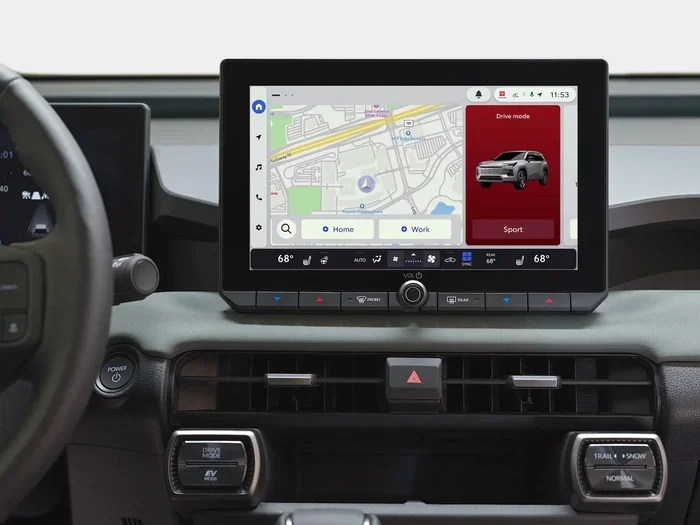
The location of the 4WD controls depends on your model year. Older 4Runners have a manual shift lever on the floor near the transmission tunnel. You physically move the lever from 2H to 4H or 4L. Newer models have electronic controls. These are buttons or a dial on the dashboard or center console.
For electronic models, look for a button labeled “4WD” or “4LO.” Some models have a dial that you twist to select the mode. The controls are easy to find once you know where to look. If you are unsure, check your owner manual for the exact location.
Step 3: Select the Right Mode
Once you find the controls, it is time to choose the mode. There are several options to pick from. Each one serves a different purpose.
- 2H (Two-Wheel High): This is your normal driving mode. The rear wheels get all the power. Use this on dry pavement and highways.
- 4H (Four-Wheel High): This sends power to all four wheels at a 1:1 ratio. Use it for snow, ice, mud, or loose gravel. You can drive at normal speeds in 4H.
- 4L (Four-Wheel Low): This mode adds extra torque and reduces speed. Use it for rock crawling, deep mud, steep hills, and extreme off-roading. You must be below 10 mph to engage 4L.
- N (Neutral): This disconnects the drivetrain. Use it only for towing or flat-towing the 4Runner.
Step 4: Shift Into the Desired Mode
For manual models, move the lever from 2H to 4H or 4L. You will feel it click into place. Do not force it. If the lever is hard to move, you may be going too fast or the truck is not fully stopped.
For electronic models, press the 4H or 4L button. You will see a light on the dashboard confirm the mode. Wait for the light to appear before you start driving. Some models take a few seconds to engage. Do not press the gas pedal until the light is on.
Step 5: Drive Safely and Monitor Your System
Once you are in 4WD, start driving slowly. Listen for any unusual sounds. Watch the dashboard for warning lights. If something feels wrong, pull over and check the system. A working 4WD system should feel smooth and confident.
If you are using 4H on the highway, remember that you can drive at normal speeds. But if you switch back to 2H, you can do that on dry pavement too. Just follow the same steps in reverse. Stop the truck, shift back to 2H, and you are good to go.
When to Use 4HI vs 4LO
Knowing when to use each mode is critical. Using the wrong mode can hurt your truck or reduce traction. Here is a simple guide to help you choose.
Use 4HI When
- You are driving on snow or ice
- The road is wet or muddy
- You are on a gravel road or loose surface
- You need extra traction at highway speeds
- You are driving through shallow water
4HI is the most commonly used mode. It gives you better grip without slowing you down. Most 4Runner owners use 4HI more than any other setting. It is perfect for winter driving and light off-road trails.
Use 4LO When
- You are rock crawling or navigating boulders
- You need maximum torque at low speeds
- You are stuck in deep mud or sand
- You are climbing a very steep hill
- You are descending a steep incline slowly
4LO multiplies your torque. This means each wheel gets much more turning force. It also limits your speed. You should not exceed 10 to 15 mph in 4LO. This mode is for slow, controlled off-road driving. If you try to use 4LO on the highway, you will damage your drivetrain.
For more tips on getting the most out of your 4Runner on the trail, check out our guide on is it ok to drive with trac off for insight into managing traction systems during off-road driving.
Common Mistakes When Using 4WD
Even experienced 4Runner owners make mistakes with their 4WD system. These errors can cause damage or reduce performance. Here are the most common ones to avoid.
Shifting While Moving
This is the number one mistake. Never shift into 4H or 4LO while the truck is moving. Always stop first. The transfer case needs the truck to be still so the gears can engage properly. Shifting while rolling can strip gears or crack the case.
Leaving 4WD On Dry Pavement
Part-time 4WD systems are not designed for dry pavement. When you leave 4H or 4LO on hard surfaces, the front and rear wheels try to spin at the same speed. This causes binding and stress on the drivetrain. It can damage the transfer case, axles, and tires over time.
Always switch back to 2H when you are on dry roads. Make it a habit. Every time you finish off-roading, shift back to 2H before hitting the pavement.
Forgetting to Check the Locking Hubs
Older 4Runner models have manual locking hubs on the front wheels. These hubs must be engaged for the front wheels to receive power. If you forget to lock them, your 4Runner will not get full 4WD capability.
Newer models have automatic locking hubs. These engage on their own when you shift into 4WD. But if you have an older truck, always double-check the hubs before you hit the trail. A quick look at each front wheel can save you from getting stuck.
Ignoring Warning Lights
Your 4Runner has dashboard lights that tell you when 4WD is engaged. If a light stays on after you shift back to 2WD, do not ignore it. It could mean the system is stuck in 4WD mode. Continuing to drive in 4WD on dry pavement will cause damage.
If you notice a warning light, stop and try the shift again. If the light does not go off, have a mechanic check the system. The traction control system works closely with the 4WD system, so issues in one can affect the other.
Tips for Maintaining Your 4Runner 4WD System
A little maintenance goes a long way. Your 4WD system needs regular care to work its best. Here are some simple tips to keep everything running smoothly.
- Check the transfer case fluid: Change it every 30,000 to 60,000 miles. Dirty fluid causes wear and overheating.
- Inspect the front and rear axles: Look for leaks around the axle seals. Any sign of fluid means a repair is needed.
- Test the locking hubs: If you have manual hubs, engage and disengage them a few times each season. This keeps them from seizing up.
- Keep tires matched: Mismatched tire sizes can damage the transfer case. Always use the same size and type on all four wheels.
- Check the driveshafts: Look for dents, rust, or worn U-joints. A damaged driveshaft can cause vibration and loss of power.
- Wash the undercarriage: Mud, salt, and road grime eat away at drivetrain components. Rinse the bottom of your 4Runner after off-road trips.
Taking care of your 4WD system means it will take care of you. A well-maintained 4Runner can handle almost anything you throw at it. The key is consistency. Small checks done regularly prevent big problems later.
Expert Tips for 4Runner 4WD Owners
Here are some insider tips from experienced 4Runner owners and off-road experts. These simple habits will improve your 4WD experience.
Practice in a safe area first. If you have never used 4WD before, find an empty parking lot or a quiet dirt road. Try shifting into 4H and 4LO in a controlled environment. Get a feel for how the truck responds. This builds confidence before you face real trails.
Always carry a 4WD cheat sheet. Write down the steps for your specific model. Keep it in the glove box. When you are cold, tired, or stressed, you will be glad you have it. Even the exterior bonnet release steps can vary by model year, so having a reference helps.
Use 4H on sand. Many drivers think they need 4LO for sand. But 4H often works better. It keeps you moving at a steady speed without bogging down. Only use 4LO if you are truly stuck and need max torque to get out.
Do not use 4LO on ice. The low range gives you more torque but less control on slippery surfaces. 4H with good tires is usually the better choice for icy roads. Save 4LO for off-road obstacles where you need slow, precise power.
Engage 4WD before you need it. Do not wait until you are already stuck in mud or snow. Get into 4H before the conditions get bad. This way, the system is ready when you need it most.
For more driving tips and safety information, check out our article on is it safe to drive with the VSC light on to understand how stability control interacts with your 4WD system.
How to Know If Your 4Runner Is in 4WD
It sounds simple, but many drivers are not sure if their 4Runner is actually in 4WD. Here is how to confirm.
- Check the dashboard display: Most modern 4Runners show the current drivetrain mode on the instrument cluster. Look for 2H, 4H, 4L, or N.
- Listen for engagement: When you shift into 4H or 4L, you may hear a slight click or feel a subtle shift. This is the transfer case engaging.
- Check the front wheels: On manual hub models, try to turn a front wheel by hand. If it is locked in 4WD, it will not spin freely.
- Monitor traction: If you are on a slippery surface and the truck feels more planted, 4WD is likely engaged.
If you are ever unsure, it is safe to stop and check. There is no harm in confirming. Better to know for sure than to guess.
Quick Tips for Shifting Into 4WD
- Always stop completely before shifting.
- Shift into 4H at speeds under 60 mph.
- Shift into 4L at speeds under 10 mph.
- Shift back to 2H on dry pavement.
- Check the dashboard light after every shift.
- Do not use 4L on dry or paved surfaces.
- Engage 4WD before you need it, not after.
These tips are easy to remember and follow. Print them out and keep them in your truck. They will save you from costly mistakes and keep your 4Runner drivetrain healthy for years to come.
Conclusion
Learning how to put Toyota 4Runner in 4 wheel drive is a skill every owner should have. It is not hard. It just takes a little knowledge and practice. You now know the steps, the modes, the common mistakes, and the maintenance tips. You are ready to use your 4Runner’s full capability whenever you need it.
Remember to always stop before shifting. Choose the right mode for your conditions. And take care of your drivetrain with regular maintenance. Your 4Runner is built to go anywhere. With the right 4WD technique, you can take it anywhere you want.
Get out there and explore. Whether it is a snowy morning commute or a weekend trail adventure, your 4Runner has the power to get you there. Just shift into 4WD and go.
Frequently Asked Questions
Can I shift into 4H while driving slowly?
No, you should always bring your 4Runner to a complete stop before shifting into 4H or 4LO. Even at low speeds, shifting while the wheels are turning can damage the transfer case. Always stop, shift, and then start driving again.
What is the difference between 4H and 4L on the Toyota 4Runner?
4H is for high-speed off-road driving on snow, mud, or gravel. It sends power to all four wheels at a normal ratio. 4L is for slow, extreme off-roading like rock crawling. It gives you much more torque but limits your speed to around 10 to 15 mph.
Do I need to use locking hubs on my 4Runner?
If you have an older 4Runner with manual locking hubs, yes, you need to engage them before shifting into 4WD. Newer models have automatic locking hubs that engage on their own. Check your owner manual to see which type your truck has.
Can I leave my 4Runner in 4WD all the time?
No, you should not leave a part-time 4Runner in 4H or 4LO on dry pavement. It causes drivetrain binding and can lead to serious damage. Switch back to 2H when driving on regular roads.
How do I know if my 4Runner is in 4WD mode?
Check your dashboard display. Most 4Runners show the current mode (2H, 4H, 4L, or N) on the instrument cluster. You can also listen for a click when shifting and try turning a front wheel by hand if you have manual hubs.
What should I do if my 4Runner won’t shift into 4WD?
First, make sure the truck is completely stopped. Then try shifting again slowly. If it still does not engage, check the transfer case fluid level. Low fluid or contaminated fluid can prevent proper engagement. If the problem continues, visit a mechanic to inspect the transfer case and related components.