How to Remove the Flat Tire Warning on an Infiniti Q50
Dealing with a flat tire warning on your Infiniti Q50 can be stressful, but it is usually easy to fix. This guide walks you through the exact steps to reset the tire pressure monitoring system, check your sensors, and clear the warning light safely. Whether the light comes on after a temperature drop or a slow leak, you will find practical solutions here. We also share expert tips to prevent the warning from returning.
There is nothing quite like the sinking feeling when a warning light pops up on your dashboard. If you drive an Infiniti Q50 and see the flat tire warning illuminate, you are not alone. This guide will show you exactly how to remove the flat tire warning on an Infiniti Q50 with clear, step-by-step instructions. You do not need to be a mechanic to handle this. Most of the time, the fix is quick, simple, and costs nothing at all.
The tire pressure monitoring system, or TPMS, is designed to keep you safe. It alerts you when one or more tires are underinflated. However, the light sometimes stays on even after you fix the problem. That is where this guide comes in. We will walk you through every method to reset the warning, check your sensors, and make sure the light stays off for good.
Key Takeaways
- Understand the TPMS: Learn what triggers the flat tire warning on your Infiniti Q50.
- Reset the System: Follow simple steps to clear the tire pressure light in minutes.
- Check Sensors: Know when a TPMS sensor battery or valve stem needs replacement.
- Prevent Future Warnings: Adopt easy tire care habits to keep the light off.
- Drive Safely: Understand when it is okay to drive and when to pull over immediately.
- Save Money: Avoid unnecessary dealership trips with DIY fixes.
📑 Table of Contents
- Understanding the Flat Tire Warning on Your Infiniti Q50
- How to Reset the Tire Pressure Light on an Infiniti Q50
- Checking Your Tire Pressure Properly
- When to Replace a TPMS Sensor
- Common Mistakes That Keep the Warning Light On
- Preventing the Flat Tire Warning From Returning
- Is It Safe to Drive with the Flat Tire Warning On?
- When to Visit a Professional
- Final Thoughts
Understanding the Flat Tire Warning on Your Infiniti Q50
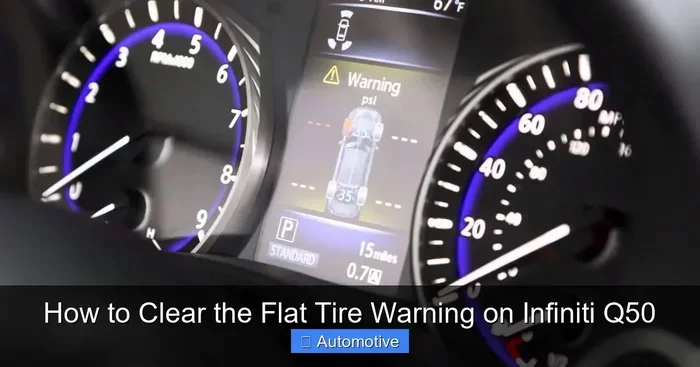
Before you jump into fixes, it helps to understand what the warning actually means. The flat tire indicator on the Infiniti Q50 looks like a horseshoe with an exclamation mark in the center. When this light comes on, your TPMS has detected low pressure in at least one tire.
What Triggers the Flat Tire Warning?
Several things can cause the tire pressure warning to activate on your Q50. Here are the most common triggers:
- Low tire pressure: A slow leak or puncture reduces air in the tire.
- Temperature changes: Cold weather can drop tire pressure and trigger the light.
- Faulty TPMS sensor: A damaged or dying sensor sends false readings.
- Recent tire change: After rotating or replacing tires, the system may need a reset.
- Spare tire issues: If you are driving on a spare, the pressure is usually much lower.
Knowing the cause helps you choose the right fix. Sometimes a simple inflation job is all you need. Other times, you may need to reset the system or replace a sensor.
How to Reset the Tire Pressure Light on an Infiniti Q50
Resetting the TPMS on your Q50 is straightforward. Follow these steps carefully to clear the flat tire warning.
Method 1: Manual Reset via the Steering Wheel
Most Infiniti Q50 models have a built-in reset function. Here is how to use it:
- Start the engine and let the car idle for a few minutes.
- Locate the TPMS reset button. It is usually beneath the steering column on the left side.
- Press and hold the button until the tire pressure light on the dashboard blinks three times.
- Release the button and turn the ignition off.
- Restart the engine and check if the warning light has cleared.
If the light stays on after this, the pressure may still be too low in one or more tires. Double-check each tire before trying again.
Method 2: Reset Through the Infiniti Information System
Newer Infiniti Q50 models allow you to reset the TPMS through the touchscreen display. Here is how:
- Navigate to the vehicle settings menu on the dashboard screen.
- Find the maintenance or vehicle health section.
- Select the tire pressure monitoring system option.
- Choose “Initialize TPMS” or “Reset Tire Pressure.”
- Confirm the reset and wait for the system to recalibrate.
This method works well when the manual button does not respond. Always refer to your owner’s manual for model-specific instructions.
Checking Your Tire Pressure Properly
Before you reset anything, make sure your tires are actually at the correct pressure. Driving on underinflated tires is dangerous and can damage your wheels.
What Is the Recommended Tire Pressure for the Infiniti Q50?
The recommended tire pressure for most Infiniti Q50 models is between 30 and 35 PSI. You can find the exact number on the tire information placard, which is located on the driver’s side door jamb. Never rely on the numbers printed on the tire sidewall. Those numbers represent the maximum pressure the tire can handle, not the recommended pressure for your vehicle.
Step-by-Step Tire Pressure Check
- Check tire pressure when the tires are cold. Driving heats up the air inside and gives false readings.
- Remove the valve cap from each tire.
- Press a tire pressure gauge firmly onto the valve stem.
- Read the PSI number and compare it to the recommended pressure.
- Add air if the pressure is low. Use a gas station air pump or a portable compressor.
- Replace the valve cap after checking each tire.
Do not forget to check your spare tire. A flat spare can also trigger the warning light on your dashboard.
When to Replace a TPMS Sensor
Sometimes the flat tire warning stays on because a sensor has failed. TPMS sensors have small batteries that typically last between five and ten years. When the battery dies, the sensor cannot send accurate readings to your car’s computer.
Signs Your TPMS Sensor Needs Replacement
- The tire pressure light flashes for one to two minutes when you start the car.
- The warning light comes on even though all tires are properly inflated.
- You recently rotated or replaced tires and the light appeared afterward.
- You get a TPMS error code when using a diagnostic scanner.
If you notice any of these signs, you should have the sensor inspected. Replacing a TPMS sensor is a relatively affordable repair. A certified mechanic or tire shop can swap out the sensor in about 15 to 30 minutes per wheel. If you are handy with tools, you can also do it yourself with the right equipment.
For more information on reading diagnostic codes from your vehicle, check out our guide on how to read ABS codes without a scanner. The process is similar and can help you identify other warning lights on your Q50.
Common Mistakes That Keep the Warning Light On
Many Infiniti Q50 owners struggle with a flat tire warning that will not go away. Often, simple mistakes cause the problem to persist. Here are the most common errors people make:
- Not checking all four tires: The TPMS monitors each tire individually. A single low tire is enough to keep the light on.
- Resetting before inflating: Always inflate your tires first, then reset the system. Resetting with low pressure will not work.
- Ignoring temperature effects: Cold mornings can lower tire pressure temporarily. If the light comes on in winter, check your pressure before assuming there is a leak.
- Using the wrong PSI: Overinflating your tires can also trigger the warning. Always stick to the manufacturer’s recommended pressure.
- Forgetting the spare tire: Many people check the four main tires but overlook the spare, which can also cause the light to stay on.
Avoiding these mistakes saves time and frustration. It also keeps your tires wearing evenly and your drives safe.
Preventing the Flat Tire Warning From Returning
Once you have cleared the warning, you want to keep it off. Regular tire maintenance is the best way to do this. Here are some easy habits that make a big difference:
- Check tire pressure monthly: A quick check once a month catches slow leaks early.
- Inspect valve stems: Damaged or cracked valve stems can cause air to leak out slowly.
- Rotate your tires regularly: Follow the maintenance schedule in your Q50 owner’s manual for tire rotation intervals.
- Keep a portable compressor in your trunk: This lets you top off tire pressure anywhere, anytime.
- Watch for temperature swings: During seasonal changes, recheck your tire pressure to account for air expansion and contraction.
Taking care of your tires also improves fuel economy and extends the life of your tires. It is a win-win situation for your wallet and your safety.
Is It Safe to Drive with the Flat Tire Warning On?
This is one of the most common questions drivers ask. The short answer is: it depends. If the warning comes on suddenly while driving, pull over safely and check your tire pressure immediately. Driving on a severely underinflated tire can cause blowouts and loss of vehicle control.
If the light is steady and you know the tire pressure is fine, you can usually drive a short distance to a service station or tire shop. However, do not ignore the warning for extended periods. The TPMS exists to protect you, and disregarding it can lead to costly tire damage or even an accident.
For tips on driving safely when your car shows warning lights, you might also find our article on how to drive a car for beginners helpful. It covers essential dashboard warning lights and what each one means.
When to Visit a Professional
Most flat tire warnings can be resolved at home with a tire gauge and an air pump. However, there are times when professional help is the right call:
- The TPMS light flashes continuously and does not clear after a reset.
- You cannot find the source of a slow leak despite multiple checks.
- A TPMS sensor has been damaged, perhaps from a road hazard or pothole.
- You have replaced tires or sensors and the system still will not initialize.
In these situations, a qualified technician has the tools and expertise to diagnose the issue properly. They can also perform a full TPMS system scan to ensure every sensor is working correctly.
For Infiniti Q50 owners worried about repair costs, it may be worth checking whether your vehicle warranty or insurance covers TPMS-related repairs. You can read more about whether Infiniti Q50 models are expensive to insure in our detailed review. Understanding your coverage can save you money on unexpected repairs.
Final Thoughts
Removing the flat tire warning on your Infiniti Q50 is easier than most people think. Start by checking your tire pressure and inflating any low tires to the recommended PSI. Then use the manual or touchscreen reset method to clear the warning light. If the light persists, inspect your TPMS sensors for battery failure or damage. With regular maintenance and a little attention, you can keep your Q50 running smoothly and your dashboard warning-free.
The key is to act quickly when the warning appears. Ignoring it can lead to unsafe driving conditions and expensive tire damage. Follow the steps in this guide, and you will handle the flat tire warning like a pro.
Frequently Asked Questions
How do I reset the tire pressure light on my Infiniti Q50?
You can reset the tire pressure light by pressing and holding the TPMS reset button located beneath the steering column. Hold it until the dashboard light blinks three times, then turn the ignition off and restart the engine. If your Q50 has a touchscreen, you can also reset the TPMS through the vehicle settings menu.
Why is my flat tire warning still on after I inflated my tires?
The TPMS may need a manual reset after you inflate the tires. Make sure all tires are at the correct PSI before resetting. If the light still does not go off, a TPMS sensor battery may be dead or a sensor could be damaged and need replacement.
Can I drive my Infiniti Q50 with the flat tire warning light on?
If the light is steady and you have confirmed your tire pressure is correct, you can drive carefully to a nearby service station. However, if the light comes on suddenly or flashes, pull over safely and check your tires immediately. Driving on a severely underinflated tire is dangerous.
How much does it cost to replace a TPMS sensor on an Infiniti Q50?
TPMS sensor replacement typically costs between $50 and $100 per sensor, including labor. The exact price depends on your location and the type of sensor your Q50 uses. Some aftermarket sensors are more affordable than OEM Infiniti parts.
How often should I check my tire pressure on the Infiniti Q50?
You should check your tire pressure at least once a month. Temperature changes, especially in cold weather, can cause pressure to drop. Regular checks help prevent the flat tire warning from coming on unexpectedly.
Does the Infiniti Q50 TPMS reset automatically after fixing a tire?
In most cases, the TPMS does not reset automatically. You need to manually initialize the system using the reset button or the vehicle settings menu. Always inflate the tires to the correct pressure before attempting a reset.