How to Reset MPG on Your Subaru Outback Step by Step
Resetting the MPG on your Subaru Outback is simple and takes just a few minutes. Whether you want to clear old trip data or track fresh fuel economy numbers, this guide walks you through every step. You will learn how to access the trip computer, reset the average MPG, and keep your readings accurate.
If you own a Subaru Outback, you know how important it is to keep track of your fuel economy. Your car’s MPG reading tells you how far you go on each gallon of gas. Over time, that number can get stale or inaccurate. That is why learning how to reset MPG on Subaru Outback models is such a handy skill.
Maybe you just filled up the tank and want a fresh start. Or perhaps you noticed your fuel economy number looks off. Whatever the reason, resetting your MPG is quick and easy. You do not need a mechanic or any fancy tools. In this guide, we will walk you through every step in plain language.
We will cover different methods based on your model year. We will also share tips to improve your fuel economy over time. By the end, you will feel confident resetting your MPG and keeping your data clean. Let us get started.
Key Takeaways
- Easy Process: Resetting MPG on a Subaru Outback only requires a few button presses on the dashboard or steering wheel controls.
- Two Methods: You can reset the trip meter or the average fuel economy reading depending on your model year.
- Regular Resets Help: Clearing old data gives you a truer picture of your current driving habits and fuel costs.
- Model Differences Matter: Older and newer Outback models may have slightly different reset procedures.
- Tracking MPG Saves Money: Monitoring your fuel economy helps you spot issues early and save on gas.
- No Tools Needed: You do not need any special equipment or mechanic visits to reset your MPG.
📑 Table of Contents
- Why You Should Reset Your MPG on the Subaru Outback
- How to Reset MPG on Subaru Outback: Step by Step
- Understanding Your Subaru Outback MPG Readings
- Tips to Improve Your Subaru Outback Fuel Economy
- Common Mistakes When Resetting MPG
- How MPG Compares Across Subaru Models
- When to See a Mechanic About Low MPG
- Final Thoughts on Resetting MPG on Your Subaru Outback
Why You Should Reset Your MPG on the Subaru Outback
Your Subaru Outback has a trip computer that tracks fuel economy. This system calculates your average miles per gallon based on driving data. Over weeks or months, old data can skew the numbers. Resetting clears the history and gives you a fresh baseline.
Here are some reasons you might want to reset your MPG:
- After a fill-up: Starting fresh after refueling gives a more accurate reading.
- After maintenance: If you changed your air filter or spark plugs, a reset helps track any improvements.
- Seasonal changes: Winter and summer driving affect fuel economy differently. A reset helps compare fairly.
- Tracking new habits: If you changed your driving style, a reset lets you measure the impact.
- Selling or sharing the car: A fresh start is fair for the next driver.
Keeping your MPG data current helps you make better decisions about fueling and driving. It also helps you spot problems early. For example, if your MPG drops suddenly, it could signal an issue with your engine or fuel system. Resetting regularly keeps your data honest and useful.
How to Reset MPG on Subaru Outback: Step by Step
The process to reset your MPG depends on your Subaru Outback model year. Newer models have more digital displays, while older ones use simpler controls. Below we cover the most common methods.
Method 1: Using the Steering Wheel Controls
Most Subaru Outback models from 2010 and newer use steering wheel buttons to control the display. Here is how to reset your average MPG:
- Press the INFO button on the left side of the steering wheel.
- Use the up or down arrows to scroll to the Average Fuel Economy screen.
- Press and hold the RESET button on the right side of the steering wheel.
- Hold for about two seconds until the number resets to zero or dashes.
- Release the button. Your MPG reading is now cleared.
This method works for most 2010 to 2024 Subaru Outback models. The reset only clears the average MPG. It does not affect other trip data like distance or elapsed time.
Method 2: Using the Dashboard Button
Some older Outback models have a reset button on the dashboard near the instrument cluster. If your car has this setup, follow these steps:
- Turn the ignition to the ON position (do not start the engine).
- Locate the trip reset button on the dashboard or steering column.
- Press and hold the button for three to five seconds.
- The display should flash and then reset to zero.
- Start the engine and drive to see fresh MPG readings.
If you are not sure where the button is, check your owner’s manual. It will have a diagram showing the exact location for your model year.
Method 3: Through the Multi-Function Display
Higher trim levels of the Subaru Outback come with a color multi-function display. These screens offer more options. Here is how to reset MPG on these models:
- Press the MENU button on the steering wheel.
- Navigate to Vehicle Info or Trip Computer using the arrow keys.
- Select Average MPG from the list of options.
- Choose Reset and confirm your selection.
- The display will show the reset is complete.
This method gives you the most control over what data you clear. You can reset just the average MPG or clear all trip data at once. Be careful not to accidentally delete other trip information you want to keep.
Understanding Your Subaru Outback MPG Readings
After you reset your MPG, it helps to understand what the numbers mean. Your Outback shows different types of fuel economy data. Each one serves a different purpose.
Instant Fuel Economy
The instant MPG reading shows your fuel economy at this very moment. It changes constantly based on your speed, acceleration, and road conditions. If you are cruising on the highway, the number will be higher. If you are stuck in stop-and-go traffic, it will drop.
Think of instant MPG as a snapshot. It is useful for seeing how your driving habits affect fuel use right now. For example, if you see the number drop when you press the gas hard, that tells you something about your style.
Average MPG
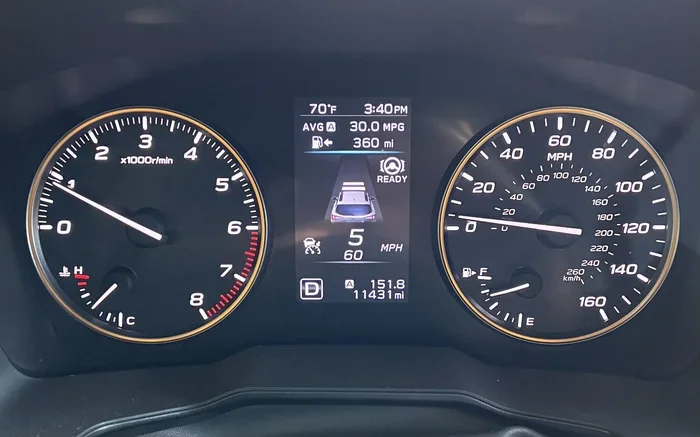
The average MPG is the number that resets. It calculates your fuel economy over the current trip. This is the number you want to track over time. It gives you a bigger picture of how efficiently you are driving.
A good average MPG for a Subaru Outback ranges from about 26 to 32 MPG depending on the engine and driving conditions. If your number is consistently below that range, it may be worth investigating.
Trip Distance and Fuel Used
Your Outback also tracks trip distance and fuel used since the last reset. These numbers help you calculate your own MPG if you want to double-check the car’s computer. Simply divide the miles driven by the gallons used.
Tips to Improve Your Subaru Outback Fuel Economy
Resetting your MPG is only half the battle. Once you have a fresh start, you want to see those numbers go up. Here are some proven tips to boost your fuel economy.
Drive Smooth and Steady
Hard acceleration and sudden braking waste gas. Try to accelerate gently and coast to stops when safe. Smooth driving can improve your MPG by 10 to 15 percent. It also makes for a more comfortable ride.
Keep Your Tires Properly Inflated
Underinflated tires create more rolling resistance. That means your engine works harder and uses more fuel. Check your tire pressure at least once a month. The recommended pressure for a Subaru Outback is usually listed on the driver’s side door jamb.
Reduce Extra Weight
Carrying heavy items in your trunk or roof rack makes your car work harder. Remove anything you do not need for your trip. Even an extra 100 pounds can lower your MPG over time.
Use Cruise Control on Highways
Maintaining a steady speed on the highway helps your engine run efficiently. Cruise control keeps your speed consistent and can improve your fuel economy. Just be sure to stay alert and ready to take control when needed.
Keep Up with Maintenance
Regular oil changes, air filter replacements, and spark plug checks keep your engine running smoothly. A well-maintained engine uses less fuel. If you have not had service in a while, resetting your MPG after maintenance is a great way to measure the difference.
For more tips on caring for your vehicle, check out our guide on how to care for your auto tint to keep your car looking and running its best.
Common Mistakes When Resetting MPG
Even though resetting MPG is simple, people make mistakes that cause confusion. Here are some to avoid.
Resetting Too Often
If you reset your MPG every time you fill up, you never build enough data to see trends. A good rule is to reset after every 500 miles or so. This gives you enough driving to get a meaningful average.
Confusing Trip A and Trip B
Subaru Outbacks often have two trip meters. Trip A and Trip B track different things. Make sure you are resetting the right one. Check which trip is showing your average MPG before you press reset.
Not Resetting After Fuel System Work
If you have had work done on your fuel system, old data may not reflect your current performance. Always reset after repairs or modifications. This ensures your readings are based on your car’s current state.
Ignoring the Reset Confirmation
Some Outback models show a confirmation screen after you reset. If you do not see the reset take effect, try holding the button longer. A quick tap may not be enough for some models.
Avoiding these mistakes helps you get accurate and useful MPG data every time. Clean data leads to better decisions about your driving and fueling habits.
How MPG Compares Across Subaru Models
Curious how your Outback’s fuel economy stacks up against other Subarus? Here is a quick look at MPG across popular Subaru models. Keep in mind that how many MPG a Ford F150 gets is a different comparison since trucks generally have lower MPG than sedans or SUVs.
The Subaru Outback typically delivers better fuel economy than larger vehicles. Its flat-four or flat-six engines are designed for efficiency. When you compare your Outback’s MPG to other models, you can see where it stands in the Subaru lineup.
For a deeper look at fuel economy across vehicles, you might also want to check how much gas is left when the light comes on in your tank. This helps you plan fill-ups and avoid running low, which can hurt your MPG readings.
Tracking your MPG over time also helps you understand how your driving compares to averages. If you notice your numbers are consistently lower than expected, it may be time for a tune-up or a check of your driving habits.
When to See a Mechanic About Low MPG
Sometimes a low MPG reading is not about driving habits. It can signal a mechanical problem. Here are signs you should visit a mechanic:
- Sudden MPG drop: If your fuel economy falls sharply after a reset, something may be wrong.
- Check engine light: A lit check engine light combined with low MPG needs attention fast.
- Unusual smells or sounds: Burning smells or odd noises alongside low MPG could indicate engine trouble.
- Frequent fill-ups: If you are at the gas pump more often than usual, get your car checked.
- Poor acceleration: Sluggish performance along with low MPG suggests fuel or ignition issues.
Do not ignore these signs. Early diagnosis can save you money and prevent bigger problems down the road. A mechanic can run diagnostics and pinpoint the issue quickly.
For more vehicle care tips and guides, visit our site for helpful articles like how to check if a vehicle is stolen for free and how to open an exterior bonnet. These guides help you stay on top of your car’s needs.
Final Thoughts on Resetting MPG on Your Subaru Outback
Resetting your MPG on a Subaru Outback is one of the easiest ways to keep your fuel data accurate and useful. Whether you use the steering wheel buttons, a dashboard reset, or the multi-function display, the process takes only a minute or two.
Regular resets give you a clear picture of your driving habits and fuel costs. Combined with smart driving tips, you can improve your MPG and save money at the pump. Keep your data fresh, stay mindful of your driving style, and your Outback will reward you with better fuel economy.
Remember to reset after maintenance, fill-ups, or seasonal changes. Track your numbers over time. And do not hesitate to see a mechanic if your MPG drops without explanation. Your Subaru Outback is a capable and efficient vehicle. With these simple steps, you can get the most out of it.
For more information about your Subaru Outback, check out our article on whether you can leave your Subaru Outback running and lock it for useful tips on vehicle care and convenience.
Frequently Asked Questions
How do I reset the average MPG on a Subaru Outback?
Press the INFO button on the steering wheel, scroll to Average Fuel Economy, and hold the RESET button for two seconds. The number will clear and start fresh. This works for most models from 2010 onward.
Can I reset just the average MPG without clearing other trip data?
Yes. On most Subaru Outback models, you can reset only the average MPG screen. Use the steering wheel controls to navigate to just that screen before pressing reset. Other trip meters and data stay intact.
How often should I reset my Subaru Outback MPG?
A good rule is to reset every 500 miles or after a major fill-up. This gives you enough driving data for a meaningful average. Resetting too often makes it hard to track trends.
Why is my Subaru Outback MPG reading inaccurate?
Old data, recent maintenance, or changes in driving habits can make MPG readings seem off. Resetting after these events gives you a more accurate baseline. If the problem continues, check for mechanical issues.
Does resetting MPG affect my odometer or trip distance?
No. Resetting the MPG only clears the fuel economy average. Your odometer and trip distance readings stay the same unless you reset those separately.
What is a good MPG for a Subaru Outback?
A good average MPG for a Subaru Outback is between 26 and 32 MPG depending on the engine type and driving conditions. Highway driving usually yields higher numbers than city driving.