South Dakota Window Tint Law Everything You Need to Know
South Dakota has clear window tint laws that set limits on how dark and reflective your car windows can be. The legal tint limits are based on visible light transmission, or VLT, with front side windows requiring at least 35 percent VLT. Understanding these South Dakota tint regulations helps you avoid fines, stay safe, and choose the right vehicle window film for your car.
If you live in or drive through South Dakota, you have probably thought about tinting your windows. Maybe you want to beat the brutal summer heat. Maybe you like the sleek look of tinted windows on your car. Or maybe you just want more privacy while you drive around Sioux Falls or Rapid City.
Whatever your reason, there is one thing you need to know before you tint your windows: South Dakota has specific window tint laws. These rules tell you exactly how dark your tint can be, what kind of tint is allowed, and what happens if you break the rules.
Understanding South Dakota tint regulations is not just smart. It can save you from a costly tint violation and a window tint ticket. In this guide, we will walk you through everything you need to know about car window tinting in South Dakota. We will cover legal limits, reflectivity rules, medical exemptions, penalties, and practical tips. By the end, you will feel confident about choosing the right vehicle window film for your car.
Key Takeaways
- Windshield tint is limited to the top 5 inches: South Dakota allows a non-reflective strip on the top of the windshield only.
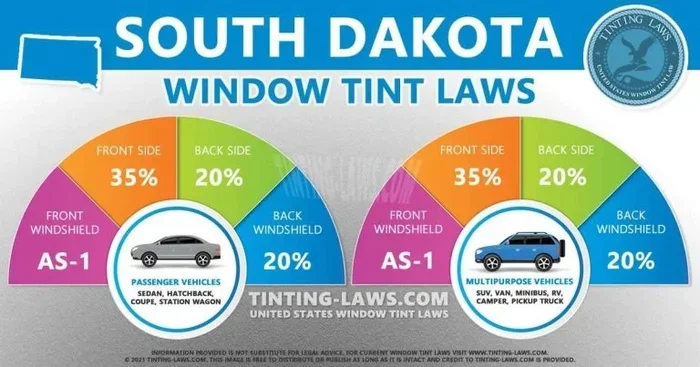
- Front side windows need 35% or higher VLT: Any tint darker than 35 percent visible light transmission is illegal on front windows.
- Rear windows can be any darkness: As long as your vehicle has dual side mirrors, you can tint rear windows as dark as you want.
- Reflectivity must stay under 35%: All window tint on all windows must not exceed 35 percent reflectivity.
- Medical exemptions are available: People with qualifying conditions can apply for a permit to use darker tint than the standard limits.
- Violations carry fines and possible court dates: Breaking tint laws can result in penalties and the requirement to remove illegal tint.
- Keep your documentation handy: Always carry your tint certificate and any exemption permit in your vehicle.
📑 Table of Contents
What Is South Dakota’s Window Tint Law?
South Dakota’s window tint law sets the rules for how dark or reflective your car windows can be. The law is based on visible light transmission, also known as VLT. VLT is a simple measurement. It tells you how much light passes through your window and enters the car. The higher the VLT, the lighter the tint. The lower the VLT, the darker the tint. A window with 70 percent VLT lets in most of the light. A window with 5 percent VLT is almost completely black.
The state of South Dakota regulates tint on several parts of your vehicle. These include the windshield, the front side windows, the rear side windows, and the rear window. Each window has its own legal limit. This is why it is so important to know the rules before you buy aftermarket tint or vehicle window film. Many people assume all windows follow the same rule. That is not the case in South Dakota.
Why Tint Laws Exist
You might wonder why states even have tint laws. The reasons are very practical. Dark tints can block a driver’s view, especially at night or during storms. They can also make it harder for law enforcement to see inside your vehicle during a traffic stop. Officers need to be able to see your hands and your passengers for their own safety. Tint laws aim to balance personal freedom with public safety. South Dakota’s rules are designed to keep roads safe for everyone on the highway.
How Tint Darkness Is Measured
Tint darkness is measured using the VLT percentage. A VLT of 70 percent means 70 percent of light passes through the glass. A VLT of 35 percent means only 35 percent of light gets through. South Dakota uses these percentages to set its legal tint limits. When you buy tint, the installer should tell you the VLT rating of the film they are using. Always ask for this number before the installation begins. It will help you stay on the right side of the law and avoid any surprises later.
It is also worth noting that factory tint comes with your vehicle when you buy it new. Factory tint is usually lighter than aftermarket tint. It typically has a VLT of around 70 to 80 percent. If you are buying a used car that already has tint, you should check the VLT before adding more tint. Layering aftermarket tint over factory tint can easily push you below the legal limit.
Legal Tint Limits for Each Window
This is the most important part of the South Dakota window tint law. Each window on your vehicle has a different rule. Let us break it down window by window so there is no confusion. Knowing these limits will help you choose the right film and avoid any legal trouble.
Windshield Tint Rules
For the windshield, South Dakota allows a non-reflective tint. However, this tint can only be applied to the top five inches of the glass. This strip is often called the sunshade band or the visor strip. Below that five-inch line, the windshield must remain completely clear. You cannot apply dark tint to the main area of your windshield. This rule helps drivers maintain good visibility, especially during sunrise and sunset when glare is common on South Dakota roads.
The five-inch strip is enough to reduce glare from the sun without blocking your view of the road. Many drivers find this strip very helpful during long drives on rural highways. Just make sure your installer applies the tint correctly and does not go below the five-inch mark. If they do, you could end up with a tint violation even if the rest of your windows are legal.
Front Side Window Requirements
The front side windows must allow more than 35 percent of light to pass through. This means your front side windows need a VLT of at least 35 percent or higher. If you apply a tint that is darker than 35 percent VLT, you are breaking the law. This rule applies to both the driver’s side and the passenger’s side front windows. The purpose is to ensure the driver has clear sightlines in all directions, including checking mirrors and blind spots.
Some people try to get around this rule by using very light tints that still look dark from the outside. This does not work. The law measures VLT from the inside out. Even if a tint looks light, it may not meet the 35 percent requirement. Always ask your installer for a VLT certificate. This document proves your tint is within the legal range.
Rear Side and Rear Window Rules
Here is where things get more relaxed. South Dakota allows any level of tint darkness on the rear side windows and the rear window. You can go as dark as you want on these windows. There is no minimum VLT requirement for the back of your vehicle. This gives you a lot of freedom if you want a very dark look on your rear windows.
However, there is one important condition. If your rear window is tinted, your vehicle must have dual side mirrors. The mirrors help compensate for the reduced visibility through the rear window. This is a practical rule that keeps drivers safe while still allowing personal choice. If your vehicle already has a rearview mirror and side mirrors, you are in good shape. Just make sure the side mirrors are present on both sides.
Tint Reflectivity and Color Restrictions
It is not just about how dark your tint is. South Dakota also has rules about how reflective your tint can be. And there are rules about which colors are allowed. Let us look at both of these factors in detail.
Reflectivity Limits
South Dakota requires that tint on all windows must not be more than 35 percent reflective. This means your tint reflectivity should stay at or below 35 percent. Reflective tints look like mirrors from the outside. They can blind other drivers, especially at night when your headlights bounce off the tint. By capping reflectivity at 35 percent, the state helps prevent glare and reduces the risk of accidents.
When you visit a tint shop near you, ask them to confirm the reflectivity level of the film they use. Most quality installers know this information and can provide it on request. If you are buying tint online, check the product specifications before you order. Look for films that are labeled as non-reflective or low-reflectivity. These are safe choices that will keep you compliant with South Dakota law.
Prohibited Tint Colors
South Dakota does not allow certain tint colors. Red, amber, and blue tints are not permitted on vehicle windows. These colors can interfere with how other drivers see your vehicle. They may also confuse law enforcement who need to identify your vehicle clearly during stops. Red and blue tints especially can be mistaken for emergency vehicle lighting, which creates a safety hazard.
Stick with neutral shades like gray, charcoal, bronze, or green. These colors are widely available and fully legal in South Dakota. They also look great on most vehicles and do not distort the color of light entering your car. If you are unsure about a tint color, ask your installer before they apply it. It is much easier to check before the fact than to deal with a citation later.
Medical Exemptions and Special Permits
What if you or a family member has a medical condition that requires more protection from sunlight? South Dakota does offer a medical exemption for window tint. This allows you to use darker tint than the standard legal limits. But there are rules you must follow, and the process is not automatic.
Who Qualifies for a Medical Exemption
People with certain medical conditions may qualify for a tint exemption. Conditions like lupus, eczema, psoriasis, or photosensitivity can make sunlight harmful to the skin or eyes. If you have a condition that makes you sensitive to UV light or sunlight, you may be eligible for an exemption. Your doctor will need to provide documentation that explains your condition and why darker tint is medically necessary.
The exemption is not just for skin conditions. Some eye conditions also qualify. If you have a disorder that makes your eyes very sensitive to light, you may be able to get an exemption. The key requirement is that a licensed physician must provide written proof of your condition. A general statement is not enough. The documentation must be specific and detailed.
How to Apply for an Exemption
To get a medical exemption, you need to submit paperwork to the South Dakota Department of Public Safety. Your doctor must provide the medical documentation. The application will ask for details about your condition and the type of tint you plan to use. Once approved, you will receive a permit. You must keep this permit in your vehicle at all times.
You may need to show this permit to an officer during a traffic stop. If you are pulled over and your tint is darker than the legal limit, having your exemption permit can save you from a ticket. The exemption may also have specific requirements about the type of tint you can use. Always check with the Department of Public Safety for the latest rules and application forms. Rules can change, so it is smart to verify before you apply.
Possible Penalties for Tint Violations
Breaking South Dakota tint regulations can cost you money and time. It is not worth the risk. Here is what can happen if your tint does not meet the legal limits. Understanding the penalties can motivate you to stay compliant from the start.
Fines and Court Costs
A tint violation in South Dakota can result in a fine. The fine amount can vary depending on the situation and whether it is a first offense or a repeat violation. In some cases, you may be asked to remove the illegal tint. If you fail to do so, the fine can increase. Court costs can also add up quickly. The total cost of a window tint ticket can be more than you expect.
Some people think a tint ticket is a minor thing. It is not. Fines can range from a few hundred dollars to more, depending on the circumstances. And if you contest the ticket in court, you will also need to pay court costs and possibly attorney fees. All of this adds up. Staying within the legal limits is the easiest way to avoid all of these expenses.
What Happens During a Traffic Stop
If an officer pulls you over and finds your tint is too dark, you may receive a citation. You will likely be given a deadline to fix the problem. If you do not fix it, you may have to go to court. In some cases, your vehicle may not pass inspection. This can be a real problem if you need your car for work or daily errands.
Officers often use a tint meter during traffic stops. This device measures the VLT of your windows on the spot. If your tint is below the legal limit, you will be cited. Having your VLT certificate or exemption permit ready can help smooth things over. But even with documentation, if your tint is clearly illegal, you may still face a citation. The best defense is to make sure your tint is legal from the beginning.
Tips for Choosing the Right Tint
Now that you know the rules, let us talk about how to choose the right tint for your car. These practical tips will help you make a smart decision and stay compliant with South Dakota traffic laws.
Pick a Certified Installer
Not all tint shops are the same. Choose an installer who is certified and experienced. A good installer will know the South Dakota window tint law inside and out. They will help you pick a film that meets the legal VLT requirements. Ask friends or family for recommendations. Read online reviews before you commit to a shop. A quality installation also lasts longer and looks better over time.
When you visit a shop, ask questions. Ask about the VLT of the film they offer. Ask about the reflectivity level. Ask if they provide a warranty on their work. A reputable installer will be happy to answer all of your questions. They will also provide you with a certificate showing the VLT of your installed tint. This certificate is your proof of compliance if you ever need it.
Check Your Local County Rules
While South Dakota sets the state-level rules, some counties may have additional regulations. Always check with your local authorities before tinting your windows. What is legal in one county may have extra requirements in another. A quick phone call to your county courthouse or sheriff’s office can save you a lot of trouble. Do not assume the state rules are the only rules that apply.
Local rules can sometimes be stricter than state rules. For example, some counties may have additional restrictions on reflectivity or tint color. Staying informed about local regulations shows that you take South Dakota traffic laws seriously. It also helps you avoid any unexpected surprises after you have already paid for your tint installation.
Keep Your Receipts and Documentation
After you get your windows tinted, keep all receipts and documentation. Your installer should give you a certificate that shows the VLT of your tint. Keep this certificate in your glove box. If you ever get stopped by law enforcement, you can show them proof that your tint is legal. This simple habit can save you time and money. It also shows that you take the rules seriously.
You should also keep your medical exemption permit in the vehicle if you have one. Store these documents somewhere safe and easy to access. Many people keep them in the glove box right next to the registration and insurance card. That way, if you are ever pulled over, you can quickly show the officer what they need to see.
Consider Factory Tint vs. Aftermarket Tint
Some vehicles come with factory tint from the manufacturer. Factory tint is usually lighter than aftermarket tint. It typically has a VLT of around 70 to 80 percent. If you are buying a used car that already has tint, check the VLT of the existing tint before you add more. Layering aftermarket tint over factory tint can push you below the legal limit.
Always measure the combined VLT of factory and aftermarket tint together. If you are unsure, have a tint shop measure it for you before they apply any additional film. This simple step can prevent you from accidentally breaking the law. It is a small effort that can save you a lot of headaches down the road.
Understanding South Dakota window tint law does not have to be complicated. The rules are clear and straightforward. By following the legal limits for each window, choosing the right reflectivity, and keeping your documentation handy, you can enjoy tinted windows without any worries. Whether you are dealing with the harsh summer sun or just want a sleek look for your vehicle, staying informed is your best move. Know the rules, choose wisely, and drive safely. Your tinted windows will look great, and you will have peace of mind every time you hit the road.
Frequently Asked Questions
What is the legal VLT for front side windows in South Dakota?
The legal VLT for front side windows in South Dakota must be more than 35 percent. This means your front side windows need to let in at least 35 percent of visible light. Any tint darker than this is considered a violation of South Dakota tint regulations.
Can I tint my rear windows as dark as I want in South Dakota?
Yes, South Dakota allows any level of tint darkness on rear side windows and the rear window. However, if your rear window is tinted, your vehicle must have dual side mirrors. This rule helps ensure you still have adequate visibility while driving.
Do I need a medical exemption for dark tint on my front windows?
If you want to apply tint darker than 35 percent VLT on your front side windows, you will need a medical exemption. You must submit documentation from a licensed physician to the South Dakota Department of Public Safety. Once approved, you will receive a permit to carry in your vehicle.
What happens if I get caught with illegal tint in South Dakota?
If you are caught with illegal tint, you may receive a citation and a fine. You could also be required to remove the illegal tint. Repeat violations may result in higher fines and court costs. It is much cheaper and easier to follow the legal limits from the start.
Is reflective tint allowed on car windows in South Dakota?
South Dakota limits tint reflectivity to no more than 35 percent on all windows. Reflective tints that exceed this limit are not allowed. Always check the reflectivity rating of your tint film before installation to ensure it meets state requirements.
Can I apply tint to my entire windshield in South Dakota?
No, South Dakota only allows a non-reflective tint on the top five inches of the windshield. The rest of the windshield must remain clear. Applying tint below the five-inch line is a violation of state tint laws.
=== CONCLUSION ===
South Dakota window tint law is designed to keep drivers safe while still allowing personal choice. By following the legal VLT limits, staying within the reflectivity cap, and choosing approved tint colors, you can enjoy the benefits of tinted windows without any legal trouble. Medical exemptions give you flexibility if you have qualifying health conditions. And keeping your documentation handy ensures you are always prepared if you are stopped by law enforcement. Take the time to understand the rules, work with a certified installer, and you will be on the right side of the law. Safe driving and enjoy your ride.