Top Symptoms of a Bad MAP Sensor You Should Never Ignore
A failing MAP sensor can cause rough idle, poor acceleration, and terrible fuel economy. Ignoring these symptoms of a bad MAP sensor may lead to expensive engine damage over time. This guide covers every warning sign, diagnostic method, and repair option you need to know.
If your car feels sluggish, idles rough, or guzzles gas for no obvious reason, a bad MAP sensor could be the culprit. The manifold absolute pressure sensor is a small but mighty component that plays a huge role in how your engine runs. When it fails, it sends wrong data to the engine control unit, and everything downstream suffers.
In this article, we will walk you through every symptom of a bad MAP sensor you should never ignore. We will also cover how mechanics diagnose the problem, whether it is safe to keep driving, and what the repair typically costs. By the end, you will know exactly what to look for and what to do next.
Key Takeaways
- Rough idle and stalling: A bad MAP sensor often causes your engine to idle unevenly or stall unexpectedly.
- Poor fuel economy: Incorrect air-pressure readings force the ECU to inject too much or too little fuel.
- Check engine light: Most MAP sensor failures trigger diagnostic trouble codes that a scan tool can read.
- Weak acceleration: You may feel hesitation or lag when pressing the gas pedal.
- Emissions test failure: A faulty sensor disrupts the air-fuel mixture, raising harmful exhaust output.
- Affordable fix: Replacing a MAP sensor typically costs between $50 and $250 for parts and labor.
- DIY-friendly: Many car owners can replace the sensor themselves with basic tools.
📑 Table of Contents
- What Does a MAP Sensor Do?
- Top Symptoms of a Bad MAP Sensor
- Why a Faulty MAP Sensor Is Dangerous
- Common Causes of MAP Sensor Failure
- How Mechanics Diagnose a Bad MAP Sensor
- Can You Drive With a Bad MAP Sensor?
- How to Replace a MAP Sensor
- Preventing MAP Sensor Problems
- MAP Sensor vs. MAF Sensor: What Is the Difference?
- When to Seek Professional Help
- Final Thoughts
What Does a MAP Sensor Do?
The MAP sensor measures the air pressure inside the intake manifold. Your engine control unit uses this data to calculate how much fuel to inject into each cylinder. Think of it as the brain’s air-pressure gauge. Without accurate readings, the fuel mixture goes wrong, and engine performance drops fast.
On naturally aspirated engines, the sensor reads atmospheric pressure changes as you accelerate. On turbocharged or supercharged engines, it also measures boost pressure. Either way, the MAP sensor keeps the air-fuel ratio balanced. When it malfunctions, the entire combustion process becomes a guessing game.
Top Symptoms of a Bad MAP Sensor
Here are the most common signs that your manifold absolute pressure sensor is failing. Watch for any of these red flags.
1. Check Engine Light Comes On
The check engine light is often the first indicator. When the MAP sensor sends erratic or out-of-range signals, the powertrain control module logs a diagnostic trouble code. Common codes include P0105, P0106, P0107, and P0108. A simple OBD2 scanner will reveal these codes in seconds. However, a check engine light can also point to other issues, so further diagnosis is important.
2. Rough or Unstable Idle
A rough idle is one of the most noticeable symptoms of a bad MAP sensor. The engine may shake, vibrate, or sound uneven when stopped at a traffic light. This happens because the ECU receives incorrect pressure data and injects the wrong amount of fuel. The result is a combustion process that runs too lean or too rich at idle speed.
3. Engine Stalling
Severe MAP sensor failure can cause the engine to stall unexpectedly. You might be driving at a steady speed, and suddenly the engine cuts out. This is especially common at idle or low speeds. A stalled engine on a highway is dangerous, so this symptom demands immediate attention.
4. Poor Fuel Economy
Have you noticed you are filling up the gas tank more often than usual? A faulty MAP sensor can wreak havoc on fuel economy. When the sensor reports incorrect pressure, the ECU compensates by adding extra fuel. This rich fuel condition wastes gasoline and money. Some drivers report a 10 to 20 percent drop in miles per gallon.
5. Weak or Sluggish Acceleration
When you press the gas pedal, do you feel a delay or lack of power? Hesitation during acceleration is a classic sign of a bad MAP sensor. The engine control unit cannot deliver the correct air-fuel mixture for the momentary demand. You may feel a lag before the car responds, making merging onto highways or passing other vehicles unsafe.
6. Engine Misfires
A misfire happens when one or more cylinders fail to combust fuel properly. A faulty MAP sensor disrupts the air-fuel ratio, leading to incomplete combustion. You might feel a jerking sensation through the steering wheel or seat. Persistent misfires can also damage the catalytic converter over time.
7. Dark or Black Exhaust Smoke
Black smoke from the tailpipe often signals a rich fuel mixture. When the MAP sensor sends low-pressure readings, the ECU dumps excess fuel into the combustion chamber. The engine cannot burn all of it, so the leftover fuel exits as dark smoke. This not only wastes fuel but also increases harmful emissions.
8. Difficulty Starting the Engine
A bad MAP sensor can make starting your car a frustrating experience. The ECU relies on pressure data to set the correct fuel amount during startup. Wrong readings mean too much or too little fuel enters the cylinders. In cold weather, this problem often gets worse because the engine already needs a richer mixture to start.
9. Failed Emissions Test
If your vehicle fails an emissions inspection, a malfunctioning MAP sensor could be the reason. An incorrect air-fuel ratio produces higher levels of hydrocarbons, carbon monoxide, and nitrogen oxides. Many states require a clean emissions test for vehicle registration, so this symptom can cause real headaches.
10. Surging or Hesitating at Highway Speeds
Surging is when your car unexpectedly speeds up or slows down without you touching the pedal. A failing MAP sensor sends inconsistent data to the ECU, causing erratic fuel delivery. This is especially noticeable at highway speeds when steady throttle is required for cruise control or safe merging.
Why a Faulty MAP Sensor Is Dangerous
Some drivers ignore the symptoms of a bad MAP sensor because the car still runs. That is a risky approach. A malfunctioning sensor does not just affect performance; it can cause real damage to your engine and wallet over time.
Running too rich floods the engine with fuel. This washes oil off cylinder walls and increases carbon buildup on spark plugs and valves. Running too lean causes overheating and potential engine knock. Both conditions shorten engine life and increase repair costs significantly.
Additionally, a bad MAP sensor affects drivability. Hesitation, stalling, and surging create dangerous situations on the road. If you notice any of these symptoms, get the sensor checked as soon as possible.
Common Causes of MAP Sensor Failure
Understanding what causes MAP sensor failure helps you prevent future problems. Here are the most common culprits.
Contamination and Dirt Buildup
Over time, oil vapor, carbon deposits, and dirt accumulate on the sensor element. This contamination blocks the pressure port and gives false readings. Vehicles that use oil-soaked air filters or have PCV system issues are especially prone to this problem.
Vacuum Leaks in the Intake System
A vacuum leak near the MAP sensor can mimic sensor failure symptoms. Cracked hoses, loose connections, or a damaged intake gasket let unmetered air enter the system. The ECU receives incorrect pressure data and adjusts the fuel mixture accordingly. Always check for vacuum leaks before replacing the sensor.
Electrical Wiring and Connector Issues
The MAP sensor relies on a three-wire connection: voltage reference, signal output, and ground. Corroded connectors, frayed wires, or a damaged harness interrupt the signal. Sometimes the problem is not the sensor itself but the wiring between the sensor and the ECU.
Age and Normal Wear
Like all electronic components, MAP sensors degrade over time. Exposure to extreme heat and vibration takes a toll. Most sensors last 100,000 miles or more, but harsh driving conditions can shorten their lifespan considerably.
Boost Pressure Issues in Turbocharged Engines
On forced-induction engines, the MAP sensor works harder because it must handle higher pressure ranges. Turbo leaks, blow-off valve failures, or intercooler problems put extra stress on the sensor. Turbocharged vehicles should pay extra attention to MAP sensor health.
How Mechanics Diagnose a Bad MAP Sensor
If you suspect your MAP sensor is failing, a mechanic will follow a systematic diagnostic process. Here is what to expect.
Step 1: Scan for Diagnostic Trouble Codes
The first step is plugging an OBD2 scanner into the diagnostic port. The tool reads stored codes related to the MAP sensor circuit. Codes P0105 through P0108 are the most common indicators. However, a code alone does not always confirm sensor failure, so further testing is needed.
Step 2: Visual Inspection
Next, the mechanic inspects the sensor, its connector, and the vacuum hose. They look for corrosion, damage, loose pins, or cracked hoses. A simple loose connection can mimic MAP sensor symptoms and is easy to fix.
Step 3: Voltage and Signal Testing
Using a multimeter, the technician measures the sensor’s output voltage at idle and under load. A healthy MAP sensor typically reads around 1 volt at idle and 4.5 to 5 volts at wide-open throttle. Readings outside this range suggest a faulty sensor or a vacuum leak.
Step 4: Vacuum Gauge Test
In some cases, a mechanic connects a vacuum gauge to the intake manifold. This provides a direct reading of manifold pressure and helps confirm whether the sensor or another component is causing the problem.
Step 5: Live Data Analysis
Modern diagnostics involve watching live sensor data on a scan tool while revving the engine. The mechanic watches for smooth voltage changes. Erratic or flat signals confirm a bad MAP sensor that needs replacement.
Can You Drive With a Bad MAP Sensor?
The short answer is yes, but you should not. A mildly failing MAP sensor may cause only slight performance issues. However, driving with a bad sensor for extended periods risks engine damage. The rich or lean fuel mixture can foul spark plugs, clog fuel injectors, and harm the catalytic converter.
If you notice multiple symptoms of a bad MAP sensor, get the vehicle inspected promptly. Short trips to a repair shop are usually safe, but long highway drives with a failing sensor are risky.
How to Replace a MAP Sensor
Replacing a MAP sensor is one of the more straightforward repairs you can do on a vehicle. Here is a quick overview of the process.
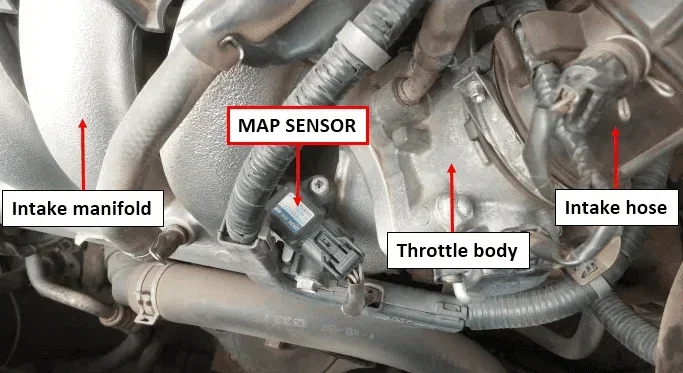
First, locate the sensor. It is typically mounted on the intake manifold or attached to a vacuum hose. Disconnect the electrical connector. Remove the mounting bolt or screw. Pull the old sensor out and compare it to the new one to ensure a correct match.
Install the new sensor, reconnect the electrical connector, and clear any stored codes with an OBD2 scanner. Start the engine and check for proper idle and throttle response. In most cases, the new sensor resolves all symptoms immediately.
The cost for a MAP sensor replacement ranges from $50 to $250 for parts and labor combined. Aftermarket sensors work well for most vehicles, but OEM parts offer the best reliability. If you are comfortable with basic car maintenance, this is a great DIY project.
Preventing MAP Sensor Problems
You cannot prevent all sensor failures, but regular maintenance reduces the risk significantly. Here are some tips.
- Change your air filter regularly: A clean air filter prevents dust and debris from entering the intake system and contaminating the sensor.
- Fix vacuum leaks promptly: Address cracked hoses and loose connections before they stress the MAP sensor.
- Use quality fuel and oil: Cleaner fuel and oil reduce carbon buildup that can affect sensor performance.
- Check the PCV system: A faulty positive crankcase ventilation valve can send oil vapor toward the sensor.
- Scan for codes early: Do not ignore a check engine light. Early detection prevents minor issues from becoming major repairs.
MAP Sensor vs. MAF Sensor: What Is the Difference?
Many people confuse the MAP sensor with the MAF sensor, but they serve different purposes. The mass airflow sensor measures the volume of air entering the engine. The MAP sensor measures air pressure in the intake manifold. Some vehicles use one, some use both, and some use neither in favor of speed-density calculations.
Symptoms of a bad MAF sensor overlap with MAP sensor symptoms. Both can cause rough idle, poor fuel economy, and hesitation. A proper diagnosis distinguishes which sensor is actually at fault. A trusted mechanic can test both sensors and pinpoint the exact problem.
When to Seek Professional Help
While replacing a MAP sensor is a manageable DIY job for many car owners, some situations call for a professional. If you are unsure about the diagnosis, if multiple sensors show fault codes, or if the problem persists after replacement, seek expert help. A qualified technician has the tools and experience to find the root cause quickly and accurately.
Also, if your vehicle has complex electronic systems or is under warranty, visiting a dealership or certified shop is the safest route. Professional diagnostics ensure no other components are overlooked.
Final Thoughts
The symptoms of a bad MAP sensor are hard to ignore once you know what to look for. From rough idle and stalling to poor fuel economy and a glowing check engine light, your car gives you plenty of warning signs. The key is catching them early before they lead to costly repairs.
If you suspect your manifold absolute pressure sensor is failing, do not wait. Get a diagnostic scan, inspect the sensor and its connections, and replace it if needed. A simple $50 to $250 repair today can save you thousands in engine damage tomorrow. Stay proactive, stay informed, and keep your car running its best.
Frequently Asked Questions
Can a bad MAP sensor cause a car to shut off while driving?
Yes, a severely failing MAP sensor can cause the engine to stall or shut off unexpectedly. When the sensor sends incorrect pressure data, the ECU cannot maintain the proper air-fuel mixture, leading to sudden engine failure, especially at idle or low speeds.
How often should a MAP sensor be replaced?
There is no set replacement interval for a MAP sensor. Most sensors last the lifetime of the vehicle, but contamination, age, and harsh driving conditions can cause premature failure. Replace the sensor only when diagnostic testing confirms it is malfunctioning.
Will a bad MAP sensor throw a specific code?
Yes, a faulty MAP sensor typically triggers diagnostic trouble codes between P0105 and P0108. However, these codes can also indicate wiring issues, vacuum leaks, or ECU problems, so a full diagnosis is always recommended before replacing the sensor.
Is it safe to drive with a check engine light on due to a MAP sensor issue?
Short trips to a repair shop are generally safe, but prolonged driving with a bad MAP sensor is risky. The incorrect air-fuel mixture can damage the catalytic converter, fouled spark plugs, and other expensive components over time.
Can cleaning a MAP sensor fix the problem?
In some cases, yes. If the sensor is dirty but not electrically damaged, careful cleaning with electronics cleaner can restore proper function. However, if the sensor has internal electrical failure, cleaning will not help and replacement is necessary.
How much does it cost to replace a MAP sensor?
The total cost typically ranges from $50 to $250 for parts and labor. The sensor itself costs between $20 and $100, and labor charges vary by location and vehicle model. Many independent shops charge less than dealerships for this straightforward repair.
=== CONCLUSION ===
The symptoms of a bad MAP sensor should never be taken lightly. This small sensor controls a big part of your engine’s performance, fuel efficiency, and emissions. From rough idle and stalling to poor acceleration and a check engine light, your vehicle gives you clear warning signs when something is wrong.
By staying alert to these symptoms and acting quickly, you protect your engine, save money on fuel, and avoid costly repairs down the road. Whether you handle the diagnosis yourself or visit a mechanic, early action is always the smartest choice. Keep your MAP sensor in good shape, and your car will reward you with smooth, reliable performance for miles to come.