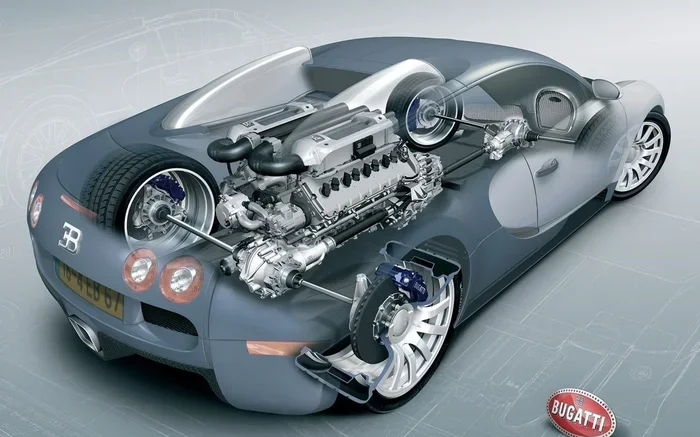
What Bugattis Veyron Engine Layout Offers Revealed
The Bugatti Veyron engine layout is a masterclass in supercar engineering. Its mid-mounted W16 design delivers insane power while keeping the car balanced and stable. This layout combines a quad-turbocharged engine with advanced cooling and a carbon fiber block to create one of the most iconic powerplants in automotive history.
The Bugatti Veyron has been turning heads since it first hit the road in 2005. It was not just another fast car. It was a statement about what engineering could achieve when money, talent, and ambition came together. At the heart of this machine lies a truly remarkable Bugatti Veyron engine layout that set new standards for supercar design. If you have ever wondered what makes this car so special under the hood, you are in the right place. Let us break it all down in a way that is easy to understand and genuinely interesting.
When most people think about supercars, they picture raw speed and flashy looks. But the real magic happens in the engine bay. The Veyron’s engine layout was designed from scratch to handle levels of power and heat that most cars never face. Every single component was placed with purpose. The result is a machine that does not just go fast. It goes fast while staying cool, balanced, and controllable. That is what separates the Veyron from every other car on the road at the time.
In this article, we will explore every major aspect of the Bugatti Veyron engine layout. You will learn about the W16 configuration, the mid-mounted placement, the cooling system, and how all of these pieces work together. Whether you are a car enthusiast or just curious about how supercars work, this guide has something for you. So let us pop the hood and take a closer look.
Key Takeaways
- Mid-Mounted W16 Design: The engine sits behind the cabin for optimal weight distribution and handling.
- Quad-Turbocharged Power: Four turbochargers work together to produce over 1,000 horsepower from an 8.0-liter engine.
- Advanced Cooling System: The layout incorporates multiple radiators and heat exchangers to manage extreme engine temperatures.
- Carbon Fiber Construction: A lightweight carbon fiber engine block reduces overall weight and improves performance.
- All-Wheel Drive Integration: The engine layout connects seamlessly to a 7-speed dual-clutch transmission and AWD system.
- Engineering Marvel: Every component is designed to handle extreme speeds and sustained high-performance driving.
📑 Table of Contents
The W16 Engine Configuration
The most striking feature of the Bugatti Veyron engine layout is the W16 cylinder arrangement. Most cars use either a V6, V8, or V12 engine. Bugatti took a completely different path. They created an engine that looks like two V8 engines joined at the crankshaft. This gives it a W shape when viewed from the front.
Why a W16 Configuration?
You might wonder why anyone would design an engine shaped like the letter W. The answer comes down to packing power into a manageable space. A traditional V16 engine would be extremely long. That extra length would push the engine too far forward. This would mess up the car’s balance and handling. The W16 configuration keeps the engine compact while still delivering 16 cylinders of power.
Here is what makes the W16 so special:
- 16 cylinders arranged in a narrow W pattern
- 8.0 liters of displacement for massive power output
- Four turbochargers working in tandem
- Compact width that fits perfectly in the mid-engine bay
- Smooth power delivery thanks to the overlapping cylinder firing order
The cylinder arrangement also helps reduce vibrations. More cylinders firing in sequence means smaller gaps between power pulses. This creates a silky-smooth power delivery that you feel through the accelerator. It is one of the reasons the Veyron feels so refined despite producing over 1,000 horsepower.
Quad-Turbocharging: The Power Behind the Layout
The Bugatti Veyron engine layout uses four turbochargers, one for each bank of cylinders. This is called a quad-turbo setup. Each turbocharger is sized specifically for its bank of four cylinders. This allows the system to respond quickly at low RPMs while still delivering serious boost at high speeds.
Having four smaller turbochargers instead of two large ones reduces turbo lag. Turbo lag is that annoying delay between pressing the gas pedal and feeling the power kick in. The Veyron’s setup minimizes this delay almost completely. You press the pedal, and the power comes on strong and immediate.
The turbochargers are fed by a carefully designed intake manifold. This manifold distributes air evenly to each cylinder bank. The result is consistent engine performance across the entire RPM range. Whether you are crawling through traffic or hitting top speed on the autobahn, the power delivery stays smooth and predictable.
Mid-Mounted Engine Placement
One of the most important aspects of the Bugatti Veyron engine layout is where the engine sits. The Veyron uses a mid-mounted configuration. This means the engine is positioned behind the driver but ahead of the rear axle. This placement is common in high-performance cars, and for good reason.
Weight Distribution and Balance
Putting the engine in the middle of the car does something crucial. It balances the weight front and rear. The ideal weight distribution for a high-performance car is close to 50/50. The Veyron gets very close to this thanks to its mid-engine placement.
Here is why this matters:
- Better handling: The car turns more predictably and feels more planted on the road.
- Reduced understeer: Front-heavy cars tend to push wide in corners. The mid-mount fixes this.
- Improved traction: Weight transfers more evenly during acceleration and braking.
- Higher cornering speeds: Balanced weight lets the car carry more speed through turns.
When the engine is mid-mounted, the weight sits right over the center of the car. This is the sweet spot for handling. The driver feels more in control, especially at high speeds. It is one reason the Veyron feels so composed even when pushing past 200 miles per hour.
Engine Bay Design and Accessibility
The engine bay design of the Veyron is another engineering feat. With the engine sitting in the middle, there is less space on each side. Bugatti had to be extremely clever about how every component was arranged. The intake system, exhaust headers, turbochargers, and cooling lines all had to fit in a tight space without blocking each other.
Maintenance access is also a consideration. While the Veyron is not a daily driver for most people, mechanics still need to reach components for service. The engine bay was designed with removable panels and clear access points. This makes it easier to work on the engine performance components without having to remove the entire engine.
Cooling System and Thermal Management
When an engine produces over 1,000 horsepower, heat becomes the biggest enemy. The Bugatti Veyron engine layout includes a sophisticated cooling system designed to keep temperatures in check at all times. Without proper cooling, the engine would overheat quickly and suffer serious damage.
Multiple Cooling Circuits
The Veyron does not rely on a single radiator. It uses several separate cooling circuits for different systems. Each circuit handles a specific job:
- Engine coolant circuit: Keeps the W16 engine at the right operating temperature
- Charge air cooler: Cools the air coming from the turbochargers before it enters the engine
- Transmission cooler: Maintains the proper temperature for the 7-speed dual-clutch gearbox
- Differential cooler: Keeps the rear differential from overheating during hard driving
Having separate circuits prevents heat from one system affecting another. This is a smart design choice that improves overall engine performance and reliability. Each cooler is sized to handle the specific heat load it faces.
Can The Engine Survive Overheating?
Even with all this cooling, there are limits. If the cooling system fails at high speeds, the engine can overheat quickly. This is a real concern for supercar owners. The good news is that Bugatti engineered multiple safety systems. The car will reduce power and warn the driver before any serious damage occurs. If you are interested in learning more about how engines handle extreme heat, check out our article on can an engine survive overheating.
The thermal management system in the Veyron is one of the most advanced ever put in a production car. It uses electric fans, water pumps, and thermostatically controlled valves to regulate temperatures. Everything works together to keep the engine layout operating within safe limits, even during sustained high-speed runs.
Materials and Construction
The Bugatti Veyron engine layout was built using materials chosen for strength and light weight. Every component was selected with a specific purpose in mind. The goal was to create an engine that was powerful, durable, and as light as possible.
Carbon Fiber Engine Block
One of the most innovative aspects of the Veyron engine is the carbon fiber engine block. Most car engines use cast iron or aluminum for their blocks. These materials are strong but heavy. Bugatti chose carbon fiber for several reasons:
- Light weight: Carbon fiber is significantly lighter than metal
- High strength: It can withstand the extreme forces inside a 1,000+ horsepower engine
- Thermal properties: Carbon fiber handles heat differently than metal, reducing thermal expansion
- Reduced reciprocating mass: Lighter components mean less stress on the engine at high RPMs
The carbon fiber block was not a simple piece of material. It was engineered with precision to withstand the enormous pressures created by four turbochargers pushing air into 16 cylinders. This level of engineering is what makes the Veyron so special.
Aluminum and Titanium Components
Beyond the block, the Veyron uses aluminum for the cylinder heads and titanium for various internal components. These materials reduce weight while maintaining the strength needed for high-performance operation. The combination of carbon fiber, aluminum, and titanium creates an engine that is both light and incredibly strong.
The use of these advanced materials also contributes to the car’s overall power-to-weight ratio. A lighter engine means less weight for the car to move. This directly translates to better acceleration, braking, and handling. Every kilogram saved in the engine bay pays off in overall performance.
Transmission and Power Delivery
All that power would mean nothing without a way to get it to the ground. The Bugatti Veyron engine layout connects to a 7-speed dual-clutch transmission through a carefully designed drivetrain. This transmission was developed in partnership with Ricardo and is specifically tuned for the Veyron’s massive torque output.
How the DSG Transmission Works
The dual-clutch transmission uses two separate clutches for odd and even gears. When you shift from first to second gear, the system pre-selects the next gear on the other clutch. This makes shifts incredibly fast. We are talking about shifts that happen in milliseconds.
Here is what makes this transmission so effective:
- Lightning-fast shifts: No pause between gears means smooth, uninterrupted power
- Clutch-based design: More efficient than traditional torque converters
- All-wheel drive integration: Power flows through the transmission to a center differential and then to all four wheels
- Manual and automatic modes: Drivers can choose how they want to shift gears
The transmission is mounted behind the engine in the rear of the car. This keeps the weight distribution balanced and puts the drivetrain components in a logical order. Power flows from the engine, through the transmission, to the rear differential, and then to all four wheels through drive shafts.
At What Mileage Does the Transmission Go Bad?
Even the best transmissions have a lifespan. The Veyron’s dual-clutch gearbox is built to handle extreme loads, but it is not indestructible. Regular maintenance and fluid changes are essential. If you want to learn more about transmission longevity and what affects it, read our guide on at what mileage does a transmission go bad. The Veyron’s transmission is designed for longevity, but it still needs proper care to last.
Engine Swap and Compatibility Considerations
The unique Bugatti Veyron engine layout raises an interesting question for car enthusiasts: can you swap this engine into another car? The short answer is no, not easily. The W16 configuration, mid-mount placement, and custom cooling system make this engine extremely specific to the Veyron platform.
Why Engine Swaps Are So Difficult
Engine swaps are already challenging in most cars. The engine must physically fit, the mounting points must align, and the wiring and cooling systems must be compatible. With the Veyron, all of these challenges are amplified. The engine is custom-designed for the car and cannot simply be dropped into another vehicle.
If you are curious about the general challenges of engine swaps, we have a detailed article on can you engine swap any car that covers the topic in depth. The Veyron represents the extreme end of the spectrum where the engine and car are so tightly integrated that swapping is essentially impossible without a complete chassis redesign.
The engine placement in the Veyron also affects how the car handles at high speeds. The mid-mounted layout keeps the center of gravity low and centered. This is a key reason the Veyron can achieve speeds over 250 miles per hour while remaining stable and controllable. The engine is not just a power source. It is a structural element that contributes to the car’s overall dynamics.
Key Takeaways
- Mid-Mounted W16 Design: The engine sits behind the cabin for optimal weight distribution and handling.
- Quad-Turbocharged Power: Four turbochargers work together to produce over 1,000 horsepower from an 8.0-liter engine.
- Advanced Cooling System: The layout incorporates multiple radiators and heat exchangers to manage extreme engine temperatures.
- Carbon Fiber Construction: A lightweight carbon fiber engine block reduces overall weight and improves performance.
- All-Wheel Drive Integration: The engine layout connects seamlessly to a 7-speed dual-clutch transmission and AWD system.
- Engineering Marvel: Every component is designed to handle extreme speeds and sustained high-performance driving.
Conclusion
The Bugatti Veyron engine layout is one of the most impressive engineering achievements in automotive history. From the unique W16 cylinder configuration to the mid-mounted placement and advanced cooling system, every detail was designed with one goal in mind: to create the fastest, most powerful production car in the world. The engine layout is not just about making power. It is about managing that power in a way that makes the car safe, stable, and driveable at extreme speeds.
What makes the Veyron truly special is how all the systems work together. The engine, transmission, cooling, and drivetrain form a cohesive unit where each part supports the others. This level of integration is what separates a true supercar from a mere fast car. The Bugatti Veyron engine layout continues to influence supercar design to this day, and it will remain a benchmark for engineering excellence for decades to come.
If you own a high-performance vehicle or dream of owning one someday, understanding engine layouts like the Veyron’s gives you a deeper appreciation for what goes into building these machines. The next time you see a Bugatti Veyron on the road, you will know exactly what is happening under that sleek carbon fiber bodywork.
Frequently Asked Questions
What makes the Bugatti Veyron engine layout so special?
The mid-mounted W16 configuration with four turbochargers is what sets it apart. This layout delivers over 1,000 horsepower while keeping the car balanced and stable. The combination of a carbon fiber block and advanced cooling makes it one of the most unique engine designs ever produced.
How does the W16 configuration work in the Veyron?
The W16 is essentially two narrow-angle VR8 engines joined at a common crankshaft. This creates a W shape when viewed from the front. The configuration allows 16 cylinders to fit in a compact space, keeping the engine width manageable while maximizing power output and smoothness.
Why is the engine placed in the middle of the car?
Mid-mount placement improves weight distribution, bringing it close to 50/50. This balanced setup enhances handling, reduces understeer, and allows the car to maintain stability at extreme speeds. The engine sitting over the rear axle also improves traction during acceleration.
How does the cooling system handle the extreme heat?
The Veyron uses multiple independent cooling circuits for the engine, charge air, transmission, and differential. Each circuit is sized for its specific heat load. Electric fans, thermostatically controlled valves, and dedicated radiators work together to keep all systems at safe operating temperatures.
Can the Veyron engine be swapped into another car?
The Veyron engine is custom-designed for the car and cannot be easily swapped. The W16 configuration, mid-mount placement, cooling system, and wiring harness are all specific to the Veyron platform. The level of integration makes it essentially impossible to transplant into another vehicle without a complete chassis redesign.
What kind of maintenance does the Veyron engine require?
The Veyron requires specialized maintenance due to its complex engine layout. Regular oil changes, coolant flushes, turbocharger inspections, and transmission fluid changes are essential. The carbon fiber engine block and quad-turbo setup demand careful attention to keep everything running at peak engine performance.