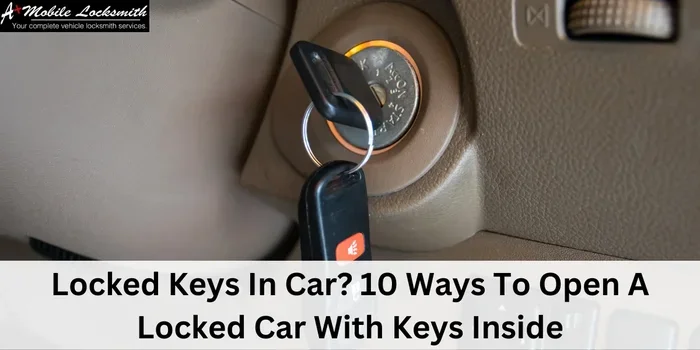
What to Do When You Lock Your Keys in Your Car Without Spare
Locking your keys in your car without a spare is stressful, but you have options. This guide walks you through every solution, from simple DIY tricks to calling a professional locksmith. Learn how to handle a car lockout safely, avoid costly mistakes, and prevent it from happening again.
You walk away from your car, grab a few bags from the trunk, and then it hits you. Your keys are locked inside your car. There is no spare. Panic sets in. You check your pockets again. You look through your bag one more time. Nothing. You are standing in a parking lot with no way to get inside your vehicle.
This happens to millions of people every year. In fact, car lockouts are one of the most common reasons people call for roadside help. Whether you left your keys on the dashboard or simply forgot them inside, the feeling is the same. You are stuck. But here is the good news. You are not helpless. There are several things you can do right now to get back behind the wheel.
This guide covers every practical solution for when you lock your keys in your car without a spare. We will walk you through DIY methods, professional services, cost expectations, and prevention tips. By the end, you will know exactly what to do and how to avoid this situation in the future.
Key Takeaways
- Stay calm and assess your situation before taking any action to avoid damage.
- Try simple DIY methods like the shoelace trick or coat hanger technique for older vehicles.
- Call a professional auto locksmith for modern cars with keyless entry or transponder keys.
- Contact roadside assistance through your insurance or membership program for quick help.
- Prevent future lockouts by getting a spare key made and using a key finder device.
📑 Table of Contents
Understand What Happened and Why It Happens
Before you jump into solutions, take a breath. Understanding why car lockouts happen can help you stay calm and think clearly. Most of the time, a lockout occurs because of a simple lapse in attention. You set your keys down while unloading groceries. You hop out to grab something from a store. You close the door and the lock clicks shut.
Common Situations That Lead to a Lockout
- Leaving keys on the seat or console when you exit the vehicle.
- Dropping keys through a gap between the seat and the center console.
- Closing the door automatically with remote keyless entry.
- Forgetting a spare key at home or at work.
- A key fob battery dies right when you need it most.
Modern cars with keyless entry systems can make things trickier. Some vehicles will not let you open the door manually if the fob is not detected. Others have electronic locks that do not respond to traditional tools. Knowing your vehicle type matters when choosing the right solution.
Try Safe DIY Methods First
If you are stranded and need quick help, some do-it-yourself methods might work. These techniques are best for older vehicles with manual locks. Always proceed with caution. If a method feels risky, stop and call a professional. You do not want to damage your car door or window.
The Shoelace Technique
This classic method works on cars with vertical lock buttons. You need a shoelace or any thin, sturdy string. Here is how it works:
- Tie a small loop in the middle of the shoelace.
- Slide the loop between the door frame and the rubber weather seal.
- Shimmy the loop up until it catches the lock button.
- Pull the shoelace upward to engage the lock.
- Open the door and retrieve your keys.
This trick takes a little practice. It works best on vehicles made before the mid-2000s. If your car has power locks or a flush-mounted door handle, this method likely will not work.
The Wire Hanger Approach
Another old-school method involves a wire coat hanger. Straighten the hanger and create a small hook at one end. Insert it between the window and the weather stripping near the door handle. Manipulate the lock mechanism from the inside. This method requires patience and a steady hand.
Warning: This technique can scratch your paint or damage the rubber seal. It is not recommended for newer vehicles with reinforced door frames or electronic lock systems.
The Inflatable Wedge Method
An inflatable air wedge creates a small gap between the door and the frame. You can purchase a car lockout kit at most auto parts stores for under $10. Once the gap is open, you can use a long rod to push the unlock button or pull the door handle.
This method is safer than using a wire hanger. It minimizes the risk of damage to your vehicle. However, it still requires some practice and dexterity.
Quick Tips for DIY Methods
- Always check your vehicle warranty before attempting any DIY method.
- Use a plastic wedge instead of a metal one to avoid scratches.
- Watch tutorial videos for your specific car model before trying.
- Stop immediately if you feel resistance or hear cracking sounds.
Call a Professional Locksmith
When DIY methods are not an option, calling a professional locksmith is your best bet. A licensed auto locksmith has the tools and training to open your car without causing damage. This is especially important for modern vehicles with transponder keys or keyless entry systems.
What to Expect When You Call a Locksmith
Most locksmiths offer 24-hour emergency lockout service. When you call, they will ask for your location, vehicle make and model, and the type of lock your car has. Response times vary, but many professionals arrive within 15 to 30 minutes.
The locksmith will use specialized tools like a lock pick set or an air wedge to gain entry. They do not break your windows or damage your doors. Once inside, they can help you retrieve your keys and even create a new key on the spot if needed.
How Much Does a Locksmith Cost?
The cost of a car lockout service depends on several factors. Here is a general breakdown:
| Service Type | Average Cost |
|---|---|
| Basic lockout (older vehicle) | $50 – $100 |
| Standard lockout (modern vehicle) | $75 – $150 |
| After-hours or emergency callout | $100 – $200 |
| Key replacement on-site | $100 – $300 |
| Transponder key programming | $150 – $400 |
These prices can vary based on your location and the locksmith’s experience. Always ask for a quote before agreeing to service. A reputable locksmith will be transparent about pricing.
Use Roadside Assistance or Insurance Coverage
If you have roadside assistance coverage, this is a great time to use it. Many car insurance policies and membership programs include lockout help at no extra charge. Before you spend money on a locksmith, check what coverage you already have.
Who Offers Lockout Help?
- Your car insurance provider may include roadside assistance as part of your policy.
- AAA or similar auto clubs offer lockout service to members.
- Your vehicle manufacturer might provide a roadside assistance program.
- Your credit card company may offer emergency roadside help as a perk.
- Your employer or association might have a preferred roadside service.
Using roadside assistance can save you a significant amount of money. Some services even cover key replacement costs if your keys are lost along with the lockout. Check your membership details or call your insurance provider to confirm your coverage.
Prevent Future Lockouts
The best way to deal with a car lockout is to never have one in the first place. Taking a few simple precautions can save you time, money, and a lot of stress. Prevention is always better than a cure.
Get a Spare Key Made
This might sound obvious, but many people skip this step. Have a car key duplicate made at a hardware store or locksmith. Keep one spare at home and another at a trusted location like your office. A spare key costs as little as $5 to $20 at a basic key-cutting service.
Use a Key Finder Device
Bluetooth key finders like Tile or Apple AirTag can help you locate your keys if you misplace them. Attach one to your keychain and use your phone to track it down. These small devices are inexpensive and incredibly useful.
Build a Key Routine
Create a habit of always checking for your keys before you close your car door. Here is a simple routine you can follow:
- Pocket your keys before you touch anything else.
- Place keys in a designated spot like a console pocket or cup holder.
- Do a quick scan of the seat and floor before exiting.
- Lock the door and check that you still have your keys in hand.
It takes just a few seconds. Over time, this becomes second nature and you will never worry about a lockout again.
Consider a Spare Key for Your Home or Office
Some people keep a spare ignition key hidden somewhere near their car. While hiding a key under a mat or in a magnetic box on the undercarriage is common, it is not the safest option. Thieves know these spots. Instead, consider giving a spare key to a trusted friend, family member, or neighbor.
What NOT to Do During a Car Lockout
When you are panicked, it is easy to make mistakes. Avoid these common errors that can turn a simple lockout into an expensive repair job.
Do Not Break Your Window
Breaking a car window should always be your last resort. A single window replacement can cost anywhere from $200 to $1,000 or more depending on your vehicle. Modern cars have sensors and laminated glass that make replacement even pricier. A professional locksmith can open your car without touching the glass.
Do Not Use Excessive Force
Trying to force a door open can damage the car door lock mechanism, the weather seal, or the door frame. These repairs can be costly and time-consuming. Always opt for a gentle, controlled approach.
Do Not Trust Just Any Locksmith
Not all locksmiths are created equal. Some unlicensed operators charge outrageous fees or use improper tools that damage your vehicle. Always verify that your locksmith is licensed, insured, and has positive reviews. Ask for identification and a price quote before they begin work.
Do Not Ignore Your Vehicle Manual
Your car’s owner manual contains valuable information about lockout procedures and emergency features. Many modern vehicles have a mechanical key override or a hidden emergency release. Reading your manual takes five minutes and could save you a lot of trouble.
Expert Insights on Handling Car Lockouts
Professional locksmiths share a common piece of advice: stay calm and think through your options. Rushing into a solution often leads to mistakes and additional costs. Experienced technicians recommend keeping a lockout emergency kit in your trunk at all times. This kit should include a thin inflatable wedge, a long reach tool, and the phone number of a trusted local locksmith.
Another expert tip is to invest in a spare key fob even if you think you do not need one. Key fob replacement costs have dropped significantly in recent years. Having a backup fob in your glove box can save you from a costly emergency callout. Many locksmiths can program a new fob for under $100 if you already have a working key.
Prevention is the ultimate solution. The best locksmith will tell you that the cheapest lockout service is the one you never need. Simple habits like always checking for your keys and keeping a spare on hand make all the difference.
Frequently Asked Questions
Can a locksmith open any car without damage?
Yes, a professional locksmith can open virtually any vehicle without causing damage. They use specialized tools designed for modern car locks and doors. Always choose a licensed and experienced locksmith to ensure safe entry.
How long does it take to unlock a car?
Most locksmiths can unlock a car within 15 to 30 minutes of arrival. The exact time depends on the vehicle model, lock type, and the complexity of the situation. Simple lockouts on older vehicles take less time.
What should I do if I lock my keys in my car at night?
Stay where you are and call a locksmith or roadside assistance. Do not attempt DIY methods in the dark, as you risk injuring yourself or damaging your vehicle. Many locksmiths offer 24-hour emergency service for exactly these situations.
Is it cheaper to call a locksmith or a tow truck?
A locksmith is almost always cheaper for a simple lockout. Tow trucks are designed for vehicle transport, not lockout services. A tow truck may charge a minimum fee just to arrive, and they will not open your car. A dedicated locksmith handles lockouts every day and has the right tools.
Can I unlock my car with my phone?
Some modern vehicles with smartphone integration allow you to unlock your car through an app. However, this only works if your phone has battery life and the feature is enabled on your vehicle. Do not rely on this as your only solution for a lockout.
How can I avoid locking my keys in my car again?
The best prevention strategies include getting a spare key made, using a key finder device, and building a consistent key-checking routine. Consider leaving a spare key with a trusted person or investing in a smart lock system for your vehicle.
Conclusion
Locking your keys in your car without a spare is a frustrating experience. But it does not have to be a disaster. With the right knowledge and a calm approach, you can get back on the road quickly and safely. Whether you try a DIY method, call a professional locksmith, or use your roadside assistance, solutions are always available.
Remember to stay safe and avoid actions that could damage your vehicle. Prevention is your greatest tool. Get a spare key made, use a key finder, and build a simple routine that keeps your keys where they belong. These small habits will save you from the stress and expense of a future lockout.
The next time you find yourself in this situation, take a deep breath. You now know exactly what to do when you lock your keys in your car without a spare. You have the tools, the knowledge, and the confidence to handle it like a pro.