Where Can I Find My Cars Paint Code On My Vehicle
Finding your car’s paint code is easier than most people think, and it can save you hundreds on touch-up paint and repairs. This guide shows you exactly where to look on your vehicle, what each code means, and how to use it for perfect color matching every time.
Have you ever stood in front of your car and wondered why the paint on one panel looks slightly different from the rest? Maybe you got a small scratch and need touch-up paint. Or perhaps you just want to know the exact color your car came in. Whatever the reason, the answer starts with one simple thing: your car’s paint code.
A car paint code is a unique combination of letters and numbers assigned by the manufacturer. It identifies the exact shade and formula used on your vehicle. Without it, getting a matching paint is basically guesswork. And nobody wants to drive around with a patch that looks like a different color entirely.
The good news is that finding this code is not as hard as it sounds. Most car makers place the code in a few predictable spots. Some are easy to find. Others require a little more searching. Either way, this guide will walk you through every method step by step. By the end, you will know exactly where to look and what to do next.
Key Takeaways
- Multiple locations exist: Your paint code can be found on the door jamb, glove box, firewall, spare tire cover, and more depending on your car maker.
- The code is a short alphanumeric string: It usually contains 3 to 6 characters and is unique to your vehicle’s exact color.
- Online lookup tools work well: If you cannot find the sticker, entering your VIN or model details into a paint code lookup tool often gives quick results.
- Always double-check the code: Using the wrong paint code leads to visible color mismatch, which is costly and frustrating to fix.
- Dealerships and auto parts stores can help: They have access to manufacturer databases that make finding your code almost foolproof.
- Touch-up paint needs the exact code: Even a slight difference in shade stands out on a repaired panel, so precision matters.
📑 Table of Contents
- What Is a Car Paint Code and Why Does It Matter?
- Where to Look for Your Paint Code on the Vehicle
- Alternative Ways to Find Your Paint Code
- How to Use Your Paint Code for Touch-Up and Repairs
- Common Paint Code Mistakes and How to Avoid Them
- Quick Tips for Finding Any Paint Code Fast
- Expert Insights on Automotive Paint Matching
- Key Takeaways
- Conclusion
What Is a Car Paint Code and Why Does It Matter?
A vehicle paint code is like a fingerprint for your car’s color. Every car that rolls off the assembly line gets a specific formula mixed for its exterior. The manufacturer assigns a code to that formula so that anyone who needs to match it later can do so accurately.
These codes usually consist of three to six characters. They can be numbers, letters, or a mix of both. For example, a common paint code might look like “WA 740” or “LY9B.” The format varies by car maker, but the purpose is always the same: to identify your exact color.
Why the Code Matters More Than You Think
You might think that saying “red” or “blue” is enough to get matching paint. But car manufacturers use hundreds of shades for each color name. Two cars that are both “red” can look completely different in sunlight. The automotive paint matching process depends on the code, not the color name.
Here is why the code is so important:
- Exact shade identification: The code tells the paint supplier the precise formula to mix.
- Avoids costly mistakes: Using the wrong code means buying the wrong paint, which wastes time and money.
- Preserves resale value: A perfect color match keeps your car looking factory-fresh, which matters to buyers.
- Essential for insurance claims: After an accident, body shops need the code to order the right paint.
- Helps with custom work: If you are adding a spoiler, bumper, or other trim, the code ensures everything blends together.
Without the correct OEM color code, even professional shops struggle to get a perfect match. That is why knowing where to find it is such a valuable skill for any car owner.
Where to Look for Your Paint Code on the Vehicle
Most manufacturers place a sticker or plate somewhere on the car that displays the paint code alongside other important information. This sticker is often called a paint sticker or a build sticker. It can be in several different locations depending on the brand. Let us go through the most common spots.
The Driver’s Side Door Jamb
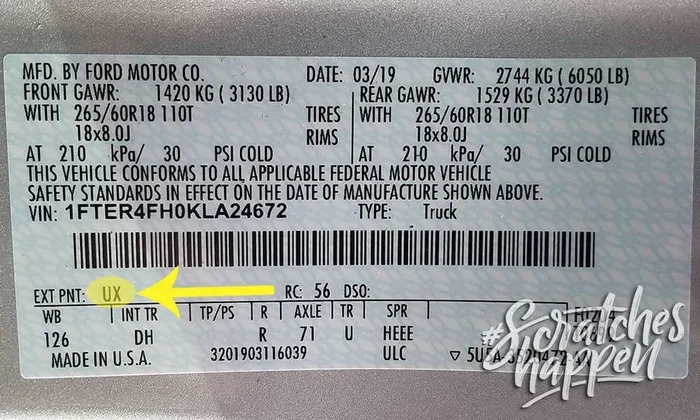
This is the most common location for a paint code sticker. Open the driver’s side door and look at the frame or the B-pillar — the vertical piece between the front and rear doors. You will usually see a small label or sticker there.
On this sticker, you will find several pieces of information. Look for labels that say “Paint Code,” “Color Code,” “Body Code,” or “Trim/Color Code.” The code is often printed right next to one of these labels. For most Ford, Chevrolet, Honda, Toyota, and Nissan vehicles, this is where you will find it.
Quick tip: If the sticker is faded or hard to read, take a photo with your phone and zoom in. Sometimes the code is still visible even when it looks blank to the naked eye.
The Glove Box or Interior Panel
Some car makers place the color code location inside the glove box. Open it and look at the inside of the door or the side panel. You might find a small sticker with the paint code printed on it.
This is common for many older vehicles and some European brands. If you do not find it on the door jamb, checking the glove box area is a smart next step.
The Firewall Under the Hood
The firewall is the metal wall between the engine compartment and the cabin. On some vehicles, the paint code sticker is attached to the firewall on the driver’s side. You will need to open the hood and look up and inward to spot it.
This location is less common but still worth checking. It is especially true for certain models from brands like BMW, Mercedes-Benz, and Volkswagen. The sticker here may also include the model year and production plant information.
The Spare Tire Cover or Wheel Well
On some SUVs and trucks, the manufacturer code is placed on the inside of the spare tire cover or near the wheel well. If you have a spare tire that is stored under the vehicle or in the trunk, check the cover for a small label.
This is particularly common for Ford SUVs and trucks. If you have one of these models, this could be your fastest path to finding the code.
The Trunk Lid or Tailgate
A few car makers stamp or label the paint code on the trunk lid or tailgate. This is more common on older vehicles and certain luxury brands. Check the inside of the trunk lid or the area around the tailgate latch.
The VIN Plate or Certification Sticker
Every vehicle has a VIN plate, usually found on the dashboard near the windshield. Some certification stickers on this plate also include the paint code. Look for any additional labels near the VIN plate that might contain a body code or trim code.
However, not all VIN stickers include the paint code. This method works on some models but not all, so it is best used as a backup option.
Alternative Ways to Find Your Paint Code
If you have searched the entire car and still cannot find the sticker, do not worry. There are several other reliable methods to track down your vehicle color code.
Use Your VIN Number
The Vehicle Identification Number is a 17-character code unique to your car. Many online tools can decode your VIN and pull up the paint code along with other factory specifications.
To use this method, you need to locate your VIN first. You can find it on the dashboard near the windshield on the driver’s side. It is also on the driver’s door jamb sticker and on the vehicle registration and insurance documents.
Once you have the VIN, enter it into a reputable paint code lookup tool. Several websites and apps offer this service for free or a small fee. The results usually include the paint code, the color name, and sometimes even the formula details.
Check the Owner’s Manual
Your car’s owner manual is another great resource. Some manufacturers include the paint code in the manual, often in a section about specifications or maintenance. If you still have the original manual, flip through it to see if the code is listed.
Contact the Dealership
If all else fails, your local dealership can help. They have access to the manufacturer’s database. All they need is your VIN or the model, year, and trim level. They can look up the OEM color code in seconds.
This is one of the most reliable methods because dealership systems are always up to date. They can also confirm the exact shade name, which is helpful when ordering touch-up paint or matching a repair.
Use Online Paint Code Databases
Several websites specialize in paint code lookup by vehicle make, model, and year. These databases are built from manufacturer information and are generally very accurate. You simply select your car’s brand, enter the model and year, and the site displays the matching paint code.
Some popular options include the websites of auto paint suppliers and dedicated automotive reference sites. Always cross-check the code you find with another source if possible, just to be safe.
Check the Original Purchase Documents
Some people keep their original window sticker or build sheet from when they bought the car. These documents often list the paint code. If you have kept any paperwork from the purchase, it is worth digging through it.
How to Use Your Paint Code for Touch-Up and Repairs
Once you have found your car paint code, you can use it in several practical ways. The most common use is ordering touch-up paint for small chips and scratches.
Ordering Touch-Up Paint
Most auto parts stores and online retailers let you order touch-up paint by entering the paint code. The paint comes in a small bottle with a brush applicator. It is designed for minor damage and works best when applied carefully and in good weather conditions.
Before you order, make sure the code you have is correct. A single wrong digit or letter can result in a noticeably different shade. When in doubt, double-check the code against a second source.
Working with a Body Shop
If you are planning a professional repair, having the paint code ready saves time and ensures accuracy. Give the body shop the code before they start mixing paint. This allows them to prepare the correct formula upfront.
Some body shops also use a car color chart to visually confirm the match. They spray a test patch and compare it to your existing paint in natural light. This extra step helps catch any discrepancies before the full repair is done.
Understanding the Code Format
Paint codes can look confusing at first glance, but they follow a simple pattern once you understand them. Most codes have a prefix that identifies the manufacturer, followed by the actual color identifier.
For example, General Motors often uses codes that start with “WA” or “WL.” Ford codes frequently begin with a letter or two followed by numbers. Toyota codes are typically a combination of letters and numbers without a standard prefix. The format varies, but the code itself is always unique to that specific color.
Common Paint Code Mistakes and How to Avoid Them
Finding the paint code is only half the battle. Avoiding common mistakes is equally important to ensure you get the right color.
Misreading the Code
A faded sticker can make it hard to tell an “8” from a “3” or a “B” from an “8.” Always read the code slowly and carefully. If possible, have someone else read it alongside you to catch any mistakes.
Using the Wrong Database
Not all online tools are created equal. Some databases are outdated or incomplete. Always use a trusted source. The manufacturer’s website, your dealership, or a reputable auto parts supplier are the best options.
Ignoring the Trim Code
Some vehicles have separate codes for the body color and the trim color. Make sure you are reading the exterior paint code and not a trim or interior code by mistake. The label on the sticker usually specifies which code is which.
Assuming the Color Name Is Enough
Never rely solely on the color name. Two cars can share the same color name but have completely different paint codes. Always use the alphanumeric code for accuracy.
Quick Tips for Finding Any Paint Code Fast
Here are some fast tips that make the whole process smoother:
- Start with the door jamb. It is the most common location for most car brands.
- Bring a flashlight. Many stickers are in dark or hard-to-reach spots.
- Take clear photos. Photos help you read faded or hard-to-see codes later.
- Have your VIN ready. It is the ultimate backup if the sticker is missing.
- Check multiple sources. Cross-reference the code you find with an online lookup tool to confirm it.
- Write the code down immediately. Do not rely on memory. Codes are easy to mix up.
Expert Insights on Automotive Paint Matching
Professional auto detailers and body shop technicians agree that the paint code is the single most important piece of information for any color-related work on a vehicle. Even slight variations in the formula can produce a visible difference, especially on newer cars with complex metallic or pearl finishes.
Metallic and pearl paints are particularly tricky. These finishes contain special flakes or particles that create depth and shimmer. Matching them requires the exact code because even a tiny change in the formula alters how light reflects off the surface. This is why guessing or using a similar shade from a different code almost never works perfectly.
Experts also recommend storing your paint code in a safe place. Write it down in your glove box, save it in your phone, or keep a photo of the sticker. Having it readily available makes future repairs, insurance claims, and even resale much smoother.
Another insight from professionals: if your car has been repainted at some point, the original paint code may not match the current color. In this case, a color matching service at a paint supplier can create a custom blend based on a sample of your current paint. This is more expensive but often the only option for older repainted vehicles.
Key Takeaways
- Multiple locations exist: Your paint code can be found on the door jamb, glove box, firewall, spare tire cover, and more depending on your car maker.
- The code is a short alphanumeric string: It usually contains 3 to 6 characters and is unique to your vehicle’s exact color.
- Online lookup tools work well: If you cannot find the sticker, entering your VIN or model details into a paint code lookup tool often gives quick results.
- Always double-check the code: Using the wrong paint code leads to visible color mismatch, which is costly and frustrating to fix.
- Dealerships and auto parts stores can help: They have access to manufacturer databases that make finding your code almost foolproof.
- Touch-up paint needs the exact code: Even a slight difference in shade stands out on a repaired panel, so precision matters.
Conclusion
Finding your car paint code does not have to be a frustrating experience. With the right knowledge, you can locate it in just a few minutes. Start with the driver’s side door jamb, then check the glove box, firewall, and other common spots if needed. If the sticker is missing or unreadable, use your VIN number or an online lookup tool to get the code quickly.
Once you have the code, you are ready to order touch-up paint, work with a body shop, or simply know exactly what color your car is. The vehicle color code is a small piece of information that makes a big difference. Keep it stored safely and refer to it whenever you need a paint match.
Whether your car is brand new or has been on the road for years, knowing your paint code empowers you as a car owner. It saves money, prevents mistakes, and keeps your vehicle looking its best. Take a few minutes today to find your code and put it somewhere safe. Your future self will thank you the next time a small scratch or chip needs attention.
Now that you know exactly where to look and what to do, you have everything you need to find your car’s paint code with confidence. Do not let a tiny chip turn into a big problem. Get the code, get the right paint, and keep your car looking factory fresh for years to come.
Frequently Asked Questions
Can I find my paint code using just my car’s make and model?
In many cases, yes. Online databases let you search by make, model, and year to find the paint code. However, some manufacturers use different codes for the same color depending on the production year or trim level. Using your VIN is always the most accurate method.
What if the paint code sticker is completely missing from my car?
Do not worry. You can still find the code using your VIN number through online lookup tools or by contacting your dealership. The dealership can access the manufacturer’s database and pull up the original paint code for your specific vehicle.
Is the paint code the same as the color name?
No. The color name is just a marketing label, while the paint code is the exact alphanumeric identifier for the specific formula. Two cars can share the same color name but have completely different paint codes, leading to mismatched shades.
Can I use any touch-up paint if I do not have the exact code?
You should always use the exact code. Touch-up paint without the correct code rarely matches perfectly. Even a slight shade difference becomes very noticeable, especially on metallic or pearl finishes. The extra effort of finding the code is always worth it.
Where is the paint code usually located on a Ford vehicle?
On most Ford vehicles, the paint code is found on the driver’s side door jamb sticker. It may also appear on the trunk lid or inside the glove box for certain models. The sticker is usually labeled with “Paint Code” or “Body Color Code.”
How do I know if I have found the right code and not a trim or interior code?
Look for labels on the sticker that specifically say “Paint Code,” “Exterior Color Code,” or “Body Code.” Trim and interior codes are usually labeled separately. If you are unsure, cross-reference the code with an online database or ask a dealership to confirm it.