Where Is the Emergency Trunk Release Located in Your Car
The emergency trunk release is a critical car safety feature that can save lives. Most vehicles hide this release inside the trunk compartment, behind the trunk latch or on the trunk lid. Knowing your emergency trunk release location before you need it is one of the smartest things you can do for your family’s safety. This guide walks you through every vehicle type and explains how the trunk release mechanism works in simple terms.
Have you ever thought about what would happen if you accidentally got locked inside your car trunk? It sounds like a scary movie plot, but it happens more often than you might think. Children playing hide-and-seek, adults locking keys inside the trunk, or even a car accident that jams the trunk shut — these situations are real, and they happen every year. That is exactly why your car has a trunk escape system built right into it.
The emergency trunk release is one of the most important car safety features you probably never think about — until you need it. This simple mechanism can mean the difference between a quick escape and a dangerous situation. Yet most drivers have no idea where it is or how it works. That changes today. In this guide, we will show you exactly where to find the emergency trunk release in every type of vehicle, explain how the trunk lock mechanism works, and share practical tips to keep it in great shape.
Whether you drive a sedan, an SUV, a hatchback, or a truck, this article has you covered. We will also cover common mistakes people make with their trunk release lever, answer frequently asked questions, and give you expert advice on vehicle safety. By the end, you will know your car better and feel more confident about trunk access and car safety for your entire family.
Key Takeaways
- Location varies by vehicle type: Sedans, SUVs, hatchbacks, and trucks all have different emergency trunk release placements.
- It is always inside the trunk: The release is typically found near the trunk latch, on the trunk lid, or behind the rear seat.
- It is a federal safety requirement: All cars sold in the U.S. since 2001 must have a vehicle emergency release inside the trunk.
- Regular maintenance matters: A dirty or rusty trunk release lever can fail when you need it most.
- Teach your family: Making sure everyone in your household knows where the hidden trunk release is can prevent vehicle entrapment.
- Modern cars offer multiple access points: Some vehicles include a trunk release button on the key fob or inside the cabin.
- It works manually: The safety release cable operates without electricity, so it functions even during a power failure.
📑 Table of Contents
- What Is an Emergency Trunk Release and Why It Matters
- Where Is the Emergency Trunk Release Located in Different Vehicles
- How the Emergency Trunk Release Mechanism Works
- Common Situations Where You Need the Emergency Trunk Release
- Tips to Keep Your Emergency Trunk Release in Good Shape
- What to Look for When Buying a Vehicle
- Key Takeaways
What Is an Emergency Trunk Release and Why It Matters
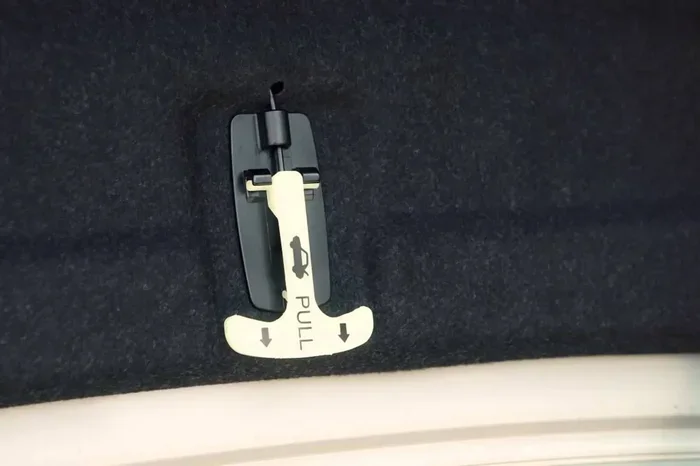
A trunk release is a safety device inside your car trunk. It lets you open the trunk from the inside, even if the trunk is locked or the main latch is jammed. Think of it as a backup plan. If the outside trunk handle or the trunk lock mechanism fails, the emergency trunk release gives you another way out.
This car safety feature became mandatory in the United States in 2001. The National Highway Traffic Safety Administration (NHTSA) required all new vehicles to include an interior trunk release. The reason is simple: people were getting trapped inside trunks, and there was no easy way out. Children were especially at risk. The vehicle emergency release was designed to give anyone stuck inside a way to escape.
How the Trunk Release System Works
The emergency trunk release is usually a simple mechanical system. It involves a safety release cable connected to the trunk latch. When you pull the release handle or lever inside the trunk, it tugs on the cable. That cable releases the trunk latch, and the trunk pops open. No electricity is needed. No buttons to press. It is a purely mechanical car safety mechanism that works even if the car battery is dead.
Some newer vehicles also have a trunk release button on the key fob. Others include an interior trunk release switch on the driver’s side console. But the most reliable emergency trunk release is always the manual one inside the trunk itself. It never depends on power, signals, or electronics.
The History Behind This Safety Feature
Before 2001, many cars did not have any interior trunk access option. This led to tragic accidents, especially involving young children who climbed into trunks while playing. The vehicle safety feature was introduced as a direct response to these incidents. Over the years, the design has improved. Early versions were sometimes hard to find or hard to pull. Modern emergency trunk handles are now brightly colored, easy to spot, and simple to operate — even for children or elderly drivers.
Where Is the Emergency Trunk Release Located in Different Vehicles
The emergency trunk release location depends on your vehicle type. Car manufacturers place it in a spot that is accessible from inside the trunk but not immediately obvious. Let us walk through where to find it in every major vehicle category.
Sedan and Coupe Models
In most sedans and coupes, the emergency trunk release is located inside the trunk compartment. Look near the trunk lid, close to the latch mechanism. In many models, you will find it on the trunk lid itself, near the rear edge. Some sedans place it on the side wall of the trunk, near the rear seat release area.
The trunk release lever in sedans is usually a small handle or a flat pull tab. It is often colored bright orange or yellow so you can spot it quickly in the dark. If you have a sedan, open your trunk right now and run your hand along the lid and the side walls. You will find it.
SUVs and Crossovers
SUVs and crossovers tend to have larger trunk spaces, which means the emergency trunk release can be in a few different spots. In many SUVs, it is located on the trunk lid, near the center. Some models place it on the interior side wall of the trunk, near where the rear seats fold down.
Because SUVs have higher trunks, the hidden trunk release can sometimes be harder to see. Look for a small handle, a textured pull tab, or a brightly colored strip near the latch area. If you have an SUV, check both the trunk lid and the side walls carefully.
Hatchbacks and Wagons
Hatchbacks and wagons are similar to sedans in terms of trunk release placement. The emergency trunk release is almost always on the trunk lid or the side wall of the trunk compartment. In hatchbacks, because the rear seats fold down into the trunk area, the release is sometimes near the fold-down seat area.
One thing to note: some hatchbacks have a rear seat release that doubles as the trunk access point. This means pulling the seat release can also give you trunk access from the cabin, which is a nice bonus.
Minivans and Trucks
Minivans often have a very large cargo area, and the emergency trunk release is usually located on the rear cargo door or the side wall of the cargo area. In some minivans, there are multiple trunk release points — one inside the cargo area and another accessible from the second-row seats.
Trucks with a separate cargo cab (like some full-size pickups) may have the trunk release inside the cargo box near the tailgate latch. The vehicle emergency release in trucks follows the same principle: it connects to the latch mechanism through a safety release cable.
Comparison: Emergency Trunk Release Locations by Vehicle Type
| Vehicle Type | Typical Release Location | Additional Access Points |
|---|---|---|
| Sedan / Coupe | Trunk lid or side wall, near latch | Rear seat fold-down |
| SUV / Crossover | Trunk lid center or side wall | Rear seat release, key fob button |
| Hatchback / Wagon | Trunk lid or near fold-down seat | Cabin trunk release switch |
| Minivan | Cargo door or side wall | Second-row seat release |
| Truck / Pickup | Cargo box near tailgate latch | Key fob trunk release |
How the Emergency Trunk Release Mechanism Works
Understanding how the trunk release mechanism works helps you appreciate why it is so important. The system is beautifully simple, and it has been refined over decades of automotive engineering.
Inside the Trunk Compartment
When you open the trunk and look inside, you will see the trunk latch. This is the metal hook that catches the trunk lid and keeps it sealed. Connected to that latch is a safety release cable. This cable runs from the latch to the emergency trunk release handle inside the trunk.
When you pull the handle, the cable tugs on the latch. The latch disengages, and the trunk lid pops open. That is it. No complicated electronics. No batteries required. It is pure mechanical engineering that works every single time, assuming the cable and handle are in good condition.
The Safety Release Cable Explained
The safety release cable is the heart of the vehicle emergency release system. It is a thin metal cable housed inside a protective sheath. One end connects to the trunk release lever inside the trunk, and the other end connects to the trunk latch.
Over time, this cable can become frayed, rusty, or stuck. That is why regular trunk access maintenance matters. A simple pull test every few months can tell you if the cable is working properly. If the handle feels loose or does not pull smoothly, it is time to inspect the cable or visit a mechanic.
Quick Tips: Testing Your Emergency Trunk Release
- Open your trunk and locate the trunk release lever.
- Pull it gently and make sure the trunk lid releases smoothly.
- Check for any rust, dirt, or debris around the cable connection.
- Test the release at least once every three months.
- Teach every licensed driver in your household how to use it.
Common Situations Where You Need the Emergency Trunk Release
Nobody plans to get locked in a trunk, but life is unpredictable. There are several real-world situations where the emergency trunk release becomes your most important car safety feature.
Accidental Lock-In Scenarios
Children are naturally curious, and a trunk can seem like a fascinating hiding spot. In some cases, a child climbs into the trunk while playing and accidentally triggers the lock. Without a working trunk escape mechanism, this can become a life-threatening vehicle entrapment situation.
Adults are not immune either. Locking your keys in the trunk is easier than you think. A moment of distraction, a push-button trunk that closes too quickly, and suddenly you are locked out with no access. The emergency trunk handle inside the trunk is your only way out in this scenario.
Emergency Situations and Safety
Car accidents can jam trunk latches in the closed position. If your vehicle is submerged in water or damaged in a collision, the trunk lock mechanism may be impossible to operate from the outside. The vehicle emergency release inside the trunk gives you a backup escape route that does not depend on the exterior trunk handle or the trunk release button.
This is also relevant for drivers who frequently travel alone or through remote areas. If your vehicle flips or becomes submerged, the trunk access via the emergency trunk release could be the difference between escape and entrapment.
Common Mistakes People Make With Their Trunk Release
There are a few mistakes that car owners make when it comes to their trunk release lever and trunk lock mechanism. Being aware of these can save you from a dangerous situation.
- Never checking the release: Many drivers never even look for the hidden trunk release. If you do not know where it is, you cannot use it in an emergency.
- Ignoring rust or debris: A dirty or corroded safety release cable can seize up over time. Regular cleaning and lubrication keep it working.
- Assuming the key fob button is enough: The trunk release button on your key fob is convenient, but it depends on electronics. If your battery dies or the system fails, you need the manual release.
- Not teaching children: Kids who know where the emergency trunk release is are far less likely to panic if they ever end up inside the trunk.
- Modifying or removing the release: Some car owners remove the trunk release lever to create more cargo space. This is a dangerous modification that removes a critical car safety feature.
Tips to Keep Your Emergency Trunk Release in Good Shape
Like any other car safety mechanism, the trunk release needs regular attention. A well-maintained trunk release lever will work reliably when you need it most. Here is how to keep it in top condition.
Maintenance and Inspection
Start by locating the trunk release lever and giving it a visual inspection. Look for any signs of rust, corrosion, or damage to the safety release cable. If the cable sheath is cracked or the cable is exposed, have it replaced by a professional.
Next, test the release mechanism regularly. Open the trunk, pull the lever, and confirm that the trunk lid releases smoothly. If it feels stiff or stuck, apply a small amount of silicone lubricant to the cable and the latch area. Avoid using heavy grease, as it can attract dirt and cause more problems over time.
Also, make sure the trunk compartment is clean and free of debris. Items shifting around in the trunk can sometimes block or jam the trunk latch or the release cable. A clean trunk is a safe trunk.
Expert Insight: Why Regular Trunk Maintenance Matters
According to automotive safety experts, the emergency trunk release is one of the most overlooked vehicle safety features in modern cars. Most people check their tire pressure, oil levels, and brake pads regularly — but how many check their trunk release? A simple monthly check can ensure that your trunk escape system is always ready to work when you need it.
What to Look for When Buying a Vehicle
If you are in the market for a new car, the emergency trunk release should be on your checklist. All new vehicles sold in the U.S. are required to have one, but the quality and placement can vary. Here is what to look for.
- Brightly colored release handle: A handle in a contrasting color like orange or yellow is easier to find in low-light conditions.
- Easy pull action: The trunk release lever should pull smoothly with minimal force. Test it before you buy.
- Multiple access points: Vehicles with both an interior trunk release and a key fob trunk release button offer the best trunk access options.
- Interior trunk release switch: Some vehicles include a switch on the driver’s side console that releases the trunk. This is a great secondary option.
- Child safety lock integration: Some vehicles combine the child safety lock with the trunk release system, adding an extra layer of protection.
When test-driving a vehicle, ask the salesperson to show you the emergency trunk release. Open the trunk, find the release, and test it yourself. This small step can give you peace of mind and help you make a more informed vehicle safety decision.
Key Takeaways
The emergency trunk release is one of the simplest yet most important car safety features in your vehicle. It is a mechanical system that works without electricity, it is required by law in all new cars, and it can save your life or the life of someone you love. Whether you drive a sedan, SUV, hatchback, or truck, knowing where your trunk release lever is located and keeping it well-maintained is essential. Take a few minutes today to locate your emergency trunk release, test it, and teach your family how to use it. Your future self will thank you.
Frequently Asked Questions
Can I install an emergency trunk release if my older car does not have one?
Yes, you can. Aftermarket trunk release kits are available at most auto parts stores and online retailers. These kits include a trunk release lever and a safety release cable that can be installed inside your trunk. Installation is usually straightforward and can be done with basic tools. If you are not comfortable doing it yourself, a mechanic can install it for you in under an hour.
Is the emergency trunk release the same in every car?
The basic function is the same, but the trunk release location and design vary by vehicle. Sedans, SUVs, hatchbacks, and trucks all have different trunk compartment layouts, so the emergency trunk handle placement differs. Always check your vehicle owner’s manual to find the exact trunk release location for your specific model.
What should I do if my child is locked inside the trunk?
First, stay calm and act quickly. Show your child the trunk escape handle or lever inside the trunk. If they cannot reach it, call 911 immediately. Emergency responders have tools to open trunks quickly. Teaching your child about the vehicle emergency release ahead of time can make a huge difference in a real emergency.
Does the emergency trunk release work if the car battery is dead?
Yes, it does. The safety release cable and trunk release lever are purely mechanical systems. They do not rely on electricity or the car battery. This is why the manual trunk release mechanism is considered the most reliable trunk access option in any situation.
Can the emergency trunk release be used to open the trunk from outside the car?
No, the emergency trunk release is designed to be used from inside the trunk. It is a trunk escape tool for people who are locked inside. From the outside, you would use the trunk handle, the key, or the key fob trunk release button to open the trunk.
How often should I check my emergency trunk release?
Experts recommend testing your trunk release lever at least once every three months. A quick pull test takes only a few seconds and ensures the safety release cable is functioning properly. If you live in a coastal area or a place with harsh weather, check it more frequently, as salt and moisture can accelerate corrosion.
=== CONCLUSION ===
The emergency trunk release is a small but mighty car safety feature that every driver should know about. It is located inside your trunk, usually near the latch or on the trunk lid, and it works through a simple safety release cable and trunk release lever system. Whether you drive a sedan, SUV, hatchback, or truck, this vehicle emergency release is your lifeline if you ever get trapped inside the trunk compartment.
Now that you know where to find it, take action. Locate your emergency trunk release today, test it regularly, and make sure everyone in your household knows how to use it. Do not wait for an emergency to discover that your trunk lock mechanism is not working. A few minutes of preparation can protect your family for years to come. Stay safe, stay informed, and never underestimate the power of knowing your car inside and out.