Do Toyota Corollas Have Rear Brakes And Disc Brakes
Yes, Toyota Corollas have rear brakes, and the type varies by model year and trim level. Most modern Toyota Corollas use disc brakes on all four wheels, while older models may have drum brakes in the rear. Understanding your Toyota Corolla brake system helps you maintain safety and avoid costly repairs.
Do Toyota Corollas have rear brakes? This is a question many car owners ask, especially when they hear strange noises or feel a change in braking performance. The short answer is yes. Every Toyota Corolla comes equipped with rear brakes. But the type of rear brake system varies depending on the model year, trim level, and generation of the car you own.
Understanding your Toyota Corolla brake system is important for safety. Brakes are the most critical safety feature on any vehicle. When they work properly, you stop on time. When they don’t, things get dangerous fast. This guide covers everything you need to know about Toyota Corolla rear brakes, including disc brakes, drum brakes, how they work, and how to keep them in great shape.
Whether you drive a 2010 Corolla or a brand-new 2024 model, this article breaks it all down. You will learn what kind of rear brakes your car has, how to spot worn brake pads, and what it costs to replace them. Let us dive in.
Key Takeaways
- Toyota Corollas come with rear brakes: Nearly all Corolla models have rear brakes, either disc or drum depending on the year.
- Disc brakes are standard on modern models: Most recent Toyota Corollas use disc brakes on all four corners for better stopping power.
- Rear brake pads wear faster than you think: Regular inspection every 12,000 miles keeps your Toyota Corolla brake system safe.
- Brake maintenance saves money: Simple upkeep like checking brake fluid and pad thickness prevents expensive repairs down the road.
- Toyota Corolla brake systems are reliable: With proper care, the Toyota brake system lasts well over 50,000 miles.
📑 Table of Contents
- Do Toyota Corollas Have Rear Brakes?
- Disc Brakes vs Drum Brakes On Toyota Corollas
- How Toyota Corolla Rear Brakes Work
- When To Replace Toyota Corolla Rear Brake Pads
- Toyota Corolla Brake Maintenance Tips
- Common Toyota Corolla Brake Problems
- Expert Tips for Long-Lasting Toyota Corolla Brakes
- Final Thoughts
Do Toyota Corollas Have Rear Brakes?
Yes, every Toyota Corolla has rear brakes. This is not optional. Federal law requires all passenger vehicles to have brakes on all four wheels. The Toyota Corolla is no exception. But the design of those rear brakes changes depending on the model year and trim level.
Most people assume all cars use the same type of brakes everywhere. That is not true. Some cars use disc brakes in front and rear. Others use drum brakes in the back. The Toyota Corolla has used both setups over the years, and knowing which one you have matters for maintenance and repair.
The Toyota Corolla is one of the best-selling cars in the world. Toyota builds these cars to be reliable, fuel-efficient, and safe. The brake system plays a huge role in that safety equation. Whether your Corolla uses disc brakes or drum brakes in the rear, the system is designed to work with the front brakes to bring you to a smooth, controlled stop every time.
Why Rear Brakes Matter
People often focus on front brakes because they do most of the stopping work. In fact, front brakes handle about 60 to 70 percent of your braking force. But that does not mean rear brakes are unimportant. Rear brakes help stabilize the car during stops. They also support the parking brake system. Without working rear brakes, your Toyota Corolla would not stop safely or evenly.
Ignoring rear brake maintenance can lead to bigger problems. Worn rear brake pads can damage the brake rotors or drums. Damaged rotors cost much more to fix than pads. That is why regular checks matter so much.
Disc Brakes vs Drum Brakes On Toyota Corollas
Toyota Corollas have used both disc brakes and drum brakes over the decades. The type you have depends mainly on your model year and trim level. Let us break down the difference between the two systems so you can understand what is under your car.
Disc Brakes on Toyota Corollas
Modern Toyota Corollas mostly use disc brakes on all four wheels. Disc brakes work by pressing brake pads against a spinning rotor. The caliper squeezes the pads onto the rotor, creating friction. That friction slows the wheel down and eventually stops the car.
Disc brakes offer several advantages. They perform better in wet conditions. They cool down faster during hard braking. They are also easier to inspect and maintain. Most drivers prefer disc brakes because they give more consistent stopping power.
If you own a Toyota Corolla from 2014 or newer, there is a very good chance it has disc brakes all around. The base L and LE trims on newer models typically use disc brakes on both the front and rear axles.
Drum Brakes on Toyota Corollas
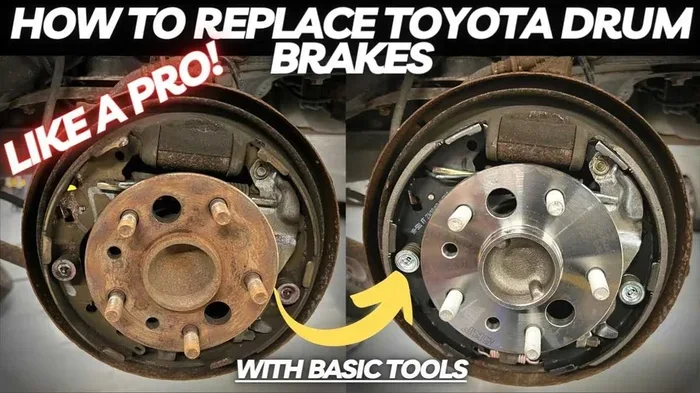
Older Toyota Corolla models, and some lower trims, use drum brakes on the rear wheels. Drum brakes work differently from disc brakes. Instead of pads squeezing a rotor, drum brakes use brake shoes that push outward against the inside of a spinning drum.
Drum brakes are cheaper to manufacture. They also hold the parking brake more easily since the drum design naturally integrates a brake shoe for the parking brake. However, drum brakes can fade under heavy use. They also take longer to dry after driving through water.
If you own an older Toyota Corolla, check your rear wheels. If they have a solid, round cover with no visible rotor, you likely have drum brakes in the back.
Comparison Table: Disc vs Drum Rear Brakes
| Feature | Disc Brakes | Drum Brakes |
|---|---|---|
| Common On | Modern Toyota Corollas (2014+) | Older Corollas and base trims |
| Performance in Rain | Excellent | Fair |
| Heat Dissipation | Very Good | Moderate |
| Parking Brake Integration | Separate or integrated | Built into drum design |
| Maintenance Cost | Moderate | Lower |
| Lifespan | 30,000 to 70,000 miles | 30,000 to 60,000 miles |
How Toyota Corolla Rear Brakes Work
Understanding how your Toyota Corolla brake system works helps you take better care of it. The rear brake system is a team effort. It works alongside the front brakes, brake lines, brake fluid, and the master cylinder to bring your car to a stop.
When you press the brake pedal, you create pressure in the brake fluid. That pressure travels through brake lines to each wheel. At the rear wheels, the pressure activates either the brake caliper (for disc brakes) or the wheel cylinder (for drum brakes). This action creates friction against the moving wheel, slowing it down.
On Toyota Corollas with rear disc brakes, the caliper slides over the rotor and presses the pads against both sides. On models with rear drum brakes, the wheel cylinder pushes the brake shoes outward against the drum. Both systems achieve the same goal: controlled deceleration.
The Toyota brake system also includes a brake proportioning valve. This valve adjusts how much braking force goes to the front and rear wheels. It ensures the rear brakes do not lock up before the front brakes. This balance is essential for safe stopping.
The Role of Brake Pads
Brake pads are the friction material that presses against the rotor or drum. They are the part that wears down over time. On a Toyota Corolla with rear disc brakes, you have two rear brake pads per wheel. That means four rear brake pads total on a disc-brake Corolla.
Brake pads are made from different materials. Ceramic brake pads are common on Toyota Corollas. They are quiet, produce less dust, and last a long time. Some models use semi-metallic pads for extra stopping power. Either way, all brake pads wear down and need replacement eventually.
When To Replace Toyota Corolla Rear Brake Pads
Knowing when to replace your rear brake pads saves you from bigger problems. Brake pads do not last forever. They wear down every time you step on the brake pedal. But how do you know when it is time for a change?
Most Toyota Corolla rear brake pads last between 30,000 and 70,000 miles. The exact lifespan depends on your driving habits, road conditions, and the type of brake pads installed. City drivers who stop and go a lot will wear pads faster than highway drivers.
Here are the most common signs that your rear brake pads need attention:
- Squealing or grinding noises: A high-pitched squeal when braking is often the first sign. Many brake pads have a wear indicator that makes this sound on purpose.
- Longer stopping distances: If your Toyota Corolla takes longer to stop than usual, your brake pads may be thin.
- Vibration in the brake pedal: This can mean warped brake rotors, which often happens when worn pads are ignored.
- Brake warning light: Some Toyota models have a dashboard warning light that activates when pad thickness gets low.
- Thin pads visible through the wheel spokes: If you can look through the spokes and see the pad, check its thickness. Less than a quarter inch means it is time for a replacement.
If you notice any of these signs, get your brakes checked right away. Driving on worn brake pads can damage the rotors. And replacing rotors costs significantly more than replacing pads. That is why quick action saves you money.
How Much Does Rear Brake Pad Replacement Cost?
The cost to replace rear brake pads on a Toyota Corolla typically ranges from $150 to $350 for both rear wheels, depending on the parts and labor rates in your area. Ceramic pads tend to cost a bit more but last longer. If you need rear brake rotors replaced too, add another $200 to $400 to the total bill.
Many Toyota dealerships and independent shops can handle this job. If you are handy, you can also do it yourself with basic tools. Just make sure you follow the proper torque specs and safety steps.
Toyota Corolla Brake Maintenance Tips
Keeping your Toyota Corolla brake system in top shape does not have to be complicated. A few simple habits go a long way. Here are practical maintenance tips every Corolla owner should follow.
Check Brake Fluid Regularly
Brake fluid is the lifeblood of your braking system. It transfers the force from your foot on the pedal to the brakes at each wheel. Over time, brake fluid absorbs moisture from the air. This moisture lowers the boiling point of the fluid and can cause brake failure in extreme cases.
Check your brake fluid level every few months. You can find the brake fluid reservoir under the hood, near the back of the engine bay. The fluid should be between the minimum and maximum marks on the reservoir. If it is low, top it off with the type of fluid recommended in your owner’s manual.
Toyota recommends changing brake fluid every two years or 24,000 miles. This is one of those maintenance items people forget. But fresh brake fluid keeps your system working properly and prevents corrosion inside the brake lines.
Inspect Brake Pads and Rotors
Have your brake pads and rotors inspected at every oil change. Most quick-lube shops and Toyota dealerships will do this for free or a small fee. They can measure pad thickness and check rotor condition with a simple visual inspection.
If you are checking your oil level regularly, you can also take a moment to look at your brakes. Just remove the wheel and look at the pad material. Thick pads mean you have time. Thin pads mean it is time to plan a replacement.
For those who use 5W 30 oil in a Toyota Corolla as part of regular maintenance, combining this with a brake inspection creates a solid routine that keeps your car safe and reliable.
Avoid Riding the Brakes
One of the fastest ways to wear out your rear brake pads is to ride the brakes. This means keeping your foot on the brake pedal while driving, even lightly. It creates constant friction and heat, which wears pads down quickly.
Instead, practice coasting to slow down when possible. Take your foot off the gas pedal early and let the car naturally decelerate. This simple habit reduces brake wear and saves fuel too.
Use Quality Replacement Parts
When it is time to replace brake components, choose quality parts. OEM Toyota brake pads and rotors are designed specifically for your Corolla. They match the original specifications for performance, noise, and durability. Aftermarket parts can be good too, but make sure they come from a reputable brand.
Cheap brake pads might save money upfront, but they often wear out faster and may cause noise or vibration. Investing in quality parts pays off over time.
Common Toyota Corolla Brake Problems
Toyota Corollas are known for reliability, but no car is perfect. Certain brake problems show up more often than others on this model. Knowing what to watch for helps you catch issues early.
Warped Brake Rotors
Warped rotors are a common problem on Toyota Corollas, especially on models that use rear disc brakes. They happen when the rotor overheats from heavy braking or riding the brakes. A warped rotor causes a pulsing feeling in the brake pedal when you stop.
The fix is either to resurface the rotor or replace it entirely. Resurfacing works if the rotor still has enough material. If it is too thin, replacement is the only safe option. Rotor resurfacing or replacement typically costs between $150 and $300 per rotor.
Sticking Brake Calipers
A sticking caliper occurs when the caliper slides or pins become corroded or dirty. This causes the caliper to not release the brake pad fully. The result is uneven pad wear, pulling to one side during braking, and reduced fuel economy.
Caliper replacement can range from $300 to $600 per caliper depending on the shop. Regular brake inspections help catch this problem before it causes further damage to the rotor or pad.
Worn Brake Hardware
Brake hardware includes clips, pins, and shims that hold the brake pad and caliper in place. Over time, these small parts wear out or corrode. Worn hardware causes noise, uneven pad wear, and poor brake performance.
Replacing brake hardware is inexpensive, usually under $50 for a full set. Many mechanics recommend replacing hardware every time you change brake pads. It is a small cost that prevents bigger headaches.
Brake Fluid Leaks
Brake fluid leaks are rare but serious. They can happen at the brake line connections, the caliper seal, or the master cylinder. A fluid leak reduces braking pressure and can lead to brake failure if not addressed quickly.
If you notice a puddle of clear or yellowish fluid under your car near the wheels, get it checked immediately. Brake fluid leaks are not something to ignore. Safety comes first.
Parking Brake Cable Sticking
On Toyota Corollas with rear drum brakes, the parking brake cable can stick or seize over time. This happens from rust, lack of use, or exposure to road salt. A stuck parking brake cable causes uneven brake wear and can overheat the rear brakes.
Regular use of the parking brake helps prevent cable sticking. Lubricating the cable and adjusting the tension during brake service also helps. If the cable is too far gone, replacement is straightforward and affordable.
Expert Tips for Long-Lasting Toyota Corolla Brakes
Want your Toyota Corolla brakes to last as long as possible? Follow these expert-backed tips. They come from years of real-world experience and Toyota maintenance knowledge.
- Drive smoothly. Gentle braking extends pad life dramatically compared to hard, sudden stops.
- Keep your tires inflated. Underinflated tires increase rolling resistance and put extra stress on the brake system.
- Flush brake fluid on schedule. Fresh fluid prevents internal corrosion and keeps the system responsive.
- Listen to your car. Unusual sounds when braking should be checked immediately. Catching a problem early saves money.
- Follow the Toyota maintenance schedule. Your owner’s manual outlines exactly when to service the brakes. Stick to it.
Toyota Corollas are built to last. With proper care, the brake system can easily go well past 100,000 miles before needing major work. Many owners report that their Toyota Corolla brake system stays strong well beyond 150,000 miles with regular maintenance.
Just like following the recommended oil change schedule and using the right 5W 30 oil for your engine, keeping up with brake maintenance ensures your Corolla remains a dependable daily driver for years to come. Toyota builds these cars to last, and that includes the braking components.
If you are wondering about the long-term reliability of your Toyota, you might also be interested to know that Toyota vehicles can last 500,000 miles with proper care. That includes keeping the brake system in excellent condition through every stage of the car’s life.
Final Thoughts
So, do Toyota Corollas have rear brakes? Absolutely. Every single Toyota Corolla on the road has rear brakes, whether they are disc brakes or drum brakes. Understanding which type your specific model uses helps you maintain the right components and catch problems early.
The Toyota Corolla brake system is designed for reliability, safety, and long life. But like any part of your car, it needs attention. Regular inspections, timely pad replacements, fresh brake fluid, and smooth driving habits keep your brakes performing at their best.
Do not wait for a problem to start paying attention to your brakes. Make brake checks part of your regular maintenance routine. Your safety, your passengers’ safety, and your wallet will all thank you. A well-maintained Toyota Corolla with healthy brakes is one of the most dependable daily drivers you can own.
Whether you are a first-time Corolla owner or have been driving one for years, understanding your brake system gives you confidence. You know what to look for, what to expect, and how to keep everything working the way Toyota intended. That is the kind of knowledge every car owner should have.
Frequently Asked Questions
Do all Toyota Corollas have rear disc brakes?
Not all Toyota Corollas have rear disc brakes. Newer models, especially from 2014 onward, typically use disc brakes on all four wheels. However, older models and some base trims may use drum brakes on the rear. Check your owner’s manual or look at the rear wheel to confirm which type your car has.
How often should I replace my Toyota Corolla rear brake pads?
Toyota Corolla rear brake pads typically last between 30,000 and 70,000 miles. Your driving style, road conditions, and the type of brake pads all affect how long they last. City drivers who stop and go frequently will need replacements more often than highway drivers.
Can I drive my Toyota Corolla with worn rear brake pads?
You should not drive your Toyota Corolla with worn rear brake pads. Worn pads reduce braking performance and can damage the rotors or drums. If your pads are thin or you hear grinding noises, get them replaced as soon as possible to avoid costly repairs and ensure safe driving.
Are rear brakes on a Toyota Corolla expensive to replace?
Rear brake pad replacement on a Toyota Corolla is generally affordable, typically costing between $150 and $350 for both rear wheels. If rotors need replacement too, the cost increases but remains reasonable compared to many other vehicles. Regular maintenance helps avoid expensive rotor damage.
What type of brake fluid does a Toyota Corolla use?
Most Toyota Corollas use DOT 4 brake fluid. Check your owner’s manual to confirm the exact specification for your model year. Always use the recommended fluid type and replace it every two years to keep the brake system functioning properly.
Do Toyota Corollas have a brake wear indicator?
Many Toyota Corollas come equipped with a brake wear indicator. This small metal tab makes a squealing noise when the brake pad material gets low. If you hear a persistent squeal when braking, it is likely the wear indicator telling you it is time for new brake pads.