Does a Metal Box Protect Car Keys From Digital Theft
A metal box can help protect car keys from digital theft by blocking radio signals that thieves use to steal vehicles. Relay attacks have made car key fobs vulnerable, and many drivers are turning to simple solutions like metal containers for car key protection. While a metal box works as a basic signal blocking pouch alternative, purpose-built RFID blocking solutions offer stronger defense against electronic theft and unauthorized access.
You lock your front door every night. You probably even set an alarm on your car. But what about your car keys? More specifically, what about the tiny electronic device sitting on your kitchen counter that could let a thief drive away in seconds? This is where the question really matters: does a metal box protect car keys from digital theft?
The short answer is yes, but with some important caveats. A metal box can block the radio signals that modern car key fobs send out. This simple trick can stop criminals from using relay devices to steal your vehicle. However, not every metal container works the same way. And there are better, more reliable options available today. In this guide, we will walk through everything you need to know about car key protection, how digital theft works, and whether a metal box is enough to keep your vehicle safe.
Digital car theft has grown rapidly in recent years. Criminals no longer need to break a window or pick a lock. They just need a small device and a clear line of sight to your key fob. This makes signal blocking one of the most important things you can do to protect your car. Let us dive in and explore how this works.
Key Takeaways
- Metal boxes can block signals: A properly sealed metal container disrupts the radio waves that car key fobs use to communicate.
- Relay attacks are a real threat: Thieves use signal boosters to extend the range of your key fob and gain access to your vehicle.
- Faraday boxes are purpose-built: These specialized containers offer more reliable protection than improvised metal boxes.
- Simple solutions work: Wrapping your key fob in aluminum foil or storing it in a metal tin can reduce signal leakage.
- Multiple layers of security help: Combining a signal-blocking solution with other anti-theft measures gives the best protection.
- Not all metal boxes are equal: The material, thickness, and seal of the container affect how well it blocks signals.
- Stay informed: Understanding how digital car theft works helps you choose the right protection for your vehicle.
📑 Table of Contents
- How Digital Car Theft Actually Works
- Can a Metal Box Really Block Car Key Signals?
- Metal Box vs. Purpose-Built Signal Blocking Solutions
- Common Mistakes People Make With Key Protection
- Expert Tips for Maximum Car Key Security
- Are Metal Boxes a Long-Term Solution?
- Final Thoughts on Protecting Your Car Keys From Digital Theft
How Digital Car Theft Actually Works
Before we talk about protection, it helps to understand the threat. Modern cars use keyless entry systems that communicate with your key fob through radio signals. When you approach your vehicle, the car detects the fob and unlocks the doors. Press a button on the key fob, and the engine starts. It is fast, convenient, and increasingly common in newer vehicles.
But this convenience comes with a serious vulnerability. Thieves have figured out how to exploit this system using a technique called a relay attack. Here is how it works in simple terms.
What Is a Relay Attack?
A relay attack involves two thieves working together. One thief stands near your home with a signal booster device. This device captures the radio signal coming from your key fob, even if it is inside your house. The second thief stands near your car with a receiver. The signal gets relayed from the first device to the second one.
Your car thinks the key fob is right next to it. The doors unlock. The engine starts. And just like that, a thief drives away with your vehicle. This entire process can take less than sixty seconds. Many car owners do not even realize what has happened until it is too late.
Relay attacks work because most key fobs are designed to constantly emit a low-level signal. This signal makes it easy for your car to find the fob. But it also makes it easy for a thief to find and amplify that signal from a distance. The problem is not with your car. The problem is with how the wireless key technology works.
Why Keyless Entry Makes Cars Vulnerable
Keyless entry systems rely on signal range. A typical key fob can send a signal up to 30 feet or more. If your fob is near a window or door, that signal can reach outside your home. Thieves use powerful signal amplifiers to extend that range even further. Some devices can pick up a fob signal from over 100 feet away.
This means your car is vulnerable even when your key fob is inside your house. It does not matter if your keys are in a drawer, on a shelf, or in the hallway. As long as the fob is powered on, it is broadcasting a signal. And that signal can be captured.
Can a Metal Box Really Block Car Key Signals?
Now let us get to the heart of the matter. Can a metal box protect car keys from being scanned and copied by thieves? The science behind this is straightforward. Metal is a conductor of electricity. When radio waves hit a metal surface, they are either absorbed or reflected. This creates what is known as a Faraday cage effect.
A Faraday cage blocks external electromagnetic fields from reaching the inside. In simple terms, a metal enclosure stops radio signals from getting in or getting out. This means a key fob stored inside a metal box cannot send its signal to a relay device outside.
The Science Behind Signal Blocking
When a key fob sends a signal, it uses radio frequency waves, typically at 125 kHz or 315 MHz. These waves travel through the air and can pass through walls, windows, and most household materials. But they cannot easily pass through solid metal. The metal reflects the waves back, trapping the signal inside the container.
This is why electromagnetic shielding works. Any fully enclosed metal container can act as a shield. The key factors that determine how effective the shielding is include:
- Material type: Steel and aluminum are the most common and effective metals for blocking signals.
- Thickness of the metal: Thicker metal provides better shielding than thin metal sheets.
- Seal quality: Gaps or openings in the container let signals leak through, reducing effectiveness.
- Size of the container: A container that fits the fob snugly works better than one with lots of empty space.
What Types of Metal Boxes Work Best?
Not all metal boxes are created equal when it comes to signal blocking. Here are some common options people use:
- Metal lunch boxes: These work surprisingly well. The steel construction and tight-fitting lid create a decent shield. Look for one with a secure latch and no large gaps.
- Old metal toolboxes: A sturdy metal toolbox with a tight seal can block key fob signals effectively.
- Metal cookie tins: These are a popular DIY option. The smooth metal walls and snug fit make them a decent choice for home use.
- Metal filing cabinets: If the drawer closes tightly, a filing cabinet can block signals from a key fob stored inside.
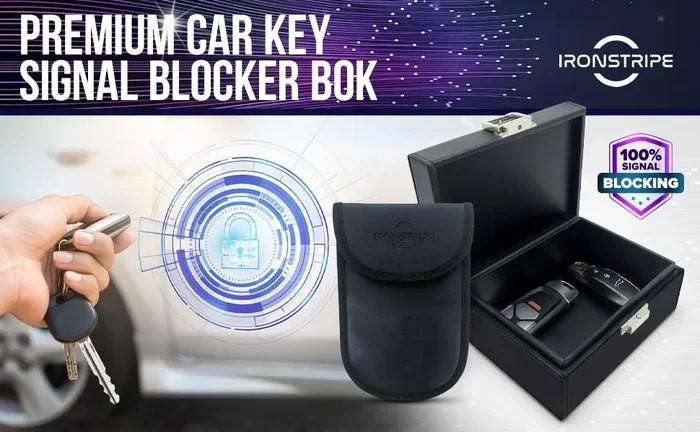
- Purpose-built Faraday boxes: These are specifically designed for signal blocking. They use specialized materials and construction to provide the most reliable protection.
The simplest DIY method is to wrap your key fob in aluminum foil. This creates a quick and cheap signal blocker. Many security experts confirm that this works. However, it is not the most convenient or elegant solution for daily use.
Metal Box vs. Purpose-Built Signal Blocking Solutions
While a metal box can block signals, it is worth comparing it to dedicated signal blocking pouches and RFID blocking products. Both approaches aim to do the same thing, but they differ in convenience, reliability, and cost.
| Feature | Metal Box | Faraday Pouch / Sleeve |
|---|---|---|
| Signal Blocking Ability | Good to excellent when fully sealed | Excellent, designed specifically for this purpose |
| Convenience | Bulky, not portable | Compact, fits in a pocket or bag |
| Cost | Low to free (DIY options) | Low to moderate ($5-$25) |
| Durability | High, metal is sturdy | Moderate, fabric wears over time |
| Ease of Use | Must open and close each time | Quick slide-in and slide-out |
| Aesthetic Appeal | Not designed for daily carry | Sleek, designed for everyday use |
| Reliability | Depends on seal and material | Consistent, tested performance |
The table above shows that both options have their strengths. A metal box works great for storing keys at home overnight. A Faraday pouch is better for carrying your key fob during the day. For the best vehicle theft prevention, you should consider using both methods together.
Common Mistakes People Make With Key Protection
Even with the best intentions, many car owners make mistakes that leave their keys exposed to digital theft. Here are some of the most common ones:
Leaving Keys Near Windows or Doors
This is the number one mistake. Placing your key fob near a front door, hallway window, or glass table makes it easy for a relay device to pick up the signal. Even if the fob is several feet away from the window, the signal can still reach outside. Move your keys to an interior room or a basement closet for better protection.
Using a Signal-Blocking Product Incorrectly
Some people buy a signal blocking pouch but do not close it properly. If the pouch is partially open or the flap is not fully sealed, signals can leak through. Always make sure the pouch is fully closed when storing your key fob.
Forgetting to Remove the Key Fob from the Car
Many modern cars keep the key fob active even when it is inside the vehicle. If you leave the fob in the car overnight in a driveway, a thief walking by with a relay device can still detect and amplify the signal. Always take the fob inside with you.
Assuming All Metal Containers Work Equally
A loosely closed metal container with gaps will not block signals effectively. The container must fully enclose the key fob with no openings. Even small gaps can let enough signal through for a relay attack to succeed.
Ignoring Software Updates From the Car Manufacturer
Many car manufacturers release software updates that improve key fob security. These updates can patch vulnerabilities that thieves exploit. Check with your dealer or the manufacturer’s app for available updates. Keeping your car’s software current is an important part of digital theft prevention.
Expert Tips for Maximum Car Key Security
Protecting your car keys goes beyond just storing them in a metal box. Here are some expert-backed tips that add layers of security to keep your vehicle safe.
Use Multiple Layers of Protection
The best approach is to use more than one method of protection. Store your key fob in a Faraday box at night, and carry it in a signal blocking pouch during the day. This double layer makes it extremely difficult for thieves to capture your key fob signal. Think of it like locking your front door and setting the alarm at the same time.
Turn Off Your Key Fob When Not in Use
Some key fobs have a physical button or switch that turns off the wireless signal. Check your key fob manual to see if this feature exists. If it does, use it when you are at home and do not need the fob to be active. A powered-off fob cannot be scanned by relay devices.
Keep Your Keys Away from Exterior Walls
Radio signals pass easily through walls, especially exterior walls. Store your key fob in the center of your home, away from outer walls and windows. A bedroom closet on an interior wall is an ideal spot.
Consider a GPS Tracker for Your Vehicle
Even with the best key protection, determined thieves may still target your car. A hidden GPS tracker gives you a better chance of recovering your vehicle if it is stolen. Many modern trackers are small enough to hide inside the dashboard or under a seat.
Stay Updated on New Theft Methods
Car thieves constantly develop new techniques to bypass security systems. Stay informed about the latest vehicle theft prevention methods. Follow trusted automotive security blogs, watch news reports, and talk to your local dealer about emerging threats.
Get a Steering Wheel Lock
While this does not protect your key fob, a visible steering wheel lock acts as a strong deterrent. Thieves prefer easy targets. A car with a visible lock is much less attractive than one without any visible security measures.
Are Metal Boxes a Long-Term Solution?
A metal box is a good short-term solution, especially if you do not want to spend money on specialized products. It provides immediate protection against relay attacks and costs little to nothing. However, it is not the most convenient or reliable long-term solution.
As car technology evolves, so do theft methods. Car manufacturers are developing newer key fob security features, including ultra-wideband technology and motion-activated fobs that go to sleep when they are not moving. These innovations will reduce the need for external signal blocking solutions.
For now, a metal box remains a practical and effective tool in your car security toolkit. Just remember that it works best when combined with other protective measures. Think of it as one layer in a multi-layered security approach.
Final Thoughts on Protecting Your Car Keys From Digital Theft
The question “does a metal box protect car keys from digital theft” has a clear answer. Yes, it can. A properly sealed metal container blocks the radio signals that thieves use to steal vehicles through relay attacks. It is a simple, affordable, and surprisingly effective method of car key protection.
But a metal box is not the only option, and it may not be the best option for every situation. Purpose-built Faraday boxes and signal blocking pouches offer more reliable and convenient protection. The best strategy combines multiple layers of security, from signal blocking to software updates to physical deterrents like steering wheel locks.
Take a few minutes today to evaluate how you store your key fob at home. Move it away from windows and doors. Consider wrapping it in aluminum foil or placing it in a metal container overnight. These small changes can make a big difference in keeping your vehicle safe from digital theft.
Your car keys are the gateway to your vehicle. Protecting them is not just about saving money on car insurance or avoiding the hassle of a stolen car. It is about protecting your daily life and your peace of mind. With the right knowledge and a few simple tools, you can significantly reduce your risk of becoming a victim of digital car theft.
Stay alert, stay informed, and take action. Your vehicle and your peace of mind are worth it.
Frequently Asked Questions
Can I use any metal container to block my car key signal?
Most metal containers will block key fob signals to some degree. Steel and aluminum work best. The container must fully enclose the fob with no gaps or openings. A loosely closed metal box may not provide complete protection against relay attacks.
How effective is aluminum foil at blocking car key signals?
Aluminum foil is surprisingly effective at blocking key fob signals. Wrapping your fob in two or three layers of foil creates a basic Faraday cage. Security experts confirm this method works. However, it is not the most convenient solution for daily use.
What is a Faraday box and how is it different from a regular metal box?
A Faraday box is specifically designed to block electromagnetic signals. It uses conductive materials and sealed construction to prevent radio waves from entering or escaping. A regular metal box can work similarly, but a purpose-built Faraday box offers more consistent and tested performance.
Do all modern cars with keyless entry are vulnerable to relay attacks?
Most cars with keyless entry systems are vulnerable to relay attacks. The vulnerability comes from the key fob constantly emitting a signal. However, some newer models include advanced security features like ultra-wideband technology that makes relay attacks much harder to execute.
Should I remove the key fob battery at night for extra security?
Removing the battery does stop the fob from transmitting signals, but it is not practical for daily use. It also risks losing your stored settings and requiring reprogramming. Using a metal box or Faraday pouch is a much more convenient and effective solution.
How much does a signal blocking pouch cost?
Signal blocking pouches and Faraday sleeves are very affordable. You can find them for as little as five to ten dollars online. Higher-end models with better materials and construction may cost up to twenty-five dollars. They are a small investment for significant peace of mind.
=== CONCLUSION ===
Does a metal box protect car keys from digital theft? The answer is a clear yes. A sealed metal container blocks the radio signals that thieves exploit through relay attacks. It is one of the simplest and most affordable ways to add a layer of car security to your daily routine. However, for the best protection, combine a metal box with purpose-built signal blocking products, keep your car software updated, and adopt smart key storage habits. Taking these steps today can save you from the stress and financial loss of vehicle theft tomorrow.