How Bugattis Quad-Turbo Tech Achieves Unmatched Speed
Bugatti’s quad-turbo system uses four turbochargers to force massive amounts of air into the engine, creating jaw-dropping horsepower and mind-blowing acceleration. This engineering marvel powers iconic models like the Chiron and Veyron to record-breaking top speeds. Understanding how quad-turbo tech works helps car enthusiasts appreciate why Bugatti remains the king of hypercar performance.
When you think about the fastest cars ever built, Bugatti comes to mind almost instantly. The French luxury brand has spent decades pushing engineering boundaries. And at the heart of their success lies a technology that changed everything: the quad-turbo system.
So what exactly makes Bugatti’s quad-turbo tech so special? Why does it produce more than a thousand horsepower and send hypercars screaming past 250 miles per hour? In this article, we break it all down. You will learn how four turbochargers work together, why the W16 engine matters, and what makes Bugatti’s approach unmatched in the world of high-performance engines.
Whether you are a gearhead or just curious about supercar engineering, this deep dive will give you a clear picture. No jargon. No fluff. Just real, useful information about one of the most impressive powertrain technologies ever created.
Key Takeaways
- Four turbochargers work together: Bugatti’s W16 engine uses four turbochargers to deliver incredible boost pressure and smooth, relentless power.
- Over 1,000 horsepower is standard: Quad-turbo setups allow Bugatti engines to produce more than 1,000 hp without sacrificing reliability.
- Advanced materials matter: Titanium turbine wheels and ceramic components handle extreme heat and RPM levels that would destroy ordinary engines.
- Aerodynamics and tech go hand in hand: The quad-turbo system works alongside active aerodynamics to keep Bugatti stable at insane speeds.
- Maintenance is critical: High-performance turbo engines need specialized care, including proper transmission fluid levels and regular inspections.
- Bugatti redefined speed: The quad-turbo approach changed what the automotive world thought was possible for road-legal cars.
📑 Table of Contents
- What Is Quad-Turbo Technology?
- The W16 Engine: The Heart of the System
- How Boost Pressure Drives Unmatched Speed
- Materials and Engineering That Withstand Extreme Conditions
- Active Aerodynamics: Working With the Turbo System
- Maintenance and Care for Quad-Turbo Engines
- The Legacy of Bugatti’s Quad-Turbo Innovation
What Is Quad-Turbo Technology?
Let us start with the basics. A turbocharger uses exhaust gases to spin a turbine. That turbine compresses air and forces it into the engine’s combustion chambers. More air means more fuel can burn. More fuel burning means more power.
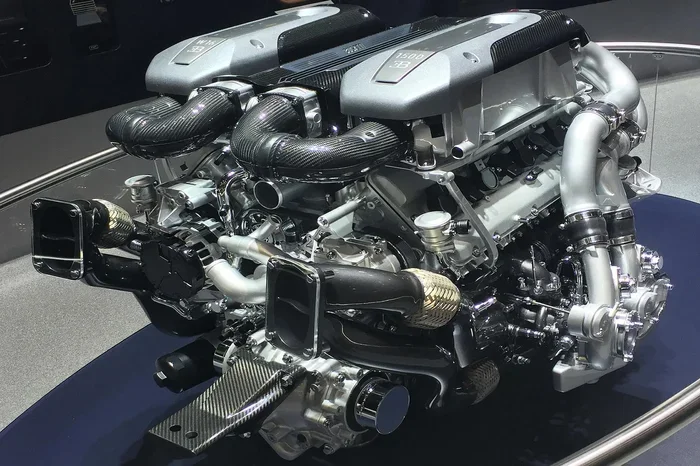
A quad-turbo setup uses four of these devices instead of one or two. Bugatti places two turbochargers on each bank of its W16 engine. This arrangement delivers several key advantages:
- Faster spooling: Smaller turbos respond quicker than one large turbo.
- Smoother power delivery: Four turbos share the work, reducing lag.
- Higher boost pressure: More compressors mean more air at higher engine speeds.
- Better reliability: Smaller turbos experience less stress than a single massive unit.
The result is an engine that delivers power almost instantly. There is no waiting for the turbo to “catch up.” The quad-turbo system provides seamless, relentless acceleration from low RPM all the way to the redline.
Why Four Turbos Instead of Two?
You might wonder why Bugatti does not just use two big turbochargers. The answer comes down to physics and packaging. A single large turbo needs more exhaust energy to spin up. This creates what enthusiasts call “turbo lag” — a delay between pressing the pedal and feeling the power.
By using four smaller turbos, Bugatti eliminates this problem almost entirely. Each turbo handles a smaller portion of the exhaust flow. They spin up faster and provide boost at lower engine speeds. This is why Bugatti cars feel so responsive, even at low speeds.
Think of it like breathing. One huge breath works, but four quick steady breaths give you more oxygen faster. Your body responds better. The same principle applies to a turbocharged engine with four compressors.
The W16 Engine: The Heart of the System
Bugatti’s quad-turbo technology would mean nothing without the W16 engine. This unique powerplant has 16 cylinders arranged in a W shape. It is essentially two V8 engines merged into one block. The result is a massive, powerful engine that fits in a reasonable space.
The W16 engine displaces 8.0 liters. Four turbochargers feed it air at high pressure. The combination produces staggering numbers:
- Horsepower: Over 1,000 hp in most configurations
- Torque: Around 1,180 lb-ft
- Top speed: Over 260 mph in the Chiron Super Sport
- 0 to 60 mph: Under 2.5 seconds
These numbers are not just impressive on paper. They translate to real-world performance that no other production car can match. The quad-turbo W16 is the reason Bugatti holds multiple speed records.
How the Combustion Chamber Benefits from Quad-Turbo Boost
Each cylinder in the W16 needs a precise mix of fuel and air. The four turbochargers ensure that every cylinder receives the same amount of compressed air. This balanced approach leads to:
- Even power distribution: All 16 cylinders fire with equal force.
- Reduced engine stress: No single cylinder is overworked.
- Better fuel efficiency: Balanced combustion wastes less energy.
- Lower emissions: Complete combustion produces fewer pollutants.
The combustion chamber design works hand in hand with the turbo system. Engineers at Bugatti spent years perfecting the relationship between air intake, fuel injection, and spark timing. Every detail matters when you are pushing the limits of what an engine can do.
How Boost Pressure Drives Unmatched Speed
Boost pressure is the secret weapon of any turbocharged engine. It measures how much extra air the turbos push into the cylinders. More boost means more power. Bugatti’s quad-turbo system operates at impressive boost levels that would destroy most other turbo setups.
Each of the four turbochargers contributes to the total boost. The system uses advanced wastegate technology to control pressure. Wastegates release excess exhaust gas to prevent the turbos from over-spinning. This keeps the engine safe while still delivering maximum power.
The Role of Intercoolers
When air gets compressed by a turbocharger, it heats up. Hot air is less dense, which means less oxygen reaches the combustion chamber. Bugatti solves this problem with massive intercoolers. These systems cool the compressed air before it enters the engine.
Cooler air is denser. Denser air means more oxygen per cylinder. More oxygen means more fuel can burn. More fuel burning means more horsepower. The intercooler system is a critical piece of the quad-turbo puzzle. Without it, the engine would lose significant power at high boost levels.
Bugatti uses large, efficient intercoolers that can handle the heat generated by four turbochargers running at full boost. This is one reason why Bugatti cars can sustain their top speed for extended periods without overheating.
Materials and Engineering That Withstand Extreme Conditions
Building a quad-turbo engine that can handle over 1,000 horsepower requires extraordinary materials. Ordinary steel and aluminum would warp, crack, or fail under such extreme conditions. Bugatti uses advanced alloys and composites throughout the system.
The turbine wheels inside each turbo are made from titanium. This metal is incredibly strong yet lightweight. It can spin at speeds exceeding 100,000 RPM without losing structural integrity. The turbine wheels are one of the most critical components in the entire system.
Ceramic components are used in the exhaust pathway. Ceramic can withstand temperatures that would melt steel. This allows exhaust gases to flow efficiently through the turbos without causing heat damage to surrounding components.
Why Material Choice Matters for Performance
Every material choice in a Bugatti quad-turbo system serves a purpose:
- Titanium turbine wheels: Light, strong, and heat-resistant.
- Inconel exhaust manifolds: Handles extreme temperatures without cracking.
- Forged steel crankshaft: Survives the massive forces of 16 cylinders firing at high RPM.
- Carbon fiber components: Reduces weight while maintaining strength.
- High-silicon aluminum pistons: Resists heat expansion and detonation.
These materials work together to create an engine that is both powerful and durable. A high-performance engine like the Bugatti W16 would not last long without these advanced components.
Active Aerodynamics: Working With the Turbo System
Raw power means nothing if a car cannot stay on the ground at high speeds. Bugatti pairs its quad-turbo powertrain with sophisticated active aerodynamics. These systems adjust in real time to keep the car stable and fast.
At low speeds, aerodynamic elements reduce drag. This helps the car accelerate quickly. At high speeds, wings and diffusers increase downforce. This pushes the car onto the road and prevents it from lifting off the ground.
The relationship between the turbo system and aerodynamics is crucial. The quad-turbo engine produces so much power that the car needs every bit of grip it can get. Active aerodynamics ensure that all that acceleration translates into real-world speed, not just wheel spin.
How Aerodynamics Complement Turbo Performance
Here is how the two systems work together:
- The turbos deliver massive power: The engine produces over 1,000 hp.
- The transmission sends power to the wheels: A seven-speed dual-clutch gearbox handles the torque.
- Active aerodynamics manage airflow: Adjustable wings and vents control drag and downforce.
- The tires grip the road: Special Michelin tires are designed for speeds over 250 mph.
- The car stays stable and fast: All systems work in harmony to achieve record-breaking supercar performance.
No single component does the job alone. The quad-turbo system provides the power, but the aerodynamics, transmission, and tires all play essential roles. This is what makes Bugatti’s approach so effective. It is a complete system, not just a big engine.
For those who wonder about long-term reliability of such extreme machines, it is worth noting that even high-idling performance vehicles need proper care. If you are curious about how long a car can safely idle, check out our guide on how long a car can idle safely. Understanding idle behavior helps owners of powerful engines like Bugatti’s manage their vehicles better.
Maintenance and Care for Quad-Turbo Engines
Owning a Bugatti is not just about speed. It is about maintaining that speed over time. A quad-turbo engine requires specialized maintenance that goes far beyond what a regular car needs.
The turbochargers themselves need regular inspection. Oil lines must be kept clean to prevent clogging. The intercooler system needs to be checked for leaks or blockages. Boost pressure sensors must function correctly at all times.
Bugatti recommends strict maintenance schedules for these vehicles. Owners should follow the manufacturer’s guidelines closely. Skipping services can lead to costly repairs or reduced performance.
Common Maintenance Tasks for Turbo-Equipped Supercars
- Oil changes: High-performance engines burn oil faster. Frequent changes keep the turbos lubricated.
- Coolant system checks: The intercooler and engine cooling system must work perfectly.
- Brake inspections: Stopping a 4,000-pound car from 250 mph puts enormous stress on brakes.
- Transmission fluid: The dual-clutch gearbox needs proper fluid levels. You cannot simply add transmission fluid if it is low without checking for leaks and system integrity first.
- Turbo wastegate calibration: Ensures boost pressure stays within safe limits.
Proper maintenance keeps a Bugatti running at its best. Neglecting these tasks can lead to turbo failure, engine damage, or loss of the incredible supercar performance that makes these cars special.
What Happens When Turbo Maintenance Is Ignored?
Skipping turbo maintenance leads to a cascade of problems. Oil contamination can destroy turbine bearings. Clogged intercoolers reduce boost pressure. Faulty wastegates cause over-boost conditions that can crack pistons or blow head gaskets.
These repairs are expensive. A single turbo replacement can cost tens of thousands of dollars. Regular maintenance is far cheaper and keeps the car performing at its peak. For Bugatti owners, this is not optional — it is essential.
Even when a Bugatti sits for extended periods, owners need to understand how the engine and turbo system are affected. Our article on how long a hybrid can sit without being driven covers some relevant storage concerns that apply to any high-performance vehicle, including those with turbo systems.
The Legacy of Bugatti’s Quad-Turbo Innovation
Bugatti’s quad-turbo technology did not appear overnight. It evolved through years of racing and engineering development. The original Bugatti Veyron introduced the world to a quad-turbo W16 engine in 2005. At the time, it was the most powerful production car ever made.
Since then, Bugatti has continued to refine the system. Each new model brought more power, better efficiency, and improved reliability. The Chiron took the concept further with refined turbos and better aerodynamics. The latest Super Sport versions pushed top speed beyond 270 mph.
Other manufacturers have tried to replicate Bugatti’s success. Some use twin-turbo setups. A few have experimented with electric turbochargers. But none have matched the seamless, brutal power delivery of a true quad-turbo W16 engine.
How Bugatti Changed the Automotive Landscape
Before Bugatti’s quad-turbo revolution, most supercars used naturally aspirated engines or single turbos. The idea of four turbochargers in a production car seemed impractical. Bugatti proved the world wrong.
Today, quad-turbo setups appear in other high-performance vehicles. But Bugatti was the first to make it work at this level. The brand set the standard that others still try to reach. The quad-turbo engine remains Bugatti’s signature technology.
For enthusiasts who love speed and engineering, Bugatti’s approach represents the pinnacle of automotive achievement. Every component, from the turbine wheels to the exhaust system, serves a purpose. The result is a machine that delivers unmatched speed with a level of refinement that surprises people who expect supercars to be rough and raw.
Even when comparing different performance platforms, the quad-turbo philosophy stands out. While some manufacturers explore hybrid technology — like Toyota’s system where Toyota hybrid cars switch to petrol at certain speeds — Bugatti has stayed committed to its turbo-first approach. This dedication to forced induction engineering is what makes Bugatti unique.
The future of Bugatti’s quad-turbo technology looks bright. The company is exploring hybrid powertrains that combine electric motors with the existing turbo setup. This could push performance even further while improving fuel efficiency. Whatever comes next, Bugatti’s quad-turbo legacy is already secure as one of the greatest engineering achievements in automotive history.
Frequently Asked Questions
What makes Bugatti’s quad-turbo system different from other turbo setups?
Bugatti uses four turbochargers instead of one or two. This allows faster spooling, smoother power delivery, and higher boost pressure. The smaller individual turbos respond quicker than a single large unit, reducing turbo lag significantly.
How much horsepower does a Bugatti quad-turbo engine produce?
Most Bugatti models produce over 1,000 horsepower. The exact figure varies by model, but the quad-turbo W16 engine consistently delivers extraordinary power that no other production car matches.
Why does Bugatti use a W16 engine instead of a V12 or V8?
The W16 configuration allows Bugatti to fit 16 cylinders in a relatively compact space. Four turbochargers connect to this engine, and the cylinder count enables the massive power output that defines Bugatti’s performance identity.
How often does a Bugatti quad-turbo engine need maintenance?
Bugatti recommends following strict maintenance schedules. Oil changes, turbo inspections, and intercooler checks should happen regularly. Skipping maintenance can lead to expensive turbo failures and loss of performance.
Can quad-turbo technology be used in regular cars?
The concept can be applied, but the cost and complexity make it impractical for most vehicles. Quad-turbo systems work best in high-displacement engines that can fully utilize the extra boost. Most production cars use single or twin-turbo setups for cost and efficiency reasons.
What is the top speed of a Bugatti with quad-turbo technology?
Bugatti models have reached top speeds over 270 mph. The quad-turbo W16 engine provides the sustained power needed to achieve and maintain these extreme velocities, supported by active aerodynamics and specialized tires.
=== CONCLUSION ===
Bugatti’s quad-turbo tech represents the absolute peak of automotive engineering. Four turbochargers working together with a massive W16 engine produce more than 1,000 horsepower of seamless, relentless power. The combination of advanced materials, precision boost control, and active aerodynamics creates a machine that achieves truly unmatched speed.
From the turbine wheels spinning at incredible speeds to the intercoolers managing extreme heat, every component plays a vital role. Bugatti did not just build a fast car — they built a complete performance system where every part works in perfect harmony.
Understanding how this technology works gives you a deeper appreciation for what Bugatti has accomplished. The quad-turbo approach changed what the world believed was possible for a road-legal car. It set new standards for supercar performance that competitors still chase today.
Whether you are a proud Bugatti owner or simply an admirer of engineering excellence, the quad-turbo story is one of innovation, ambition, and relentless pursuit of speed. The technology continues to evolve, but its core principle remains the same: four turbochargers working together to deliver power that defies belief.