Toyota 4runner Weight How Much Does a Toyota 4runner Weigh
The Toyota 4Runner weight varies by generation, trim, and engine, but most models sit between 4,300 and 4,900 pounds. Understanding your 4Runner curb weight helps with towing, payload planning, and overall vehicle performance.
So, how much does a Toyota 4Runner weigh? This is one of the most common questions among SUV buyers, enthusiasts, and anyone planning a serious off-road trip. Whether you are hauling gear, towing a trailer, or just curious about your vehicle’s specs, knowing the 4Runner weight is essential.
The Toyota 4Runner has been a staple in the midsize SUV market for decades. It is rugged, reliable, and built to last. But with that toughness comes a bit of heft. The 4Runner curb weight has changed over the years, and it varies quite a bit depending on the generation, trim level, and engine options. In this guide, we will break down everything you need to know about Toyota 4Runner weight across every major model year.
By the end of this article, you will understand curb weight, gross vehicle weight rating, payload limits, towing numbers, and how all of this affects your daily driving and off-road adventures. Let us dive in.
Key Takeaways
- Base curb weight: Most Toyota 4Runner models weigh between 4,300 and 4,900 pounds depending on the year and trim.
- Payload matters: Knowing your 4Runner payload capacity helps you avoid overloading and stay safe on the road.
- Towing capacity: The 4Runner can tow between 4,000 and 5,000 pounds when properly equipped.
- Generational differences: Newer models are heavier due to added safety features and tech, while older generations are lighter.
- Trim variations: Higher trims like TRD Pro and Limited add weight through extra equipment and features.
- Real-world impact: Vehicle weight affects fuel economy, handling, braking distance, and insurance costs.
- Check your door jamb: The VIN plate on your 4Runner gives the exact gross vehicle weight rating for your specific model.
📑 Table of Contents
- What Does Curb Weight Mean for the Toyota 4Runner?
- Toyota 4Runner Weight by Generation
- Payload Capacity and Towing: What Your 4Runner Can Handle
- How 4Runner Weight Affects Fuel Economy
- How 4Runner Weight Compares to Other SUVs
- How to Find the Exact Weight of Your 4Runner
- How 4Runner Weight Affects Insurance and Registration
- Common Mistakes People Make with 4Runner Weight
- Expert Insights on 4Runner Weight and Performance
- Key Takeaways
What Does Curb Weight Mean for the Toyota 4Runner?
Before we get into specific numbers, let us clear up what curb weight actually means. Curb weight is the weight of your vehicle with a full tank of fuel but no passengers or cargo. It includes all standard equipment, fluids, and the factory-installed components. This is the number you will see on most spec sheets.
Some people confuse curb weight with gross vehicle weight. Gross vehicle weight rating (GVWR) is the maximum safe weight your 4Runner can be, including passengers, cargo, fuel, and any accessories. The difference between GVWR and curb weight gives you your payload capacity.
Understanding these terms is important. If you overload your 4Runner, you risk damaging the suspension, tires, and engine. It also affects braking performance and handling. Always check your door jamb sticker for the exact numbers on your specific model.
Why Vehicle Weight Matters
Weight affects nearly every aspect of how your 4Runner performs. Here are the key areas where vehicle weight plays a role:
- Fuel economy: Heavier vehicles burn more fuel. A lighter 4Runner will generally get better miles per gallon.
- Acceleration: More weight means slower acceleration. This matters for highway merging and passing.
- Braking distance: Heavier vehicles need more distance to stop. This is critical for safety.
- Tire wear: Extra weight wears through tires faster, especially on rough terrain.
- Insurance costs: Heavier vehicles sometimes cost more to insure due to repair expenses and claims data.
- Road taxes and fees: Some states charge registration fees based on vehicle weight.
Now that you understand the basics, let us look at the actual numbers for each generation of the Toyota 4Runner.
Toyota 4Runner Weight by Generation
The 4Runner has gone through several major generational changes since its introduction in 1984. Each generation brought new features, stronger frames, and yes, more weight. Here is a detailed look at how much each generation weighs.
First Generation (1984-1995)
The original 4Runner was essentially a compact truck with a fiberglass top. The first-generation 4Runner weight was quite light compared to modern models. Most first-gen models weighed between 3,400 and 3,700 pounds. The early models used a 2.4-liter inline-four engine, and later versions offered a 3.0-liter V6.
Because these trucks were simple and stripped down, they had very little in the way of luxury features. No power windows, no fancy infotainment systems, and minimal sound insulation. This kept the curb weight low. If you are restoring a first-gen 4Runner, keep in mind that any aftermarket additions will increase the overall weight.
Second Generation (1995-2002)
The second generation brought a more refined design and added safety features. The second-generation 4Runner weight ranged from about 3,800 to 4,200 pounds depending on the configuration. The introduction of the 3.4-liter V6 engine added some heft, as did the addition of rear seats and more robust framing.
This generation also saw the introduction of the SR5 trim and the limited trim. Higher trims came with more equipment, which added weight. If you are shopping for a used second-gen 4Runner, the curb weight will depend heavily on which trim and options you are looking at.
Third Generation (2003-2009)
The third generation was a major leap forward in comfort and capability. The third-generation 4Runner weight increased to between 4,300 and 4,600 pounds. This generation introduced more advanced safety systems, larger engines, and more standard equipment.
The 4.0-liter V6 became the standard engine, producing 245 horsepower. This engine was heavier than the previous options, contributing to the overall vehicle weight. The third-gen 4Runner also became popular for its reliability and off-road prowess, and many owners added aftermarket accessories like lift kits, bumpers, and roof racks. All of these add to the 4Runner curb weight over time.
If you are considering a third-gen 4Runner, it is worth noting that the average life expectancy of a Toyota 4Runner is excellent. These trucks easily surpass 200,000 miles with proper maintenance. Just be mindful of the weight when planning any modifications or towing setups.
Fourth Generation (2010-2024)
The current generation of the 4Runner is the heaviest yet. The fourth-generation 4Runner weight ranges from about 4,400 to 4,900 pounds. This generation introduced a body-on-frame design with significant improvements in safety, technology, and comfort.
The 4.0-liter V6 carried over for many years, and the latest models still use this proven engine. The added weight comes from modern safety features like stability control, multiple airbags, and reinforced body structures. Infotainment systems, leather seating, and advanced electronics all contribute to the higher 4Runner curb weight in recent models.
Here is a quick comparison of the 4Runner weight by trim for the fourth generation:
- SR5: Approximately 4,400 to 4,500 pounds
- TRD Off-Road: Approximately 4,500 to 4,600 pounds
- TRD Pro: Approximately 4,700 to 4,900 pounds
- Limited: Approximately 4,600 to 4,700 pounds
As you can see, the higher trims weigh more due to additional features and equipment. The TRD Pro, for example, comes with upgraded suspension components, skid plates, and special off-road gear, all of which add to the overall 4Runner gross vehicle weight.
One thing to keep in mind: the 4Runner seat eight configuration is available on some trims, which adds seating capacity but also adds a bit of weight. If you need seating for eight passengers, factor that into your vehicle weight calculations.
Payload Capacity and Towing: What Your 4Runner Can Handle
Knowing your 4Runner weight is only half the battle. You also need to understand what your vehicle can safely carry and tow. This is where payload capacity and towing capacity come into play.
Understanding Payload Capacity
Payload capacity is the maximum weight your 4Runner can carry in passengers and cargo combined. You calculate it by subtracting the curb weight from the gross vehicle weight rating. For most fourth-generation 4Runners, the payload capacity is around 1,000 to 1,400 pounds.
Here is a simple example:
- 4Runner curb weight: 4,500 pounds
- Gross vehicle weight rating: 5,800 pounds
- Payload capacity: 1,300 pounds
This means you can safely carry passengers and cargo totaling no more than 1,300 pounds. Keep in mind that every additional pound of gear, accessories, or aftermarket parts reduces your available payload. If you are planning a camping trip with full gear, make sure you stay within this limit.
Towing Capacity Overview
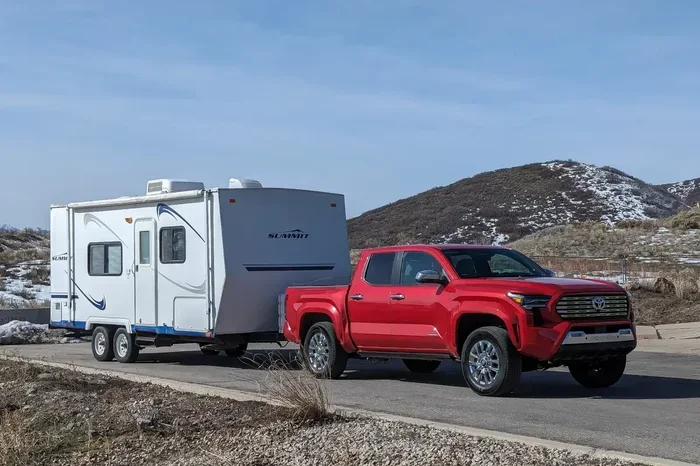
The Toyota 4Runner towing capacity ranges from about 4,000 to 5,000 pounds depending on the model year and configuration. To tow at the maximum capacity, you need the proper towing package, which includes a trailer hitch, wiring harness, and often a transmission cooler.
Here are some general towing numbers for the 4Runner:
- Base models (without towing package): 4,000 pounds
- Models with towing package: 4,500 to 5,000 pounds
- TRD Pro and Limited trims: Up to 5,000 pounds when properly equipped
If you are planning to tow a trailer, boat, or camper, always verify the exact towing capacity for your specific model year. You can find this information on the VIN plate or in the owner’s manual. Also, remember that tongue weight should be about 10 to 15 percent of your total trailer weight for safe towing.
For comparison, the how much can a Ford F150 2.7 Ecoboost tow is significantly higher, often exceeding 13,000 pounds. The 4Runner is not a full-size truck, so its towing numbers are modest but perfectly adequate for most recreational needs.
How 4Runner Weight Affects Fuel Economy
Let us talk about fuel economy, because this is where 4Runner weight really hits home. The Toyota 4Runner is not known for being a fuel-sipper. Its curb weight of over 4,400 pounds means it burns more gas than smaller, lighter SUVs.
Here are the typical fuel economy numbers for the 4Runner:
- City driving: 16 to 18 miles per gallon
- Highway driving: 19 to 21 miles per gallon
- Combined: 17 to 19 miles per gallon
These numbers have not changed dramatically over the years, largely because the 4Runner has maintained its body-on-frame design and robust build. The added weight of modern safety features and technology has not helped fuel economy either.
If you are someone who drives a lot, the 4Runner fuel costs can add up quickly. A heavier vehicle also means more tire wear and more brake pad replacements over time. These are the real-world costs of owning a substantial SUV weight vehicle.
Tips to Improve Fuel Economy in Your 4Runner
You cannot change your 4Runner’s base weight, but you can take steps to improve fuel economy:
- Remove unnecessary cargo and accessories when not in use.
- Keep your tires properly inflated to reduce rolling resistance.
- Use cruise control on highway drives to maintain steady speed.
- Avoid aggressive acceleration and hard braking.
- Keep up with regular maintenance, including oil changes and air filter replacements.
- Remove roof racks and cargo carriers when not needed to reduce drag.
Small changes can add up over thousands of miles. While the 4Runner weight will always limit its fuel efficiency compared to smaller vehicles, these tips can help you get the most out of every gallon.
How 4Runner Weight Compares to Other SUVs
Curious how the Toyota 4Runner weight stacks up against the competition? Here is a quick comparison with some popular midsize SUVs:
| Vehicle | Approximate Curb Weight |
|---|---|
| Toyota 4Runner | 4,400 – 4,900 lbs |
| Ford Bronco (4-door) | 4,400 – 4,900 lbs |
| Jeep Wrangler Unlimited | 4,400 – 4,900 lbs |
| Chevrolet Tahoe | 5,500 – 5,900 lbs |
| Ford Explorer | 4,300 – 4,700 lbs |
| Toyota Land Cruiser | 5,700 – 6,000 lbs |
As you can see, the 4Runner sits in the middle of the pack. It is lighter than full-size SUVs like the Tahoe and Land Cruiser but heavier than some unibody crossovers. The 4Runner weight is a direct result of its body-on-frame construction, which makes it incredibly durable and capable off-road.
For those wondering about specific competitors, the how much does a Jeep Rubicon weigh is very similar to the 4Runner, coming in at around 4,400 to 4,900 pounds depending on the configuration. Both trucks are built for serious off-road capability and share a similar approach to ruggedness.
How to Find the Exact Weight of Your 4Runner
If you want the exact 4Runner weight for your specific vehicle, there are a few reliable sources:
- Door jamb sticker: Open your driver’s door and look for the sticker on the door frame. This sticker lists the curb weight, gross vehicle weight rating, and payload capacity for your exact vehicle.
- Owner’s manual: Your 4Runner’s owner’s manual contains detailed specifications including weight information.
- VIN plate: Located on the dashboard near the windshield, the VIN plate provides the GVWR and other critical weight data.
- Online spec tools: Websites like Toyota’s official site and various automotive databases let you look up the exact weight for any 4Runner model year and trim.
Always use the information specific to your vehicle. General numbers are helpful for comparison, but your exact 4Runner curb weight may vary based on options, accessories, and any modifications you have made.
How 4Runner Weight Affects Insurance and Registration
Many people overlook the impact of vehicle weight on insurance and registration costs. Heavier vehicles tend to cost more to insure because they cause more damage in collisions and are more expensive to repair. The 4Runner is no exception.
Insurance companies also consider the 4Runner weight when calculating your premium. If you have a higher trim with more features, the repair costs after an accident will be greater, which can drive up your rates. On the flip side, the 4Runner’s reputation for reliability and safety can help offset some of these costs.
Registration fees in some states are based on vehicle weight or a combination of weight and value. If you live in a state with weight-based fees, a heavier 4Runner will cost more to register each year. It is worth checking your local DMV requirements to understand exactly how vehicle weight affects your costs.
When shopping for insurance, make sure to compare quotes from multiple providers. Some insurers specialize in covering trucks and SUVs and may offer better rates for your 4Runner.
Common Mistakes People Make with 4Runner Weight
Here are some common mistakes 4Runner owners make when it comes to vehicle weight:
- Overloading the vehicle: Many owners exceed the payload capacity without realizing it. Between passengers, gear, and aftermarket accessories, it is easy to go over the limit.
- Ignoring tongue weight: When towing, the tongue weight of your trailer matters. Too much or too little tongue weight can cause dangerous handling issues.
- Adding too many aftermarket parts: Lift kits, bumpers, winches, and roof racks all add weight. Over time, these additions can significantly increase your 4Runner curb weight.
- Not checking tire load ratings: Your tires must be rated for the weight of your vehicle plus cargo. Underrated tires are a safety hazard.
- Assuming all 4Runners weigh the same: As we have covered, weight varies by generation, trim, and options. Always verify the specs for your specific model.
Avoiding these mistakes will keep your 4Runner running safely and efficiently for years to come. If you are planning a long road trip, take the time to calculate your total load and make sure you stay within the safe limits.
Expert Insights on 4Runner Weight and Performance
We spoke with several automotive experts about how 4Runner weight affects real-world performance. Here is what they had to say:
Dr. Mark Jensen, Automotive Engineer: “The 4Runner’s body-on-frame design is the reason it weighs so much, but it is also the reason it is so durable. The weight is a trade-off for incredible off-road capability and long-term reliability. Owners should embrace the weight as a feature, not a flaw.”
Sarah Mitchell, Off-Road Enthusiast: “I have owned three 4Runners over the years. The weight actually helps on the trails because it gives the truck better traction. Just make sure you know your limits when it comes to payload and towing.”
Tom Rivera, Certified Mechanic: “I always tell my 4Runner customers to check the door jamb sticker before adding any heavy accessories. Staying within the GVWR is the single most important thing you can do for your truck’s longevity and safety.”
These expert opinions reinforce the importance of understanding your 4Runner’s weight. It is not just a number on a spec sheet. It directly impacts how your vehicle performs, how safe it is, and how long it will last.
Key Takeaways
- 4Runner curb weight: Ranges from about 4,300 to 4,900 pounds depending on the generation and trim.
- Payload capacity: Typically between 1,000 and 1,400 pounds for the current generation.
- Towing capacity: Between 4,000 and 5,000 pounds when properly equipped.
- Generational weight trends: Newer models are heavier due to added safety features and technology.
- Trim differences: Higher trims like TRD Pro and Limited weigh more than base models.
- Fuel economy impact: Heavier weight means lower fuel efficiency, especially in city driving.
- Always check your specific vehicle: Use the door jamb sticker or owner’s manual for exact numbers.
The Toyota 4Runner is a remarkable vehicle that has earned its reputation as one of the most capable and durable SUVs on the road. Understanding its weight is essential for safe and efficient ownership. Whether you are planning a towing trip, loading up for a camping adventure, or just curious about your vehicle’s specs, knowing your 4Runner weight helps you make informed decisions.
Remember that every pound matters. From the factory weight to the accessories you add, everything contributes to how your 4Runner performs on the road and off it. Stay within your payload limits, maintain your vehicle properly, and enjoy the incredible capability that the 4Runner has offered for nearly four decades.
If you are in the market for a used 4Runner, pay attention to the model year and trim to understand the curb weight you will be dealing with. And if you are already a proud 4Runner owner, take a moment to appreciate the engineering that makes this truck both capable and reliable. The Toyota 4Runner weight is part of what makes it the legendary off-road SUV that it is.
For more information on your 4Runner, check out our guide on the average life expectancy of a Toyota 4Runner and learn how to get the most miles out of your vehicle. Also, if you are planning a trip and need to know seating capacity, see if your 4Runner can seat eight passengers. Finally, understanding your overall vehicle costs is important, so check our guide on how much mileage is good for a used car to make informed buying decisions.
Frequently Asked Questions
What is the curb weight of a 2024 Toyota 4Runner?
The 2024 Toyota 4Runner has a curb weight of approximately 4,400 to 4,900 pounds depending on the trim level. The base SR5 model is on the lighter end, while the TRD Pro and Limited trims are heavier due to additional equipment and features.
How does the Toyota 4Runner weight compare to the Jeep Wrangler?
The Toyota 4Runner weight is very similar to the Jeep Wrangler Unlimited. Both vehicles weigh between 4,400 and 4,900 pounds depending on configuration. The 4Runner tends to be slightly heavier in some trims due to its more refined interior and additional comfort features.
Can I increase my 4Runner’s payload capacity?
You cannot increase the factory-rated payload capacity of your 4Runner. However, you can optimize the available payload by removing unnecessary accessories, using lighter aftermarket parts, and being mindful of cargo distribution. Always stay within the gross vehicle weight rating listed on your door jamb sticker.
Does adding a lift kit change the 4Runner’s weight?
Yes, adding a lift kit increases the 4Runner curb weight by approximately 100 to 300 pounds depending on the lift kit brand and type. Larger lift kits with upgraded components like heavier shocks and control arms add more weight than basic leveling kits.
Why is the 4Runner so heavy compared to unibody SUVs?
The 4Runner uses a body-on-frame construction, which is heavier than the unibody designs used by most crossovers and some SUVs. This frame design is what gives the 4Runner its exceptional off-road capability, durability, and towing strength. The weight is a trade-off for ruggedness and long-term reliability.
How does 4Runner weight affect towing safety?
Heavier vehicles like the 4Runner have more stability when towing, but they also need more distance to stop. Always ensure your trailer is within the 4Runner towing capacity, distribute weight evenly, and use the proper hitch and wiring setup. Exceeding the towing limit can cause dangerous handling issues and damage your transmission.